Crappie & Panfish Fishing Techniques
Many Minnesota anglers have spent a frustrating Saturday afternoon staring at a blank sonar screen while the kids get restless in the boat, wondering why the "easy" fish aren't biting. This comprehensive guide solves that problem by breaking down the specific seasonal movements, specialized tackle, and advanced presentation strategies needed to consistently find and catch trophy crappie and panfish in the Land of 10,000 Lakes.
Understanding Minnesota Panfish Species and Behavior
When we talk about panfish in Minnesota, we are usually referring to a handful of species that provide more action—and better meals—than almost any other fish in our waters. While they share some similarities, a successful day on the water starts with knowing exactly which species you are targeting and how they behave in our unique glacial lakes.
The Black and White Crappie Distinction
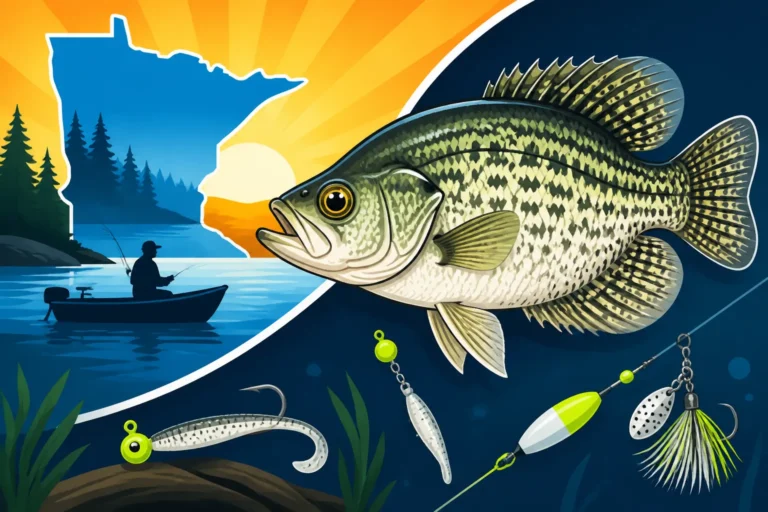
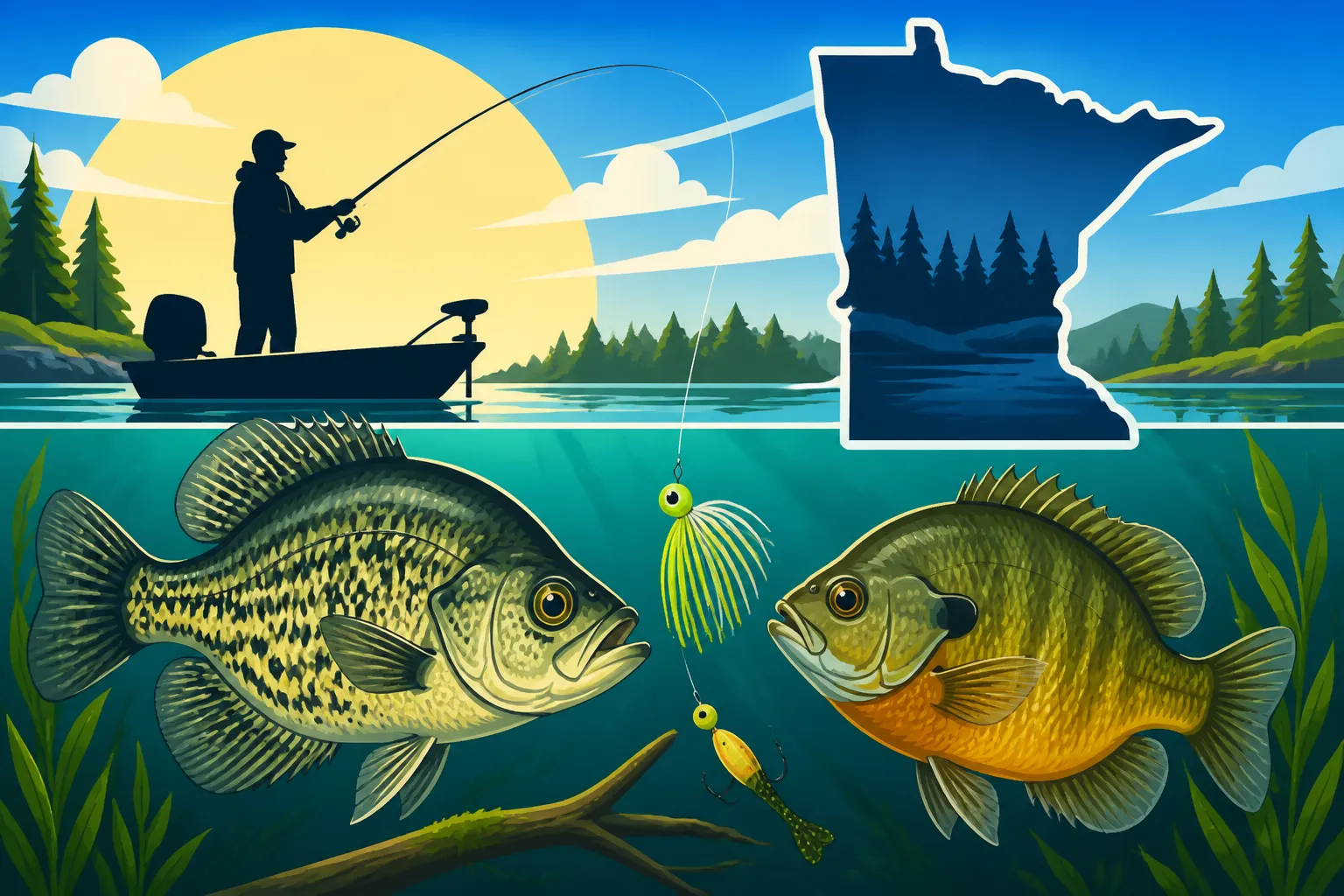
In Minnesota, the black crappie is the dominant species you will encounter, especially in the clear, weed-heavy lakes of the central and northern regions. They are characterized by irregular dark blotches and seven or eight dorsal spines. White crappies, which are more common in the silty, turbid waters of southern Minnesota and river systems, have distinct vertical bars and only five or six dorsal spines. Knowing the difference matters because black crappies are much more likely to be found buried in heavy vegetation, while white crappies are notorious for suspending in open water near submerged timber.
I have spent many mornings on the White Bear Lake Fishing docks realizing that what worked for black crappies in the weeds didn't translate to the white crappies in the muddy river backwaters. Black crappies are sight hunters that love clear water, so your lure color and presentation need to be much more refined. In contrast, white crappies rely more on their lateral line to sense vibrations, making small rattles or high-vibration plastics a game-changer when the water looks like chocolate milk.
The Mighty Bluegill and Sunfish Family
The bluegill is the king of the Minnesota sunfish family, but we also have pumpkinseeds, green sunfish, and hybrids. A common mistake is treating bluegills and crappies as the same fish. Bluegills have much smaller mouths and a much higher metabolism in warm water. They are the "nibblers" that often steal your bait before you can set the hook. Understanding the Bluegill vs Sunfish vs Crappie: Panfish ID is essential for staying within legal limits and targeting the right structure.
Bluegills are incredibly social and competitive. When you find a school of "bull" bluegills, you’ll notice they are much more aggressive than the smaller fish. However, they are also easily spooked by heavy line or large hooks. I often see people using hooks that are far too large, resulting in missed bites and frustration. A size 8 or 10 hook is usually the sweet spot for these hard-fighting panfish.
Yellow Perch and the Bonus Bite
While often overshadowed by walleye, yellow perch are a staple of the Minnesota panfish scene, especially on large lakes like Mille Lacs and Winnie. Perch are bottom-dwellers by nature, unlike the suspending crappie. They follow the sand-to-mud transitions and are often found in the same areas as walleye. If you are struggling to find crappies, looking for Yellow Perch: Where to Find Jumbo Perch can save a trip, as they often stay active during the midday slump when other species shut down.
Perch are notorious "bottom peckers." They will follow a jig all the way to the lake floor and wait for it to puff up a bit of silt before striking. This behavior is why many veteran Minnesota anglers prefer a transition-style bait—something that looks like a small crayfish or a bloodworm. If you're fishing a lake with a high perch population, keep your electronics tuned to the bottom six inches of the water column.
Seasonal Patterns for Minnesota Panfish
If you want to be a successful panfish angler, you have to stop fishing where the fish were and start fishing where they are. Minnesota's dramatic seasons force these fish into a predictable cycle of movement. If you can master the calendar, you can find fish even on the toughest days.
Spring Shallow Water Tactics
The spring "crappie boom" is legendary in Minnesota. As soon as the ice out occurs and the water temperatures hit that magic 50-degree mark, crappies begin migrating toward the shallow, dark-bottom bays that warm up first. These fish are looking for two things: food and a place to spawn. Look for northern bays protected from the wind, as these stay several degrees warmer than the main lake.
During this time, the fish are extremely shallow—often in two to four feet of water. This is when the Spring Crappie Fishing in Minnesota techniques really shine. Using a light-wire jig under a small float allows you to keep your bait in the strike zone without snagging the emerging lily pads. Be careful, though; a sudden cold front can push these fish back into the first deep drop-off overnight. I’ve seen 80-degree days followed by snow in May, and the fish will react accordingly by vacating the shallows in a heartbeat.
Summer Deep Weedline Strategies
Once the spawn ends and the heat of July hits, the big panfish move out. This is where most casual anglers lose them. The "dink" sunfish stay in the shallow docks, but the "dinner plates" move to the deep weed edge—usually in 10 to 18 feet of water depending on lake clarity. This is the time to master Summer Walleye Patterns: Deep Structure because crappies and large bluegills will often utilize the exact same deep-water haunts.
In the summer, oxygen levels and water temperature dictate where the fish sit. They want the cool, oxygen-rich water found near healthy green Coontail or Cabbage weeds. If you find brown, dying weeds, move on; there won't be any fish there. I like to use my electronics to find the "pockets" in the weedline. A heavy tungsten jig is great here because it gets down through the canopy quickly before the small fish can grab it. You can find a wide variety of these jigs on Amazon if your local bait shop is picked over during the mid-summer rush.
Fall Transitions and Winter Basin Patterns
As the water cools in September and October, panfish begin to school up in massive numbers. They move away from the weedlines and head toward the deep basins of the lake. This is the best time of year for "vertical jigging." The fish are often suspended over 30 to 40 feet of water, but they might only be 15 feet down. This is also when the Fall Walleye Fishing: Turnover & Cold Water rules apply—once the lake "turns over," the fish can be anywhere, but they generally trend deep.
Once the ice hardens, the basin bite continues. For many of us, Ice Fishing for Crappie & Panfish is the highlight of the winter. During the low-light hours of dawn and dusk, crappies will move up the water column, sometimes sitting just five feet under the ice in 30 feet of water. You need to be mobile. If you aren't seeing fish on your flasher within ten minutes, drill another hole. The "basin roamers" are always on the move, chasing clouds of zooplankton and minnows.
Essential Gear and Tackle for Panfish
You don't need a $50,000 bass boat to catch panfish, but you do need specialized tackle. Using a medium-heavy walleye rod for crappies is like trying to perform surgery with a sledgehammer. You will miss bites, tear mouths, and have a lot less fun.
The Ultralight Rod and Reel Setup
The foundation of a good panfish kit is a 6-foot to 7-foot ultralight or light-power rod with a fast action tip. The fast action allows you to detect the "up-bite"—that moment when a crappie swims upward with your bait, taking the weight off the line. I recommend pairing this with a 1000-series spinning reel. You can find excellent entry-level combos on Amazon that will last several seasons if you keep them clean.
Line choice is equally critical. For clear Minnesota lakes, 2lb or 4lb test fluorocarbon is the gold standard. Fluorocarbon is nearly invisible underwater and sinks faster than monofilament, which is a huge advantage when fishing tiny jigs. If you are fishing heavy lily pads in the spring, you might step up to a 6lb high-visibility monofilament so you can see your line move before you even feel the fish.
Jigs, Plastics, and Live Bait Options
While the old-fashioned minnow under a bobber still works, modern plastics have changed the game. Small, 1-inch to 2-inch curly tail grubs, tubes, and "mop" style plastics are incredibly effective. The key is to match the hatch. If the lake is full of small perch fry, use something with a bit of orange or gold. If they are eating insects, go with dark browns or purples.
| Gear Category | Recommended Item | Purpose |
|---|---|---|
| Rod | 6'6" Ultralight Fast Action | Sensitivity and light lure casting |
| Line | 4lb Fluorocarbon | Stealth and sinking properties |
| Terminal Tackle | 1/32 oz Tungsten Jigs | Fast drop rate and small profile |
| Live Bait | Waxworms or Eurolarvae | Cold water or finicky fish |
| Electronics | Portable Fish Finder | Locating suspended schools |
When the bite gets tough—usually after a cold front—nothing beats live bait. For bluegills, a single waxworm or a couple of "spikes" (eurolarvae) on a tiny teardrop jig is the ultimate fallback. For crappies, a small "crappie minnow" hooked through the back is hard for them to resist. Just remember to check the Minnesota Crappie & Sunfish Limits before you start filling the livewell, as some lakes have special regulations on size and quantity.
High-Percentage Techniques for Crappies
Crappies are the most popular panfish in the state for a reason: they are fun to catch and taste amazing. However, they can be incredibly temperamental. One hour they are slamming anything that moves, and the next, they won't touch a bait unless it's perfectly still.
The Art of the Slip Bobber
The slip bobber is perhaps the most versatile tool in a Minnesota fisherman's arsenal. Unlike a fixed clip-on bobber, a slip bobber allows you to fish at any depth while still being able to cast easily. This is vital when crappies are suspended 12 feet down over a 20-foot weed edge. Learning How to Set Up a Slip Bobber Rig Step by Step will instantly make you a more effective angler.
The secret to slip bobber fishing for crappies is the "jiggle." Don't just let it sit there. Occasionally twitch your rod tip to make the jig dance underneath the float. This movement often triggers a strike from a fish that was just "inspecting" the bait. Also, use the smallest bobber you can get away with. If a crappie feels the resistance of a giant float, it will often spit the bait before you can set the hook.
Vertical Jigging and Casting
When the fish are active and spread out along a weedline, casting and retrieving is the way to go. A 1/16 oz jig head with a small paddle tail plastic is a killer combo. The trick is to count your lure down. If you know the weeds start at 8 feet, count to six and then start a slow, steady retrieve. This keeps your bait just above the "bedroom" of the fish, forcing them to come up and grab it.
In the late fall and winter, vertical jigging becomes the primary method. Using Best Lures for Ice Fishing Walleye tactics—like using a small Jigging Rap or a Swedish Pimple—can actually work for jumbo crappies too. When you are vertical jigging, the goal is to keep the bait about a foot above the fish. Crappies have eyes on the top of their heads; they almost always strike up. If your bait is below them, they will never see it.
Tactics for Monster Bluegills and Sunfish
Targeting trophy-sized bluegills—those over 9 or 10 inches—is a completely different ballgame than catching the small ones off the end of a dock. Big bluegills are old, wise, and often very cautious. They don't hang out with the masses; they stake out the best territory and guard it.
Downsizing for Big Bulls
The biggest mistake anglers make when chasing big sunfish is using tackle that is too heavy. Even a 1/32 oz jig can sometimes be too big. This is when I reach for tungsten. Tungsten is much denser than lead, meaning you can have a tiny profile that still sinks quickly and stays vertical in the wind. These specialized jigs are readily available on Amazon and are worth every penny when the fish are being finicky.
When you're over a school of sunfish, the "dinks" will usually hit first because they are faster and less cautious. To get to the big ones, you often have to get your bait through the "cloud" of small fish as quickly as possible. I often use a larger bait to deter the small fish, then switch to a tiny, realistic insect imitation once I've reached the depth where the larger marks are showing on my electronics.
Stealth and Depth Control
Big bluegills are incredibly sensitive to boat noise and shadows. If you are fishing in shallow water (less than 8 feet), try to keep your boat as far away from the target as possible and cast into it. If you have a trolling motor with "Spot-Lock," use it. Anchors splashing into the water will clear out a school of trophy sunfish in seconds.
Depth control is the final piece of the puzzle. Bluegills are very specific about where they sit in the water column. Often, the difference between catching a 6-inch fish and a 10-inch fish is only two feet of depth. If you are catching small ones, try going deeper. The "bulls" often sit underneath the main school, waiting for easy meals to drop down to them. This is where Catch and Release Best Practices in Minnesota come into play; those 10-inch bluegills are likely 8 to 10 years old. Taking too many of them can ruin a lake's size structure for a decade.
Finding the Right Spots: Minnesota Lake Structure
You can have the best gear in the world, but if you're fishing in a "dead zone," you're just practicing your casting. Minnesota lakes offer a variety of structures, but panfish are remarkably consistent about what they like.
Docks, Lifts, and Man-Made Cover
In the summer, never overlook a good dock. Docks provide shade, safety from overhead predators, and a constant supply of food in the form of insects and minnows. However, not all docks are created equal. The best docks are those that have deep water (at least 5-6 feet) at the end of them and are located near a weedline.
A "secret" tactic many pros use is skipping jigs under boat lifts. The dark, cool water under a pontoon is a magnet for big crappies. This takes practice, but once you master the "skip cast," you'll have access to fish that most people never see. Just be careful not to hook the neighbor's upholstery! If you're looking for these spots in the city, Twin Cities Metro Fishing: Best Lakes Near Minneapolis & St. Paul has some of the best dock-fishing opportunities in the state.
Submerged Timber and Vegetation Edges
In our northern lakes, submerged timber (downed trees) and "cribs" (man-made fish structures) are panfish goldmines. Crappies love to "hug" the branches of a fallen oak tree. You will lose some jigs, but that's where the fish are. Using a weedless jig head or a light-wire hook that you can bend back out of a snag is a smart move here.
Vegetation is the most common structure you'll deal with. Look for "edges" and "pockets." A straight wall of weeds is okay, but a weedline with points, gaps, and varying heights is much better. I always look for the "inside" weed edge in the spring and the "outside" weed edge in the summer. If you can find a spot where the bottom changes from muck to sand right at the weedline, you've found a honey hole.
Advanced Electronics and Technology
We are living in the golden age of fishing technology. While a veteran might tell you they don't need "fancy gadgets," there is no denying that modern electronics make finding panfish significantly faster and more efficient.
The Role of Forward-Facing Sonar
If you've been following the fishing world lately, you've heard about Garmin LiveScope or Humminbird MEGA Live. This technology allows you to see the fish in real-time before you even cast. For panfish, this is a total game-changer. You can literally watch a crappie swim toward your jig, see it hesitate, and then adjust your movement to trigger the strike.
Is it "cheating"? Some think so, but for a family with limited time on the water, it’s a tool that ensures the kids actually see fish. If you're wondering Is Garmin LiveScope Worth It for Walleye?—the answer is even more "yes" for panfish because they tend to suspend in open water where traditional 2D sonar struggles to give you the full picture. You can see which way the school is moving and lead them with your cast.
Mapping and GPS Strategy
Even without expensive live sonar, a good GPS map is essential. Apps like Navionics or a Lakemaster chip in your fish finder allow you to see the contours of the lake. I look for "holes" in the middle of shallow flats or steep "saddles" between two islands. These are natural funnels for fish movement.
Before I even launch the boat, I spend time looking at maps to identify three or four likely spots. This prevents "aimless trolling" and keeps the day productive. If you're fishing a new lake, check out the Minnesota Fishing Regulations PDF: Where to Find It to ensure the lake doesn't have specific experimental limits that might change how you approach the day.
Summary of Panfish Techniques
| Technique | Best Season | Target Species | Key Gear |
|---|---|---|---|
| Slip Bobber | Spring / Summer | Crappie / Bluegill | Small float, minnow or jig |
| Vertical Jigging | Fall / Winter | Crappie / Perch | Tungsten jig, plastic tail |
| Dipping Docks | Summer | Bluegill / Crappie | 7' Light rod, skipping jig |
| Counting Down | Summer / Fall | Black Crappie | 1/16 oz jig, paddle tail |
| Basin Roaming | Winter | Crappie | Flasher, tiny spoons |
Responsible Angling and Conservation
Minnesota is blessed with incredible panfish resources, but they aren't bottomless. In recent years, the DNR has implemented lower bag limits on many lakes to protect the size structure of our sunfish. It is our job as anglers to be stewards of these waters.
The Importance of Selective Harvest
The old mentality of "keeping a limit every time" is fading, and for good reason. When we remove all the large "bull" bluegills from a lake, the smaller males stop growing and start spawning earlier, leading to a stunted population of 5-inch fish. A better practice is to keep the "medium" fish (7-8 inches for sunfish, 10-11 inches for crappies) for a meal and release the true trophies.
Always be aware of the Minnesota Possession Limits Explained rules. Remember, your "possession" limit includes the fish in your freezer at home, not just what's in your bucket today. By practicing selective harvest, we ensure that the next generation of Minnesota kids gets to experience the thrill of a 12-inch "slab" crappie pulling on their line.
Minnesota Fishing Disclaimer
Fishing regulations in Minnesota are subject to change annually, and many individual lakes have "special" or "experimental" regulations that override general state rules. Always consult the most current Minnesota DNR Fishing Regulations handbook or the DNR's LakeFinder tool before heading out. The information provided in this guide is for educational purposes and based on general patterns and the anticipated 2026 rules. Always fish safely, wear a life jacket, and respect private property when shore fishing.