Bowstring Lake Walleye Limit & Slot
There is nothing quite as gut-wrenching as pulling a beautiful, glassy-eyed walleye over the gunwale of your boat on Bowstring Lake, only to realize you are not entirely sure if it is legal to keep. This guide solves that uncertainty by detailing the specific 2026 walleye limits and slot regulations for Bowstring Lake to keep you legal and stress-free.
Understanding the Bowstring Lake Walleye Limit for 2026
If you have spent any time fishing the sprawling waters of Itasca County, you know that Bowstring Lake is a crown jewel for walleye hunters. However, because it is such a popular destination, the Minnesota Department of Natural Resources (DNR) keeps a very close eye on the population. For the 2026 season, the walleye limit on Bowstring Lake follows a specific set of rules designed to maintain a healthy balance of eater-sized fish and trophy-class spawners.
The daily and possession limit for walleye on Bowstring Lake is currently set at six fish. While this mirrors the standard Minnesota Walleye Limit & Size Rules for many inland waters, the real nuance lies in the protected slot. You cannot simply keep any six fish you catch. In Minnesota, the "daily limit" refers to what you can catch and keep in a single calendar day, while the "possession limit" is the total number of fish you can have in your freezer, cooler, or livewell at any given time. For those of us who stay at a resort for a week, this distinction is vital. You cannot bring home 30 fish just because you fished for five days.
I have seen many well-meaning anglers get confused by the possession rule. If you are staying at a cabin and have already processed four walleyes from yesterday’s haul, you are only allowed to keep two more today before you hit your total possession limit of six. Keeping track of your count is not just about staying legal; it is about respecting the resource so that Bowstring remains a top-tier fishery for the next generation of Northwoods anglers.
The Protected Slot Limit: What You Can Keep and What Must Go Back
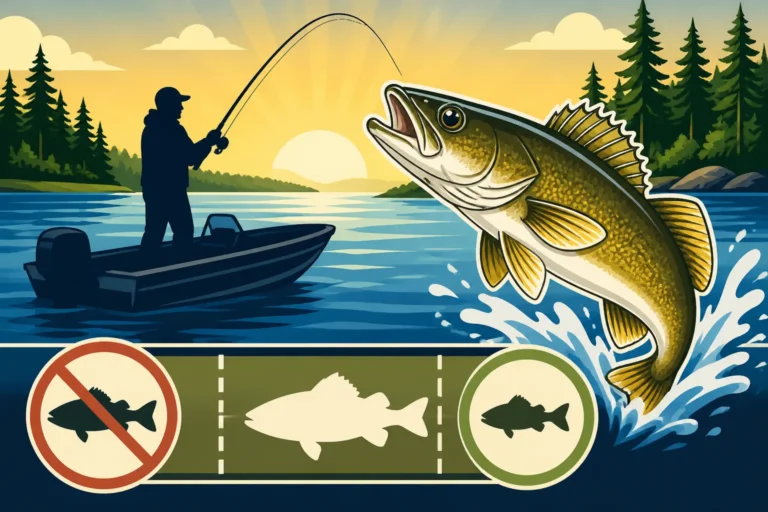
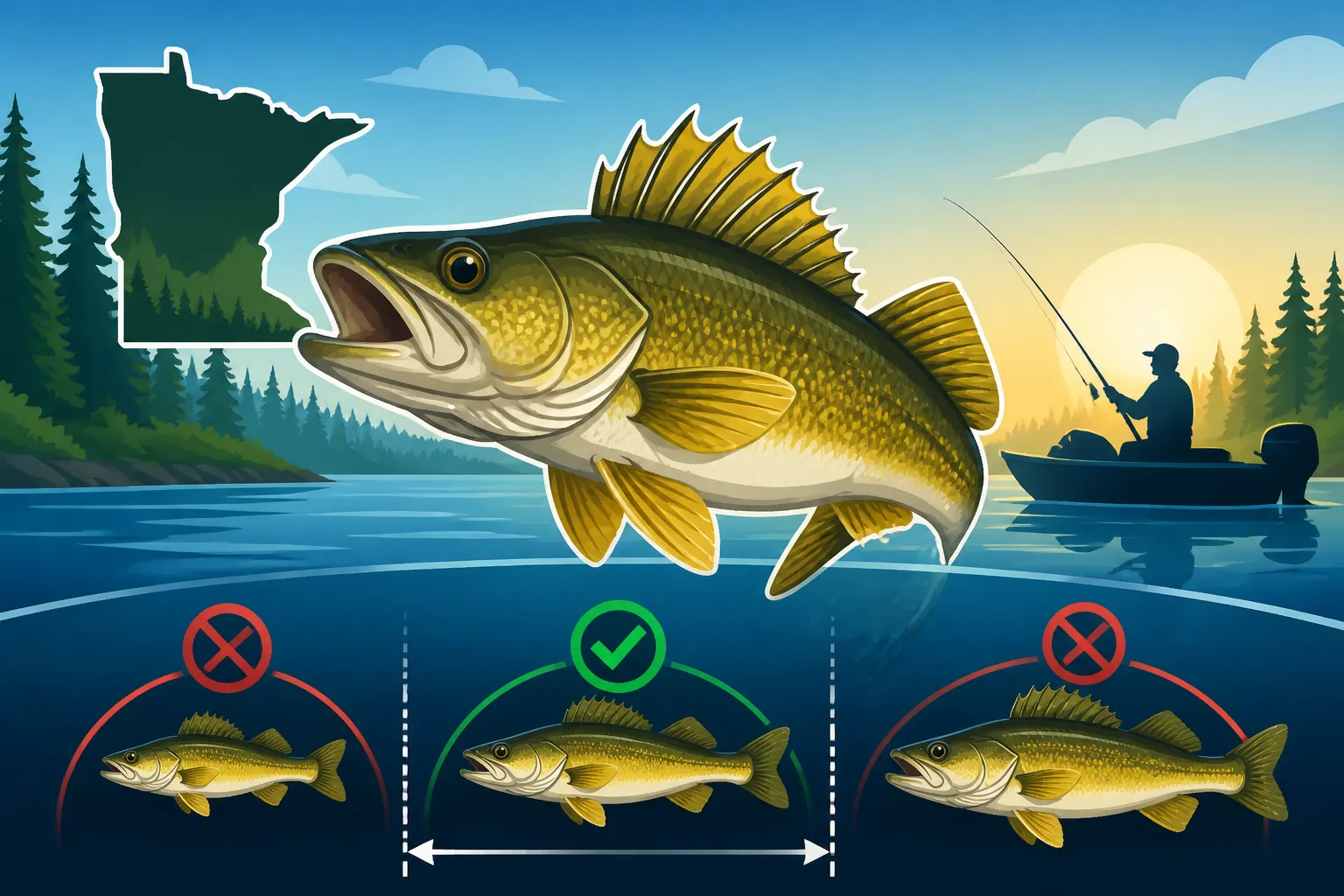
The most critical part of fishing Bowstring is navigating the protected slot limit. As of 2026, Bowstring Lake operates under a special regulation where all walleyes between 18 and 26 inches must be immediately released. This "protected slot" is designed to keep the most productive breeding females in the lake. These are the fish that do the heavy lifting for the population, and letting them go ensures that the "eater" classes remain abundant.
You are allowed to keep one walleye over 26 inches as part of your six-fish limit. This is often referred to as a "trophy allowance." However, many veteran Bowstring anglers, myself included, generally choose to release these giants. A 26-plus-inch walleye is an old fish, often decades old in these northern waters, and they are far more valuable in the water than on a mounting board. If you do catch a keeper within the legal range—meaning anything under 18 inches—you are good to go, provided you do not exceed your total bag limit.
Measuring these fish accurately is where the rubber meets the road. I always recommend using a high-quality, flat measuring board rather than a flexible tape measure. To get a legal measurement in Minnesota, you must close the fish’s mouth and squeeze the tail lobes together to reach the maximum length. If that tail fin even brushes the 18-inch mark, that fish belongs back in the water. To understand the broader logic behind these rules, you might want to look into Minnesota Slot Limits: Which Lakes & Why to see how these regulations vary across the state.
| Regulation Type | Bowstring Lake Walleye Rules (2026) | Statewide General Rule |
|---|---|---|
| Daily/Possession Limit | 6 Fish | 6 Fish |
| Protected Slot | 18" to 26" (Must be released) | None (unless specified by lake) |
| Trophy Allowance | 1 fish over 26" | 1 fish over 20" (standard) |
| Measuring Method | Squeeze tail, closed mouth | Squeeze tail, closed mouth |
| Season Dates | Check Minnesota Fishing Seasons & Opener Dates (2026) | Standard Inland Opener |
Why Bowstring Lake Regulations Differ from Statewide Rules
You might wonder why Bowstring has these extra "hoops" to jump through compared to a random lake in southern Minnesota. The answer lies in the lake's unique biology. Bowstring is a relatively shallow, fertile lake with a massive amount of structure—bars, humps, and weed lines—that makes it a walleye factory. Because it is so productive, it attracts a massive amount of fishing pressure, especially during the When Is the Minnesota Walleye Opener 2026? festivities and the early summer months.
The DNR uses special regulations on Bowstring to prevent "over-harvesting" of specific size classes. Without the 18-to-26-inch protection, the lake could quickly become "top-heavy" or, conversely, lose its big-fish potential entirely. By forcing the release of those mid-sized fish, the state ensures there is always a "recruitment" class moving up into the trophy category. It is a balancing act that has made Bowstring one of the most consistent producers of walleye in the entire state.
I remember talking to a local conservation officer near Deer River a few years back. He mentioned that since the implementation of these tighter slots, the average size of a "keeper" on Bowstring has actually stabilized. We aren't just catching 12-inch "cigars" anymore; we are catching healthy 16-to-17-inch fish that make for perfect fillets. If you are curious about how these decisions are made at a higher level, keeping an eye on Minnesota Fishing Regulations Changes for 2026 will give you a better idea of the shifting landscape of lake management.
Practical Tips for Staying Legal and Successful on Bowstring
When you are out on the water, the last thing you want to do is fumble through a wet rulebook. I keep a summary of the Bowstring-specific rules taped to the inside of my tackle box. It saves time and prevents expensive mistakes. Beyond the legalities, catching these fish requires a bit of local know-how. During the early season, look for walleyes in the shallow sand flats or near the mouth of the Bowstring River. As the water warms, they migrate toward the deeper humps and the legendary "Bowstring bars."
For bait, you really cannot go wrong with the classics. A 1/8-ounce or 1/4-ounce jig tipped with a fathead minnow is the gold standard here. If the bite gets tough in mid-July, switching to Best Live Bait for Walleye (Leeches, Minnows, Crawlers) like a jumbo leech on a slip-bobber can be the ticket to filling your limit of "under-18s." Always remember that even if you are just catching and releasing, you must handle the fish with care. Using a rubberized net and keeping the fish in the water as much as possible helps ensure that the 20-inch fish you release today will be a 27-inch trophy in a few years.
Finally, before you even back the trailer down the ramp, make sure your paperwork is in order. You can easily find out How to Get a Minnesota Fishing License Online to save yourself a trip to the bait shop in town. If you are visiting from out of state, be sure to check the specific costs for a Nonresident Fishing in Minnesota: Licenses & Rules to avoid any surprises. Bowstring is a place of incredible beauty and bounty, and following these rules is the small price we pay to enjoy one of the best walleye lakes in the world.
Legal Requirements and Licensing for Itasca County
Fishing Bowstring Lake is not just about the gear and the slot limits; it is also about following the administrative rules that fund the very stocking and enforcement programs we rely on. Every angler over the age of 16 needs a valid Minnesota fishing license. Depending on your needs, you might opt for a 24-hour license or a full-season individual license. For more details on the pricing tiers, see Minnesota Fishing License: Cost, Types & How to Buy (2026).
Additionally, Bowstring Lake is part of a region that is very sensitive to Aquatic Invasive Species (AIS). It is not just a suggestion; it is the law that you must pull your drain plug and drain all bait buckets before leaving the boat access. I have seen many people get ticketed simply because they forgot to pull the plug while driving down the road. If you are unsure of the latest protocols, reading up on Aquatic Invasive Species (AIS) Rules for Boaters is a must. It protects Bowstring from zebra mussels and starry stonewort, which could ruin the walleye spawning grounds we all love.
If you are planning a trip with the whole family, remember that there are breaks available for certain groups. You might want to check the Minnesota Fishing License for Seniors or see if your trip coincides with Free Fishing Weekends in Minnesota to save some money on licensing fees. Being a responsible angler means knowing the rules before you cast your first line.
Disclaimer
This guide provides information based on the 2026 Minnesota fishing regulations. However, fishing laws can change due to emergency DNR orders or mid-season adjustments. Always check the official Minnesota DNR Fishing Regulations handbook or the posted signs at public water accesses before beginning your fishing trip to ensure you have the most current information for Bowstring Lake.