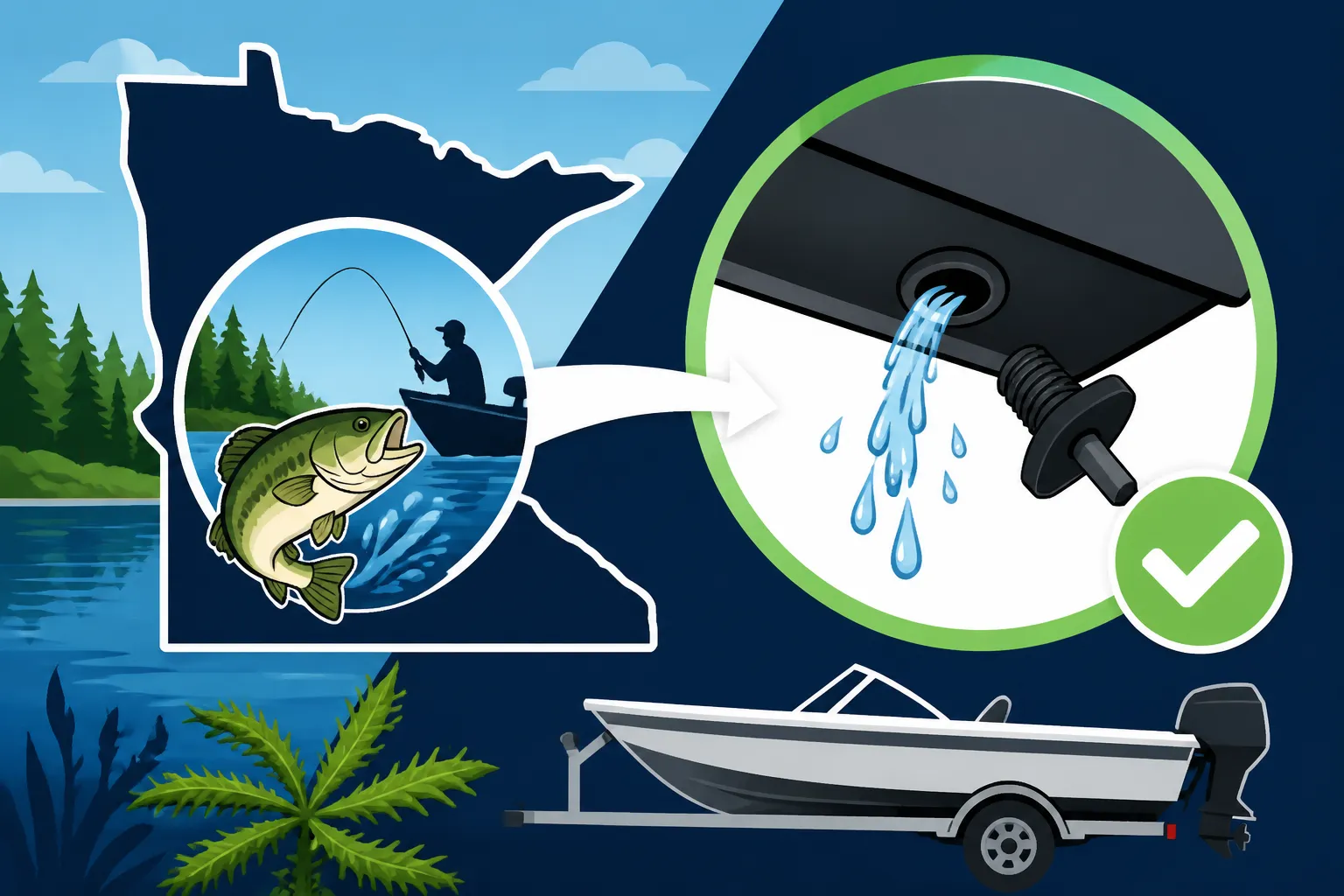
Minnesota AIS Drain Plug Law Explained
You’re pulling your boat out of Lake Minnetonka after a long, successful afternoon of chasing bass. The sun is setting, the kids are tired, and you’re in a hurry to get home. You winch the boat up, strap it down, and start driving. Five minutes later, you see the flashing lights of a DNR truck. It’s that sinking feeling in your stomach—did you forget the drain plug? This guide explains everything you need to know about Minnesota’s strict AIS drain plug laws so you can avoid hefty fines and help protect our 10,000 lakes.
Understanding the Core Mandate of the Minnesota Drain Plug Law
If you have spent any amount of time on Minnesota waters, you know that our state takes its natural resources seriously. The "Drain Plug Law" is one of the most frequently cited regulations by the Department of Natural Resources (DNR) because it is so easy to overlook in the rush of leaving a landing. At its simplest level, the law requires that all boaters remove the drain plug from their watercraft and keep it out while transporting the boat on public roads. This isn't just a suggestion; it is a legal requirement designed to ensure that no lake water—which could contain microscopic larvae—is moved from one body of water to another.
The frustration often stems from the "why." You might think your boat is bone dry, but a modern fishing boat has miles of plumbing, livewell lines, and bilge areas that can hold several gallons of water even when the boat looks empty. The law is written to be absolute to remove any guesswork. If the boat is on the trailer and moving down the road, that plug must be pulled. It doesn't matter if you are going five miles to your driveway or fifty miles to another lake. The mandate is clear: pull the plug and keep it out.
When Does the Law Apply
The legal requirement kicks in the moment you leave the boat ramp area. In Minnesota, the law states that you must remove the drain plug and all other water-draining devices before leaving the water access or riparian property. This includes the "drainage" of livewells, baitwells, and any other compartments that hold water. The only time the plug should be in is when you are actually on the water or in the process of launching.
One common mistake is thinking you can wait until you get to a gas station or a more "convenient" spot to pull the plug. However, DNR officers often wait just outside the entrance of popular landings specifically to check for this. If you are on a public road and that plug is still screwed in, you are technically in violation. This applies to all types of watercraft, including pontoons, fishing boats, and even personal watercraft like Jet Skis. Before you head out, it's always a good idea to refresh your knowledge on Minnesota Fishing Regulations PDF: Where to Find It to stay current on any yearly tweaks to these rules.
The Specific Language of the Mandate
The legal language used by the Minnesota DNR is quite specific. It doesn't just mention the transom plug; it refers to "all water-draining devices." This means if your boat has multiple drain points, perhaps for a specialized hull design or a multi-tier bilge system, every single one must be opened. Furthermore, the law requires that these plugs remain out during transport. You cannot pull the plug at the landing, drain the water, and then put the plug back in for the drive home.
Why the strict "keep it out" rule? It’s because the DNR wants to ensure that any residual moisture has a chance to evaporate during the drive and while the boat is in storage. A closed plug creates a humid, dark environment where invasive species can survive for much longer than they would in a dry, ventilated bilge. For those who are new to the state, understanding these nuances is a key part of Nonresident Fishing in Minnesota: Licenses & Rules compliance.
Why Minnesota Is So Strict About Drain Plugs
It can feel like the state is nitpicking when they hand out a hundred-dollar ticket for a forgotten plug, but the environmental stakes are incredibly high. Minnesota’s lakes are our greatest treasure, and they are under constant threat from Aquatic Invasive Species (AIS). Once a lake is infested with something like zebra mussels or spiny waterfleas, there is no "undo" button. The ecosystem changes forever, often leading to clearer water that encourages massive weed growth, sharp shells that cut swimmers' feet, and a total shift in the food chain that can hurt walleye populations.
The drain plug law is our primary line of defense. It’s a low-cost, high-impact way to slow the spread. When we talk about Aquatic Invasive Species (AIS) Rules for Boaters, the drain plug is the cornerstone. By forcing boaters to drain every drop of water, we drastically reduce the chances of a "hitchhiker" making its way into a pristine lake.
The Threat of Zebra Mussels and Veligers
The biggest villain in this story is the zebra mussel. While adult zebra mussels are easy enough to see on a dock or a boat hull, the real danger is invisible to the naked eye. Zebra mussels reproduce by releasing millions of microscopic larvae called veligers. These veligers float in the water column and can easily be sucked into a boat’s bilge, livewell, or cooling system.
If you leave a lake like Mille Lacs, which has a known infestation, and you don't drain your boat, you could be carrying thousands of these veligers in just a few cups of water. If you then launch into a "clean" lake the next day, those larvae are released, and a new infestation begins. This is why the Mille Lacs Lake Fishing Rules & Limits often emphasize the importance of decontamination. The drain plug law specifically targets these microscopic threats that you can't see but can definitely transport.
Spiny Waterfleas and Other Invisible Threats
Beyond zebra mussels, we are also fighting spiny waterfleas. These tiny crustaceans are incredibly hardy and have long, barbed tails that prevent small fish from eating them. They can easily get tangled in fishing lines or trapped in small pockets of water within a boat. Much like zebra mussel veligers, they are difficult to spot unless there is a large cluster of them.
Draining your boat is the only way to ensure these pests aren't hitching a ride. When you are looking at How to Decontaminate Your Boat (AIS), pulling the plug is the first and most vital step. Without that initial drainage, any other cleaning you do is essentially useless because the "guts" of your boat are still holding contaminated water.
Best Practices for Compliance at the Boat Ramp
Knowing the law is one thing; remembering it at 9:00 PM when you’re exhausted is another. The best way to avoid a ticket is to build a "landing routine" that becomes muscle memory. Most veteran Minnesota anglers have a specific order of operations they follow every time the tires hit the pavement at the ramp.
Start by making the drain plug the very first thing you touch after you pull the boat out of the water and move to the designated tie-down area. Do not wait until you are strapping the transom or loading the gear into the truck. Make it a habit: boat out, plug out. This is as essential as having your Minnesota Fishing License: Cost, Types & How to Buy (2026) on hand.
| Action Item | When to Do It | Why It Matters |
|---|---|---|
| Remove Drain Plug | Immediately after pulling out | Prevents transport of veligers/AIS |
| Drain Livewell | At the landing tie-down area | Stops contaminated water transfer |
| Empty Bait Buckets | Before leaving the landing | Legal requirement for lake water |
| Inspect Hull/Trailer | Before pulling onto the road | Removes visible weeds/mussels |
| Lower Motor | Briefly at the ramp | Drains water from the cooling system |
Creating a Routine to Avoid Tickets
A great tip used by many locals is to keep the drain plug in a place where you literally cannot miss it. Some people attach the plug to their boat keys with a small lanyard. Others keep a bright orange "Remove Plug" tag that they hang on the steering wheel when the boat is on the trailer. Whatever method you choose, the goal is to create a physical reminder that overrides your "I want to get home" instinct.
Another part of the routine involves checking the "hidden" water. Don't forget to trim your motor down for a few seconds while you’re still over the concrete at the landing. This allows the water in the engine's cooling system to drain out. While the law specifically mentions the plug, the spirit of the law is about removing all water. Staying compliant is just as important as knowing How to Transport a Boat Legally in Minnesota (AIS) when moving between different regions of the state.
Where to Store Your Drain Plug
Where you put the plug once it's out is just as important as taking it out. There is nothing worse than getting to the lake the next morning, backing the boat in, and realizing your drain plug is sitting on the workbench in your garage. Most modern boats have a dedicated clip near the drain hole specifically for storing the plug.
If your boat doesn't have one, consider buying a "dummy" plug or a clip you can screw into the splashwell. Many anglers also keep a spare plug in the glove box or the truck's center console. Having a backup is vital, especially if you’re heading out for Minnesota Ice Fishing & Shelter Rules season when gear can get brittle and lost in the snow.
Consequences of Non-Compliance: Fines and Checkpoints
The Minnesota DNR doesn't just rely on the honor system. Throughout the summer, especially on holiday weekends like the 4th of July or the When Is the Minnesota Walleye Opener 2026?, the DNR sets up AIS checkpoints. These are often mandatory stops, similar to a weigh station for semi-trucks. Officers will inspect your boat for weeds, check your livewells, and, most importantly, check your drain plug.
Getting caught with the plug in is an expensive mistake. The fines can vary by county, but you’re typically looking at a ticket in the $100 to $500 range depending on the severity and whether you are also transporting invasive species. It is a "strict liability" offense, meaning "I forgot" is not a legal defense that will get you out of the ticket.
What to Expect at a DNR AIS Checkpoint
If you see signs for a mandatory AIS inspection, don't panic—just follow the directions. The officers are generally friendly and looking to educate rather than just punish. They will ask where you've been fishing and where you're headed. They will walk around the boat with a flashlight, checking the trailer rollers and the lower unit of your motor for any stuck vegetation.
They will also look into your bilge. If they see the plug is in, even if the boat is dry, they will likely issue a citation. This is also a time when they might check for your Minnesota Trout Stamp & Trout Regulations if you have trout gear visible, so it pays to have all your ducks in a row. These checkpoints are a vital tool in keeping our lakes healthy, and cooperating makes the process go much faster.
Financial and Legal Penalties
Beyond the initial fine, being caught in violation of AIS laws can sometimes lead to more complications. If you are found to be transporting actual invasive species (like live zebra mussels) because you didn't clean your boat, the penalties escalate significantly. In some cases, the DNR can even order you to decontaminate your boat at a professional station before you are allowed to launch it anywhere else.
Compare this to the cost of a fishing license. When people ask How Much Is a Minnesota Fishing License?, they realize that the license is a bargain compared to a single AIS fine. Avoiding these penalties is simple: follow the "Clean, Drain, Dry" protocol every single time you leave the water.
Comprehensive Boat Decontamination Beyond the Plug
While the drain plug is the law's primary focus, it is only one part of being a responsible boater. To truly protect our lakes, you should follow the full "Clean, Drain, Dry" method. This is the gold standard for conservation in the Midwest.
Cleaning means removing all visible plants, mud, and animals from your boat, trailer, and gear. Draining means more than just the bilge; it means the livewell, the bait bucket, and the motor. Drying is the final step, and it’s the one most people skip. Ideally, a boat should dry for at least five days (and up to 21 days in cool, damp weather) before moving to a new body of water. This ensures that any remaining microscopic larvae are completely desiccated.
Draining the Livewell and Bait Buckets
The livewell is a major hiding spot for AIS. Many anglers like to keep their catch in a livewell full of lake water for the drive home to keep the fish fresh. In Minnesota, this is illegal. You must drain the livewell before leaving the access. If you want to keep your fish on ice, you should bring a cooler and transfer the fish there.
Bait is another tricky area. You cannot transport lake water away from a landing in a bait bucket. If you want to keep your minnows or leeches for another day, you must replace the lake water with tap water or bottled water. This simple act prevents the transfer of waterborne diseases and invasive larvae. It’s a small extra step that makes a huge difference in Catch and Release Best Practices in Minnesota and overall lake health.
The 21-Day Drying Rule
While not a law, the 21-day drying recommendation is something the DNR strongly encourages for boaters moving between "infested" and "uninfested" waters. Some species, like the spiny waterflea, can survive in damp environments for a surprisingly long time. If you’ve been fishing a lake known to have these pests, giving your boat a long break in the sun is the best way to ensure you aren't the one who ruins the next lake.
If you don't have 21 days because you’re on a fishing trip, the next best thing is a high-pressure, hot water wash (at least 140 degrees Fahrenheit). This temperature kills zebra mussels and most other AIS on contact. For those wondering What Happens If You Fish Without a License in Minnesota?, the consequences of spreading AIS are far more reaching and damaging to the community than an individual license violation.
Minnesota AIS Drain Plug Law Disclaimer
This guide is intended for informational purposes and provides a general overview of Minnesota’s Aquatic Invasive Species (AIS) laws as they relate to boat drainage. Regulations can change, and specific lakes may have additional local ordinances or temporary restrictions. Always consult the official Minnesota Department of Natural Resources (DNR) handbook or website for the most current legal requirements. Failure to comply with state laws can result in significant fines, legal action, and the potential spread of invasive species. Play your part in protecting our waters by staying informed and diligent.