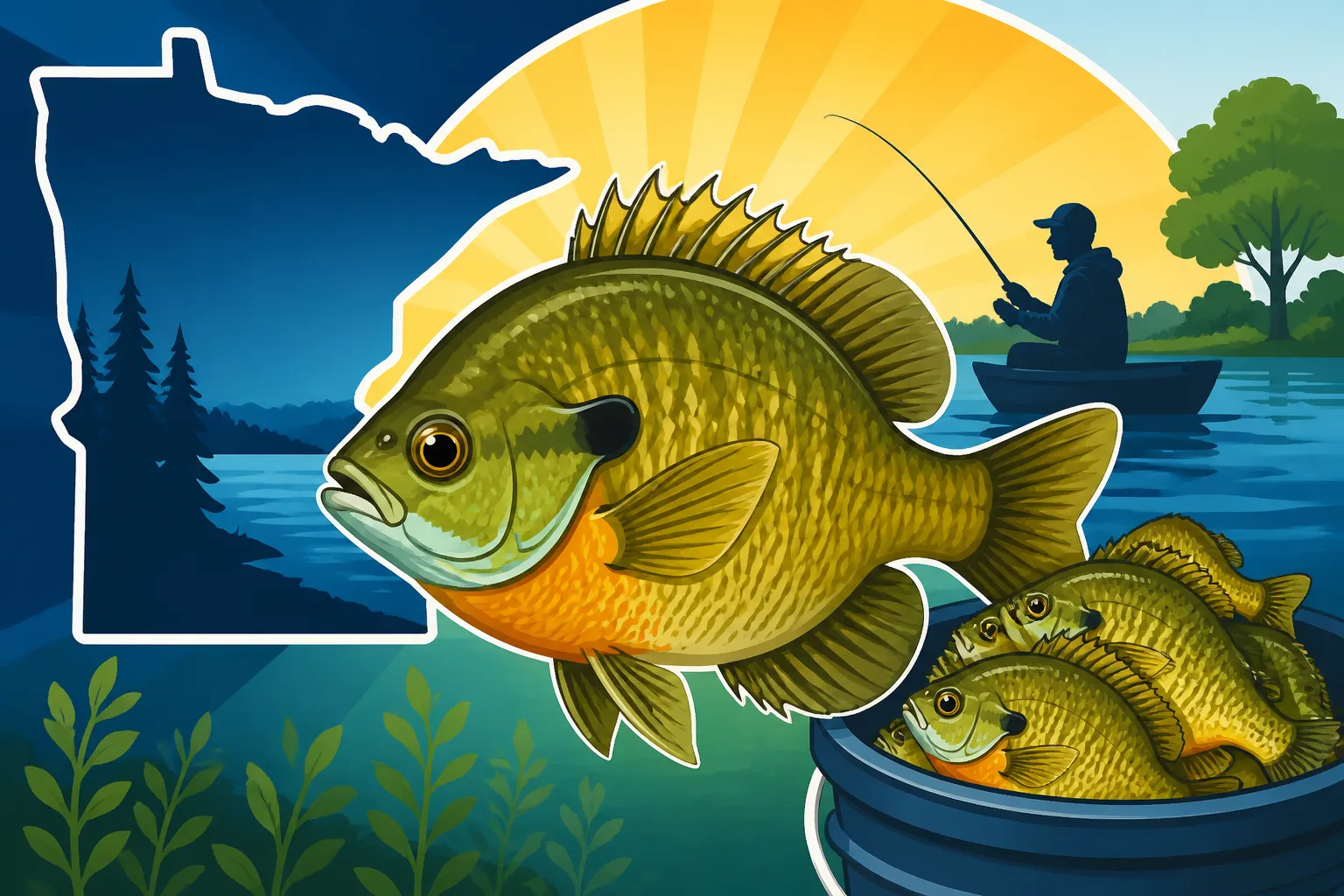
Sunfish Season & Limit in Minnesota
It’s a tale as old as time for Minnesota anglers: you head out to your favorite lake, ready to enjoy a relaxing day of sunfish angling, only to suddenly second-guess yourself about the regulations. "Wait, what's the limit on this lake again? Is it different than last year? And what exactly counts as a 'sunfish' anyway?" It’s a frustrating moment, especially when you’re just trying to enjoy the simple pleasure of catching these feisty little panfish. This comprehensive guide is here to clear up all that confusion, breaking down the current sunfish season and limits in Minnesota so you can fish with confidence and stay on the right side of the law.
Understanding Minnesota’s Sunfish Regulations
Minnesota’s Department of Natural Resources (DNR) works hard to manage our fish populations sustainably, and sunfish are no exception. These panfish are a cornerstone of our state’s angling culture, providing easy access to fishing for families and seasoned pros alike. However, their popularity also means they need careful management to prevent overharvesting, which is why regulations are in place and can sometimes feel a bit complex.
Why Sunfish Limits Change
You might wonder why the sunfish limits seem to change from time to time, or why they vary so much from lake to lake. It’s not just to keep you on your toes, I promise! The DNR adjusts sunfish regulations based on scientific data collected from our lakes, including population assessments, average size, and angler harvest rates. For instance, if a lake shows signs of “stunting”—where sunfish become overpopulated but individually small—the DNR might implement a reduced bag limit or a protected slot limit to encourage anglers to harvest more of the smaller fish and allow the remaining fish to grow larger. Conversely, some lakes with healthy, robust populations might have more liberal limits. It’s all about maintaining a healthy, balanced ecosystem and a quality angling experience for future generations.
The Statewide Daily Bag Limit
As of the latest regulations, the general statewide daily bag limit for sunfish in Minnesota is 20. This means you can keep up to 20 sunfish per day from most lakes across the state. This limit applies to all species within the sunfish family, including bluegill, pumpkinseed, green sunfish, and others, when caught in waters not designated as “special waters.” Remember, this is a *daily* limit, meaning it’s the maximum number of fish you can possess *while on the water* or *in the process of transporting them from your fishing location*. If you go out fishing for multiple days, your possession limit at home can be higher, but it still relates to the daily bag limit—you can’t keep more than 20 fish caught in a single day, regardless of how many days you’re out. For a broader overview of state regulations, you might want to check out our guide on Minnesota Fishing Limits: Bag & Possession (2026) for other species too.
Navigating the Sunfish AIS Special Waters Program
One of the most significant complexities in sunfish regulations comes from the DNR’s “Quality Sunfish Initiative,” which has led to numerous lakes being designated as “special waters” with reduced limits. This program aims to improve the size structure of sunfish populations in certain lakes, often those that have experienced issues with small, abundant fish. It’s a proactive measure to ensure better quality fishing for everyone.
Identifying AIS Special Waters
So, how do you know if you’re on one of these special waters? It’s crucial to do your homework *before* you even cast a line. The easiest and most reliable way is to consult the official Minnesota DNR fishing regulations booklet, which is updated annually. You can find a digital version on the DNR website, or pick up a physical copy wherever fishing licenses are sold. This booklet lists all lakes with special regulations, including specific sunfish limits. You’ll often see signs at public access points on these lakes too, clearly stating the reduced limits. Ignorance of the law is no excuse, so always double-check! For specific lake regulations, our article on What Is the Sunfish Limit on My Lake? provides further details.
Reduced Limits for Specific Lakes
When a lake is designated as a special waters lake for sunfish, its daily bag limit will be reduced from the statewide 20. These reduced limits can vary quite a bit, from as low as 5 to 10 per day. For example, some popular lakes in Minnesota might have a daily limit of 5 sunfish, while others might have a limit of 10. These reduced limits are often implemented in conjunction with other management strategies, like promoting the harvest of smaller fish to thin the population and allow larger individuals to thrive.
Let's look at a hypothetical scenario: Imagine you're planning a trip to Big Fish Lake in the Brainerd Lakes Area. You've always caught a lot of sunfish there. Before you go, you check the DNR regulations and discover that Big Fish Lake now has a special sunfish regulation of a 10-fish daily bag limit. If you showed up expecting the statewide 20, you'd be in for a surprise—and potentially a citation! This is why proactive research is so vital. It’s not just about compliance, but about contributing to healthier fish populations that will provide great fishing for years to come.
Here's a simplified table illustrating how sunfish limits can vary across different types of Minnesota waters:
| Water Type | Daily Bag Limit (Sunfish) | Example Management Goal |
|---|---|---|
| Most Statewide Waters | 20 | General sustainable harvest |
| Special Waters (Example A) | 10 | Reduce population density, improve size structure |
| Special Waters (Example B) | 5 | Target trophy potential, protect larger breeders |
| Border Waters (e.g., Wisconsin) | Varies | Harmonize regulations with neighboring states |
| Private Ponds (Stocked) | Often No Limit | Reduce overpopulation, encourage harvest (check local rules) |
Practical Tips for Anglers
Staying informed and fishing responsibly isn’t just about avoiding fines; it’s about being a good steward of our natural resources. Panfish like sunfish are incredibly important to Minnesota’s fishing heritage, and we all play a role in keeping their populations healthy.
How to Stay Up-to-Date on Regulations
The fishing world changes, and so do regulations. The most dependable sources for current Minnesota fishing regulations are always the official DNR website and their annual fishing regulations booklet. These are typically released in late winter or early spring, well before the main fishing seasons kick off. Make it a habit to review these resources at the start of each fishing season, or any time you’re planning to visit a new body of water. You can usually find the most current version of the Minnesota Fishing Regulations PDF: Where to Find It online, or grab a physical copy at bait shops, sporting goods stores, and DNR offices across the state. Trust me, a quick check can save you a lot of headache (and maybe some money!).
Additionally, subscribing to the DNR’s email updates or following their social media accounts can alert you to significant regulation changes as they happen. Local bait shops are also fantastic resources, as their owners and staff are often keenly aware of the specific nuances for lakes in their area.
Practicing Responsible Catch and Release
Even with generous bag limits, practicing catch and release, especially for larger sunfish, can contribute to healthier populations. Large sunfish are often the most prolific spawners, so letting them go ensures strong future generations. When you decide to release a fish, handle it gently with wet hands, minimize its time out of water, and use de-barbed hooks when possible to reduce injury. If you’re targeting sunfish for a meal, consider keeping the smaller to medium-sized fish, which are still delicious, and releasing the bigger ones. Our guide on Catch and Release Best Practices in Minnesota offers more detailed tips for minimizing stress on fish. These little efforts add up to a big difference for our lakes!
Common Questions About Sunfish Fishing
Anglers often have similar questions when it comes to sunfish regulations. Let’s tackle a couple of the most frequent ones to help demystify the rules.
Do Kids Need a Fishing License to Catch Sunfish?
This is a fantastic question, and the answer is generally, no, not if they are young enough! In Minnesota, residents under the age of 16 do not need a fishing license to fish. This is wonderful news for families, making it easy to introduce kids to the joys of fishing without an extra barrier. Non-residents under 16 also don’t need a license if their parent or guardian has a valid Minnesota fishing license. However, even without a license, kids are still subject to the same daily bag limits and length restrictions as licensed anglers. So, if you’re taking your grandkids out for some panfish action, make sure they know the limits for the lake you’re on! For more details on this, you can look into our article about Do Kids Need a Fishing License in Minnesota?.
Can You Fish for Sunfish Year-Round?
Unlike some game fish like walleye or northern pike, which have specific opening and closing dates for their seasons, sunfish in Minnesota can generally be fished year-round. This means you can target them through the open water season and straight into the ice fishing season, without having to worry about an “opener” or “closer” for the species itself. The continuous open season for sunfish is part of what makes them such a popular target, providing angling opportunities almost any time the water is accessible. Of course, all other general regulations, like daily bag limits and any special lake regulations, still apply regardless of the time of year. So, whether you’re dangling a bobber from a dock in July or jigging a tungsten bait through the ice in January, you’re good to go! To understand the broader seasonal implications, our post on Can You Fish Year-Round in Minnesota? might be helpful.
Just remember that while sunfish season is open year-round, ice conditions or weather might make it unsafe or impractical to fish in certain periods. Always prioritize safety first!
Disclaimer
*Please note: Fishing regulations are subject to change by the Minnesota Department of Natural Resources (DNR). While we strive to provide the most accurate and up-to-date information, it is the angler’s responsibility to consult the official Minnesota DNR fishing regulations booklet or website for the most current rules and any emergency regulation changes before fishing. This guide is for informational purposes only and should not be considered a substitute for the official regulations.*