Best Tackle for Lake Sturgeon in Minnesota
There's nothing quite like the dream of tangling with a true freshwater leviathan, and in Minnesota, that often means setting your sights on a majestic Lake Sturgeon. But let's be real, you can't just show up with your trusty walleye rod and expect to land one of these ancient giants. Their immense size and incredible strength demand a specialized approach to tackle, leaving many anglers scratching their heads about where to even begin. This comprehensive guide will equip you with all the knowledge you need to select the best tackle for Lake Sturgeon fishing in Minnesota, ensuring you're ready for the fight of a lifetime.
Understanding Lake Sturgeon: Power and Habitat
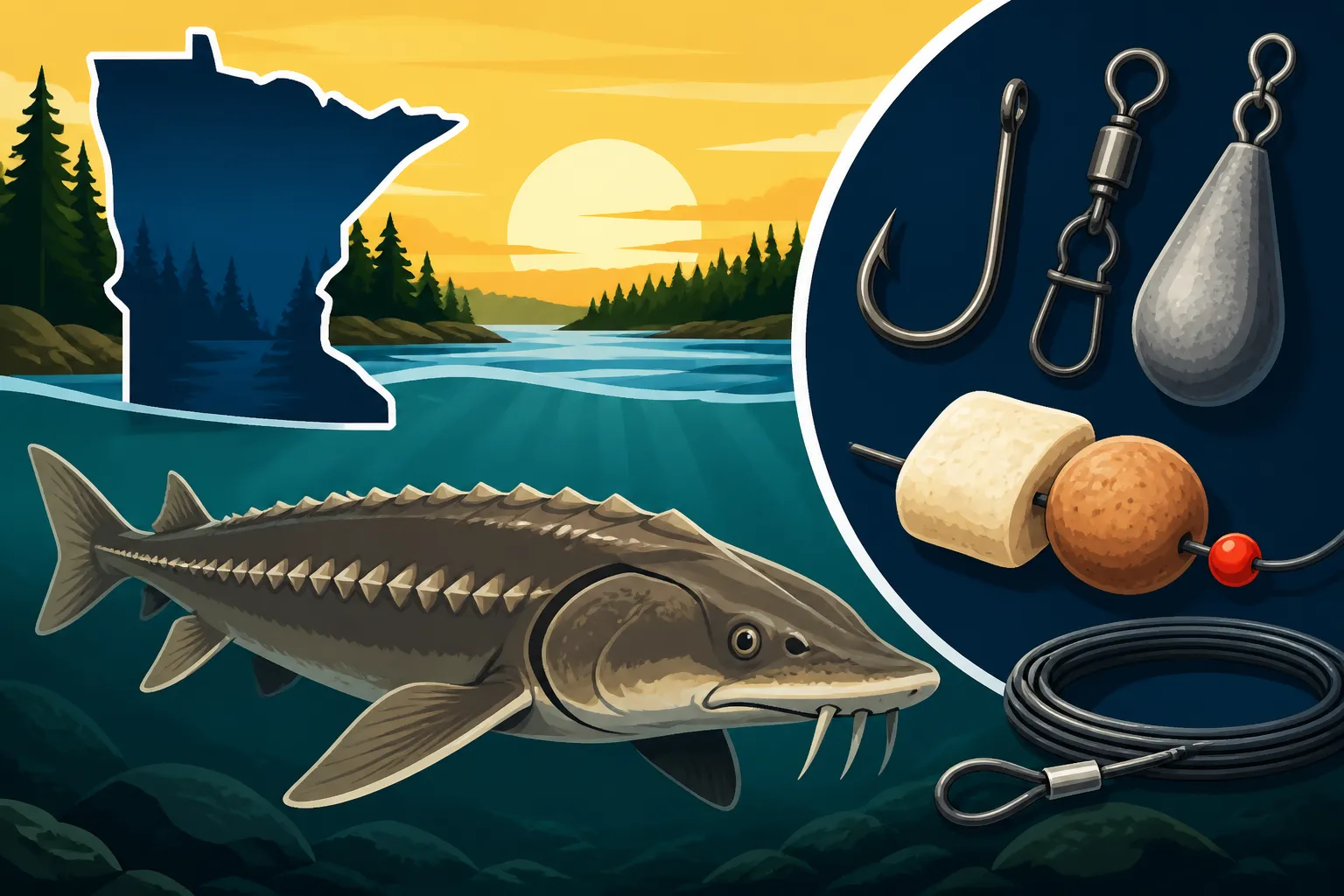
Before we dive into the specific gear, it’s crucial to understand the fish you’re after. Lake Sturgeon are unlike most other species you'll encounter in Minnesota waters. They're bottom feeders, often found in deep, slow-moving sections of rivers and larger lakes, and they can grow to truly epic proportions, easily exceeding 50 pounds and sometimes topping 100 or even 200 pounds! Their powerful, cartilaginous mouths, armored bodies, and incredible stamina mean your tackle needs to be robust, reliable, and able to withstand a prolonged, brutal fight.
Why Standard Tackle Just Won't Cut It
Imagine hooking into a 70-pound fish with a medium-heavy bass rod. You'd quickly realize your mistake. Standard fishing gear, designed for typical game fish like walleye or northern pike, simply isn't built to handle the sustained pressure and sheer power of a large sturgeon. Their fighting style is less about quick runs and more about deep, relentless pulls, often hugging the bottom and using the current to their advantage. A flimsy rod will snap, a light reel's drag will burn out, and weak line will part under the strain. You need a setup that can take a serious beating and still have gas in the tank. To learn more about these incredible fish, check out our guide on Lake Sturgeon in Minnesota: Rainy River Giants.
Key Sturgeon Fishing Locations in Minnesota
While Lake Sturgeon populations are recovering thanks to conservation efforts, their primary strongholds in Minnesota are specific river systems. The Rainy River, which forms part of the border with Ontario, is arguably the most famous sturgeon fishery, particularly during the spring and fall. The St. Croix River, another significant border water, also offers excellent opportunities. Additionally, portions of the Mississippi River hold good numbers of sturgeon. These rivers typically feature deep channels, strong currents, and plenty of gravel or sand flats where sturgeon forage. Understanding these environments helps inform your tackle choices, as you’ll need gear capable of casting heavy weights and enduring powerful currents. For specific rules, it's always wise to review the Lake Sturgeon Regulations & Tag in Minnesota before you go.
Rods and Reels: The Backbone of Your Setup
When targeting Lake Sturgeon, your rod and reel aren't just tools; they're your primary weapons in a heavy-weight battle. Skimping here will lead to disappointment and potentially lost fish. You need power, durability, and capacity.
Heavy-Duty Rods for Serious Fights
Forget about "medium" or "medium-heavy" actions. For sturgeon, you're looking for heavy to extra-heavy power rods, typically 7 to 9 feet in length. The longer length helps with casting heavy baits and weights, provides better leverage during a fight, and helps keep your line out of snags in strong currents.
- Power and Action: An extra-heavy power rod with a moderate-fast action is ideal. The "extra-heavy" power provides the backbone needed to turn a big fish and withstand immense pressure, while the "moderate-fast" action offers enough flex in the upper half of the rod to absorb the shock of head shakes and deep lunges, preventing hooks from tearing out and line from snapping prematurely. A good example might be a specialized catfish rod, as they often share similar characteristics needed for big, strong bottom-dwelling fish. Brands like Ugly Stik or Penn often make affordable, incredibly durable rods that fit the bill.
- Material and Construction: Graphite composite or fiberglass rods are excellent choices. Fiberglass offers incredible durability and a more parabolic bend, which can be advantageous for absorbing heavy runs. Composite rods offer a good blend of sensitivity and power. Look for rods with strong, double-footed guides that can handle heavy braided line without wear. A comfortable, extended handle is also a must, giving you plenty of leverage when you're locked in a tug-of-war. If you're looking for more general rod advice, our guide on Best Walleye Rods & Reels might offer some transferable insights on quality construction.
Matching Reels for Incredible Torque and Line Capacity
Your reel needs to be just as robust as your rod, if not more so. A large conventional (baitcasting) reel is generally preferred over a spinning reel for sturgeon due to its superior cranking power, durability, and line capacity.
- Conventional Reels: Look for heavy-duty conventional reels with a robust gear system and a smooth, powerful drag. Models in the 30-50 size range (like an Ambassadeur 7000 series or Penn Squall) are excellent choices.
- Drag System: This is paramount. You need a drag that can be set incredibly tight without becoming jerky or sticking, allowing the fish to take line when necessary but applying constant, even pressure. Carbon fiber drag washers are a big plus for their smoothness and heat dissipation.
- Line Capacity: A large spool is essential. Sturgeon fishing requires heavy line, and large fish can make long runs. You'll want a reel that can comfortably hold at least 200-300 yards of 60-80 lb braided line, especially on big rivers like the Rainy River where fish can really pull.
- Gear Ratio: A lower gear ratio (e.g., 4.0:1 to 5.0:1) is often preferred for more cranking power, which is invaluable when battling a stubborn sturgeon that's trying to hug the bottom.
- Spinning Reels (If Preferred): While less common, a very large, heavy-duty spinning reel can work if you prefer that style. You'd be looking at sizes equivalent to 8000-10000 or even 12000 in brands like Penn, Shimano, or Daiwa. The key here is an incredibly strong metal body, a stout bail, a bulletproof drag, and massive line capacity. Be prepared for a tougher fight against the current and heavier weights with a spinning reel, as conventional reels typically offer more direct cranking power. You can often find great deals on these larger reels at places like Bass Pro Shops or even through Amazon.
Terminal Tackle: Built for Battle
The connection between your line and the fish is where the battle truly happens. Every component of your terminal tackle needs to be up to the task – from the hook that grabs the fish's mouth to the weight that holds your bait in the current.
Choosing the Right Hooks for Sturgeon Mouths
Sturgeon are unique bottom feeders with soft, cartilaginous mouths. This means you need a hook that is incredibly strong, very sharp, and designed for good penetration without tearing out.
- Circle Hooks are King: Absolutely opt for large, heavy-duty circle hooks. Sizes typically range from 5/0 to 10/0, depending on the bait size and target fish. Circle hooks are fantastic for sturgeon for several reasons:
- Safety: They are designed to hook in the corner of the fish's mouth, minimizing deep hooking and making catch-and-release much safer and easier, which is critical for a protected species like Lake Sturgeon.
- Self-Setting: Once a sturgeon picks up the bait and swims away, the circle hook usually rotates and sets itself. You don't need a hard "hook set" – just tighten the line and start reeling.
- Strength: Choose hooks made from heavy-gauge wire, like Gamakatsu Octopus Circle or Owner Mutu Light Circle hooks. These won't straighten out under the immense pressure of a big sturgeon.
- J-Hooks (Use with Caution): Some anglers still use large, strong J-hooks (e.g., 8/0 to 12/0), but they require a very precise and often aggressive hook set and carry a higher risk of deep hooking, which can harm the fish. If you do use them, ensure they are incredibly sharp and heavy-duty. However, for the health of these magnificent fish, circle hooks are highly recommended, especially since sturgeon fishing in Minnesota is often catch-and-release.
Leaders and Mainline: Strength and Abrasion Resistance
Your line and leader are the literal connection to your trophy. They need to be incredibly strong and resistant to abrasion.
- Mainline (Braid Preferred): Braided line is the go-to choice for sturgeon fishing.
- Strength: Use 60-80 lb test braided line. This might seem like overkill, but it provides the necessary breaking strength for huge fish and casting heavy weights in strong currents.
- Sensitivity: Braid has virtually no stretch, which means incredible sensitivity. You'll feel every subtle bite, even with a lot of line out and heavy current.
- Abrasion Resistance: While braid is strong, it can be susceptible to abrasion from rocks or sharp objects on the bottom. This is where a good leader comes in.
- Leaders (Heavy Mono or Fluoro): A heavy monofilament or fluorocarbon leader is essential to absorb shock, provide abrasion resistance, and offer some stealth.
- Material: 80-100 lb test monofilament or fluorocarbon is standard. Monofilament offers more stretch and is more abrasion resistant than braid, while fluorocarbon is nearly invisible underwater and also highly abrasion resistant. Some anglers even use braided steel leaders, particularly if northern pike are prevalent, though sturgeon typically don't cut line.
- Length: A leader of 2-4 feet is common. This length provides a buffer zone between your mainline and the bait, absorbing the shock of the sturgeon's initial run and protecting your main line from rubbing on the bottom.
- Connection: Connect your leader to your mainline using a strong knot like a FG knot, Alberto knot, or a heavy-duty swivel. You'll want to avoid knots that can slip under extreme pressure. Learning how to tie a good connection is as important as the line itself. Our guide on Lake Sturgeon Season & Limit in Minnesota provides a good overview of the regulations you'll need to follow once you're out there.
Selecting Weights to Hold the Bottom
Sturgeon are bottom feeders, and in often-swift river currents, keeping your bait on the bottom is critical. This means using heavy weights.
- Weight Types:
- Pyramid Sinkers: These are a popular choice because their shape digs into the bottom, providing excellent holding power in current.
- No-Roll Sinkers: Flatter on two sides, these also resist rolling in current.
- Heavy Bell Sinkers: While they can roll more easily, bell sinkers are still effective in moderate currents.
- Weight Size: You'll typically need weights ranging from 3 to 8 ounces, and sometimes even heavier (up to 12 ounces or more) in extremely strong currents or very deep water. Always bring a variety of sizes so you can adjust to conditions. The goal is to use just enough weight to hold your bait firmly on the bottom without it rolling downstream. You can often find a good selection of these heavy weights at fishing stores or even online on Amazon.
The Best Baits for Attracting Sturgeon
Sturgeon have an incredible sense of smell and a preference for natural, often pungent baits. They are scavengers, so fresh bait with a strong scent trail is key.
The Power of Live Bait and Cut Bait
These are by far the most effective options for tempting a hungry Lake Sturgeon.
- Nightcrawlers: A large gob of fresh nightcrawlers (often 6-10 worms threaded onto a single hook) is a classic and highly effective bait. The wriggling mass creates movement and a natural scent trail that sturgeon find irresistible.
- Cut Bait: Fresh cut bait, especially oily species, can be a sturgeon magnet.
- Suckers or Ciscoes: These local fish, cut into chunks or strips, release a strong scent.
- Smelt: Their oily nature and strong smell make them excellent cut bait.
- Minnows (large fatheads or shiners): While often used for other species, large minnows or chunks of them can also work for sturgeon.
Always ensure your cut bait is fresh; stale bait rarely gets results. The strong scent profile is crucial for attracting these bottom-dwellers. While this article focuses on sturgeon, you might find some crossover in bait discussions in our Best Live Bait for Walleye (Leeches, Minnows, Crawlers) guide.
Other Effective Sturgeon Baits and Scent Attractants
While live and cut bait are primary, some other options can also produce.
- Dead Baits: Whole dead baitfish, like a large sucker or smelt, can sometimes be effective, especially if slightly bruised to release more scent.
- Sturgeon Baits (Commercial): Some manufacturers offer commercially prepared sturgeon baits, often in paste or nugget form, designed to release a strong scent. While these can work, they often don't outperform fresh cut bait.
- Scent Attractants: Adding a strong, fishy scent attractant to your bait, especially if using a less pungent option, can significantly increase your chances. Scents like garlic, anise, or specific fish oils can mask human scent and add to the bait's appeal. Apply them generously to your nightcrawlers or cut bait. Remember, sturgeon rely heavily on their sense of smell to locate food on the river bottom.
Putting it All Together: Rigging Techniques
Having all the right tackle components is one thing; putting them together effectively is another. The most common and effective rig for Lake Sturgeon is a simple bottom rig designed to keep your bait stationary and accessible on the riverbed.
The Basic Bottom Rig for Sturgeon
This rig is straightforward, effective, and minimizes snags while maximizing your chances of a hookup.
- Mainline: Begin by running your braided mainline from your reel.
- Sliding Sinker: Thread your heavy pyramid or no-roll sinker directly onto your mainline. The key here is for the sinker to be able to slide freely. This allows the sturgeon to pick up the bait and move off without immediately feeling the resistance of the heavy weight, giving you more time for the circle hook to do its job.
- Swivel: Tie a heavy-duty barrel swivel (rated for at least 100-150 lbs) to the end of your mainline, directly below the sliding sinker. This swivel serves two purposes: it prevents line twist, and more importantly, it stops the sliding sinker from reaching your hook, acting as a "stop" for your weight.
- Leader: To the other end of the swivel, tie your 2-4 foot heavy monofilament or fluorocarbon leader.
- Hook: Finally, tie your large circle hook to the end of your leader. A Palomar knot or an improved clinch knot are good, strong choices for this connection.
This setup allows your bait to move naturally with the current a bit, while the weight holds the entire rig in place. It's an incredibly effective presentation for sturgeon. If you're planning a trip to the Rainy River, understanding these rigs is essential for success. You can find more detailed information in our article Sturgeon Fishing on the Rainy River: What to Know.
Essential Accessories for Sturgeon Anglers
Beyond the core rod, reel, line, and terminal tackle, a few accessories will make your sturgeon fishing experience safer, more comfortable, and more successful.
- Heavy-Duty Rod Holders: When fishing with heavy weights in strong currents, your rod can take a beating. Sturdy, bank-mounted rod holders (often made from metal rebar or heavy-gauge steel) are absolutely essential to keep your rod secure when a sturgeon hits. Many anglers prefer rod holders that angle the rod tip toward the water to minimize current drag on the line.
- Large Landing Net or Cradle: Landing a giant sturgeon is challenging. A very large, rubberized landing net (to protect the fish's slime coat) or a specialized sturgeon cradle is crucial for safely bringing the fish to shore or into the boat. Do not try to lift a large sturgeon by the line or with inadequate gear; it risks harming both the fish and yourself.
- Long-Nosed Pliers/Hook Remover: Even with circle hooks, you'll need sturdy, long-nosed pliers to safely remove hooks.
- Scale and Measuring Tape: If you plan to weigh or measure your catch (for bragging rights, photos, or data for catch-and-release programs), bring a heavy-duty scale and a flexible measuring tape. Our guide on Lake Sturgeon Size, Age & Records has some interesting facts about how big these fish can get!
- Bait Cooler: Keep your nightcrawlers lively and your cut bait fresh by storing them in a small cooler with ice, especially on warm days.
- Comfortable Chair: Sturgeon fishing often involves a lot of waiting. A comfortable chair can make a world of difference during those long stretches between bites. For more generalized advice on setting up your gear, you might also find our article on Best Fishing Gear for Beginners in Minnesota (By Budget) helpful, especially for other useful accessories.
- Fishing PFD (Personal Flotation Device): Safety first! Especially when fishing near strong currents, wearing a PFD is always a good idea. Brands like Mustang Survival or Onyx offer comfortable options.
Tackle Recommendations at a Glance
Here’s a quick summary of the tackle recommendations for Lake Sturgeon in Minnesota:
| Tackle Component | Recommended Specification | Why It's Important |
|---|---|---|
| Rod | 7-9 ft, Extra-Heavy Power, Moderate-Fast Action | Power for large fish, leverage, casting heavy weights, shock absorption. |
| Reel | Large Conventional (30-50 size) or Heavy Spinning (8000+ size) | Superior cranking power, high line capacity, robust and smooth drag. |
| Mainline | 60-80 lb Braided Line | Extreme strength, zero stretch for sensitivity, high abrasion resistance. |
| Leader | 80-100 lb Monofilament or Fluorocarbon (2-4 ft) | Shock absorption, abrasion resistance from bottom, stealth. |
| Hooks | 5/0 – 10/0 Heavy-Duty Circle Hooks | Safe mouth hooking, self-setting, won't straighten under pressure. |
| Weights | 3-8 oz Pyramid or No-Roll Sinkers (bring variety) | Holds bait on bottom in strong current, allows fish to take bait without resistance. |
| Primary Bait | Large Gob of Nightcrawlers, Fresh Oily Cut Bait | Strong scent trail, natural presentation, irresistible to bottom-feeding sturgeon. |
With this tackle in hand, you’re not just ready to fish; you're ready for an epic encounter. Remember to always handle these magnificent creatures with care, especially during the release. For more details on catching methods, be sure to check out How to Catch Lake Sturgeon in Minnesota (Step by Step).
Disclaimer
Fishing regulations, seasons, and limits can change. It is always the angler's responsibility to check the most current Minnesota Department of Natural Resources (DNR) regulations before heading out on the water. This guide is for informational purposes only and does not replace official DNR publications.