Best Tackle for Yellow Perch in Minnesota
It's incredibly frustrating when you're out on the water or ice, targeting those tasty yellow perch, and just can't seem to entice a bite. You see others pulling them in, and you're left wondering if your tackle is all wrong. Don't worry, you're not alone! This comprehensive guide is here to demystify the world of yellow perch tackle in Minnesota, ensuring you have the right gear to fill your bucket on your next outing.
Understanding Yellow Perch Behavior in Minnesota
Before we even talk about specific lures or rods, it's crucial to grasp a bit about yellow perch themselves. These feisty, delicious panfish are common throughout Minnesota, from the vast expanses of Lake of the Woods down to smaller, local lakes. Their behavior, however, shifts significantly with the seasons and the specific environments they inhabit. Knowing why they're where they are and what they're looking for will fundamentally change how you choose your tackle.
Seasonal Movements and Feeding Habits
Yellow perch are true opportunists, and their diet and location change throughout the year. In the spring, after the ice recedes, perch often move into shallower, warmer waters to spawn. During this time, they might be found near emergent vegetation or hard-bottomed areas, actively feeding on insect larvae, small minnows, and crustaceans to regain energy. This post-spawn period can offer some fantastic fishing, as they are often aggressive.
As summer progresses and water temperatures rise, perch tend to migrate to deeper, cooler sections of lakes. You'll find them congregating around structural elements like deep weed lines, rock piles, submerged humps, and even basin areas where they can ambush baitfish. Their feeding windows can be shorter during the heat of summer, often preferring low-light conditions early mornings, late evenings, or even cloudy days. Tackle choice then shifts to presentations that can reach these deeper zones efficiently and entice a wary bite.
Come fall, as the water cools, perch will often move shallower again, exhibiting a burst of feeding activity to bulk up for winter. They can be found in similar locations to spring, but often more spread out, following schools of baitfish. Finally, during the long Minnesota winter, perch are masters of survival, often schooling tightly on distinct structures or roaming large basin areas, feeding on whatever they can find, including tiny invertebrates and even other small fish. This is when finesse and precise tackle become paramount, as their metabolism slows, and bites can be incredibly subtle. Understanding these patterns is key to knowing what you need.
Ideal Perch Habitats and Structure
Yellow perch are structure-oriented fish, meaning they relate strongly to changes in the lake bottom or vegetation. In many Minnesota lakes, especially those with good fertility, they thrive in areas with abundant weed growth. Think expansive flats with cabbage, coontail, or even sparse milfoil. These weeds provide cover from predators, a rich food source of invertebrates, and ambush points for smaller baitfish. When fishing these areas, your tackle needs to be somewhat snag-resistant, or at least easily retrievable from vegetation.
Beyond weeds, perch also gravitate towards hard-bottom structures. Rock reefs, gravel points, submerged humps, and even old cribs or brush piles are prime real estate for them. These areas often hold crayfish and other benthic organisms that perch love to feast on. Here, a vertical presentation with jigs or spoons that can be "pounded" on the bottom to stir up sediment can be incredibly effective. Knowing the specific kind of bottom and structure you're fishing helps you fine-tune your lure choice and presentation. If you're looking for Yellow Perch: Where to Find Jumbo Perch, paying close attention to these habitat cues will be your best bet.
Finally, don't overlook basin areas, especially in larger, deeper lakes like Lake Mille Lacs or Winnie. Perch will often suspend over vast open water, following schools of tullibees or other baitfish. This can be a challenging pattern to crack, requiring mobile approaches and good electronics to locate these nomadic schools. When they are in the basin, presentations that mimic small baitfish, often presented vertically or trolled slowly, become the go-to. This variety in habitat means a versatile tackle box is a perch angler's best friend.
Essential Rods and Reels for Perch Anglers
When it comes to tackle, the rod and reel are your direct connection to the fish. For yellow perch, precision and sensitivity are the names of the game. You're not usually fighting huge, line-stripping monsters, so the focus is on feeling those light bites and delivering delicate presentations.
Rod Power, Action, and Length Considerations
For yellow perch, an ultralight rod is almost always the answer. What does "ultralight" truly mean? It refers to the rod's power, which is its ability to lift weight. An ultralight rod is designed for very light lines (2-6 lb test) and small lures (1/32 to 1/8 oz, sometimes up to 1/4 oz). This light power allows the rod to load effectively with minimal weight, making casting those tiny jigs much easier and detecting subtle bites incredibly clear. Imagine a perch barely mouthing your bait; an ultralight rod will telegraph that tiny "tick" up the line, whereas a heavier rod might miss it entirely.
Next up is rod action, which describes where the rod bends when pressure is applied. For perch, a fast or extra-fast action is highly recommended. A fast action rod bends mostly in the top third of the blank, providing a very sensitive tip for detecting bites and a strong backbone for quick, powerful hook sets. This is crucial when fishing tiny jigs or spoons, as a delayed hook set can mean missing the fish. A medium-light power with a fast action can also be a versatile choice, offering a little more backbone if you happen to hook into a bonus walleye or small northern pike while perch fishing. Rod length also plays a role: for open water, a 5'6" to 6'6" spinning rod offers a good balance of casting distance and maneuverability. For ice fishing, specialized shorter rods, typically 24-30 inches, are designed for sensitivity in a tight space, allowing you to quickly get fish out of the hole. If you're exploring Best Ice Fishing Rods for Walleye & Panfish, many of those principles apply directly to perch, just leaning towards the lighter end of the spectrum.
Spinning Reel Selection and Line Choices
Pairing your ultralight rod with the right spinning reel is just as important. For perch, you'll want to look at 500 or 1000 series spinning reels. These are the smallest sizes available and are perfectly matched to the light lines and small lures used for perch. A good reel in this size range will have a smooth drag system, which is essential for protecting light lines when a surprisingly large perch, or even an accidental walleye, decides to test your gear. Brands like Shimano, Daiwa, and Pflueger offer excellent options that are durable and reliable for years of fishing. You can often find great deals on these smaller reels at retailers like Bass Pro Shops or even online through Amazon.
Regarding line, you have a few excellent choices, each with its own advantages. Monofilament is a classic for a reason; its stretch provides a forgiving cushion for light bites and can help prevent hooks from pulling out of a perch's soft mouth. Two to four-pound test monofilament is ideal for most perch situations. Fluorocarbon is much less visible underwater and has less stretch than mono, offering enhanced sensitivity and direct connection to your lure. Many anglers will use a 4-6 lb fluorocarbon main line or, more commonly, a fluorocarbon leader tied to a braided main line.
Ah, braid! Braided line offers superior strength-to-diameter ratio and virtually no stretch, providing incredible sensitivity. You can feel every bump, every weed, and every subtle bite. A 4-6 lb test braided line (which has the diameter of 1-2 lb mono) is excellent as a main line, but because it's so visible and doesn't stretch, it's almost always paired with a 2-4 lb fluorocarbon leader. This combination gives you the best of both worlds: sensitivity and casting distance from the braid, and stealth from the fluorocarbon. Remember, perch have keen eyesight, especially in clear water, so stealth is key.
Top Lures and Baits for Minnesota Yellow Perch
This is where the fun begins! The world of perch lures is vast, but a few categories stand out as perennial producers in Minnesota waters. The key is often matching the hatch – presenting something that looks and acts like the natural forage available to the perch.
Jigs and Spoons for All Seasons
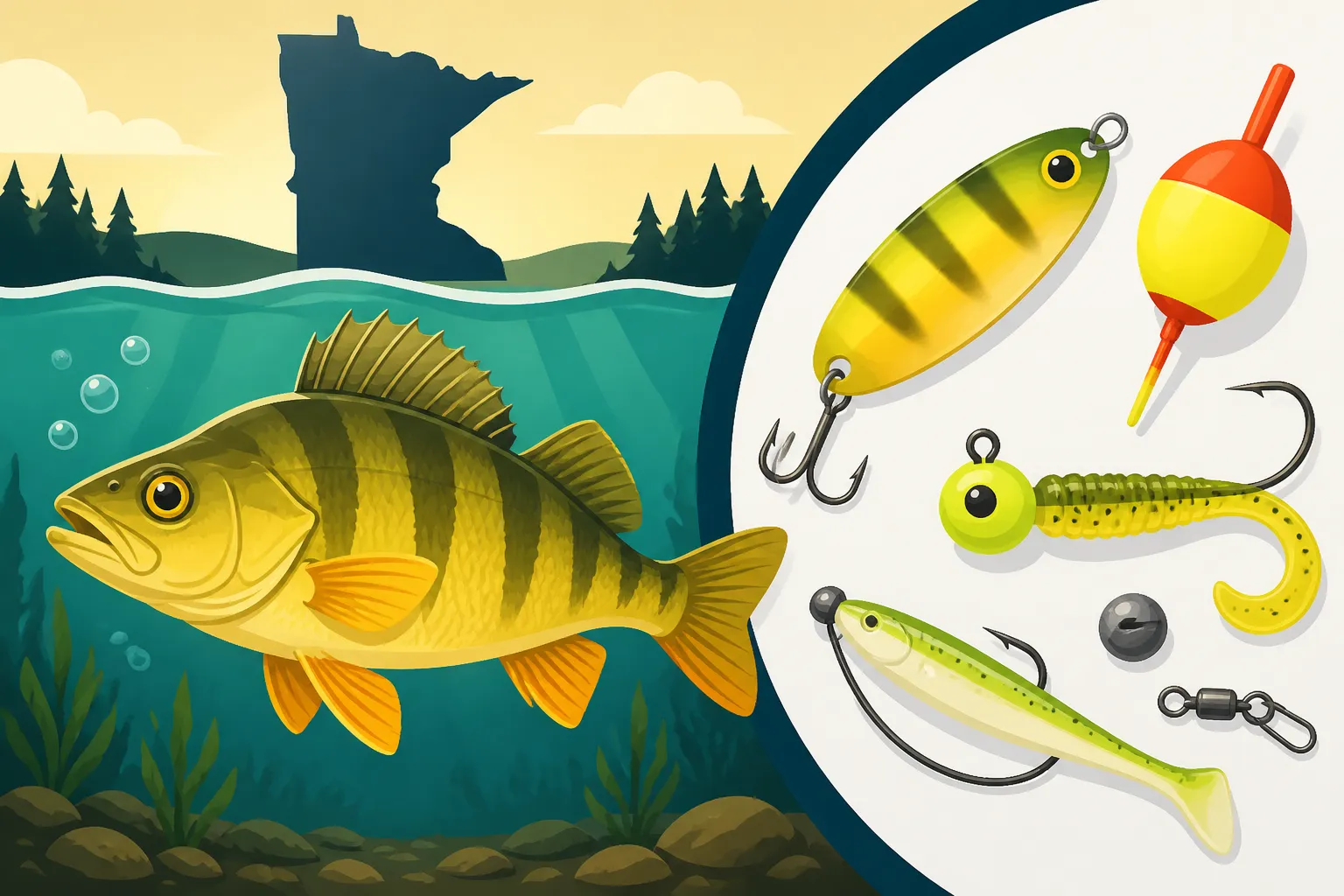
When you talk about perch fishing, jigs and spoons are practically synonymous with success, whether you're fishing open water or through the ice. Small lead-head jigs, typically 1/32 to 1/8 ounce, are incredibly versatile. Tipped with a small minnow, a piece of plastic, or even just a few wax worms, they can be cast and retrieved, slowly dragged along the bottom, or vertically jigged. Color choices are important; natural colors like brown, green, and black work well in clear water, while brighter colors like chartreuse, orange, and glow can be deadly in stained water or low-light conditions.
Tungsten jigs have revolutionized panfish fishing, especially for ice anglers. Because tungsten is much denser than lead, a tungsten jig can be significantly smaller in profile for the same weight, meaning it falls faster and appears more natural to wary perch. These often come in sizes as tiny as 1/50 to 1/16 ounce. Paired with a single or a few maggots (spikes) or wax worms, they are absolute killers for finicky winter perch. Many Best Tungsten Jigs for Panfish are designed with perch in mind.
Spoons are another category that excels for perch. Slender spoons, like the classic Swedish Pimple or a slender Kastmaster, flutter enticingly on the fall, mimicking a dying baitfish. Small tear drop spoons are also fantastic, especially for ice fishing, as they can be tipped with bait and provide a subtle profile. For more aggressive presentations, particularly when perch are chasing schools of minnows, a Rattle Spoon can draw fish in from a distance with its built-in sound chamber. Again, colors should vary with water clarity and light conditions, but chrome, gold, white, and fire tiger patterns are often consistent producers. The key with spoons is to let them do their work on the fall, allowing them to flutter and enticing a reaction strike.
Live Bait and Soft Plastics Rigging
Sometimes, nothing beats the real thing. Live bait remains a staple for yellow perch anglers for a simple reason: it works. Minnows, particularly small fatheads or shiners, are often irresistible to perch. You can rig a minnow in several ways: hooked lightly through the lips for a natural swimming action under a bobber, or hooked through the back just behind the dorsal fin when still fishing or jigging. A lively minnow struggling on the hook is often the perfect trigger.
Wax worms and maggots (spikes) are another pair of perch magnets, especially when fishing small jigs. Threading one or two wax worms onto a tiny jig adds scent, bulk, and a tempting wriggling action that perch can't ignore. For truly finicky fish, a single spike can be the difference-maker. These baits are particularly effective in colder water when perch metabolisms are slower, and they prefer an easy meal.
Beyond live bait, the world of soft plastics offers incredible versatility and durability. Tiny grubs, micro plastics shaped like minnows, worms, or insect larvae, can be deadly when threaded onto a small jig head. The advantage here is that they stay on the hook better than live bait, can be fished more aggressively, and come in an endless array of colors and scents. Some popular options include small Berkley Gulp! Alive! minnows or crappie grubs, which release a strong scent to attract fish. Experimenting with different shapes, sizes, and colors of these micro plastics can often unlock a hot bite. For general Crappie & Panfish Fishing Techniques, many soft plastic approaches translate directly to perch.
Terminal Tackle and Accessories
The little things often make a big difference in perch fishing. Your terminal tackle – the stuff connecting your line to your lure – needs to be light and unobtrusive. Small, high-quality barrel swivels or interlock snaps can prevent line twist, especially when using spoons or small spinners, and allow for quick lure changes. Keep your sinkers minimal; small split shot is usually sufficient to get your bait down.
Bobbers are an absolute must for many perch situations. For shallow water or when targeting suspended fish, a small, sensitive slip bobber allows you to present your bait at a precise depth without spooking fish. Brands like Thill or Palsa make excellent choices. The goal is to use the smallest bobber that will adequately support your bait without hindering a bite. When a perch takes the bait, you want that bobber to disappear with minimal resistance.
Finally, a few accessories will make your perch fishing much more enjoyable. A good pair of forceps or needle-nose pliers is essential for safely removing hooks from perch mouths, as they often swallow small baits deep. A small, fine-mesh landing net can help you secure those jumbo perch, especially if you're using light line. And don't forget a sharp knife and a cooler with ice if you plan on keeping some of those delicious fillets! For beginners putting together their tackle box, looking at a guide like Best Fishing Gear for Beginners in Minnesota By Budget can help get you started with these essentials.
Specialized Tackle for Ice Fishing Perch
Ice fishing for yellow perch is a quintessentially Minnesotan experience. It demands a particular set of tackle and techniques to effectively target these schooling fish through a small hole in the ice. The subtlety required often means even more specialized gear.
Ice Rod and Reel Pairings
When you're peering down an ice hole, your rod and reel setup changes significantly from open water. Ice rods are much shorter, typically ranging from 24 to 36 inches. This shorter length is crucial for maneuverability inside an ice shelter and for quick hook sets and landing fish right at the hole. The most important feature of an ice rod for perch is its sensitive tip. Many ice rods have a spring bobber or an ultra-light carbon fiber tip that visibly flexes with the lightest touch, allowing you to detect those incredibly subtle "up bites" or tiny pressure changes that indicate a perch has inhaled your bait.
Pair these sensitive rods with equally small, lightweight micro spinning reels. A 500 series reel is often perfect, offering a smooth drag and precise line control. The small arbors on these reels also help minimize line memory, which is a common issue in cold weather. It’s important to match the rod's power to your target species; for perch, an ultra-light or light power ice rod is the only way to go. This ensures you feel every slight movement of your lure and every peck of a hungry perch. When the Ice Fishing for Perch in Minnesota bite is tough, sensitivity is everything.
Flashers and Underwater Cameras
While not technically "tackle" in the traditional sense, electronics are an absolute game-changer for ice fishing perch and are almost considered essential gear by many seasoned anglers. A flasher, such as models from Vexilar or Humminbird Ice Helix, provides real-time sonar feedback, showing you the depth, the bottom, your lure, and any fish swimming beneath. Being able to see a school of perch approach your lure, and then precisely adjust your presentation to entice a bite, is incredibly powerful. You can tell if fish are ignoring your bait, actively chasing it, or barely nudging it, allowing you to adapt on the fly. Knowing How to Read a Flasher Vexilar/Humminbird is a skill worth developing for ice fishing.
Underwater cameras are another fantastic tool, especially for visual learners or when fishing with kids. Brands like Aqua-Vu offer portable camera systems that let you literally see the perch interacting with your lure. This can be invaluable for understanding how fish are reacting to different colors, bait sizes, or jigging actions. Sometimes, you'll see perch follow your lure but refuse to bite, giving you clues to change tactics. While not always necessary, a camera adds a whole new dimension to understanding what's happening below the ice.
Ice Fishing Baits and Presentations
The specific baits for ice fishing perch largely overlap with open water, but the presentation often becomes more critical. Tungsten jigs, as mentioned before, truly shine here. Their small profile and fast drop rate make them perfect for working small holes. Tip them with a couple of maggots, a single wax worm, or a small piece of a minnow tail. The "deadstick" technique is also incredibly effective: one rod active jigging, and another "deadsticked" with a small spoon or jig tipped with a minnow suspended just off the bottom. Perch will often hit the deadstick after being drawn in by the active rod.
Small vertical jigs and spoons also have their place. A small Northland Forage Minnow or a Custom Jigs & Spins Ratfinkee, tipped with bait, can be jigged aggressively to draw fish in, then slowly lowered and presented subtly to get them to commit. The action during ice fishing is typically more subdued than open water, often relying on subtle lifts, drops, and pauses. The "pound and pause" method—gently tapping your lure on the bottom to stir up sediment, then letting it sit—can also be incredibly effective at attracting perch to your location. When considering How to Catch Yellow Perch Through the Ice in Minnesota, these techniques are often highlighted as crucial for success.
Seasonal Perch Tackle Guide
| Season | Rod & Reel | Main Line / Leader | Primary Lure Types | Recommended Live Bait | Key Presentation |
|---|---|---|---|---|---|
| Spring | UL spinning (5'6"-6'6") | 4-6lb mono or 4lb fluoro/braid | Small jigs (1/16-1/8 oz), soft plastics, small spinners | Fathead minnows, wax worms | Slow retrieve, bobber fishing, light jigging |
| Summer | UL spinning (6'-7') | 4-6lb fluoro/braid with leader | Small jigs (1/8-1/4 oz), spoons, small crankbaits | Minnows, leeches (small) | Vertical jigging deep structure, slow trolling, slip bobbers |
| Fall | UL spinning (5'6"-6'6") | 4-6lb mono or 4lb fluoro/braid | Small jigs, spoons, small crankbaits, slip bobber rigs | Minnows, wax worms | Active searching, casting points, slip bobber over weed edges |
| Winter | UL ice rod (24"-30") | 2-4lb mono or 2-4lb fluoro/braid | Tungsten jigs (1/50-1/16 oz), small spoons | Maggots, wax worms, minnow heads | Finesse jigging, deadsticking, sight fishing with electronics |
Disclaimer
Fishing regulations can change frequently. Always consult the latest Minnesota Department of Natural Resources (DNR) fishing regulations handbook before heading out on the water to ensure compliance with all current rules, including season dates, bag limits, and any special regulations for specific lakes.