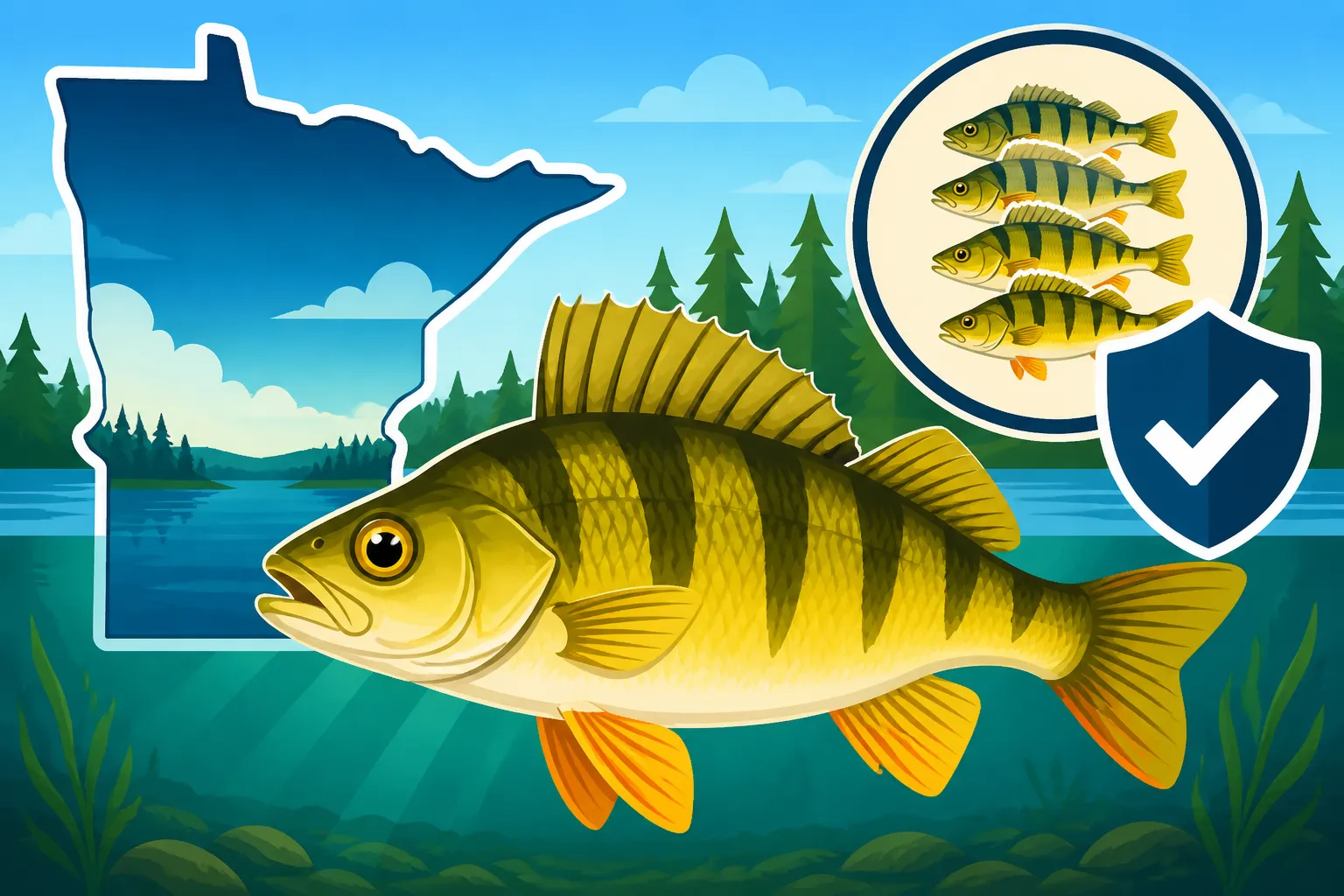
Yellow Perch Season & Limits in Minnesota
Trying to figure out the exact rules for yellow perch in Minnesota can feel like navigating a tangled fishing line sometimes. It’s not always as straightforward as you'd hope, especially when you consider how many beautiful lakes and rivers we have. This comprehensive guide is here to untangle all that confusion, breaking down the specific seasons and limits for yellow perch across the state so you can enjoy your time on the water without any worries.
Understanding Yellow Perch Fishing Regulations in Minnesota
Minnesota is a land of 10,000 lakes, and with that incredible abundance comes a responsibility to manage our fisheries wisely. Yellow perch, often affectionately called "ring-perch" or just "perch," are a staple for many anglers, especially during the ice fishing season. They're fun to catch, readily available, and make for some fantastic eating. But because they're so popular and can be found almost everywhere, the Minnesota Department of Natural Resources (DNR) has put regulations in place to ensure their populations remain healthy for generations to come.
These regulations aren't just arbitrary rules; they're based on scientific data, population assessments, and angler input. The goal is always conservation, balancing the joy of fishing with the need to protect the resource. This means understanding the "why" behind the rules can make them a lot easier to remember and follow.
Why Perch Regulations Matter
You might wonder why such seemingly small fish like yellow perch need specific rules, especially when they seem so plentiful. The truth is, yellow perch play a vital role in Minnesota's aquatic ecosystems. They are a primary forage fish for many larger predators like walleye and northern pike, and they're also a popular target species themselves. Overharvesting in specific lakes, or even across regions, could have a ripple effect, impacting the health of other fish populations and the overall balance of the lake.
Think about a small, isolated lake where perch grow exceptionally large – "jumbos" as we call them. Without limits, a few motivated anglers could significantly reduce the number of these larger, more mature fish, which are crucial for maintaining a healthy breeding population. Regulations help distribute the harvest and protect these essential fish from localized depletion. It’s all about maintaining that delicate balance.
Distinguishing Statewide vs. Special Regulations
One of the biggest sources of confusion for Minnesota anglers, myself included, is the difference between statewide regulations and special regulations. When you first pick up that DNR Fishing Regulations booklet (or pull up the PDF on your phone), you'll see a section for statewide rules. These are your baseline, the general guidelines that apply to most waters. However, many lakes, rivers, and even specific sections of water bodies have special regulations that supersede the statewide rules.
These special regulations are often put in place due to unique biological factors in a specific lake, such as a desire to grow bigger fish, protect a struggling population, or manage an overpopulated species. For example, a lake might have a more restrictive bag limit for perch than the statewide rule if the DNR is trying to foster a trophy fishery or rebuild a declining population. It's absolutely critical to always check for these special regulations for the specific body of water you plan to fish before you cast your line.
Statewide Yellow Perch Seasons and Limits
Let's dive into the default, statewide rules for yellow perch in Minnesota. These are the regulations that apply unless a specific lake or river is listed with its own unique rules. For most casual anglers, these will be the rules you primarily follow, but remember, always double-check your specific fishing spot.
The Continuous Yellow Perch Season
One of the best things about fishing for yellow perch in Minnesota is that the season is continuous. What does "continuous" mean in practical terms? It means there's no closed season for yellow perch. You can target them year-round, whether it's the heat of summer, the crisp days of fall, or through the ice in winter. This makes them a fantastic species for anglers of all skill levels, offering opportunities whenever you feel the urge to wet a line.
This continuous season is a testament to the robust nature of yellow perch populations in many of our lakes. They reproduce quickly and adapt well to various environments, which generally allows for year-round angling pressure without significant harm to their overall numbers. So, if you're planning a last-minute trip, or just want to get out on a random Tuesday, perch are always an option!
Statewide Daily Bag and Possession Limits
The statewide daily bag limit for yellow perch in Minnesota is quite generous: 20 fish. This means you can keep up to 20 yellow perch per day. The statewide possession limit is also 20 fish.
Now, let's break down what "bag limit" and "possession limit" truly mean, because this is another area where anglers sometimes get tripped up.
- Daily Bag Limit: This is the maximum number of fish of a particular species you can keep in one calendar day, from midnight to midnight. So, if you start fishing at 6 AM and catch 20 perch by noon, you can't go out and catch another 20 later that same day. Once you've hit your daily limit, you're done for that day.
- Possession Limit: This is the maximum number of fish of a particular species you can have in your possession at any time, whether they're fresh from the lake, stored in your cooler, in your freezer at home, or even cleaned and filleted. For perch, the statewide possession limit is also 20. This means you can't have more than 20 perch total from previous fishing trips combined with your current daily catch.
Let's imagine a scenario: You go out on a Saturday and catch 20 perch, taking them home and filleting them. Then, on Sunday, you want to go fishing again. If the possession limit is 20, you technically cannot keep any more perch until those first 20 are consumed, given away, or otherwise no longer "in your possession." This is a critical distinction, especially for those who like to fish multiple days in a row or stock up their freezer. The general rule of thumb is that your freezer, livewell, or cooler should never exceed the possession limit for any given species, unless those fish are clearly marked as belonging to other licensed anglers.
For a broader understanding of how these limits work for all species, you might find our guide on Minnesota Fishing Limits: Bag & Possession (2026) helpful.
Navigating Special Regulations for Yellow Perch
While the statewide rules offer a good starting point, Minnesota's commitment to species-specific and lake-specific management means that special regulations are common. Ignoring these can lead to fines and penalties, so it’s always best to be informed.
How to Find Lake-Specific Perch Regulations
This is probably the single most important piece of advice any angler can get: always check the specific regulations for the lake or body of water you intend to fish. The best way to do this is to consult the official Minnesota DNR Fishing Regulations. You can find this in a few ways:
- DNR Website: The DNR website has an interactive map and a searchable database where you can look up specific lakes. This is often the most up-to-date source.
- Physical Booklet: Grab a free copy of the DNR Fishing Regulations booklet wherever licenses are sold – bait shops, sporting goods stores, or even some convenience stores. Keep a copy in your tackle box or boat.
- DNR Mobile App: The official DNR app often has a condensed version or links to the full regulations, making it handy on the go.
When you're looking up a lake, pay close attention to the "Special Regulations" section. These will override the statewide rules. For example, many lakes have different length limits or reduced bag limits for walleye, but sometimes these special rules extend to other species like perch, especially if the lake is managed for a trophy fishery or has a specific ecological balance the DNR is trying to maintain.
A good practice is to check the Minnesota Fishing Regulations PDF: Where to Find It every season, as regulations can change from year to year.
Common Types of Special Perch Regulations
While less common for perch than for species like walleye or northern pike, special regulations can still apply. These might include:
- Reduced Bag Limit: Instead of the statewide 20, a lake might only allow 10 or even fewer perch per day/possession. This is often seen in smaller, high-pressure lakes or those where perch populations are being monitored.
- Protected Slot Limits: While rare for perch, a lake could theoretically have a slot limit where fish within a certain size range must be released (e.g., all perch between 8 and 10 inches must be released), while those smaller or larger can be kept. This is usually to protect spawning fish or promote trophy growth.
- No Live Bait Restrictions: Although not a direct bag limit, some lakes have restrictions on using live bait to prevent the spread of aquatic invasive species (AIS). If you can't use your favorite crappie minnows or waxworms, it certainly impacts how you might fish for perch. For more on this, check out Aquatic Invasive Species (AIS) Rules for Boaters.
Let's illustrate with a hypothetical scenario: Imagine you're planning a trip to Big Fish Lake, a small, highly productive lake known for jumbo perch. You check the DNR regulations and find that Big Fish Lake has a special regulation stating: "Yellow Perch: Daily & Possession Limit 10." This means that even though the statewide limit is 20, you can only keep 10 perch from Big Fish Lake. If you also fished a different lake with statewide regs that day, you'd still be limited to a total possession of 20, but only 10 from Big Fish Lake.
It can get a little complicated, but the key is diligence.
Example Table: Statewide vs. Special Regulations (Illustrative)
To help visualize the difference, here's an example of how regulations might look. Remember, these lake-specific examples are purely illustrative and you must check the current DNR regulations for actual, up-to-date information for your chosen lake.
| Regulation Type | Statewide Yellow Perch Rule | Hypothetical "Jumbo Perch Lake" Rule | Hypothetical "Community Pond" Rule |
|---|---|---|---|
| Season | Continuous | Continuous | Continuous |
| Daily Bag Limit | 20 fish | 10 fish | 5 fish |
| Possession Limit | 20 fish | 10 fish | 5 fish |
| Length Limits | None | None (but "jumbos" often targeted) | None |
This table clearly shows how a specific lake's rules can significantly differ from the statewide standard, highlighting the importance of looking it up every time.
Practical Tips for Adhering to Perch Regulations
Staying compliant with fishing regulations isn't just about avoiding fines; it's about being a responsible angler and contributing to the health of Minnesota's fisheries. Here are some practical tips to make sure you're always following the rules.
Measuring Your Catch (When Applicable)
While yellow perch typically don't have length limits, it's a good habit to understand how to properly measure a fish. If a special regulation did include a length limit, you'd measure the total length of the fish from the tip of the snout to the end of the tail, with the fish laid flat on a ruler. Having a sturdy, waterproof measuring board or a tape measure prominently displayed on your boat or tackle box is always a good idea. You can find a variety of reliable fishing rulers and scales on platforms like Amazon.
Even without length limits, many anglers like to measure their perch to identify those "jumbos." Yellow Perch: Where to Find Jumbo Perch often delves into how big these prized fish can get!
Counting Your Catch Accurately
This might seem obvious, but it's easy to lose track, especially if the bite is hot! I've been there, reeling in fish after fish, and suddenly realizing I might be pushing my limit. Here are a few strategies:
- Designated Bucket/Livewell: Keep a separate bucket or section of your livewell for fish you intend to keep. Count them as they go in.
- Clicker Counter: Many anglers use a simple clicker counter, often found at sporting goods stores or online. Click it every time you put a keeper in the bucket.
- Verbal Count: If fishing with others, establish a clear verbal count. "That's three for me!" helps everyone stay aware of their individual limits.
Remember, the daily limit applies per licensed angler, not per boat or group, unless otherwise specified for specific youth licenses. For example, if you and a buddy are fishing, and the limit is 20, each of you can keep 20, for a total of 40 in the boat, provided each angler's catch is identifiable.
Using Proper Catch and Release Techniques
Even when you're targeting perch for the frying pan, some fish might be too small, or you might hit your limit and still want to keep fishing. Practicing proper catch and release is crucial for the survival of those fish you send back into the water.
- Minimize Handling: Try to handle the fish as little as possible.
- Wet Hands: Always wet your hands before touching a fish to protect its slime coat, which is vital for disease resistance.
- Quick Release: Use needle-nose pliers or a hook remover for quick, efficient hook removal. If a fish is deeply hooked, it's often better to cut the line as close to the hook as possible rather than tearing delicate internal organs.
- Support the Fish: When holding a fish for a photo, support its body horizontally, especially larger fish, to avoid damaging its spine or internal organs.
These techniques are good practice for any species, not just perch. Our article on Catch and Release Best Practices in Minnesota offers a deeper dive into this important topic.
Staying Updated with DNR Resources
The Minnesota DNR is your ultimate authority for fishing regulations. They work tirelessly to monitor fish populations and adjust rules as needed. Things can change, sometimes subtly, sometimes significantly.
- Subscribe to Updates: Many anglers subscribe to DNR email newsletters or follow their social media channels for real-time updates on regulation changes, fishing reports, and important notices.
- Check Annually: Make it a habit to review the entire fishing regulations booklet at the beginning of each fishing season, typically in the spring before the major openers like Minnesota Fishing Seasons & Opener Dates (2026). Don't just rely on what you remember from last year.
By staying informed and adhering to these guidelines, you're not just avoiding a ticket; you're actively participating in the conservation efforts that keep Minnesota's fishing traditions alive and well for generations to come. Happy fishing!
Disclaimer
Please remember that fishing regulations are subject to change. While this guide provides a comprehensive overview based on current information, it is your responsibility to consult the official Minnesota Department of Natural Resources (DNR) fishing regulations for the most up-to-date and specific rules for the waters you plan to fish. Always check for special regulations on specific lakes or rivers, as these supersede statewide rules.