Best Tackle for Muskie in Minnesota
Chasing the fish of ten thousand casts across Minnesota’s legendary lakes can test even the most dedicated angler’s patience, especially when a single weak snap, inferior line, or under-gunned leader costs you the trophy of a lifetime. Muskie fishing demands specialized, heavy-duty equipment built to withstand brutal strikes and punishing figure-eight turns. This guide breaks down the best tackle, terminal gear, lures, and handling tools you need to gear up for Minnesota muskies successfully.
Heavy Duty Terminal Tackle and Leaders for Minnesota Muskies
When you are casting heavy lures weighing anywhere from two to eight ounces, standard freshwater terminal tackle simply will not cut it. Every link in your chain—from your main line down to the treble hook on your lure—must be capable of handling violent strikes from fish that routinely cross the forty-five-inch mark. Skimping on terminal tackle is the number one reason anglers lose big fish on iconic waters like Lake Minnetonka or Lake Vermilion.
Fluorocarbon versus Wire Leaders for Clear and Stained Waters
The debate between wire and fluorocarbon leaders is alive and well among Minnesota muskie guides, but both have a defined time and place. Heavy fluorocarbon leaders, typically rated between 100-pound and 150-pound test, have become the standard for clear water applications. Lakes like Mille Lacs and Leech Lake feature exceptionally clear water where a thick, visible wire leader can make pressured fish turn away at the last second during a figure-eight. High-quality fluorocarbon offers incredible abrasion resistance while remaining practically invisible underwater. It also possesses a slight amount of give, which helps absorb the shock of a head-striking muskie right at the boat side.
On the other hand, solid wire and multi-strand titanium leaders still reign supreme when fishing heavy cover or trolling massive crankbaits. Solid stainless steel wire leaders are non-negotiable when running glide baits and jerkbaits, as they prevent the lure from surging forward and catching your leader on its sharp hooks. Titanium wire, while pricier, resists kinking far better than standard stainless steel and can survive multiple fish catches without needing replacement. If you are prepping your gear box before heading north, picking up high-strength fluorocarbon coils or pre-made titanium leaders on Amazon or at local tackle shops ensures you have options for varying water clarity.
Heavy-Duty Snaps, Swivels, and Split Rings
Never use standard duo-lock snaps designed for bass or walleye when targeting muskies. Muskie teeth and massive water pressure can easily leverage standard snaps open during a aggressive strike. Instead, stock your tackle box with solid cross-lock or welded ball-bearing swivels paired with heavy-duty stay-lok snaps rated for 150 to 250 pounds. A high-quality ball-bearing swivel is critical for preventing line twist caused by fast-retrieved inline bucktails.
Split rings are another frequently overlooked weak point. Stock split rings on off-the-shelf lures often fail under extreme force. Swapping out factory split rings for heavy-duty stainless steel split rings rated above 100 pounds prevents hooks from pulling free during a violent fight. Maintaining a small kit of split ring pliers and replacement terminal hardware will keep your lures running true and secure throughout the season.
Must-Have Muskie Lures for Land of Ten Thousand Lakes
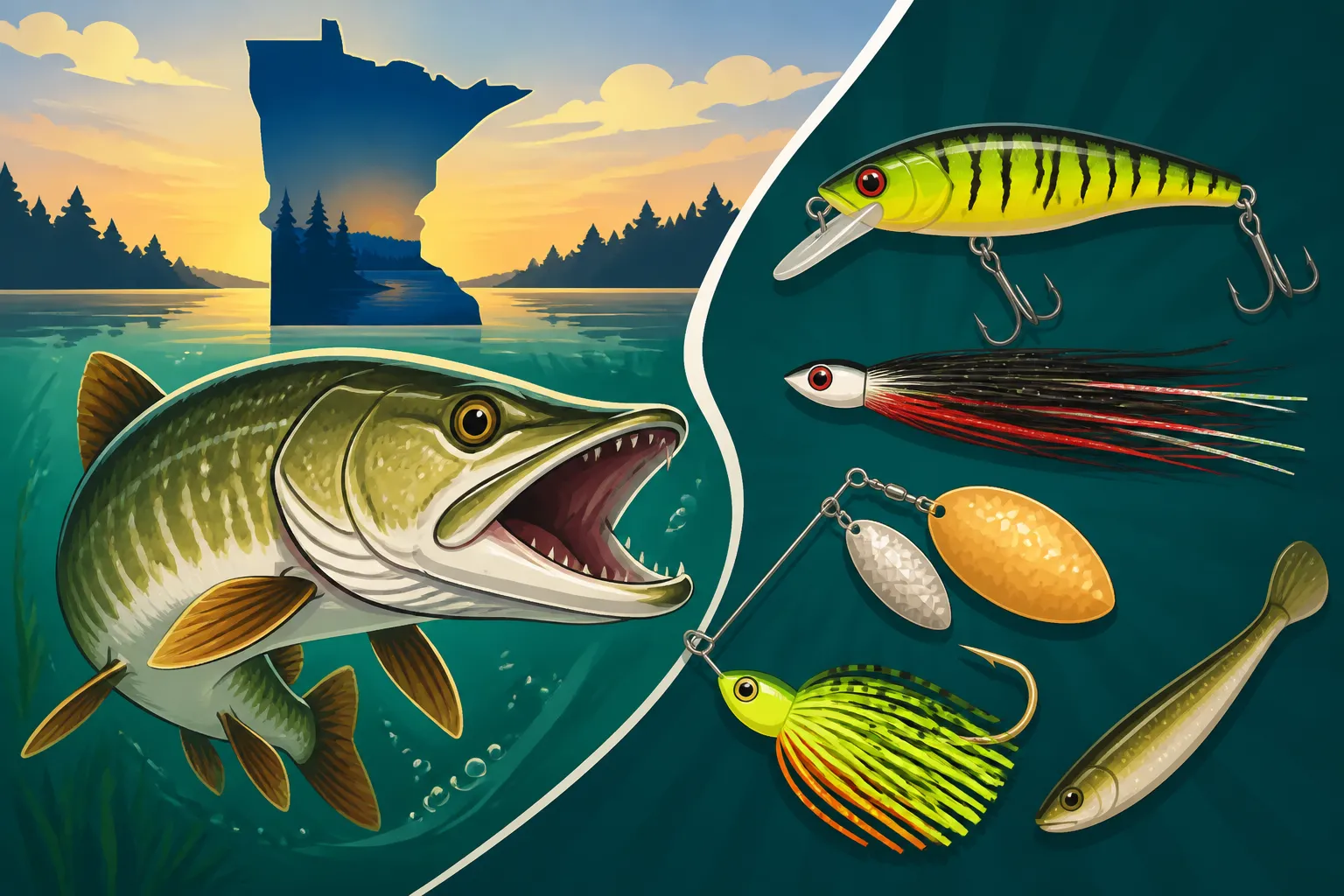
Minnesota features a diverse range of muskie habitats, from shallow weed flats in central mesotrophic lakes to deep, rocky reefs in northern shield waters. To be consistently successful, your tackle bag needs a balanced selection of classic bait styles designed to cover different layers of the water column. Understanding when and where to throw each style is fundamental to mastering Muskie Fishing Techniques for Beginners.
Inline Bucktails and Topwaters for Shallow Weedlines
Inline bucktails are the absolute backbone of Minnesota muskie fishing. Featuring single or double blades ranging from size 8 up to massive size 12 Colorado blades, bucktails push massive amounts of water and trigger explosive reaction bites during the summer months. Double-blade spinners generate high-frequency vibration and lift, allowing you to burn them fast over cabbage bed tops in lakes like Leech Lake. For comprehensive destination patterns, you can check our Leech Lake Muskie Fishing guide to see how shallow weed tactics change across different bays.
Topwater lures provide some of the most thrilling bites in all of freshwater fishing. Walk-the-dog style topwaters, prop baits, and tail-spinners excel during early morning, late evening, or calm, overcast summer days. Tail-rotators produce a steady, rhythmic plucking sound that draws muskies out of dense weed beds. Keep a variety of natural shades like perch and cisco, alongside high-visibility chartreuse patterns, when browsing retailers like Bass Pro Shops for your open-water summer lineup.
Large Rubber Baits and Glide Baits for Deep Structure
When water temperatures drop in the fall, muskies shift their focus toward deeper structure, rocky drop-offs, and lingering soft-bottom edges. This is when heavy rubber baits and slow-moving glide baits shine. Soft plastic muskie lures feature large paddle tails or dual bull-tails that vibrate slowly on the drop. Counting down a heavy rubber bait to depth and working it with slow, methodical pulls of the rod tip is a proven tactic on cold water fisheries across the state.
Glide baits require a bit more angler input, utilizing short taps of the rod tip to make the lure dart side to side in a wide S-pattern. This erratic horizontal action mimics a dying whitefish or tullibee, making it an irresistible meal for giant females staging on deep breaklines. Mastering the glide bait presentation requires patience and a stiff rod, but it consistently produces large fish when standard retrieves fail.
| Lure Category | Primary Application | Target Water Layer | Recommended Leader |
|---|---|---|---|
| Double Bucktails | Summer weed flats, fast burn retrieves | Top 2 to 6 feet | 100-130 lb Fluorocarbon |
| Topwater Props | Calmer conditions, low-light periods | Surface | 100 lb Titanium / Wire |
| Large Soft Plastics | Deep breaklines, fall slow-rolling | 10 to 30 feet | 130-150 lb Fluorocarbon |
| Solid Glide Baits | Cold water, suspended baitfish | 4 to 12 feet | Solid Steel Wire |
| Deep Crankbaits | Trolling drop-offs, rocky structures | 8 to 20+ feet | 130 lb Fluorocarbon / Wire |
Essential Rods Reels and Lines Built for Hard Biting Muskies
You cannot effectively cast or manipulate heavy muskie lures using standard medium-heavy bass gear. Attempting to do so leads to casting fatigue, poor hook sets, and ruined equipment. Equipping yourself with purpose-built muskie setups ensures you can throw large baits for hours without destroying your shoulders or losing control during a boat-side fight.
Choosing the Right Rod Power and Action
Modern muskie rods have evolved significantly over the past decade. Where seven-foot stiff wooden boards were once the standard, modern anglers lean toward longer rods ranging from 8 feet 6 inches to 9 feet 6 inches. The extra length offers two major advantages: it acts as a lever to help throw heavy lures with far less physical effort, and it creates a much wider radius when executing a boat-side figure-eight, giving trailing fish more room to turn and strike.
Look for a rod rated extra-heavy power with a fast or medium-fast action capable of handling lure weights between 3 and 10 ounces. A quality rod tip needs enough flexibility to load properly during a cast and absorb sudden lunges, while the backbone must remain stiff enough to drive heavy gauge hooks through a muskie’s bony mouth. If you are putting together your full setup, checking out Best Gear for Muskie Fishing in Minnesota will give you a clearer picture of balancing rod power with lure weight.
Heavy Baitcasting Reels and Braid Ratings
A sturdy, high-capacity baitcasting reel is non-negotiable. Look for reels built with solid aluminum frames, brass or stainless steel gearing, and smooth, heavy-duty drag systems capable of producing 25 or more pounds of drag pressure. High-speed gear ratios allow you to burn large bucktails back to the boat, while lower gear ratios give you the raw cranking power needed to pull massive deep-running crankbaits through heavy water resistance. For a detailed breakdown of top options, read our guide on Best Baitcasting Reels for Muskie & Pike.
Spool your reel with high-quality braided line rated between 80-pound and 100-pound test. Heavy braid offers nearly zero stretch, allowing for crisp, hard hook sets even at long casting distances. Additionally, the thick diameter of 80-to-100-pound braid helps prevent the line from digging into itself on the spool under heavy drag tension, reducing catastrophic line snaps during hard casts. Always inspect the first ten feet of your main line for fraying after every outing, cutting away any worn sections immediately.
Key Boat Side Tackle and Fish Handling Gear
Tackle extends beyond what you cast into the water; proper fish handling equipment is essential for protecting both the angler and the fish. Muskies are apex predators with razor-sharp teeth and incredible muscle density. Handling them improperly can result in severe injuries to your hands or fatal damage to a giant fish you intend to release.
Rubber Nets Unhooking Tools and Heavy Cutters
A giant, rubber-matted landing net is the single most important piece of boat gear you can carry. Modern conservation-minded nets feature deep, flat-bottomed bags coated in smooth rubber that preserve the fish’s protective slime coat and prevent treble hooks from becoming tangled. Once a muskie is netted, leave it suspended in the water alongside the boat while preparing your tools, rather than dragging it onto hot aluminum or carpeted boat floors. You can compare top net designs in our guide to the Best Landing Net for Muskie & Pike.
Before you ever lay a lure into the water, ensure your unhooking kit is laid out on the deck and easily accessible. Your tool kit should include:
- Extra-long needle-nose pliers (11-inch minimum) for reaching deep hook sets safely.
- Long-reach hook-out tools to leverage stubborn trebles out of jaw bone.
- Heavy-duty bolt or mini-bolt cutters capable of cutting thick, hardened treble hooks instantly.
- Jaw spreaders to safely open and hold a thrashing mouth open.
Cutting a hook that is embedded near a muskie’s gills or throat is vastly superior to wrestling with it and causing fatal bleeding. Hooks are cheap and easily replaced; trophy fish take decades to grow. Reviewing Best Muskie Lures (Bucktails, Jerkbaits, Topwater) will give you ideas on stocking extra replacement trebles for when you inevitably need to snip a hook out.
Organizing Your Muskie Box Efficiently
Muskie lures are huge, heavy, and notoriously difficult to store without creating a tangled mess of steel and plastic. Standard tackle trays rarely fit oversized rubber baits or massive topwater lures. Investing in a vertical-hanging muskie tackle box or heavy-duty soft-sided tackle bag designed with dedicated hanging dividers keeps your expensive lures separated, dry, and easily accessible.
Hanging lures vertically allows water to drain off after use, preventing hook rust and skirt deterioration. Keep your leaders organized in labeled sealable bags or specialized leader boards so you aren’t untangling fluorocarbon rigs while a feeding window is opening up on the lake. If you order storage systems online via Amazon, make sure to double-check the interior dimensions to confirm your longest glide baits and rubber tails can hang without curling at the bottom.
When planning your trips across the state, always remain mindful of local harvest limits and season structures by reviewing the official Muskie Season & Limit in Minnesota guidelines. Knowing the legal rules alongside having the right gear ensures a safe, successful, and rewarding experience on every body of water found across our Best Muskie Lakes in Minnesota.
Disclaimer
This article is for general informational purposes only and does not constitute professional advice. Laws, prices and regulations vary by location and change over time. Consult a qualified professional for guidance on your specific situation.