Best Time of Year to Catch Walleye in Minnesota
Trying to pinpoint the absolute "best" time to catch walleye in Minnesota can feel like a riddle wrapped in an enigma, especially with our notoriously fickle weather and ever-changing lake conditions. Many anglers get frustrated by inconsistent bites, wondering if they're just on the water at the wrong time. This comprehensive guide will break down the seasonal patterns of walleye in the Land of 10,000 Lakes, helping you understand their movements and feeding habits so you can maximize your chances of a successful outing, no matter the month.
The Spring Walleye Spree: Post-Spawn Aggression
Ah, spring in Minnesota! The ice is finally off, and anglers across the state are practically vibrating with anticipation for the walleye opener. This period, typically from mid-May through early June, is often considered one of the most exciting times to target walleye, primarily due to their post-spawn recovery and aggressive feeding.
Early Season Tactics and Locations
Once the ice recedes, walleye gather in traditional spawning areas like rocky shorelines, river currents, and shallow, gravelly flats. After the rigors of spawning, they're often lethargic for a short period, but soon a switch flips, and they become incredibly hungry. They'll move to nearby shallow bays, points, and weed lines where water temperatures warm up faster, attracting baitfish. Focusing on these areas where there's a good food source is key. Think shallow — anywhere from 4 to 12 feet, especially if there's emerging new green weed growth or submerged wood.
For many Minnesota anglers, the walleye opener is a sacred tradition. The date changes slightly each year, so it's always wise to check the official Minnesota Fishing Seasons & Opener Dates (2026) before heading out. The fishing during this initial push can be fast and furious. Live bait, such as shiners, rainbow chubs, or large minnows, fished under a bobber or on a jig, is often irresistible to these hungry fish. Don't be afraid to experiment with retrieve speeds; sometimes a slow, almost dead-stick presentation is best, while other times a more aggressive jigging motion will trigger strikes.
Understanding the Post-Spawn Recovery
The initial post-spawn period sees walleye recuperating, but as their energy levels return, they need to replenish calories. This is why they become so aggressive. They're not just feeding to survive; they're actively trying to put on weight. This is a fantastic time for anglers, as they're often less finicky than at other times of the year. Lakes like Lake Vermilion, where walleye numbers are strong, can offer exceptional early-season action. They might still be found in those shallow, warmer areas, especially during cloudy days or early mornings and late evenings. Understanding where to present your bait is just as important as choosing the right bait itself. Many experienced anglers swear by the effectiveness of a jig and minnow during this time, often fishing it vertically or with short pitches into promising spots.
Summer's Deep Dive: Adapting to Warm Water
As Minnesota's lakes fully warm up through June, July, and August, walleye behavior shifts dramatically. They move away from the shallow spawning grounds and early season haunts, seeking cooler, more stable temperatures and abundant food sources in deeper waters. This means anglers need to adapt their strategies significantly.
Targeting Structure and Thermoclines
During summer, walleye are often found relating to specific structures such as deep reefs, humps, sunken islands, breaklines, and the edges of expansive weed beds. These features provide cover, ambush points for baitfish, and often correlate with the cooler water of the thermocline – the layer of water where temperature changes rapidly with depth. Using good electronics, like a quality fish finder, becomes absolutely crucial to locate these underwater features and identify schools of baitfish, which are almost always a precursor to finding walleye.
Fishing techniques for summer walleye often involve vertical jigging with a jig-and-minnow or jig-and-leech combination, slow-trolling crankbaits over deep structure, or employing a bottom bouncer rig with a crawler harness. A classic approach is to drift over these structures, using your electronics to stay on top of fish. On larger, deeper lakes like Mille Lacs Lake or Leech Lake, finding the right "spot on the spot" can be the difference between a slow day and a banner day. The key is methodical searching and a willingness to move if you're not seeing fish.
Night Fishing for Summertime Giants
While day fishing can certainly be productive, many serious walleye anglers consider summer night fishing to be the absolute best time for trophy fish. Walleye have excellent low-light vision, making them incredibly efficient predators after dark. They'll often move from their deep daytime haunts into shallower feeding flats or along weed edges under the cover of darkness to ambush baitfish.
Night fishing often involves trolling crankbaits, casting stickbaits, or using a slip bobber with a lively leech or minnow. The calm waters and quiet atmosphere of a summer night create a magical experience, and the bites can be shockingly aggressive. Remember to always prioritize safety when fishing at night; tell someone your plans, have proper lighting on your boat, and wear a life vest. For more specific tactics, check out our guide on Night Fishing for Walleye in Minnesota.
Fall Feeding Frenzy: Bulking Up for Winter
As autumn approaches and water temperatures begin to drop, Minnesota walleye enter a high-calorie feeding frenzy. This period, typically from September through November, is another fantastic window for anglers, often yielding some of the largest walleye of the year as fish bulk up for the lean winter months.
The Autumn Turnover and Walleye Movement
The "fall turnover" is a critical event in many Minnesota lakes, where the surface water cools to the point that it becomes denser than the deeper water. This causes the water column to mix, equalizing temperatures and oxygen levels from top to bottom. While the initial stages of turnover can temporarily scatter fish and make them harder to locate, once the lake stabilizes, walleye often become incredibly active. They'll be found in a wider range of depths, moving between deeper structure and shallower feeding areas, often congregating in predictable patterns.
During this period, walleye are primarily focused on forage. They’re looking for schools of baitfish like ciscoes (tullibees) or perch that are also moving into accessible areas. Deep rocky points, mid-lake humps, and steep breaklines that drop into deep water are prime locations. Larger baits, both live and artificial, often become more effective as walleye are looking for substantial meals. Trolling large crankbaits, jigging heavy spoons, or working large shiners can be incredibly productive. Our detailed guide on Fall Walleye Fishing: Turnover & Cold Water dives deeper into these patterns.
Prime Time for Trophy Walleye
The fall months are when many anglers land their personal best walleye. The fish are at their heaviest, having fed hard all summer, and they're aggressively continuing to feed as winter approaches. The cooler water temperatures also mean fish fight harder, making for truly memorable battles. Lakes known for producing large walleye, such as Lake of the Woods or Winnie (Lake Winnibigoshish), can be absolute goldmines in the fall.
It's not uncommon to see groups of boats working the same deep breaks or trolling routes. While it might seem crowded, it's often a sign that fish are consistently being caught. Pay attention to what other successful anglers are doing, but also trust your instincts and electronics. Sometimes a subtle change in lure color, trolling speed, or depth can make all the difference.
Winter's Chill: Ice Fishing Opportunities
When the lakes freeze over and Minnesota transforms into a winter wonderland, the walleye bite doesn't stop; it simply changes character. Ice fishing for walleye is a beloved tradition for thousands of Minnesotans, offering a unique and often highly rewarding experience. While the fish metabolism slows down, they still need to feed, and dedicated ice anglers can find incredible success.
Ice Fishing Hot Spots and Gear
Early ice, usually December, is often considered the best time for sheer numbers of walleye, as they are still relatively active and accessible in traditional fall feeding areas. As winter progresses and ice thickens, walleye tend to settle into more predictable patterns, often concentrating on deep main lake humps, points, and breaklines, similar to summer, but often in deeper water. Look for irregularities in the bottom, rock piles, or transition zones between hard and soft bottom.
Essential gear for ice fishing walleye includes a good ice auger (electric models like the StrikeMaster Lithium 40V are fantastic), a flasher or fish finder (Vexilar and Humminbird are popular choices) to mark fish and your lure, and a variety of jigs and spoons. Having a comfortable ice shelter, whether it's a portable flip-over or a permanent wheelhouse, makes the experience much more enjoyable, especially on those brutally cold days. For a complete run-down on how to gear up, check out our Best Ice Fishing Gear for Minnesota (2027 Guide).
Effective Ice Fishing Techniques
The most common techniques for ice fishing walleye involve jigging with spoons, lipless crankbaits, or small jigs tipped with a minnow head or wax worm. Deadsticking, where a second rod is left motionless with a live minnow just off the bottom, is also incredibly effective. The walleye's reduced metabolism in cold water means they often prefer a slower, more subtle presentation.
On Lake of the Woods, for instance, anglers will often set up a main hole for jigging and have a few secondary holes with tip-ups spread out, hoping to catch a cruising walleye. Patience is key, as is the willingness to move holes if the bite is slow. Sometimes a move of just 20-30 feet can put you right on top of a school of fish. Our guide to Ice Fishing for Walleye: Tactics & Setups has even more in-depth information.
Seasonal Walleye Fishing Summary
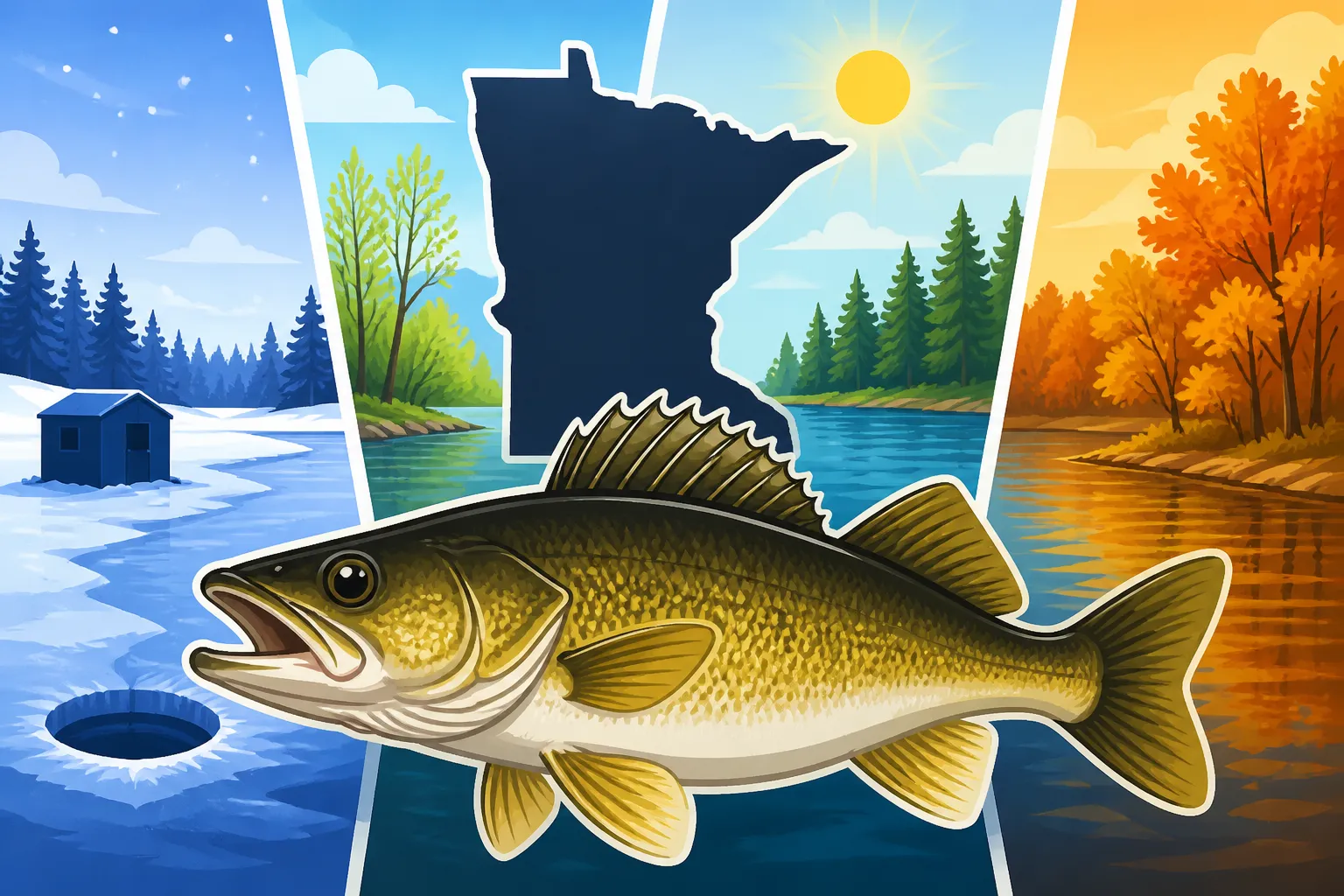
To help visualize the best times and typical approaches, here's a quick summary table of walleye activity throughout the year in Minnesota:
| Season | Typical Months | Water Temperature | General Walleye Behavior | Key Locations | Preferred Baits/Lures | Notes |
|---|---|---|---|---|---|---|
| Spring | May – Early June | Cool (40-60°F) | Post-spawn recovery, aggressive feeding, shallower | Shallow bays, rocky points, river mouths, new weeds | Live minnows (jigged/bobber), shallow crankbaits | Walleye Opener, fast action, focus on warm water |
| Summer | Mid June – August | Warm (65-75°F) | Seek cooler, deeper water, relate to structure | Deep reefs, humps, breaklines, weed edges | Live bait (leeches/crawlers), deep crankbaits, jigs | Electronics crucial, night fishing productive |
| Fall | September – November | Cooling (50-40°F) | Intense feeding frenzy, bulking up for winter, turnover | Deep breaks, mid-lake humps, steep points | Large minnows, big crankbaits, spoons, blade baits | Trophy potential, follow baitfish, turnover effects |
| Winter | December – March | Cold (32-38°F) | Metabolism slows, concentrated on structure under ice | Deep main lake structure, breaks, rock piles | Small jigs (tipped), spoons, rattlebaits, deadsticked minnows | Early ice can be hot, patience required, safety first |
Maximizing Your Walleye Success Year-Round
While each season presents its unique challenges and rewards, consistent walleye success in Minnesota hinges on a few core principles. Being adaptable to conditions, understanding the walleye's seasonal movements, and having the right gear are paramount.
The Role of Weather and Water Conditions
Walleye are highly sensitive to changes in weather. Cold fronts, significant barometric pressure drops, and sudden temperature shifts can often shut down a bite. Conversely, stable weather patterns, light winds, and consistent temperatures often translate to more active feeding. Water clarity also plays a significant role; walleye in clear lakes might be more active during low-light conditions (dawn, dusk, cloudy days, or at night), while those in stained or turbid waters might bite more consistently throughout the day. Always pay attention to the forecast and adjust your plans accordingly.
Wind is another critical factor. A moderate chop on the water can break up light penetration, allowing walleye to feel more comfortable in shallower water and making them less wary. It also creates current and concentrates baitfish. However, too much wind can make boat control difficult and fishing uncomfortable. Learning to "read" the wind and fish effectively with it is a skill that comes with experience.
Local Knowledge and Fishing Reports
Never underestimate the power of local knowledge. Chatting with bait shop owners, resort staff, or other anglers at the boat launch can provide invaluable insights into what's working right now on a specific lake. Many popular Minnesota lakes, like Leech Lake or Upper Red Lake, have dedicated online fishing reports that offer real-time updates on walleye activity, preferred depths, and effective baits. These reports can save you a lot of time and effort by narrowing down your search.
Additionally, keeping your own detailed fishing log can be incredibly helpful over time. Note the date, time, weather conditions, water temperature, location, depth, bait used, and results. Over several seasons, these logs will reveal patterns specific to your fishing style and the lakes you frequent, giving you an edge. The more data you collect, the better you'll understand the nuances of Walleye Fishing in Minnesota: Complete Guide.
Disclaimer
Fishing regulations, seasons, and limits can change frequently. Always consult the latest Minnesota Department of Natural Resources (DNR) fishing regulations handbook or their website before heading out on the water to ensure compliance. This guide is for informational purposes only and does not supersede official regulations.