Best Walleye Rod for Jigging
Trying to jig for walleye in Minnesota with just any old rod from your garage can feel like trying to thread a needle with a rope – it's frustrating, inefficient, and often leads to missed bites and lost fish. You might feel every tiny snag but completely miss that subtle thunk of a walleye inhaling your jig. This guide is here to untangle that frustration, helping you understand precisely what makes a dedicated walleye jigging rod shine, and how to choose the perfect one to put more fish in your boat.
Why a Specialized Jigging Rod is Essential for Walleye Success
Many anglers start out using a general-purpose spinning rod for everything, from casting crankbaits to dropping a jig. While versatile, a jack-of-all-trades rod is often a master of none, especially when it comes to the nuanced world of walleye jigging. Walleye are known for their incredibly light bites, often feeling more like a slight weightlessness or a spongy resistance than a firm strike. Without the right tool, you're fishing blind, leaving countless opportunities on the lake floor.
The Frustration of Using a Generic Rod for Jigging
Imagine you're out on Lake Winnibigoshish, trying to work a 1/8 oz jig through some scattered rock piles. With a standard medium-action, moderate-fast rod, you might feel the jig hitting the rocks, but discerning a subtle walleye bite from bottom contact becomes a guessing game. You set the hook on phantom bites, or worse, reel in to find your minnow gone, your lure stripped, and no fish to show for it. This isn't just annoying; it can totally tank your confidence and your fishing day.
A common rod often lacks the sensitivity to transmit those crucial light bites directly to your hand. It might be too heavy, making it tiring to jig all day, or the action might be too soft, preventing a quick, powerful hookset needed to penetrate a walleye's bony mouth. You end up with a high "miss rate," wondering what you're doing wrong when in reality, your equipment is holding you back. This is why investing in a rod designed specifically for jigging can dramatically improve your feel and your catch rate, making your time on the water far more rewarding.
The Undeniable Advantage of Sensitivity and Control
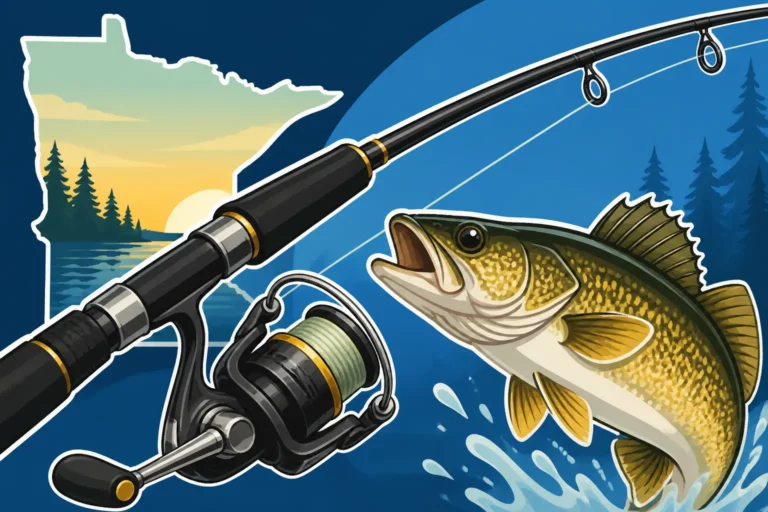
A specialized walleye jigging rod is designed from the ground up to give you maximum sensitivity and control. Think of it as an extension of your arm, where every tiny vibration from your jig, every subtle tick from the bottom, and most importantly, every whisper of a bite, is telegraphed straight to your fingertips. This isn't just about feeling the bite; it's about feeling the bottom. Knowing if your jig is on sand, gravel, or a rock-infested transition zone helps you predict where walleye might be lurking and adjust your presentation accordingly.
The precise action and power of these rods also give you superior control over your lure. Whether you're making short, sharp snaps to impart erratic action to a Jigging Rap or gently lifting and dropping a live bait rig, the rod responds with precision. This control means you can work your bait more effectively, mimic natural forage, and ultimately entice more strikes. When a walleye does commit, that blend of sensitivity and precise action allows for quick, authoritative hooksets, converting those soft bites into landed fish. This level of responsiveness is a game-changer for anyone serious about Walleye Fishing Techniques: Complete Minnesota Guide.
Decoding the Perfect Walleye Jigging Rod: Key Characteristics
Choosing the best rod for walleye jigging means understanding a few critical characteristics that make all the difference. It's not just about a pretty paint job or a high price tag; it's about how the rod functions in your hand and under pressure.
Rod Power and Action Explained for Walleye Jigging
When we talk about rod power, we're referring to the strength of the rod blank and its ability to handle different lure weights and fight different size fish. For walleye jigging, you'll generally look at rods in the medium-light (ML) to medium (M) power range.
- Medium-Light (ML): This power is excellent for lighter jigs, say 1/16 to 1/4 ounce, especially when fishing shallower water or when walleye are finicky and require a very subtle presentation. It maximizes sensitivity but can feel a bit underpowered for larger fish or heavier jigs in current.
- Medium (M): This is a versatile sweet spot for many walleye jigging situations, handling jigs from 1/8 to 1/2 ounce comfortably. It offers a good balance of sensitivity and backbone to fight bigger fish and provides a more solid hookset.
Rod action, on the other hand, describes where the rod bends when pressure is applied to the tip. This is absolutely critical for jigging.
- Fast Action: The rod bends primarily in the upper third of the blank. This is the most popular choice for walleye jigging because it offers incredible sensitivity, allowing you to feel even the lightest taps. The stiff backbone translates to quick, powerful hooksets, which are essential for driving a hook into a walleye's hard mouth.
- Extra-Fast (XF) Action: Even more extreme than fast action, bending only in the very tip. This provides maximum sensitivity and lightning-fast hooksets. It's fantastic for vertical jigging or when using precise, subtle jig movements.
For most jigging scenarios, a Fast or Extra-Fast action rod in Medium-Light or Medium power will be your best friend. This combination gives you the ability to feel those elusive bites and set the hook effectively before the walleye spits the jig.
Ideal Length and Materials for Sensitivity
The length of your walleye jigging rod plays a significant role in casting, hooksetting leverage, and overall feel. While personal preference comes into play, common lengths for jigging range from 6'3" to 7'6".
- Shorter Rods (6'3" – 6'9"): These are fantastic for vertical jigging directly under the boat, offering excellent control and precision. They're also great in tight quarters or when sight-fishing through the ice.
- Mid-Range Rods (6'10" – 7'3"): This is often considered the most versatile length for all-around walleye jigging. It provides a good balance of casting distance for pitching jigs, while still maintaining excellent sensitivity and control for vertical presentations. A 7-foot, fast-action, medium-light rod is a go-to for many anglers.
- Longer Rods (7'4" – 7'6"): These excel at casting jigs a long distance, especially when pitching to shallow flats or covering a lot of water from the bank. The extra length also aids in picking up slack line quickly for hooksets, which can be crucial when you have a lot of line out.
When it comes to materials, high-modulus graphite is king for walleye jigging rods. Graphite is inherently sensitive and lightweight, allowing you to feel subtle bites without fatiguing your arm. The "modulus" refers to the stiffness-to-weight ratio; higher modulus means a stiffer, lighter, and more sensitive blank. Some rods might incorporate a blend of graphite and fiberglass (composite) for added durability or a slightly softer tip, but for pure jigging sensitivity, full graphite is generally preferred. Brands like St. Croix and Fenwick are renowned for their high-quality graphite blanks, offering exceptional feel.
Critical Components: Handles, Guides, and Reel Seats
Beyond the blank itself, the other components of a jigging rod contribute significantly to its performance and your overall experience.
- Handles: You'll typically find handles made of cork or EVA foam.
- Cork: Often preferred for its classic feel, lightweight nature, and how well it transmits vibrations. High-quality cork is durable and comfortable.
- EVA Foam: More durable and easier to clean than cork, and offers good grip even when wet. It can be slightly less sensitive than cork, depending on the blank's quality.
Many jigging rods feature a split-grip handle, which exposes more of the rod blank. This direct contact with the blank can enhance sensitivity, allowing you to feel even the lightest vibrations. A well-designed handle also ensures comfortable palming of the reel and reduces fatigue during long days of fishing.
- Guides: The line guides on your rod are crucial for smooth line flow and durability. Look for guides with ceramic inserts, such as Alconite, SiC (Silicon Carbide), or Zirconia. These materials reduce friction, allowing for longer casts and preventing premature wear on your fishing line, especially if you're using braided line. The number and spacing of guides also matter; more guides, especially smaller ones towards the tip, help the rod blank bend more uniformly under load, which improves sensitivity and casting performance.
- Reel Seat: The reel seat securely fastens your spinning or baitcasting reel to the rod. A good reel seat should hold the reel firmly without any wobble, and ideally, allow direct contact with the rod blank. Ergonomic designs that blend seamlessly into the handle provide maximum comfort and sensitivity. Some manufacturers, like those found at Bass Pro Shops, offer specialized reel seats designed to enhance vibration transfer, further improving your ability to feel bites.
Consider the entire package. A super sensitive blank can be hampered by a bulky, insensitive handle or cheap, heavy guides. Every component plays a role in the overall performance of your Walleye Fishing Rods & Reels.
Spinning vs. Baitcasting for Jigging Walleye
When it comes to walleye jigging, the debate between spinning and baitcasting setups is a common one. Both have their merits, and the "best" choice often comes down to personal preference, specific techniques, and the conditions you're fishing.
The Spinning Rod Advantage: Versatility and Finesse
For the vast majority of walleye jigging applications, a spinning rod and reel combo is the go-to choice. It's incredibly versatile, user-friendly, and excels in situations where finesse and lighter tackle are key.
- Ease of Use: Spinning reels are much easier to cast, especially with lighter jigs. You don't have to worry about backlashes, making them ideal for beginners and experienced anglers alike. This ease means you can focus more on your presentation and less on managing your equipment.
- Light Line and Lure Presentation: Spinning rods are perfectly suited for using lighter lines (e.g., 6-10 lb braid with a fluorocarbon leader) and smaller jigs (1/16 oz to 3/8 oz). This is crucial when walleye are finicky or when you're fishing clear, shallow water where a subtle presentation is paramount. The open-face design allows for incredibly smooth line release, translating to longer, more accurate casts with these lighter offerings.
- Vertical Jigging and Pitching: Whether you're vertical jigging directly below the boat in 20 feet of water or pitching a jig to a shallow weed line, a spinning setup handles both with ease. The smooth drag system on most quality spinning reels also allows for precise adjustments when fighting a surging walleye. Many anglers find the "feel" with a spinning reel, palming the reel and wrapping a finger around the line, provides a direct connection to what's happening at the business end of their setup. If you're looking for a great all-around choice for a fishing trip to Leech Lake, a spinning setup is hard to beat.
When Baitcasting Shines: Power and Precision for Heavier Rigs
While less common for finesse jigging, baitcasting setups definitely have a place in a walleye angler's arsenal, particularly when you need more power and precision with heavier baits.
- Heavier Jigs and Deeper Water: If you're fishing deeper water (30+ feet) or in strong current on a river like the Mississippi, you'll often need to use heavier jigs (3/8 oz to 3/4 oz or more) to maintain bottom contact. Baitcasting reels are designed to handle these heavier line and lure weights more efficiently than spinning reels. Their robust gearing and stronger drag systems make it easier to crank up heavy rigs and larger fish.
- Casting Accuracy in Specific Situations: For certain presentations, like pitching large jigging spoons or heavier blade baits to specific structures, a baitcasting reel can offer superior accuracy. With practice, baitcasters allow for pinpoint casting to tight spots or around submerged cover.
- Fighting Larger Fish and Trolling: If you're targeting truly giant walleye, or perhaps incidentally hooking into a big Northern Pike or Muskie, the brute strength and leverage of a baitcasting setup can be an advantage. Some anglers also prefer baitcasting setups for specific trolling applications, though this is less about jigging and more about covering water with crankbaits or spinner rigs.
For those looking to expand their arsenal or specifically target bigger fish with heavier presentations, a baitcasting rod paired with a sensitive, high-modulus blank could be a potent option.
Top Rod Types and Considerations for Walleye Jigging
With so many options out there, narrowing down the best walleye jigging rod can feel overwhelming. Let's break down some specific rod types and what to look for, along with how to find them.
Versatile All-Around Jigging Rods
If you're looking for one rod to do it all when it comes to walleye jigging, you're generally going to gravitate towards a 6'8" to 7'2" medium-light or medium power, fast or extra-fast action spinning rod. This configuration offers a fantastic balance of sensitivity, casting ability, and backbone.
- Why it works: This rod length provides excellent leverage for fighting fish and good casting distance for pitching jigs, while still being nimble enough for vertical presentations. The fast action ensures you feel those light bites, and the medium-light to medium power is perfect for a wide range of jig weights from 1/8 oz to 1/2 oz. It’s ideal for chasing walleye on popular lakes like Mille Lacs Lake or Lake of the Woods.
- Finding your rod: Many reputable brands offer excellent rods in this category. Look for models like the St. Croix Eyecon, Bass X, or Legend Tournament Walleye series, Fenwick HMG, or Shimano Zodias. These brands are known for their quality blanks and components. You can find a huge selection of these at Bass Pro Shops, where you can often get a feel for the rod in person, or browse reviews and make a purchase through retailers like Amazon for convenience. Don't forget to pair it with one of the Best Spinning Reels for Walleye.
Specialized Jigging Sticks for Specific Techniques
Sometimes, the situation calls for a more specialized tool. While the versatile rod covers most bases, certain techniques or conditions benefit from a rod tailored to that specific application.
- Ripping Raps or Snap Jigging Rods: These techniques, which involve aggressively ripping a lipless crankbait or jig off the bottom, benefit from a slightly stiffer rod with a fast action. A 7'0" to 7'6" medium power, fast action rod is often preferred. The added power helps impart that violent action to the lure and provides the backbone needed for solid hooksets when a walleye strikes on the fall. Some anglers even go for a medium-heavy power for maximum control over larger baits in deeper water.
- Finesse Hair Jigging Rods: For ultra-light presentations with small hair jigs or plastics, especially in clear, calm conditions, you might want to lean towards maximum sensitivity. A 6'6" to 6'9" medium-light power, extra-fast action rod is perfect here. The shorter length and lighter power allow for incredible feel and precise manipulation of these delicate lures. This is where high-modulus graphite really shines.
- Heavy Jigging Rods (for Deep Water/Heavy Current): When you're dropping 3/4 oz to 1 oz jigs in deep reservoirs or strong river currents, a more robust rod is necessary. A 6'10" to 7'0" medium-heavy power, fast action rod, often a baitcasting setup, will give you the control and lifting power you need. The heavier power helps manage the larger jigs and provides the leverage to pull big fish out of strong currents.
Understanding these nuances and matching your rod to your specific Jigging for Walleye: Jig & Minnow Basics technique can make a significant difference. It’s also important to consider the Best Fishing Line for Walleye (Braid vs Mono vs Fluoro) as it works in tandem with your rod for optimal sensitivity.
Choosing the Right Reel and Line to Complement Your Rod
Your jigging rod is only one part of the equation; the reel and line are equally vital. A great rod paired with a mediocre reel or improper line will undermine your efforts.
- Reel Selection: For spinning rods, a 2500 or 3000 size reel is typically ideal for walleye jigging. It offers a good balance of line capacity, drag power, and retrieve speed without adding excessive weight. Look for smooth drag systems, minimal play in the handle, and a lightweight body. Brands like Shimano, Daiwa, and Pflueger offer excellent options.
- Line Choices:
- Braided Line: This is often the top choice for walleye jigging due to its near-zero stretch and incredible sensitivity. A 10-15 lb test braid will transmit every bump and bite directly to your rod. However, braid is visible, so it's usually paired with a fluorocarbon leader (6-10 lb test) for stealth.
- Fluorocarbon Line: Can be used as a main line (8-12 lb test) but is less common for jigging due to its stretch compared to braid. Its low visibility and abrasion resistance make it an excellent leader material.
- Monofilament Line: Generally not recommended for jigging as a main line due to its significant stretch, which dampens sensitivity and makes hooksets less effective.
Choosing the right combination ensures your entire setup works synergistically, maximizing your feel, control, and ability to land more walleye.
Making Your Final Decision
Deciding on the perfect walleye jigging rod is a personal journey, but armed with the right knowledge, you're much better equipped. Consider what type of jigging you'll do most often, the average size of walleye in your target lakes, and your budget.
Evaluating Your Primary Jigging Style
Are you primarily a vertical jigger, dropping baits straight down over structure on Lake Vermilion? Or do you prefer pitching jigs long distances to cover shallow flats on Upper Red Lake?
- Vertical Jigging: For pure vertical work, a slightly shorter rod (6'3" to 6'9") with an extra-fast action and medium-light power often provides the most precise control and maximum sensitivity. You're not concerned with casting distance, so the focus is entirely on detecting subtle bites directly beneath the boat.
- Pitching Jigs: If you're frequently casting jigs to shorelines, weed edges, or shallow humps, a longer rod (6'10" to 7'3") with a fast action and medium power will be more advantageous. The extra length aids in casting distance and gives you more leverage to sweep set the hook from a distance. This versatility is key for covering water and adapting to different walleye behaviors.
Test Driving Your Options and Budgeting
Before you commit, if possible, try to handle different rods. Head to a local tackle shop or a larger retailer like Bass Pro Shops. Pick up the rods, put a reel on them, and feel their balance and weight. Flex the tip to get a sense of the action. While you can't truly simulate fighting a fish, getting a feel for the rod in your hand is invaluable.
Here’s a general idea of what you can expect across different price points, which you might find when browsing on Amazon or in person:
| Price Range | Expected Quality | Key Features | Best For |
|---|---|---|---|
| $50 – $100 | Entry-level to Mid-range | Decent graphite blanks, adequate guides, functional reel seats. Good for beginners or occasional anglers. | Casual jigging, learning fundamentals. |
| $100 – $250 | Mid-range to Upper Mid-range | High-modulus graphite, better sensitivity, lighter weight, quality components (cork handles, better guides). Excellent value. | Serious hobbyists, versatile jigging. |
| $250 – $400+ | Premium/High-End | Elite graphite blanks, exceptional sensitivity, ultra-lightweight, top-tier guides (Fuji K-Series, SiC), ergonomic reel seats. | Tournament anglers, demanding situations, those seeking ultimate feel. |
You don't need to break the bank to get a fantastic walleye jigging rod. Many rods in the $150-$250 range offer incredible performance and durability that will serve you well for many seasons. Remember, the goal is to find a rod that feels comfortable, is sensitive enough to detect those subtle walleye bites, and has the backbone to land them. This specific gear choice will significantly enhance your ability to put more walleye in the boat, complementing your understanding of Best Walleye Fishing Tactics in Minnesota.
Disclaimer
The information provided in this guide is for general informational purposes only. Fishing regulations, season dates, and limits can change frequently. Always consult the most current Minnesota Department of Natural Resources (DNR) regulations before heading out on the water. Fishing inherently carries risks, and it is your responsibility to ensure safe practices.