How to Tell a Male from Female Walleye
It’s a question that often pops into the minds of curious anglers, especially when you’ve got a couple of nice walleye in the livewell or are practicing catch and release: "Is this a male or a female?" While it might not seem immediately obvious, there are subtle yet distinct ways to tell the difference, particularly if you know what to look for and when. This guide will walk you through the various indicators, from physical traits to behavioral cues, helping you better understand the walleye you encounter on Minnesota’s plentiful waters.
Why Differentiate Male and Female Walleye?
Knowing whether you’ve caught a male or female walleye goes beyond mere curiosity. It offers a deeper appreciation for the species' biology and can even inform your fishing practices, especially during sensitive times of the year. Understanding these differences contributes to a more informed and responsible angling experience.
Understanding Spawning Behavior and Conservation
For many anglers, the primary reason to differentiate sexes is to better understand the walleye's reproductive cycle. Female walleye are the egg-producers, and during the pre-spawn and spawning periods, they carry a significant amount of roe (eggs). These large, egg-laden females are vital for maintaining healthy walleye populations across Minnesota. When you release a large, ripe female, you're directly contributing to the future of the fishery, a practice many conservation-minded anglers champion. The Minnesota Department of Natural Resources (DNR) tracks walleye populations closely, and understanding their reproductive success is paramount. While they don't generally ask anglers to differentiate sexes for reporting, knowing this information privately reinforces the importance of careful handling during certain seasons.
Males, on the other hand, play a different role. They fertilize the eggs and often remain on the spawning grounds longer than females. This behavior is crucial for successful reproduction. By knowing the distinction, you can better appreciate the life cycle unfolding beneath the surface, especially if you're out on the water during the annual walleye spawn. You might notice males more actively defending areas, even if subtly, or congregating in specific spots, providing valuable insight into their behavior.
Impact on Fishing Strategies
Believe it or not, understanding the sex of walleye can actually influence your fishing approach. During the pre-spawn, female walleye are often gorging themselves, trying to build up energy reserves for the strenuous act of spawning. This means they might be found in different areas or be more aggressive feeders than males, who are already moving towards the spawning grounds. You might find larger females staging in deeper breaks near inlets or rivers, while the smaller, more numerous males are already testing the waters closer to traditional spawning reefs.
Once the spawn is underway, and especially immediately after, male walleye tend to stick around the spawning areas for a longer duration. They might not be actively feeding in the same way, but they can still be caught as they recover or wait for late-arriving females. Females, once they've deposited their eggs, typically retreat to deeper water to recuperate and replenish their energy. If you're targeting early-season walleye after the opener, knowing these general patterns can help you decide whether to focus on those shallow, traditional spawning reefs (where males might still be present) or to start searching deeper structure for post-spawn females. This nuanced understanding can subtly shift your lure choices and presentation, helping you adapt to the fish’s current physiological state. For a deeper dive into optimal times to target these fish, check out our guide on Walleye Fishing Techniques: Complete Minnesota Guide.
Physical Characteristics: Subtle Clues to Gender
When you hold a walleye in your hands, there are a few physical indicators that can help you determine its sex. Some are more reliable than others, and their prominence can change depending on the time of year, especially around the spawning season.
Body Shape and Size Differences
One of the most noticeable, though not always definitive, characteristics is general body size. Female walleye, on average, tend to grow larger and live longer than males. While you might catch a trophy male, the vast majority of record-breaking walleye are females. This difference becomes more pronounced as walleye age. A 20-inch walleye could be either sex, but a 30-inch walleye is almost certainly a female.
Beyond overall length, the body shape can also provide clues, especially during the spring. A female walleye, particularly in the weeks leading up to and during the spawn, will appear much plumper and rounder, her belly distended with roe. She’ll feel heavy for her length. Male walleye, even mature ones, generally maintain a more streamlined, torpedo-like shape throughout the year. Their bellies remain flatter. Imagine holding a football versus a fully inflated basketball; the difference can be that pronounced in a ripe female. This visual cue is often the first thing experienced anglers notice when handling a walleye during the spring season.
Vent Area and Urogenital Papilla Examination
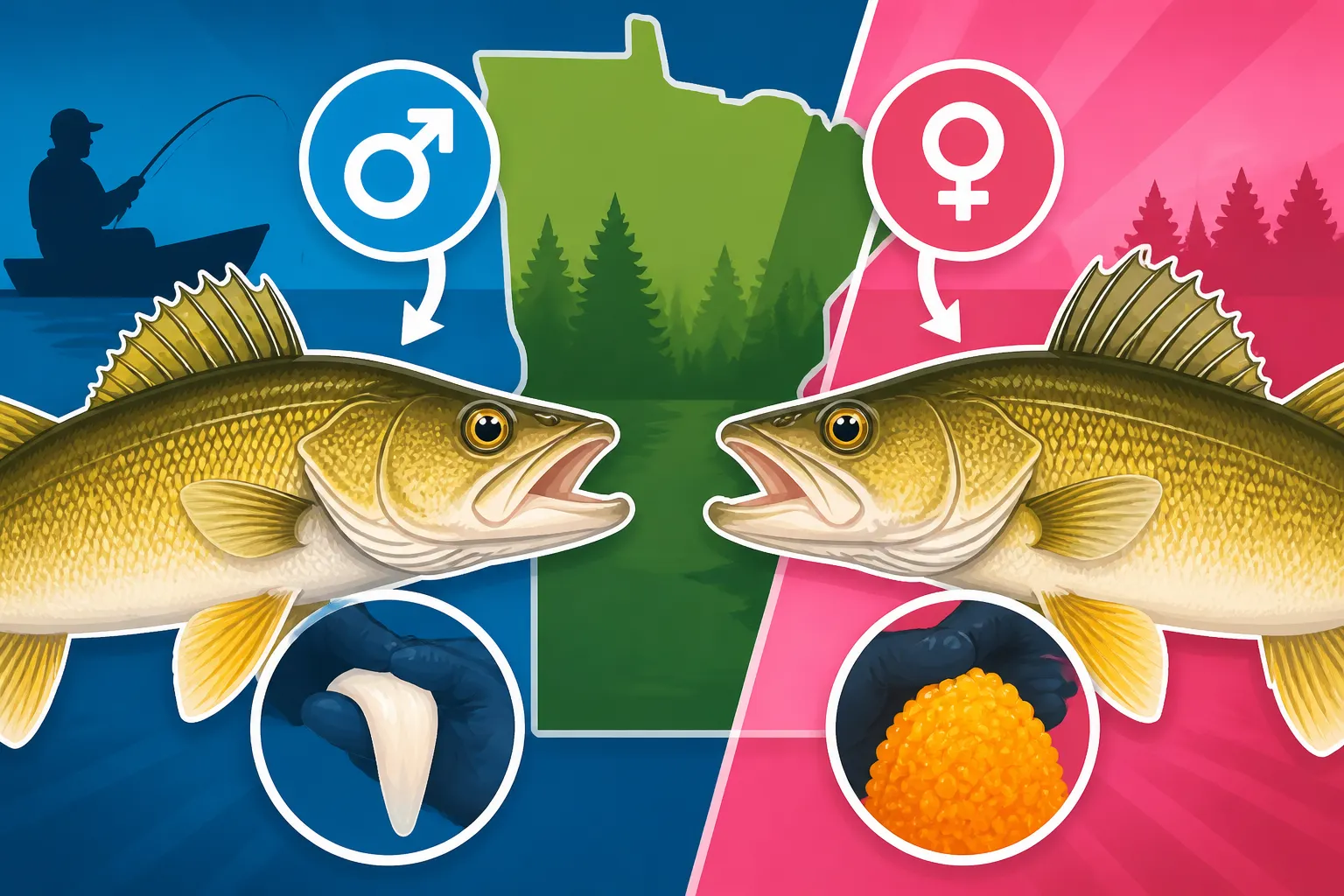
This is arguably the most reliable method for distinguishing male from female walleye, especially when they are mature and approaching or in their spawning cycle. The key lies in examining the urogenital vent, which is located just in front of the anal fin.
- Male Walleye: Look closely at the vent area. A male walleye will have a small, conical, and somewhat pointed protrusion. This is the urogenital papilla, through which sperm (milt) is released. It will generally be less swollen and less pronounced compared to a female. Even during the spawn, it remains relatively small and compact.
- Female Walleye: A female walleye, especially when ripe with eggs, will have a much larger, more rounded, and often significantly swollen vent opening. Her papilla will be broader, softer, and more flush with the belly, sometimes appearing as a wide slit or an open, swollen pore. As she prepares to release eggs, this area will become extremely pronounced, making identification relatively easy. It will also often feel softer to the touch compared to the surrounding scales. This distinction is most evident from late winter through spring, leading up to the Walleye Spawning: When and Where period.
Here’s a simple table to help visualize the key differences in the vent area:
| Characteristic | Male Walleye | Female Walleye |
|---|---|---|
| Vent Shape | Small, conical, pointed protrusion | Larger, rounded, often swollen |
| Papilla Size | Smaller, less pronounced | Broader, softer, more flush with belly |
| Appearance Pre-Spawn | Generally flat, compact | Distended, soft, noticeably swollen with roe |
| Feel (Pre-Spawn) | Firmer | Softer, sometimes mushy due to internal egg mass |
It’s important to handle fish gently when examining this area. Support their body, minimize time out of water, and return them carefully, especially if they are spawning females.
Coloration and Fin Differences (Less Reliable)
While the vent area is the most definitive, some anglers swear by subtle differences in coloration or fin size, though these are far less reliable and can vary widely between individual fish, water bodies, and even time of day.
Occasionally, during the spawning season, male walleye might exhibit slightly more vibrant or intense coloration, particularly around their fins or the lower part of their bodies. This is thought to be a territorial or display characteristic, similar to what you see in many other fish species during reproduction. However, this is not a consistent rule and can be easily influenced by factors like water clarity, diet, and individual genetics. You might see a male with a slightly deeper gold hue on its fins, but another male from the same lake might be quite muted. Relying on color alone is a quick way to misidentify.
Similarly, some anglers suggest that male walleye might have slightly larger or more robust fins relative to their body size, especially the pectoral and pelvic fins, which they might use for fanning eggs or maneuvering in currents. Again, this is highly anecdotal and not a scientifically proven differentiator. The variation in fin size and shape between individual walleye of the same sex can be greater than any perceived difference between sexes. So, while it's interesting to note, don't stake your identification on fin aesthetics. Stick to the more concrete indicators like body shape and, especially, the vent examination.
Behavioral Observations in the Wild
Beyond physical examination, observing walleye behavior in their natural habitat can also offer clues about their sex, particularly during the crucial spring spawning period. These observations can enhance your understanding of Seasonal Fishing Patterns in Minnesota.
Spawning Activity and Location
During the spring, as water temperatures rise, walleye begin their annual migration to spawning grounds. This is when behavioral differences between males and females become most apparent. Typically, male walleye are the first to arrive at these shallow, rocky reefs or river stretches where spawning occurs. They will "stage" there, sometimes for weeks, waiting for the females. They might be seen actively cruising or loosely defending small territories.
Female walleye, laden with eggs, usually arrive a bit later, often when water temperatures hit optimal ranges, usually in the mid-40s to low-50s Fahrenheit. They come in, quickly deposit their eggs, and often leave the spawning grounds within a day or two to recuperate in deeper water. The males, however, will typically linger, fertilizing eggs as they are laid and sometimes remaining for an extended period after the main spawning event. If you're fishing a known spawning reef during the early season and consistently catching smaller, leaner walleye, there's a good chance you're primarily interacting with males. Catching a large, heavy walleye in these same areas usually indicates a female either just arriving or still dropping eggs. This pattern is particularly noticeable in places like Lake of the Woods or Mille Lacs Lake.
Aggressiveness and Feeding Habits
The spawning season also brings about shifts in feeding and general demeanor. Male walleye, being on the spawning grounds longer and expending energy in territorial displays and reproduction, can sometimes be more aggressive in striking lures. They might not be actively feeding for sustenance, but rather striking out of instinct, irritation, or to defend their space. This is why techniques like jigging with a minnow or throwing small crankbaits can be so effective on males lingering on the reefs.
Female walleye, on the other hand, often exhibit two distinct feeding phases around the spawn. Before they drop their eggs, they enter a "pre-spawn bite," where they can be incredibly aggressive feeders, trying to pack on calories. They need immense energy to produce and carry their eggs. This is often the best time to target larger females. After spawning, they are typically exhausted and may go through a period of reduced feeding as they recover. They'll then gradually resume feeding, often moving to deeper, cooler water to regain strength. Knowing these phases helps you tailor your approach; you might target shallow reefs for active males during the spawn, and then transition to deeper breaks or points for recovering, post-spawn females. This knowledge is key to maximizing your success when fishing for Walleye in Minnesota: Complete Guide.
Practical Application for Anglers
Understanding how to differentiate male and female walleye isn't just an academic exercise; it has real-world implications for how you approach your time on the water, impacting your choices in catch and release, and fostering a deeper sense of stewardship.
Catch and Release Considerations
For many anglers, particularly those focused on conservation, knowing the sex of a walleye can be a critical factor in deciding whether to keep or release a fish. Catching a large, egg-laden female, especially during the pre-spawn or spawning period, often prompts a thoughtful decision. These "broodstock" females are the engine of the fishery, responsible for producing millions of eggs. Releasing them ensures their genetic material contributes to future generations. Even if the fish meets the legal slot or size limit, many anglers will opt to release a visibly ripe female to bolster future populations. For example, if you're fishing on Upper Red Lake, where walleye numbers are robust, releasing a large female ensures that healthy reproduction continues.
When practicing catch and release, it's always important to handle fish with care, regardless of sex. Minimize their time out of the water, use appropriate landing nets that don't damage fins or scales, and revive them properly before release. A quick check of the vent can help you make an informed decision, especially if you're already nearing your Minnesota Fishing Limits: Bag & Possession (2026). Being mindful of the fish’s reproductive state allows us to be better stewards of our precious Minnesota fisheries. For more information on responsible fishing, consider reviewing Catch and Release Best Practices in Minnesota.
Legal and Ethical Considerations
In Minnesota, there are no specific legal requirements for anglers to differentiate between male and female walleye, nor are there different bag limits based on sex. The regulations, such as the Walleye Season & Limit in Minnesota, apply universally to all walleye of legal size, regardless of gender. However, understanding the biological significance of female walleye, particularly during their reproductive prime, introduces an ethical dimension to fishing.
Many passionate anglers embrace an unwritten code of ethics that encourages the release of large, mature females, especially those visibly distended with roe. While there's no penalty for keeping a legal-sized female, the ethical choice often leans towards ensuring she has the opportunity to spawn. This is part of the broader conservation ethic that guides many who spend time on the water. It’s about leaving something for the next generation, about recognizing the fish not just as a meal or a trophy, but as a vital part of a delicate ecosystem. It reflects a deeper respect for the resource. Making these informed choices helps sustain the incredible walleye fisheries that Minnesota is famous for, ensuring we can all continue to enjoy them for years to come.
Disclaimer
Fishing regulations can change frequently. Always consult the latest Minnesota DNR fishing regulations before heading out on the water. This guide is for informational purposes only and should not be considered a substitute for official DNR publications.