How to Catch Fish on a Windy Day in Minnesota
There’s nothing quite as frustrating as waking up for a planned fishing trip in Minnesota, only to be greeted by relentless wind howling across the lake. It can feel like your perfect day is ruined before it even begins, making boat control a nightmare, casting impossible, and finding fish seem like an uphill battle. But don't despair! This comprehensive guide will walk you through exactly how to adapt your strategies and still have a successful day catching fish, even when Mother Nature decides to crank up the breeze.
Understanding How Wind Impacts Minnesota Fishing
Wind isn't just an annoyance for anglers; it's a powerful force that completely reshapes the underwater environment. It affects everything from water clarity and temperature to current patterns and, most importantly, fish behavior. Ignoring these impacts is like trying to drive with a blindfold on – you’re just not going to get where you want to go.
Surface Turbulence and Water Clarity
One of the most immediate effects of wind is the churning of the water's surface. This turbulence breaks up light penetration, creating a "low-light" environment even on a sunny day. Think of it like a giant diffuser on the water. For certain species, like walleye, which have eyes adapted for low light, this can be a huge advantage. It makes them feel more secure and encourages them to move out from deeper cover or more sheltered areas.
However, strong winds also stir up the bottom in shallow areas, especially on lakes with soft bottoms like many of our fertile Minnesota waters. This can lead to decreased water clarity as sediment gets suspended. While some fish, particularly aggressive predators like northern pike, might not mind a bit of murk, sight-feeding fish can be negatively impacted. It also means your visibility for spotting structure or fish on your electronics might be reduced, requiring you to rely more on your feel and understanding of the lakebed.
Current Generation and Bait Presentation
Another critical impact of wind is the creation of current. Even in lakes that aren't rivers, a sustained wind pushes water across the surface, creating a subtle but significant flow beneath. This "wind-driven current" can concentrate baitfish and other forage organisms on specific banks or points. Where the baitfish go, the predators often follow, turning a windy shoreline into a prime feeding zone.
This current also dictates how your lures and baits behave underwater. A light jig or unweighted plastic might get swept away too quickly, making it hard to maintain contact with the bottom or keep it in the strike zone. You'll often need to adjust your weight or presentation style to ensure your bait is acting naturally and effectively. Understanding how to use the current to your advantage, or at least how to counteract its negative effects, is key to successful windy day fishing.
Fish Behavior Changes in Wind
Fish aren't just passive recipients of wind's effects; they actively respond to the changes it brings. As mentioned, the low light conditions created by surface chop can make fish like walleye more active, pushing them shallower and making them more willing to bite during daylight hours. This is often why the "walleye chop" is such a celebrated phenomenon among experienced anglers.
Beyond light, fish also react to the movement of forage. If minnows, insect larvae, or other small creatures are being pushed into a certain area by the current, game fish will congregate there to capitalize on the easy meal. Conversely, some fish might seek shelter from the direct force of the wind, moving to the calmer, leeward side of islands, points, or deep structure. Learning to anticipate these shifts in behavior is what separates a frustrating day from a fantastic one.
Strategic Positioning: Where to Fish When the Wind Blows
When the wind is whipping, simply going to your usual "spot" might not cut it. You need to think strategically about where fish will be congregating or seeking shelter. This often means moving away from the perfectly calm, sunny spots and embracing the chop.
The Wind-Blown Shoreline: A Walleye Magnet
This is perhaps the most classic windy-day strategy, especially for targeting walleye. A shoreline that has been exposed to a consistent wind for a while will often be churning with activity. The waves crash against the shore, creating that essential low-light condition, and also dislodging invertebrates and small baitfish, creating a buffet for hungry predators.
Look for shorelines with some kind of structure – rocky points, gravel bars, or even submerged weed lines. These areas will break the current slightly, allowing fish to ambush prey without expending too much energy. Casting crankbaits parallel to the shore, or drifting with a live bait rig like a Lindy Rig, can be incredibly effective here. Just remember that boat control can be tricky, so it pays to be patient and make repeated drifts. You might find some of the best fishing of the season along these exposed stretches, often during times when other anglers are tucked away in calm bays.
Leeward Sides and Protected Bays
While the wind-blown side can be hot, not all fish want to be in the washing machine. Many species, including bass, panfish, and even some walleye, will seek refuge from the direct force of the wind on the leeward (downwind) side of islands, points, or in protected bays. These areas offer calmer water, which can be more comfortable for fish and also concentrate warmer surface water.
These protected zones often become staging areas for baitfish pushed in by the wind, making them attractive to predators. When fishing these areas, you might find fish holding tighter to cover or deeper in the water column, waiting for opportune feeding windows. This is where subtle presentations, like using a slip bobber for walleye and crappie, can really shine, allowing you to thoroughly work an area without battling the elements. Don't be afraid to try both the wind-blown side and the immediate calm water adjacent to it – fish can sometimes be found right on the edge of the chop.
Structure Fishing in Wind
Deep water structure always holds fish, but wind can make it even more productive by pushing baitfish into these areas or providing additional current. Humps, reefs, and sharp breaks that extend into deeper water are prime candidates. The key is often to position your boat on the windward side of the structure and let the wind drift you over it, allowing for a natural presentation.
When fishing structure in the wind, a good Best Fishing Boats for Minnesota: Lund, Ranger & More with a strong Best Trolling Motors: Minn Kota Buyer's Guide can be a game-changer. Models like a Minn Kota Terrova with Spot-Lock can hold you precisely on a spot, even in stiff breezes, allowing you to vertical jig or precisely present a bait. Without this technology, it becomes a constant battle of boat positioning, making it much harder to focus on the fishing itself. Pay close attention to your electronics, as fish will often orient themselves on the side of the structure that offers the most comfort or the easiest ambush points.
Adapting Your Approach: Techniques and Gear Adjustments
Fishing in the wind demands more than just finding the right spot; it requires you to adapt your techniques and sometimes even your gear. Ignoring the wind's influence on your presentation is a surefire way to get frustrated.
Taming Your Boat in Windy Conditions
Boat control is arguably the biggest challenge when fishing in the wind. Without proper control, your lure presentation suffers, and you spend more time fighting the boat than fishing. If you're drifting, a drift sock or two can be invaluable. These parachutes deploy in the water, creating drag and slowing your drift, allowing you to thoroughly work an area and maintain a more consistent boat speed. They also help keep your bow pointed into the wind, making casting and landing fish much easier.
For those with electric trolling motors, especially bow-mount units with GPS anchoring features, you're at a significant advantage. Brands like Minn Kota offer features like Spot-Lock, which allows your motor to automatically hold your boat in place over a fishing spot, regardless of wind or current. This is a massive benefit, freeing you up to focus on fishing rather than constantly steering. Even without GPS, using your trolling motor to "back-troll" (driving the boat in reverse) into the wind can provide excellent boat control and allow for precise jigging or bottom-bouncing.
Choosing the Right Lures and Baits
Wind dictates that you often need to go heavier and more streamlined with your lure choices. Light jigs or baits will simply be blown around too much, making it impossible to feel bites or keep your offering in the strike zone. Consider using heavier jigs, up to 1/2 oz or even 3/4 oz in very strong winds, especially when targeting walleye or sauger in deeper water. This allows for better bottom contact and feel.
For trolling, crankbaits or spinner rigs with bottom bouncers are excellent choices because their weight and design help them cut through the water and maintain depth. Larger profile baits, like a Rapala Shad Rap or a Berkley Flicker Shad, can also create more vibration that fish can feel in turbulent water. If you're casting, stick with heavier spoons, jigging raps, or even Texas-rigged plastics that can punch through the wind and get to your target quickly. Don't shy away from bright or contrasting colors when water clarity is reduced by wave action, as visibility decreases for the fish too. You can find a fantastic selection of these lures on Amazon, often with quick shipping to get you ready for your next blustery day.
Line Management and Sensitivity
Wind makes line management a nightmare. Slack line is your enemy; it creates a huge bow in the line, making it impossible to feel subtle bites and difficult to set the hook. To combat this, use heavier line that sinks faster, or switch to braided line. Braided line has less stretch and a smaller diameter for its strength, which helps cut through the wind and water, maintaining better contact with your lure.
Always try to cast with the wind or at an angle that minimizes the amount of line exposed to the wind. Keep your rod tip low to the water, which reduces the wind's ability to catch your line. Practice a sweeping hookset rather than a straight upward one, as the slack often created by wind requires a more aggressive motion to drive the hook home. A sensitive rod and reel combo, such as those recommended in our Best Walleye Rods & Reels guide, will also make a world of difference in detecting those often-subtle bites in choppy conditions.
Species-Specific Wind Strategies in Minnesota
While general principles apply, specific fish species react differently to windy conditions. Knowing these nuances can help you tailor your approach for higher success rates across Minnesota's diverse fisheries.
Walleye in the Wind
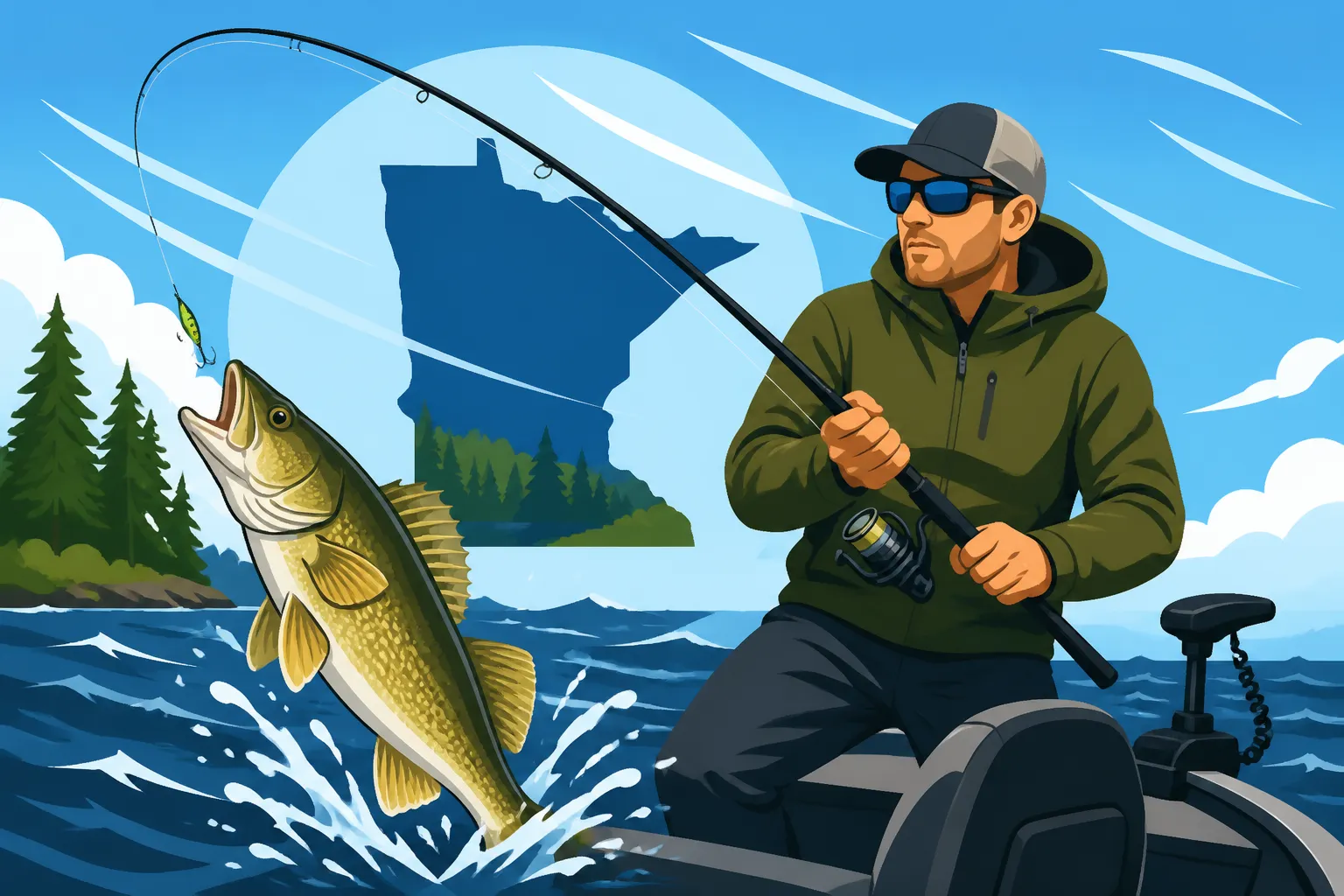
Walleye are perhaps the most celebrated "wind fish" in Minnesota. Many anglers actively seek out windy days specifically for walleye fishing, and for good reason. The choppy water provides low-light conditions that make walleye more aggressive and willing to feed during the day. On lakes like Mille Lacs or Lake of the Woods, a stiff breeze blowing into a rocky shoreline or a large mud flat can ignite a walleye bite that's otherwise dormant.
When targeting walleye in the wind, focus on those wind-blown points, reefs, and shorelines. Casting crankbaits or heavier jigs and soft plastics parallel to the shore in 5-15 feet of water can be deadly. Another excellent tactic is drifting with a How to Fish a Lindy Rig for Walleye or a spinner rig, allowing your live bait to tumble naturally with the current. This can be especially effective on vast expanses of open water where wind pushes baitfish. Don't be afraid to fish shallower than you might on a calm day; those walleye are often right up in the wash.
Bass and Pike in Choppy Water
Northern pike are ambush predators that thrive in reduced visibility, making them excellent targets on windy days. They often position themselves in or near current breaks along wind-blown shorelines, waiting for disoriented baitfish to come by. Large spoons, spinnerbaits, or even big crankbaits retrieved at a steady pace can trigger aggressive strikes. Look for them holding on the edge of weed lines or rocky points that are getting hammered by the waves.
Smallmouth and largemouth bass, while not always as enthusiastic about extreme chop as walleye, can still be found actively feeding. Smallmouth on rocky lakes like Mille Lacs often move shallower onto wind-blown main lake points and humps to feed on crayfish and minnows dislodged by the waves. Largemouth might retreat slightly into the calmer edges of bays or thick weed beds where the wind's force is somewhat mitigated but still brings forage. For bass, consider power fishing techniques like throwing spinnerbaits, chatterbaits, or crankbaits that create a lot of vibration and flash in the turbulent water. You can explore a variety of bass lures and gear on Amazon to stock up for your next windy day excursion.
Panfish on Windy Days
Panfish like crappie and sunfish often seek shelter from strong winds. You'll typically find them tucked into the most protected areas: deep, calm pockets within bays, behind large points, or in the dense cover of emergent weeds on the leeward side of the lake. The goal is to find the calmest water possible where they can comfortably suspend or hold tight to cover.
When you locate these calmer areas, slow down your presentation. A simple jig and plastic, or a small jig tipped with a wax worm or minnow under a small float, can be very effective. Since visibility might be an issue even in calmer water, consider using baits with some scent or a brighter color to attract attention. Don't be surprised if they're holding tighter to cover or structure than usual; they're looking for refuge. Our Crappie & Panfish Fishing Techniques guide offers even more insights into targeting these popular Minnesota species.
Here’s a quick overview of how to adjust your fishing strategy based on wind conditions:
| Wind Strength | Primary Impact on Water | Fish Behavior | Recommended Strategy |
|---|---|---|---|
| Light Breeze (0-5 mph) | Gentle ripple | Mildly active, slightly more dispersed | Fish usual spots, subtle presentations, look for minor current seams. |
| Moderate Wind (5-15 mph) | Choppy surface, some current | Active, moving to wind-blown areas (walleye, pike) or sheltered (bass, panfish) | Target wind-blown structure, use slightly heavier baits, good boat control. |
| Strong Wind (15-25 mph) | Heavy chop, strong current, reduced visibility | Very active on wind-blown (walleye), seeking extreme shelter (others) | Focus on main lake wind-blown points/shorelines, heavy jigs/crankbaits, excellent boat control (drift socks/Spot-Lock), fish protected bays for panfish. |
| Gale Force (25+ mph) | Dangerous waves, extreme chop | Often difficult to fish safely, fish seek deepest or most protected areas | Prioritize safety. Fish from shore in extremely sheltered areas or postpone. |
Final Thoughts and Disclaimer
Fishing on a windy day in Minnesota can be challenging, no doubt about it. But with the right mindset, strategic positioning, and smart gear adjustments, you can often turn a seemingly impossible situation into one of your most memorable and productive days on the water. Don't let a little wind keep you off the lake; embrace the challenge, learn from the conditions, and you might just discover a whole new way to catch fish! For more detailed insights into specific techniques, check out our Walleye Fishing Techniques: Complete Minnesota Guide. And remember, always prioritize your safety on the water, especially when dealing with strong winds and rough conditions.
Disclaimer: Fishing regulations in Minnesota can change. Always consult the latest Minnesota Department of Natural Resources (DNR) fishing regulations handbook or website before heading out. This guide provides general information and best practices, but it is your responsibility to know and follow all current laws and regulations.