Best Catfish Fishing Tactics in Minnesota
There's nothing quite like the feeling of a heavy thud on your line, a telltale sign that one of Minnesota's hard-fighting catfish has taken the bait. But let's be honest, figuring out the best spots and tactics for these often misunderstood fish can feel like a guessing game, leaving many anglers wondering why their efforts aren't paying off. This comprehensive guide is here to demystify catfish angling in our beautiful state, helping you understand their habits, choose the right gear, and employ proven strategies to put more whiskers in your net.
Understanding Minnesota's Catfish Species
Minnesota is home to several fantastic catfish species, each with its own quirks and preferences. Knowing what you're targeting and how they behave is the first step to consistent success. While many think of catfish as purely bottom-dwelling scavengers, they're much more dynamic than that, especially the bigger ones that offer incredible fights.
Channel Catfish: The Widespread Fighter
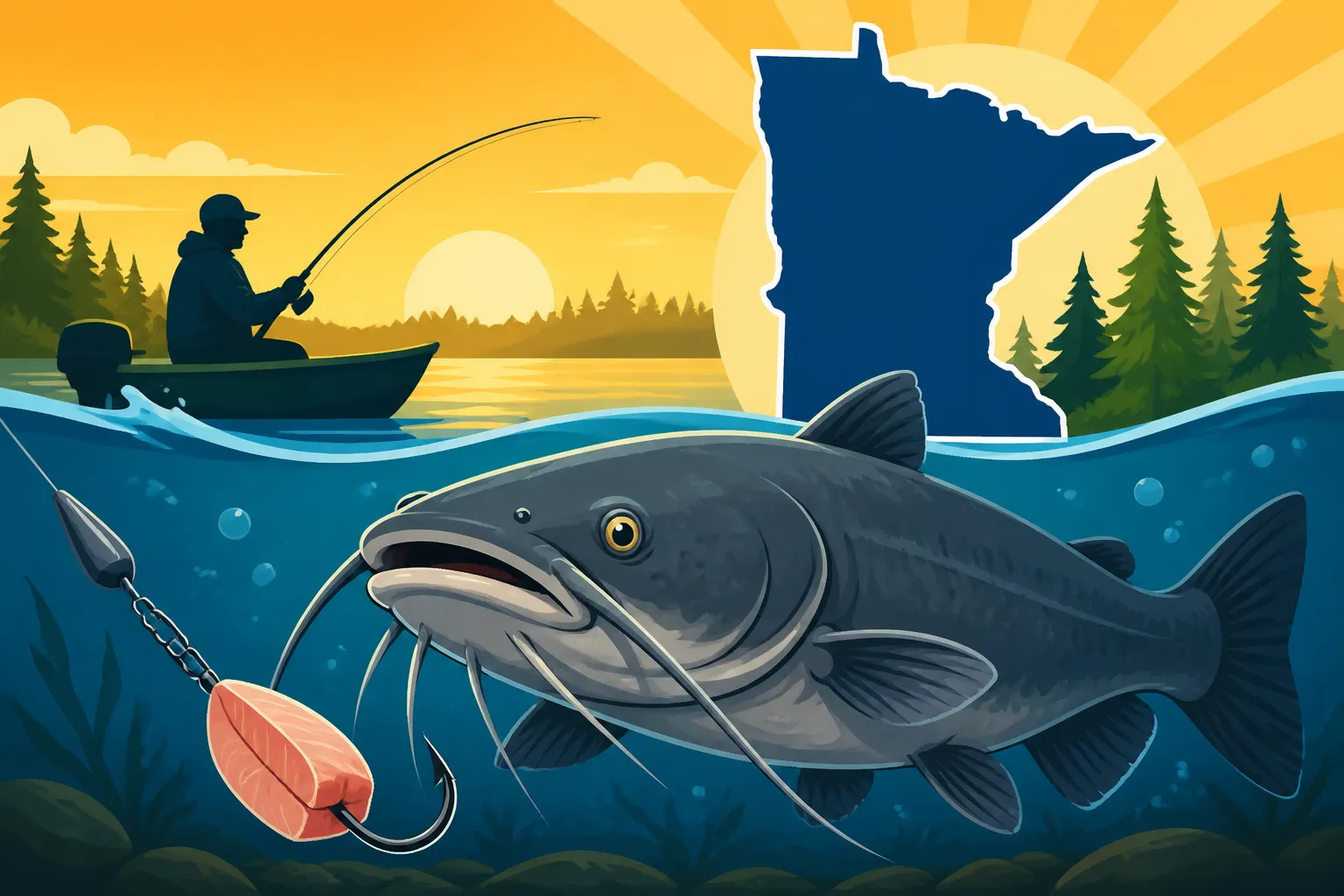
Channel catfish are hands-down the most common and widely distributed catfish in Minnesota, thriving in a variety of environments from rivers to lakes. These guys are identifiable by their deeply forked tails, scattered dark spots (though these fade with age), and slender bodies. They’re opportunistic feeders, meaning they’ll munch on just about anything, which makes them a fun target for anglers using a wide range of baits. You'll often find them in warmer, murkier waters, particularly around structure that offers cover and current breaks. Their average size in Minnesota can range from a couple of pounds to double digits, with genuine trophy fish reaching over 20 pounds in some of our larger river systems. If you're looking for a solid fight and good table fare, the channel cat is your friend. To learn more about identifying these whiskered beauties, check out our guide on Catfish in Minnesota: Channel & Flathead.
Catching a channel catfish is often about understanding their preferred haunts. In rivers, they love deep holes, slack water behind wing dams, and stretches with submerged logs or brush piles. In lakes, look for them around points, humps, and areas where creek or river inlets bring in fresh food. They're particularly active during low-light conditions, making dusk, dawn, and nighttime prime fishing windows. Their keen sense of smell is a huge advantage, drawing them to potent baits from a distance.
Flathead Catfish: The River Monster
If you’re seeking a true heavyweight battle, the flathead catfish is your ultimate Minnesota quarry. These impressive fish are easily distinguished by their flat, broad heads, protruding lower jaws, and squared-off (or slightly notched) tails. Unlike channel cats, flatheads are primarily found in our larger river systems, notably the Mississippi, St. Croix, and Minnesota Rivers. They are strict predators, preferring live bait or fresh cut bait over stink baits, and they love to ambush their prey from heavy cover like log jams, root wads, and undercut banks.
Flatheads are solitary fish, preferring to hold court in deep, dark sanctuaries. When you hook a big flathead, be prepared for a fight of sheer power, often involving long runs and attempts to dive back into cover. These fish can grow absolutely massive in Minnesota, with specimens routinely caught in the 30 to 50-pound range, and even larger giants lurking in the depths. Targeting flatheads requires different tactics and often heavier gear due to their size and habitat. Understanding their predatory nature is key to success; they aren't looking for a casual snack, they're looking for a meal. The thrill of landing a huge flathead is something every serious Minnesota angler should experience.
Essential Gear and Baits for Successful Catfishing
You can't expect to consistently land big catfish with ultralight panfish gear. Catfishing demands a robust setup that can handle powerful runs and the challenging environments where these fish often live. Getting your gear right is paramount to turning those aggressive bites into landed fish.
Rods, Reels, and Line: Building a Robust Setup
For channel catfish, a medium-heavy to heavy action spinning or baitcasting rod, typically 7 to 9 feet long, is an excellent choice. This length provides good casting distance and enough leverage to control a fighting fish. Pair that with a durable spinning reel (size 4000-6000) or a sturdy baitcasting reel capable of holding a decent amount of heavy line. For line, 15 to 30-pound monofilament or fluorocarbon is common, but many anglers are now opting for 30 to 65-pound braided line for its sensitivity, strength, and thin diameter, especially when fishing around snags. Braided line offers minimal stretch, which helps with hooksets at a distance and feeling subtle bites in current.
When it comes to flathead catfish, you need to crank things up a notch. Think heavy to extra-heavy action rods, often 8 to 10 feet in length, providing maximum backbone for battling true river monsters. These rods need to absorb the shock of a powerful strike and have the lifting power to pull a 40-pound fish out of a log jam. A heavy-duty baitcasting reel, like a larger Abu Garcia Ambassadeur or a Penn Squall, spooled with 60 to 100-pound braided line, is standard for serious flathead hunters. You might also consider a stout fluorocarbon leader to provide some abrasion resistance against underwater obstacles. Finding the right heavy-duty tackle can often be done easily online through retailers like Amazon, which offers a wide selection of specialized catfish gear. Our detailed guide on Best Gear for Catfish Fishing in Minnesota offers more in-depth recommendations.
Baits that Catfish Can't Resist
Catfish are less picky than some other species, but certain baits consistently outperform others. Your choice of bait often depends on whether you’re targeting channel cats or the more predatory flatheads.
Stink Baits and Cut Baits for Channel Cats
Channel catfish are notorious for their love of pungent, strong-smelling baits. Prepared stink baits, whether store-bought like Berkley PowerBait Catfish Chunks or homemade concoctions of cheese, blood, and other odorous ingredients, are highly effective. These baits are typically fished on a treble hook or a bait holder spring hook to keep them on. Chicken livers are another classic channel cat bait; their soft texture and strong scent are irresistible, though keeping them on the hook can be a challenge (try curing them in garlic salt or wrapping them with thread).
Cut baits, which are essentially pieces of fish like shad, suckers, or even oily panfish like bluegill, are also fantastic for channel cats. The scent and oils released by cut bait disperse well in the water, attracting catfish from a distance. A fresh piece of cut bait, maybe a 1-2 inch chunk, fished near the bottom, often gets immediate attention. The key with these baits is freshness and scent—the stronger, the better. Consider dipping your cut bait in a commercial scent enhancer to really boost its appeal, especially if you’re fishing in murky conditions or strong currents.
Live Bait for Flathead Catfish
Flathead catfish are obligate predators, meaning they prefer to hunt and eat live prey. Therefore, live bait is almost always the best choice for these giants. Common live baits include bluegill, suckers, bullheads, and chubs, typically ranging from 4 to 8 inches, though larger baits are often used for larger flatheads. The livelier the bait, the better, as its struggles send out vibrations that flatheads can detect with their lateral lines.
Presenting live bait effectively means using a strong circle hook (sized 5/0 to 10/0) through the back or lips, allowing the bait to swim naturally. You'll want to use heavy terminal tackle to withstand the powerful takes and ensure a solid hookset. Fishing live bait usually involves a simple Carolina rig or a three-way swivel rig to keep the bait near the bottom without hindering its movement too much. Remember to check local regulations for baitfish restrictions; it's generally best to use species native to the water body you're fishing. For more detailed advice on the specific tackle needed for these beasts, our guide on Best Tackle for Flathead Catfish in Minnesota can be very helpful.
| Bait Type | Target Species | Scent Level | Preferred Rig | Notes |
|---|---|---|---|---|
| Stink Baits | Channel Catfish | Very High | Treble Hook/Sponge | Commercial or homemade, great for attracting from afar |
| Chicken Liver | Channel Catfish | High | Bait Holder Hook/Thread | Inexpensive, highly effective but can be messy |
| Cut Bait (Fresh) | Channel Catfish, Small Flatheads | Medium-High | Carolina Rig/Knocker Rig | Sucker, Shad, Bluegill; releases natural oils |
| Live Bait (Fish) | Flathead Catfish | Low (Vibration) | Carolina Rig/Three-Way Swivel | Bluegill, Suckers, Bullheads; must be lively and fresh |
| Nightcrawlers | Channel Catfish, Smaller Cats | Medium | Bottom Rig/Slip Bobber | Versatile, good for smaller cats and mixed bags |
Proven Catfish Fishing Techniques
Knowing the right gear and bait is only half the battle; how you present it makes all the difference. Catfish can be caught using a variety of methods, but certain techniques are particularly effective in Minnesota's diverse waters.
River Fishing: Navigating Current and Structure
Minnesota's rivers, particularly the Mississippi, St. Croix, and Minnesota Rivers, are prime catfish territory, offering excellent opportunities for both channel and flathead catfish. River fishing often involves battling current and targeting specific structures where catfish ambush prey or rest. Our guide on How to Catch Catfish in Minnesota Rivers delves deeper into this exciting pursuit.
Targeting Current Breaks and Holes
In rivers, catfish will almost always be found near some form of current break. This could be a seam where fast water meets slow water, the eddy behind a wing dam, or the slack water created by a submerged log jam. These areas allow catfish to conserve energy while waiting for food to drift by. For channel cats, focus on the downstream side of these breaks or in deeper holes where the current slows down significantly. A simple bottom rig, like a slip-sinker rig (Carolina rig), with enough weight to hold your bait in place, is highly effective. Cast upstream of your target area and let your bait drift naturally into the zone.
Flatheads, being more predatory, often position themselves within the heavy cover itself, such as deep log jams or undercut banks, waiting to ambush live bait. Anchoring upstream and letting a live baitfish drift down into these snags is a classic flathead tactic. This approach, however, comes with a high risk of snags, so be prepared with plenty of terminal tackle and a strong line. The fight is intense when a big flathead charges out of cover, and you need to be ready to lean on them hard to pull them out before they bury themselves back in. Exploring specific areas like those described in Mississippi River Pool Fishing in Minnesota can significantly boost your success rates.
Lake Fishing: Locating Deep Water and Food Sources
While rivers are renowned for catfish, many of Minnesota's larger lakes also hold healthy populations of channel catfish. Lake fishing for catfish often involves different strategies than river fishing, primarily because there's less current to dictate fish location.
Focusing on Structures and Inlets
In lakes, catfish tend to congregate around areas that offer food and cover. Look for deep holes, channel swings, humps, and points that drop off into deeper water. Inlets from rivers or large creeks are also hot spots, as they bring in fresh water, oxygen, and food sources. During warmer months, catfish might move shallower during low-light conditions to feed, but they generally retreat to deeper, cooler water during the day. A slip-bobber rig can be incredibly effective in lakes, allowing you to present bait precisely at different depths over structure. This is especially useful if you are using live bait, allowing it to swim freely near the bottom.
Night fishing can be particularly productive in lakes, as catfish become more active and less wary. Anchoring over a deep flat or near a channel edge and spreading out multiple lines with different baits can help you pinpoint what they're biting. Using glow-in-the-dark beads above your hook or a glow stick on your bobber can help you track your lines in the dark. Don't be afraid to experiment with different depths until you find where the fish are holding.
Seasonal Strategies for Minnesota Catfish
Catfish behavior in Minnesota changes dramatically with the seasons, influenced by water temperature, spawning cycles, and available food. Adapting your tactics to these seasonal shifts is crucial for consistent success.
Spring: Post-Spawn Feasting and Pre-Summer Activity
As Minnesota's waters warm up in spring, typically late April through May, catfish become highly active after their lethargic winter. This is a prime time for both channel and flathead catfish as they prepare for or recover from spawning. They'll move into shallower, warmer water where baitfish and other food sources are abundant. For channel cats, look for them in the shallower flats and current eddies of rivers, or creek arms and bays in lakes, where water temperatures rise fastest. They’ll be aggressively feeding, making them susceptible to stink baits and cut baits.
Flatheads, on the other hand, will also be moving out of their deeper wintering holes and into areas with heavy wood cover in preparation for spawning, which usually occurs when water temperatures reach the upper 60s to low 70s Fahrenheit. This pre-spawn period is an excellent time to target them with live bait near log jams and undercut banks in major rivers. Focus on the main river channels and their confluences. Understanding the Best Seasonal Pattern for Channel Catfish in Minnesota and flatheads during this time can greatly improve your odds.
Summer: Nighttime Dominance and Deep Water Retreats
Summer in Minnesota means warm water and often hot weather. During the day, catfish in both lakes and rivers will typically retreat to deeper, cooler water. In rivers, this means deep holes, scour areas below dams, and the deepest parts of log jams. In lakes, they'll hold on deep flats, channel edges, and submerged structure. Your best bet during daylight hours is to target these deep zones with heavy rigs and potent baits, being patient as bites might be slower.
However, summer truly shines for catfish angling during the night. As the sun sets and water temperatures cool slightly, catfish become incredibly active, moving into shallower feeding areas. This is when flatheads particularly shine, actively hunting live bait in relatively shallower water near their daytime haunts. For channel cats, night fishing with stink baits or cut baits along current breaks or lake points can be incredibly productive. Many anglers use lanterns or headlamps to help manage their lines and land fish in the dark. Make sure you're geared up for nighttime fishing, with plenty of bug spray and a reliable light source, easily purchased on Amazon.
Fall: The Pre-Winter Feeding Frenzy
As fall arrives and water temperatures begin to drop, catfish enter a pre-winter feeding frenzy, trying to pack on as much weight as possible before the cold sets in. This period, usually from September through October, can offer some of the best trophy catfishing opportunities. Fish become more aggressive and less particular about bait choices.
In rivers, both channel and flathead catfish will remain active, often consolidating into deeper holes in the main river channel as water temperatures continue to fall. They'll still respond well to their preferred baits – stink and cut baits for channels, live bait for flatheads – but they might be found in slightly different locations than in summer. Focus on the deepest parts of outside bends, major log jams, and any structure adjacent to deep water. For a comprehensive look at how flatheads behave this time of year, check out Best Seasonal Pattern for Flathead Catfish in Minnesota. In lakes, catfish will also be found in deeper areas, often concentrating on distinct humps or breaks that connect to wintering holes. The bites might be less frequent than in summer, but the fish you do catch are often larger and full of fight.
Finding Catfish Hotspots: Location, Location, Location
Successful catfishing boils down to understanding where these fish live and feed. While every body of water is unique, some general principles apply across Minnesota.
Reading River Systems
Rivers are dynamic environments, and catfish use their features to their advantage. Learning to "read" a river is a game-changer.
Identifying Prime River Structure
When you're on a river like the St. Croix River, look for the following:
- Log Jams & Wood Debris: These are flathead sanctuaries. Big flatheads love to hide in the tangled branches and roots, waiting to ambush prey. Focus your efforts where these jams create current breaks or deep pockets.
- Wing Dams & Scour Holes: Man-made structures like wing dams redirect current, often creating deep scour holes on their downstream side. These holes are perfect resting and feeding spots for channel cats, offering protection from the current and a steady supply of food.
- Outside Bends: The deepest part of a river channel is typically on the outside of a bend. These deep pockets often hold significant numbers of catfish, especially during the day or in colder water.
- Confluences: Where two rivers or a river and a major creek meet, you often find a concentration of food and varied currents, making them excellent catfish spots.
Always remember that catfish, especially flatheads, prefer areas with overhead cover or deep, dark hideouts. They feel secure there and can ambush prey effectively. Don't be afraid to move around and experiment with different depths and presentations until you find where they are holding.
Exploring Lake Environments
Lakes present a different challenge due to the lack of significant current, but catfish still rely on structure and food availability.
Locating Key Lake Features
In Minnesota's lakes, consider these hotspots:
- Deep Humps and Reefs: Submerged humps or reefs that rise from the lake bottom provide excellent structure. Catfish will often patrol the edges of these features, especially where they drop off into deeper water.
- Channel Edges: If a lake has a distinct old river channel running through it, the edges of this channel are catfish highways. Fish will travel along these breaks and often hold in any deeper pockets or turns along the channel.
- Inlets and Outlets: Any place where water flows into or out of a lake can concentrate baitfish and other food, attracting catfish. These can be particularly good during spring and fall.
- Weed Lines and Timber: While not as critical as in rivers, dense weed lines that border deep water or submerged timber can offer cover and ambush points for lake-dwelling catfish.
Using a good map, whether a paper contour map or a digital one on a fish finder, is invaluable for identifying these structures. Mark potential hotspots and revisit them throughout the season. Remember that catfish often use their sense of smell to find food, so even in vast lakes, a strong-smelling bait can bring them to your hook from a surprising distance.
Disclaimer
Fishing regulations, including seasons, limits, and bait restrictions, can change. Always consult the latest Minnesota Department of Natural Resources (DNR) fishing regulations handbook or website before heading out on the water. This guide provides general information and best practices, but it is the angler's responsibility to adhere to all current local and state laws.