Bass Fishing Techniques for Minnesota Lakes
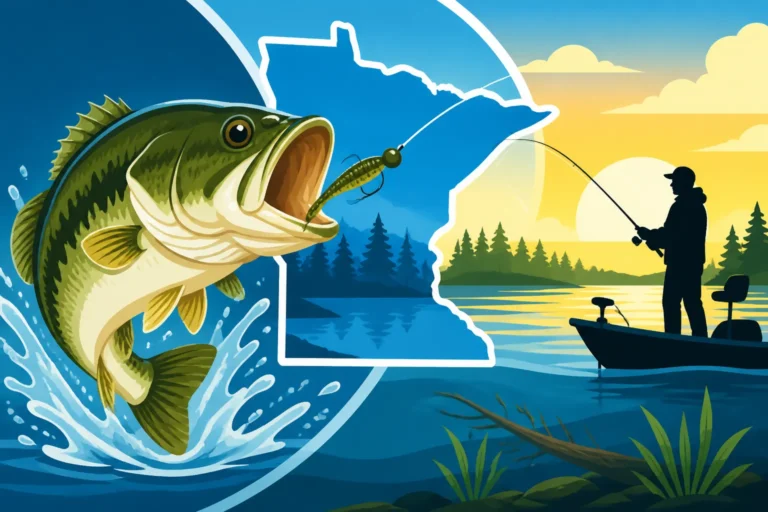
Trying to find a consistent bass bite in the Land of 10,000 Lakes can feel like looking for a needle in a haystack, especially when the weather refuses to cooperate. Whether you are battling heavy boat traffic on the metro lakes or facing the unpredictable winds of the north, this guide solves the puzzle of how to catch bass in Minnesota.
Understanding Minnesota Bass Behavior and Seasons
If you have spent any time on our water, you know that the Minnesota Bass Season (New 2026 Catch-and-Release) has changed the game for many anglers. The biggest frustration I hear from folks is that they don't know where the fish go once the water warms up. In the early spring, bass are looking for the warmest water they can find, which usually means shallow, muddy bays that soak up the sun. You will find them sitting in two feet of water near old cattail stalks, just waiting for the sun to hit its peak. It is a slow, methodical game where you have to be patient enough to let your lure sit.
As we move into the early summer, those fish start to transition. They leave the shallow nesting areas and head toward the first significant drop-off or the edge of the new weed growth. This is the "Goldilocks Zone" where the oxygen is high and the food is plentiful. I’ve spent countless hours staring at my electronics, wondering why I’m not getting bit, only to realize I was fishing five feet too shallow. In Minnesota, a five-degree temperature shift or a slight change in weed type from lily pads to coontail can make or break your entire weekend.
By the time late summer and fall roll around, the Smallmouth & Largemouth Bass in Minnesota start to behave very differently. The largemouth will often bury themselves so deep in the thickest milfoil you can find that you’ll think it’s impossible to get a lure to them. Meanwhile, the smallmouth start schooling up and following baitfish into deeper water. Understanding these seasonal shifts isn't just about knowing where to cast; it’s about understanding the biology of the lake. If the water is turning over in the fall, you might as well pack it up and head to a different lake that hasn't hit that stage yet.
Topwater Tactics for Explosive Action
There is nothing quite like the heart-stopping explosion of a five-pound largemouth hitting a frog on top of a weed mat. But let’s be honest, missing those fish is one of the most frustrating things in fishing. Most people set the hook too fast. You have to wait until you actually feel the weight of the fish before you yank back. In Minnesota, our lakes are often choked with vegetation, so your topwater game has to be on point. I always suggest checking out the latest frog designs on Amazon to see which ones have the best hook-up ratios because a cheap frog will just lead to lost fish and a lot of swearing on the boat.
Working the lily pads is a staple of Minnesota fishing. You want to look for "lanes" or "pockets" in the pads. Don't just cast blindly. Aim for the little openings where a bass can see the sky. I like to "walk" my frog across the leaves and then let it sit perfectly still in the open water pockets. Usually, that’s when the water erupts. If the pads are too thick, you might need to switch to a buzzbait to create more commotion and "call" the fish up from the depths. It's a high-energy way to fish that keeps you focused even when the sun is beating down.
Low-light windows are your best friend for topwater. I’m talking about that hour before the sun comes up and the hour after it goes down. This is when the big girls come out to play. On lakes with heavy recreational traffic, the bass get pushed deep and get "shy" during the day. Once the jet skis go home and the lake calms down, they move back into the shallows to feed. A black Whopper Plopper or a jitterbug worked along a dock line can produce the biggest fish of the year during these quiet hours. It's a peaceful, almost magical time to be on the water, provided you have enough bug spray.
Best Topwater Lures for MN Lakes
| Lure Type | Best Time | Primary Target | Tip |
|---|---|---|---|
| Hollow Body Frog | Mid-Summer | Largemouth in Slop | Wait 2 seconds before setting hook |
| Whopper Plopper | Dawn/Dusk | Smallmouth on Flats | Use a steady, medium retrieve |
| Poppers | Overcast Days | Largemouth near Docks | Use long pauses between pops |
| Buzzbaits | Windy Days | Aggressive Bass | Keep the blade ticking the surface |
Finesse Fishing for Pressure-Heavy Lakes
When the bite gets tough—and in Minnesota, it gets tough often—you have to scale down. We have some of the most pressured bass lakes in the country, and those fish have seen every spinnerbait and crankbait in the catalog. This is where finesse fishing comes in. The Ned rig has absolutely changed the way I fish. It looks like a little piece of a worm, and it looks like absolutely nothing special, but it catches fish when nothing else will. If you’re struggling, head over to Amazon and grab some 1/16 oz mushroom jigs and some small plastic sticks. It’s the ultimate "avoid a skunk" technique.
For those targeting the Smallmouth Bass Season & Limit in Minnesota, drop-shotting is a must-learn skill. Smallmouth are notorious for being picky, especially on clear water lakes like Mille Lacs. A drop-shot allows you to keep your bait suspended right in their face without it getting lost in the rocks or the muck. You want to use a light fluorocarbon leader because these fish can be extremely line-shy. I’ve sat over a school of smallies for an hour with a jig and got nothing, only to switch to a drop-shot and catch ten in a row. It’s a game of inches and patience.
Wacky rigging is another technique that feels "wrong" until you see it work. You just hook a plastic worm right through the middle and let it flutter down. It’s a slow way to fish, which is exactly why it works on lethargic bass. On a hot July afternoon when the lake is like glass, a wacky rig thrown under a shaded boat lift is almost a guaranteed bite. You don't even need to "work" the lure; the water does the work for you as the worm sinks. Just watch your line for that tell-tale "tick" or a sideways movement.
Power Fishing: Covering Water and Finding Actives
Sometimes you don't have time to slow down. If you're on a new lake and trying to find where the fish are holding, power fishing is the way to go. This involves using lures that you can move quickly to cover as much acreage as possible. Ripping a lipless crankbait through the tops of the weeds is a classic Minnesota move. You want the lure to snag slightly on the grass and then "snap" it free. That sudden burst of movement is what triggers the predatory instinct in a bass. It’s a workout for your arms, but it’s the best way to find an active school.
Spinnerbaits are another tool that every Minnesota angler should have tied on. They are remarkably weedless, making them perfect for our lush lakes. I love throwing a spinnerbait on a windy day when the "walleye chop" is hitting a rocky point. The flash and vibration mimic a distressed baitfish, and the bass will often crush it just as it clears a piece of cover. It's a great "search bait" because you can cover a whole shoreline in twenty minutes. If you aren't getting bit, move to the next spot. Don't fall in love with a shoreline that isn't producing.
Swim jigs are the secret weapon of many tournament pros in the Midwest. Unlike a traditional jig that you hop on the bottom, you swim this through the water column, much like a paddletail swimbait. It’s incredibly effective in "the slop"—that messy mix of duckweed and milfoil. Because the hook is protected by a weed guard, you can throw it into places where other lures would just come back with five pounds of salad attached. It’s a versatile technique that works from the moment the weeds start growing until they die off in the frost.
Targeting Minnesota's "Big Two": Largemouth vs. Smallmouth
While they are both bass, largemouth and smallmouth might as well be from different planets. If you want to catch a big bucketmouth, you need to look for "stuff." They love wood, docks, heavy weeds, and anything that provides shade and an ambush point. They are the couch potatoes of the fish world; they want to sit in one spot and have the food come to them. This is why Best Bass Lures for Minnesota Lakes usually involve something weedless. A heavy Texas-rigged creature bait flipped into the center of a brush pile is a classic largemouth strategy that never goes out of style.
Smallmouth, on the other hand, are the roaming wolves of the lake. They prefer hard bottoms—rocks, gravel, and sand. They love current and are often found in our river systems or on the big, wind-swept flats of our larger lakes. To catch them, you often have to look deeper than you would for largemouth. They are much more likely to follow a bait for a long distance before committing. This is why Drop-Shot for Smallmouth Bass is so effective; it keeps the bait in their line of sight for a longer period.
When choosing which one to target, consider the lake type. If you are on a shallow, stained water lake with lots of lily pads, you are in largemouth country. If you are on a deep, clear, cold lake with rocky reefs, you are in smallmouth heaven. Knowing the difference will save you hours of casting in the wrong spots. I’ve seen people try to "power fish" for smallmouth in forty feet of water with a spinnerbait, and it just doesn't work. Match your technique to the species and the habitat, and your catch rate will soar.
Essential Gear and Electronics for MN Bass
You can have all the best lures in the world, but if your gear isn't up to the task, you’re going to lose the fish of a lifetime. For most Minnesota applications, a medium-heavy baitcasting rod is your workhorse. It has enough backbone to pull a fish out of the weeds but enough tip to cast a lighter lure. If you’re just starting out, check the reviews on Amazon for a solid combo that won't break the bank. You don't need a thousand-dollar setup to catch fish, but you do need something reliable. I always suggest a 7-foot rod for a good balance of casting distance and control.
Electronics have changed fishing more in the last five years than in the previous fifty. Side imaging and live sonar allow us to see exactly where the fish are sitting. However, don't let the technology become a crutch. I’ve spent way too much time staring at a screen and not enough time with my lure in the water. Use your electronics to find the "structure"—the humps, the weed lines, and the rock piles—and then use your intuition to catch the fish. Knowing that a Best Bass Rod and Reel for Minnesota Lakes is in your hand gives you the confidence to make those tough casts into the wind.
Boat positioning is the most underrated part of bass fishing. If the wind is blowing you into the weeds, you’re going to spend more time fighting the boat than fishing. A good trolling motor with "Spot-Lock" technology is a total game-changer. It allows you to stay pinned on a specific spot regardless of the wind or current. It’s the difference between struggling to stay on a rocky reef and actually picking it apart piece by piece. Whether you are looking at Lund vs Ranger Fishing Boats, make sure your boat is set up for the way you actually fish.
Best Bass Lakes in Minnesota
If you are looking for quantity and convenience, Lake Minnetonka Bass Fishing is hard to beat. It is a massive, complex system with every kind of habitat you can imagine. You can fish the "slop" in the morning and then head out to the deep weed edges in the afternoon. The downside is the boat traffic, which can be brutal on the weekends. If you can sneak out on a Tuesday morning, you’ll have some of the best largemouth fishing in the state all to yourself. The docks on Minnetonka are legendary for holding giant fish, but you have to be able to skip a bait back into the darkest corners.
For a true world-class experience, Mille Lacs Smallmouth Bass: World-Class Fishery is the place to go. It is consistently ranked as one of the top bass lakes in the country. The smallmouth here are massive and incredibly aggressive. However, the lake is huge and can get dangerous very quickly when the wind picks up. You need a big boat and a lot of patience to find the schools on the vast rock flats. But once you find them, it is not uncommon to catch multiple four-pound fish in a single hour. It’s a bucket-list destination for any serious bass angler.
Don't overlook the "hidden gems"—the smaller lakes that don't get the headlines. There are thousands of lakes in central and northern Minnesota that rarely see a dedicated bass angler because everyone is chasing walleye. These lakes often have "uneducated" fish that will hit almost anything. I love taking a kayak into a small, no-motor lake and just enjoying the silence. Sometimes the Best Bass Lakes in Minnesota (Smallmouth & Largemouth) are the ones that don't even have a paved boat ramp. All you need is a little bit of effort to get off the beaten path.
Minnesota Fishing Regulations Disclaimer
Fishing regulations are subject to change, and it is your responsibility to stay informed. For the most accurate and up-to-date information regarding seasons, limits, and special lake-specific rules, always consult the official Minnesota Department of Natural Resources (DNR) website or their annual printed handbook. This guide is for informational purposes only and does not supersede state or local laws. Always practice safe boating and respect the environment to ensure our fisheries remain healthy for generations to come.