Namakan Lake Walleye Limit & Slot
Stepping onto the docks at the Ash River Visitor Center with Namakan Lake stretching out before you is a dream for any angler, but the excitement can quickly turn into a headache when you start trying to parse the complicated rulebook. Between the Voyageurs National Park regulations and the Ontario border rules, the Namakan Lake Walleye Limit & Slot can feel like a puzzle designed to trip you up. This guide simplifies those regulations so you can focus on the fishing and stay on the right side of the law.
Understanding Namakan Lake Walleye Regulations
Namakan Lake isn't just any body of water; it’s a sprawling, rock-strewn gem that sits right on the border between Minnesota and Ontario. Because it is part of the Namakan Reservoir—which includes Kabetogama, Sand Point, Crane, and Little Vermilion—the Minnesota Department of Natural Resources (DNR) manages it with a specific set of rules aimed at maintaining a world-class trophy fishery. The most common frustration for folks visiting from out of state, or even from the Twin Cities, is realizing that the Minnesota Walleye Limit & Size Rules you use on your local lake probably don’t apply here.
The primary goal of these regulations is to protect the "spawning biomass." In plain English, that means the DNR wants to keep the most productive breeding fish in the water. Namakan has a reputation for producing thick, healthy walleyes, but that only stays true if the mid-sized fish are allowed to reach maturity. If you’re planning a week-long trip, you need to be hyper-aware of the distinction between your daily limit and your total possession limit. It is incredibly easy to lose track when you are cleaning fish for a shore lunch and then realizing you’ve already hit your cap for the trip.
When you are out on the water near Kettle Falls, you’ll notice that the ecosystem is fragile despite its rugged appearance. The regulations aren't just red tape; they are the reason you can still go out and reliably hook into a twenty-inch fish. However, for the person who just wants a few fillets for the frying pan, the Minnesota Possession Limits Explained guide is essential reading because the "combined" limit for walleye and sauger on Namakan is one of the strictest in the state.
The Combined Limit Breakdown
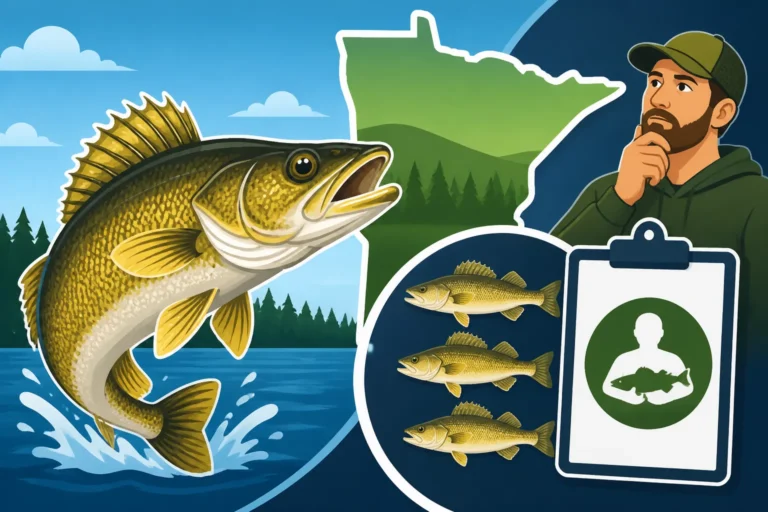
On Namakan Lake, you are looking at a combined limit of four walleye and sauger. This means you cannot have four walleyes and four saugers; the total count of those two species in your livewell or cooler cannot exceed four. Within that four-fish limit, there is another catch: you are generally looking at a specific number of walleyes allowed. In most years, including the current 2026 cycle, the rule is designed to encourage you to keep a few saugers if you really want a full limit, while being very conservative with the walleyes.
Think of it this way: if you catch three saugers and one walleye, you are at your limit. If you catch four walleyes, you are also at your limit. The sauger is the "little brother" to the walleye, and while they don't get as big, they are just as delicious. Many veteran Namakan anglers actually prefer targeting sauger for their evening meals to ensure they aren't dipping too deeply into the precious walleye population. For more details on telling these two apart, you might want to check out the Yellow Perch & Sauger in Minnesota section to avoid an accidental ticket.
Why Regional Consistency Matters
The DNR manages the entire chain—Crane, Kabetogama, Namakan, and Sand Point—under the same umbrella. This is a huge win for anglers because you don't have to worry about the rules changing the moment you boat through the "Hole in the Wall" or pass through the Namakan Narrows. This consistency helps prevent "accidental" violations where a boat drifts from one lake to another without realizing the slot limit has shifted.
However, just because the Minnesota side is consistent doesn't mean the whole lake is. The moment you cross that invisible line into Ontario waters, you are in a completely different jurisdiction. This is where many people get into hot water. The Canadian side often has different limits, and more importantly, they require different paperwork. If you haven't brushed up on the Border Water Fishing Rules (Minnesota-Ontario, Wisconsin) specifically for 2026, you are taking a massive financial risk every time you chase a school of fish across the border.
Navigating the Slot Limit on Namakan
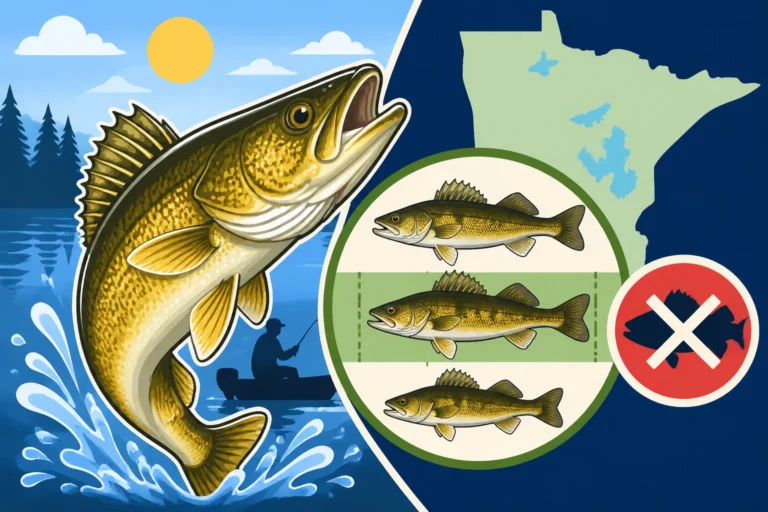
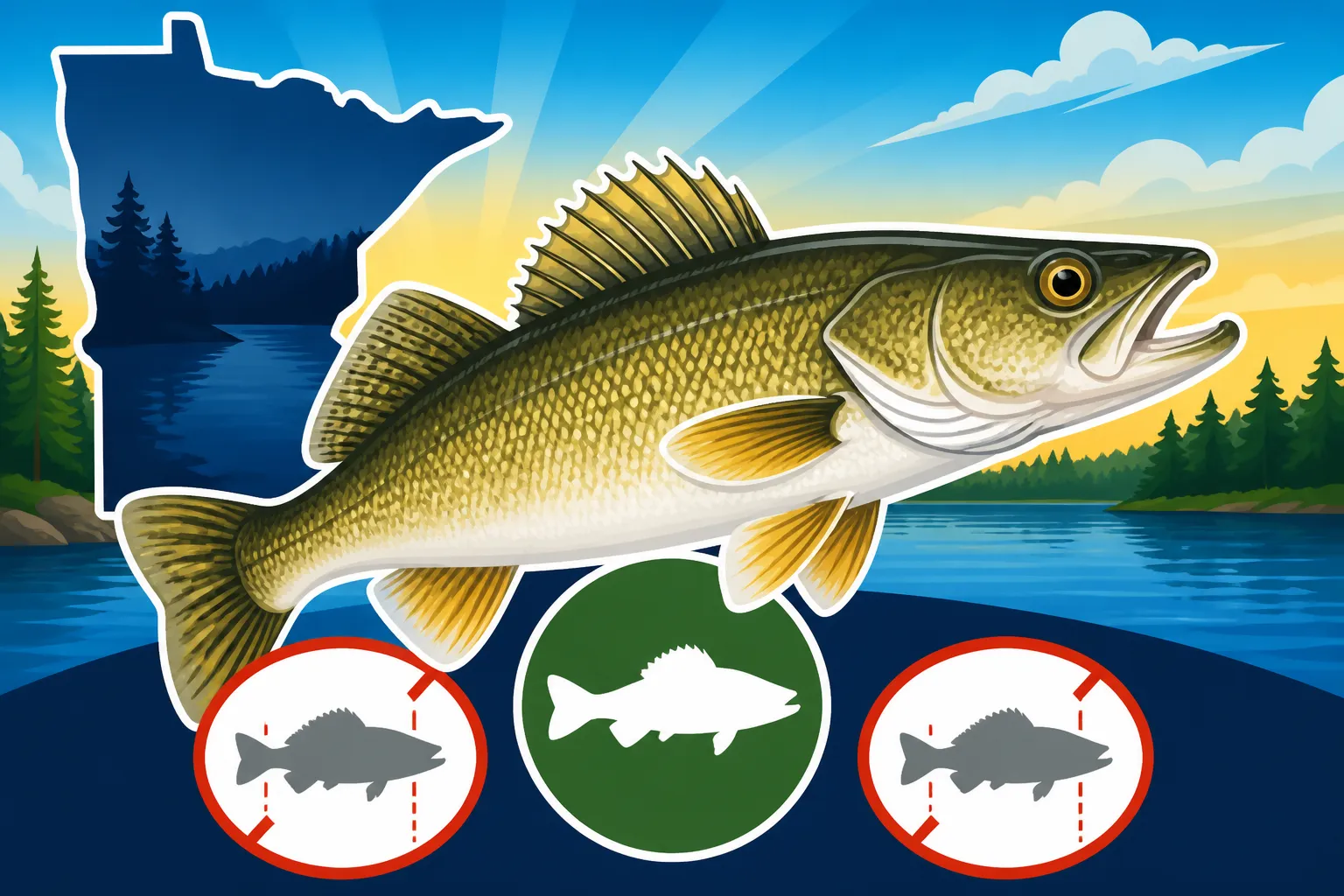
The "Slot" is the most talked-about part of the Namakan Lake Walleye Limit & Slot. Currently, the regulation dictates a protected slot of 18 to 26 inches. This means every single walleye you catch that measures between 18 and 26 inches must be immediately returned to the water. This is the "heart" of the breeding population, and the DNR is adamant about protecting it. You are allowed to keep fish under 18 inches, and you are allowed to keep exactly one fish over 26 inches as a trophy.
The frustration usually sets in when you have a day where every fish you hook is 19 or 20 inches. We call this "getting slotted." It can be a long, hungry day if you’re looking for a fish fry and all you're catching are beautiful, healthy fish that are just slightly too big to keep. But remember, this is a "good" problem to have—it means the lake is healthy. For a deeper dive into why the state uses these tools, read up on Minnesota Slot Limits: Which Lakes & Why to see the science behind the harvest.
Measuring Your Catch Correctly
When the difference between a legal meal and a $200 fine is a quarter of an inch, your measuring technique matters. You cannot just eye-ball it against a paddle or a cooler lid. In Minnesota, the legal measurement is taken with the fish's mouth closed and the tail squeezed to get the maximum length. If that tail tip touches the 18-inch mark, that fish has to go back.
It is a great idea to invest in a high-quality, flat measuring board rather than a flimsy tape measure. On a rocking boat in the middle of a windy Namakan afternoon, a tape measure can flex and give you a false reading. If you’re unsure, the most empathetic advice any veteran can give you is this: let it go. It isn't worth the stress or the potential penalty to keep a "tweener" fish. If you need a refresher on how to handle these fish to ensure they survive after being caught, check out Catch and Release Best Practices in Minnesota.
The One Over 26 Rule
The allowance for one fish over 26 inches is meant for the "fish of a lifetime." However, many modern anglers are choosing to photograph these giants and let them go anyway. A 26-plus inch walleye in Namakan is likely quite old and is a major contributor to the lake's future. While the law allows you to keep one, remember that it counts toward your daily limit of four. If you already have four fish in your possession and you catch a 28-incher, you have to let it go or release one of your smaller fish immediately to make room, assuming you haven't "reduced to possession" (i.e., killed or put on a stringer) the others yet.
Licensing Requirements for Border Waters
Fishing Namakan is a logistical challenge because of its geography. To fish the Minnesota side, you obviously need a valid Minnesota fishing license. If you are a resident, it’s straightforward, but if you are visiting, you need to look at the Minnesota Fishing License: Cost, Types & How to Buy (2026) to decide if a 3-day, 7-day, or annual pass is best for your trip. But the paperwork doesn't always stop there.
Many of the best reefs and points on Namakan are on the Canadian side. If you intend to even let your boat drift across the border while fishing, you must have an Ontario Fishing License and an Ontario Outdoors Card. Furthermore, you need to be aware of the Remote Area Border Crossing (RABC) permit if you intend to land your boat on Canadian soil or if you are crossing into certain areas. Even in 2026, the fines for being in Canadian waters without the proper remote crossing authorization are steep and strictly enforced by the CBSA and the Ontario MNR.
Navigating the RABC and COVID-Legacy Rules
While the world has moved on from the height of the pandemic, border crossing rules for remote waters like Namakan have remained somewhat rigid. You cannot simply pull up to a Canadian island for a shore lunch unless you have cleared customs or have the proper permits. Most anglers find it much easier to simply stay on the Minnesota side. If you do choose to fish the Ontario side, remember that you cannot bring live bait (like minnows or leeches) across the border into Canada. This is a massive "gotcha" for people who buy a flat of nightcrawlers in Ray, Minnesota, and think they can use them on the Canadian reefs.
National Park Requirements
Namakan is part of Voyageurs National Park, which adds another layer of oversight. While there isn't a separate "fishing fee" for the park, there are strict rules regarding where you can camp and how you handle your boat. If you are staying overnight, you must have a reserved campsite. Also, the park is very aggressive about the Aquatic Invasive Species (AIS) Rules for Boaters. You will likely encounter park rangers who will check your boat for the drain plug and ensure you aren't transporting lake water. To avoid a sour start to your trip, make sure you know How to Decontaminate Your Boat (AIS) before you hit the landing.
| Regulation Category | Minnesota Side (Namakan) | Ontario Side (Namakan) |
|---|---|---|
| Walleye/Sauger Limit | 4 Combined (Max 4 Walleye) | Varies by License (Sport vs. Conservation) |
| Protected Slot | 18" – 26" (Must be released) | Typically none (check current Ontario Zone 5) |
| Trophy Allowance | 1 over 26" | Usually 1 over a certain length |
| Live Bait Rules | Allowed (MN certified) | No live bait allowed from U.S. |
| Licensing | MN Resident or Non-resident | Ontario Outdoors Card + License |
Practical Tips for a Successful Trip to Namakan
Fishing a lake this big requires more than just knowing the Namakan Lake Walleye Limit & Slot; it requires a strategy for the environment. The lake is full of "lower units" (the bottom of boat motors) because the rocks here are unforgiving. A GPS with updated lake chips is not a luxury; it is a necessity. Even if you stay within the marked channels, the wind can push you onto a reef in seconds.
If the walleye bite is slow or you’re tired of catching slot fish that you have to release, don't forget the other species. Namakan has an incredible population of smallmouth bass and northern pike. In fact, many people find that the Lake Kabetogama Walleye patterns often mirror what’s happening on Namakan, so if you hear a report that the fish are deep on Kab, they are likely deep on Namakan too.
Best Practices for Catch and Release
Because you will be releasing a lot of fish due to the slot limit, your handling skills are vital. When fishing deep water (over 25 feet), walleyes can suffer from barotrauma—where their swim bladder expands because of the pressure change. If you plan to fish the deep holes near the Namakan narrows, you need to be prepared to "fizz" a fish or, better yet, stop fishing that deep if you intend to release everything.
Avoid using towels to grab the fish, as this wipes off their protective slime coat, leaving them vulnerable to infections. A rubberized net is much easier on their fins and scales. If you are taking a photo, keep the fish in the water until the very last second, and never hold a large walleye by the gill plate if you intend to let it go. We want these fish to stay healthy so they can eventually grow out of the slot and become that 30-inch trophy someone catches in 2030.
Staying Updated on Regulation Changes
The DNR occasionally tweaks these rules based on annual fish surveys. While the 18-26 inch slot has been the standard for a while, you should always check the Minnesota Fishing Regulations Changes for 2026 before your first cast. Sometimes possession limits are adjusted mid-season if the harvest numbers are too high or if environmental factors like a late ice-out affect spawning.
Being a responsible angler on Namakan means more than just catching fish. It means being a steward of one of the last truly wild places in the Midwest. By following the slot limits and respecting the border, you're ensuring that the next generation of anglers can experience the same "Namakan Magic" that we enjoy today. If you're looking for more general info on the area, check out the Rainy Lake Fishing Regulations (2026) as it shares many of the same border-water characteristics.
Disclaimer
Fishing regulations in Minnesota, particularly on border waters like Namakan Lake, are subject to change by the Minnesota Department of Natural Resources (DNR) and Ontario Ministry of Natural Resources. While this guide is based on 2026 projections and historical data, always consult the official 2026 Minnesota Fishing Regulations handbook or the DNR website before your trip to ensure you have the most current information on limits, slots, and bait restrictions.