Is a Fishing License Required on Rainy Lake?
One of the most common headaches for anyone planning a trip to International Falls is the confusion surrounding border water regulations. You’re out on the massive expanse of the water, the walleye are biting, and suddenly you realize you aren't quite sure if you’ve drifted into Canadian territory. This guide clarifies exactly when you need a license on Rainy Lake and how to stay legal on both sides of the border.
The Core Question: Is a License Mandatory on Rainy Lake?
If you are wetting a line anywhere on the Minnesota side of Rainy Lake, the answer is a definitive yes. Unless you fall into a very specific exempt category, such as being a Minnesota resident under the age of 16 or over the age of 90, you must have a valid fishing license. This isn't just a suggestion; the Minnesota Department of Natural Resources (DNR) frequently patrols these waters, especially around popular spots like the Brule Narrows or the mouth of the Rainy River.
The frustration for many anglers is that Rainy Lake isn't just one body of water with one set of rules. Because it serves as a border between the United States and Canada, your physical location on the water determines which government agency has jurisdiction over your boat. If you are fishing in Minnesota waters, you need a Minnesota license. If you cross that invisible line into Ontario, your Minnesota license becomes a useless piece of paper, and you are suddenly required to possess an Ontario Outdoors Card and a fishing license.
For those visiting from out of state, the process is slightly different than for locals. You will need to look into Nonresident Fishing in Minnesota: Licenses & Rules to ensure you are paying the correct fees and following the specific guidelines for visitors. Rainy Lake is a world-class fishery, but the penalties for fishing without the proper credentials can quickly turn a dream vacation into a legal nightmare involving heavy fines and even the seizure of your fishing gear.
Understanding Minnesota Resident Requirements
For locals, the rules are fairly straightforward but still require attention to detail. If you are a resident between the ages of 16 and 89, you need a standard angling license. Many people forget that residency in Minnesota is defined by living in the state for a specific period (usually 60 days) and having a valid state ID. If you have recently moved or are a seasonal resident with an out-of-state driver's license, you might still be classified as a nonresident for licensing purposes.
It is also worth noting that there are different tiers of licenses. For instance, the Minnesota Conservation vs Regular License choice is popular on Rainy Lake. A conservation license is cheaper but allows you to keep only half the standard limit of fish. On a lake where the walleye slot limits are strict, many anglers find the conservation license to be a smart, budget-friendly move since they often practice catch-and-release anyway.
The Ontario Factor and the International Border
The biggest "gotcha" on Rainy Lake is the international border. Roughly 70% of Rainy Lake is actually in Ontario, Canada. The border follows the old deep-water channel of the river and lake, weaving between islands and through open bays. If you intend to follow the fish into Canadian waters, a Minnesota license will not protect you.
To fish the Canadian side, you need two things: an Ontario Outdoors Card and an Ontario fishing license (either a "Sport" or "Conservation" level). Furthermore, if you are crossing the border by boat and plan to touch Canadian soil or anchor in Canadian waters, you generally need to report to Canadian Customs or have a Remote Area Border Crossing (RABC) permit. Understanding the Border Water Fishing Rules (Minnesota-Ontario, Wisconsin) is vital because Canadian conservation officers are known for being very strict regarding border crossings and licensing.
Navigating Rainy Lake Regulations and Limits
Once you have your license in hand, the work isn't over. Rainy Lake has "special" regulations that differ from the standard Minnesota inland water rules. These rules are designed to protect the unique trophy walleye population that makes this lake famous. You cannot simply assume that the limits you follow in the Twin Cities apply here in the Northwoods.
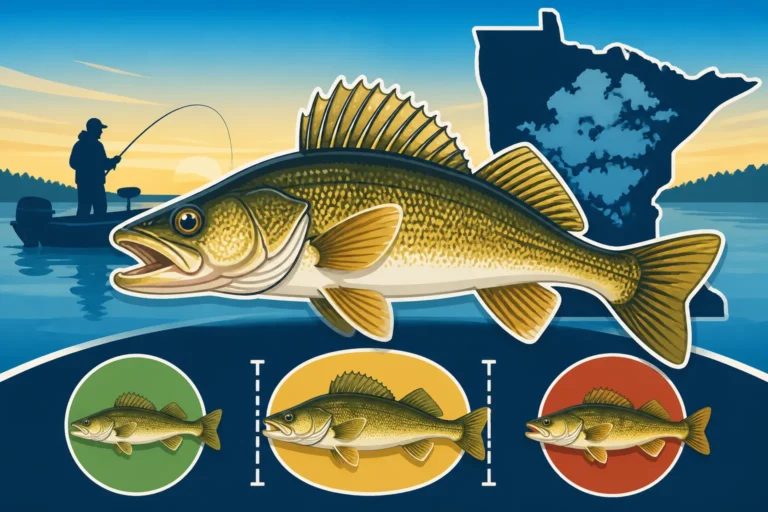
The most critical regulation involves the Rainy Lake Walleye Regulations (2026). Currently, Rainy Lake is managed under a special slot limit. This means there is a specific range of fish lengths that you are required to release immediately. For example, if the regulation states you must release all walleye between 18 and 26 inches, and you keep one that is 20 inches, you are in violation of the law. This is a common point of contention among anglers who want to bring home a "trophy" for the wall, but these rules have been instrumental in maintaining the high quality of fishing on the lake.
Size Limits and Possession Rules
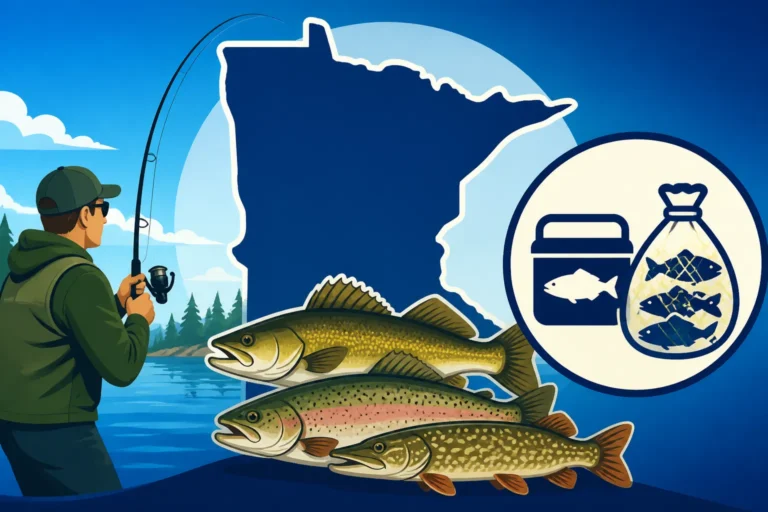
Possession limits are another area where people get tripped up. The term "possession" doesn't just mean what is in your livewell at that exact moment; it includes fish in your cooler, your hotel freezer, or your vehicle. If you are staying at a resort for a week, you need to be very careful about Minnesota Possession Limits Explained. On Rainy Lake, the combined limit of walleye and sauger is often four, with only one walleye allowed over the slot.
If you are fishing both sides of the border, you must be extremely cautious. You cannot possess more than one limit of fish. If you catch your limit in Ontario and then drive back into Minnesota waters to keep fishing, you must ensure you are not over the Minnesota limit. Typically, the rule of thumb is that the most restrictive limit applies if you are transporting fish across the border. Always check the Rainy Lake Walleye Limit & Slot updates before you head out, as these numbers can shift based on annual DNR surveys.
Species-Specific Regulations
While walleye are the primary draw, Rainy Lake is also home to massive northern pike, smallmouth bass, and even sturgeon. Each of these species has its own set of rules. Northern pike on Rainy Lake often have a protected slot as well, aimed at producing more "trophy" class fish over 40 inches. Smallmouth bass are generally open for harvest, but the local culture heavily favors catch-and-release to preserve the incredible size of the "bronzebacks" found in the rocky reefs.
If you are targeting sturgeon, particularly in the Rainy River which feeds the lake, you need to be aware of the tag requirements. Fishing for these prehistoric giants is a unique experience, but it requires a specific sturgeon tag if you plan to harvest one during the designated keep season. For most of the year, it is a catch-and-release fishery only.
| License Type | Estimated Cost (Resident) | Estimated Cost (Nonresident) | Primary Benefit |
|---|---|---|---|
| Annual Angling | $25.00 | $51.00 | Full harvest limits allowed. |
| Conservation | $15.00 | $36.00 | Lower cost; half-possession limits. |
| 24-Hour License | $12.00 | $14.00 | Perfect for a quick one-day trip. |
| 72-Hour License | N/A | $36.00 | Best for weekend visitors. |
| Sturgeon Tag | $5.00 | $5.00 | Required to harvest one sturgeon per year. |
Logistics: How and Where to Buy Your License
The days of needing to find a specific bait shop that is open at 5:00 AM just to get a paper license are mostly behind us. While many local shops in International Falls and Ranier still offer this service—and it’s a great way to support the local economy and get a quick fishing report—digital options have become the standard for most anglers.
If you are tech-savvy, the easiest way to prepare for your trip is to learn How to Get a Minnesota Fishing License Online. The Minnesota DNR website allows you to purchase and print your license from home, or you can save a PDF copy on your smartphone. Having a digital copy is perfectly legal in Minnesota, provided you can produce it when a conservation officer asks to see it. Just make sure your phone is charged!
Purchasing in International Falls
For those who prefer a physical copy or need to pick up some last-minute gear, there are several reliable locations in the International Falls area. Places like Outdoorsman's Headquarters or the local Holiday station stores are staples for license sales. These locations can also provide you with the physical Minnesota Fishing Regulations (2026) booklet, which is an invaluable resource to keep in your boat’s glove compartment for quick reference when you’re unsure of a slot limit.
If you are a senior citizen, don't forget to ask for the discounted rates. There is a specific Minnesota Fishing License for Seniors that provides a significant break on the annual fee for residents. For families traveling with children, remember that Minnesota Fishing License for Kids & Youth rules generally exempt anyone under 16 from needing their own license, though their catch counts toward the limit of the licensed adult they are with.
Dealing with Aquatic Invasive Species (AIS)
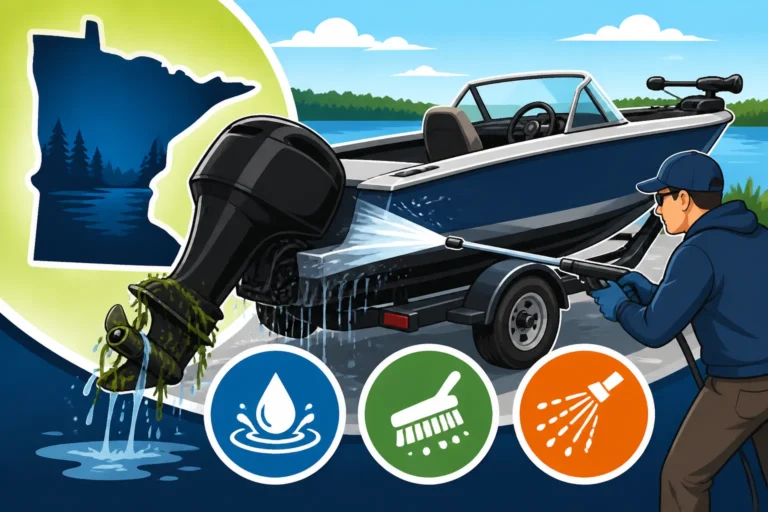
Before you even put your boat in Rainy Lake, you have a legal obligation regarding Aquatic Invasive Species. Rainy Lake is a sensitive ecosystem, and the spread of zebra mussels or spiny water fleas can be devastating. Minnesota law requires that you drain all water from your boat, livewells, and bait buckets before transporting your craft.
Violating Aquatic Invasive Species (AIS) Rules for Boaters can result in a fine that is much more expensive than the fishing license itself. Conservation officers often set up checkpoints on the roads leading away from Rainy Lake boat launches to ensure compliance. It only takes a few minutes to pull your plug and check your trailer for weeds, and it’s a vital part of being a responsible angler on these northern waters.
Real-World Scenarios: Avoiding Common Pitfalls
To help you understand how these rules play out in the real world, let's look at a few common scenarios that catch people off guard on Rainy Lake.
Scenario 1: The Accidental Border Crosser
You are fishing a reef near the border. The wind picks up, and you drift a few hundred yards north. An Ontario MNR officer approaches you. Even if you didn't mean to cross, if you are fishing in Canadian waters without an Ontario license, you are liable. This is why having a high-quality GPS with a lake map chip (like LakeMaster or Navionics) is essential. These chips clearly mark the international boundary line.
Scenario 2: The Multi-Species Mix-Up
You have a limit of walleye in your livewell, and you decide to stay out and fish for northern pike. If you catch a walleye while pike fishing, you must release it immediately. If you have five walleye in your boat and the limit is four, you are "over-limit" the second that fifth fish hits the floor of your boat. Always count your fish before you decide to keep "just one more."
Scenario 3: The Guest in the Boat
You have a license, but your friend from out of state does not. They figure they will just "watch" you fish. If that friend touches a fishing pole, helps you net a fish, or even holds the rod while you tie a lure, they are legally "angling." If a DNR officer sees this, your friend will likely receive a citation for fishing without a license. It is always better to spend the few dollars on a Minnesota Fishing License: Cost, Types & How to Buy (2026) for every person in the boat who plans to participate in any way.
Staying Updated with the 2026 Rules
Fisheries management is a dynamic process. Every year, the DNR evaluates the health of the Rainy Lake fish population and may adjust the Rainy Lake Fishing Regulations (2026) accordingly. Sometimes the slot limit narrows, or the bag limit changes based on the success of recent spawning years. Before you launch your boat for the first time each season, take five minutes to read the latest posting at the public landing or check the DNR’s mobile-friendly website. Being "unaware" of a change is never a valid defense in the eyes of a conservation officer.
Minnesota Fishing Regulations Disclaimer
This guide is intended for informational and educational purposes only and should not be considered legal advice or a substitute for the official Minnesota Department of Natural Resources (DNR) or Ontario Ministry of Natural Resources (MNR) regulations. Fishing laws, license costs, and species-specific limits are subject to change frequently. Always verify current rules and boundary lines through official government channels before beginning your fishing trip. The author and publisher are not responsible for any legal repercussions, fines, or incidents arising from the use of this information. Practice safe boating and respect the environment.