What Is the Sunfish Limit on My Lake?
You’re out on the water, the sun is shining, and the bluegills are finally biting, but then it hits you: is the limit on this specific lake still twenty, or did it change to five recently? Navigating Minnesota’s shifting sunfish regulations can be a massive headache for even the most seasoned anglers. This guide breaks down exactly how to find your lake's specific rules so you can stay legal while enjoying a classic fish fry.
The Evolution of Minnesota’s Sunfish Regulations
For decades, the sunfish limit in Minnesota was a straightforward, statewide affair. You could head to almost any lake in the North Star State and confidently keep 20 sunfish. However, as fishing pressure increased and technology like forward-facing sonar made it easier to find the "bull" bluegills, the Minnesota Department of Natural Resources (DNR) noticed a troubling trend. The average size of sunfish was plummeting. To combat this, they introduced the Quality Sunfish Initiative, which has fundamentally changed how we look at the daily bag limit depending on which body of water we are fishing.
The Science Behind the Quality Sunfish Initiative
The core reason for the varying limits you see today—often five or ten fish instead of twenty—is rooted in bluegill biology. Sunfish are highly social and have a complex "nesting" hierarchy. In a healthy lake, large "bull" males guard the nests. Their presence actually chemically and socially inhibits the younger, smaller males from spawning too early. This allows those younger fish to put their energy into body growth rather than reproduction.
When we, as anglers, harvest all the large males, that social structure collapses. The smaller males begin spawning at a younger age and a much smaller size. Once a sunfish starts spawning, its growth rate slows down significantly. This leads to a phenomenon called "stunting," where a lake becomes overpopulated with tiny, four-inch sunfish that never seem to get any bigger. By implementing a 5-fish limit on specific lakes, the DNR aims to protect those large guardian males, ensuring the lake can continue to produce "plate-sized" sunfish for years to come.
Why Every Lake Can Feel Like a New Set of Rules
It is incredibly frustrating to pull up to a landing in Brainerd or Alexandria and realize the rules are different from the lake you fished just ten miles down the road. Currently, there are over 400 lakes in Minnesota that have these "special" or "experimental" regulations. This means the days of assuming a 20-fish limit are largely over. You have to treat every new boat ramp as a potential zone for unique Minnesota Crappie & Sunfish Limits that might differ from the statewide standard.
The "experimental" tag can also be confusing. It usually means the DNR is monitoring the lake for a 10-year period to see if the reduced bag limit actually improves the size structure of the fish. If it works, the regulation becomes permanent. If it doesn’t, it might revert to the statewide limit. This constant flux is why checking the regulations annually is no longer just a suggestion—it is a necessity to avoid a hefty fine.
Understanding the Difference Between Daily Bag and Possession Limits
One of the most common mistakes I see at the cleaning station is a misunderstanding of what a "limit" actually means. In Minnesota, there is a legal distinction between what you can catch in a single day and what you can have in your freezer at home or in your bucket on the boat. This is where many people run into trouble with the law, especially on multi-day fishing trips.
The Daily Bag Limit Explained
The daily bag limit is the number of fish you can legally "keep" or "reduce to possession" in a single calendar day. If you are on a lake with a 5-sunfish limit, you can only keep five fish between midnight and midnight. Even if you eat those five fish for lunch, you cannot go back out in the afternoon and catch five more. Your "daily" allowance has been met. This is a common point of contention, but the law is very specific: once you have reached that limit for the day, you are done harvesting that species until the next calendar day begins.
The Total Possession Limit
The possession limit is the total number of fish you are allowed to have at any given time, regardless of where they are. This includes fish in your livewell, fish in your cooler, and fish in your freezer at home. For sunfish, the statewide possession limit is typically 20 fish. This means if you go on a four-day trip to a lake with a 5-fish daily limit, you can bring home a total of 20 fish at the end of the trip (5 fish per day x 4 days). However, you can never exceed that total cap of 20. For a deeper dive into these nuances, you should review Minnesota Possession Limits Explained to ensure you aren't accidentally breaking the law by "stacking" limits.
Processing and Transporting Your Catch
How you prepare your fish for the ride home also matters. Minnesota law requires that fish be transported in a way that they can be counted and identified. For sunfish, this generally means you can fillet them, but you must leave a 1-square-inch patch of skin with scales on the fillet so a conservation officer can identify the species. If you are fishing a lake with a special length limit (though rare for sunfish), the fish must remain whole or be filleted in a way that the length can still be measured. Always keep your fish separated by species in your cooler to make the inspection process quick and painless if you get pulled over or met at the ramp.
How to Find Your Specific Lake's Sunfish Limit
Gone are the days when you had to rely solely on the folded paper map in your glove box. While the DNR still produces the massive regulation booklet, there are much faster ways to find out what is happening beneath the surface of the water you are currently floating on.
Using the MN DNR LakeFinder Tool
The absolute gold standard for checking limits is the MN DNR LakeFinder. You can access this via their website or a mobile browser. You simply type in the name of the lake and the county, and it will pull up a wealth of information, including water clarity, fish stocking data, and—most importantly—special regulations. Look for the "Regulations" tab or a highlighted box at the top of the lake’s page. If there is a special 5 or 10-fish limit, it will be clearly listed there.
Checking the Printed Regulation Booklet
If you prefer the old-school method, you can pick up a physical copy of the Minnesota Fishing Regulations at any place that sells licenses, like a local bait shop or a big-box retailer. To save time, look for the section titled "Special Regulations." These are listed alphabetically by lake name. It is a good idea to keep a copy in your boat’s side pocket. If you can't find a physical copy, you can always download the Minnesota Fishing Regulations PDF: Where to Find It on your smartphone for offline use when you are in the deep woods of the Boundary Waters where cell service is non-existent.
Looking for Signs at Public Access Points
The DNR does a fairly good job of posting signs at public boat launches. These signs are often bright yellow or have bold lettering indicating a change in the sunfish limit. However, do not rely on these signs 100% of the time. Vandals sometimes pull them down, or ice and wind can knock them over during the winter. As an ethical angler, the "I didn't see a sign" excuse rarely holds up when you're talking to a DNR officer. It is your responsibility to know the rules before your first cast.
Identifying Your Catch: Not All Sunfish Are Created Equal
When people talk about "sunfish," they are usually referring to Bluegills. However, Minnesota is home to several different species of panfish, and the regulations can sometimes treat them as a collective group or as individual species depending on the lake. Knowing the difference is vital for staying within your Minnesota Crappie & Sunfish Limits.
Bluegill vs. Pumpkinseed vs. Green Sunfish
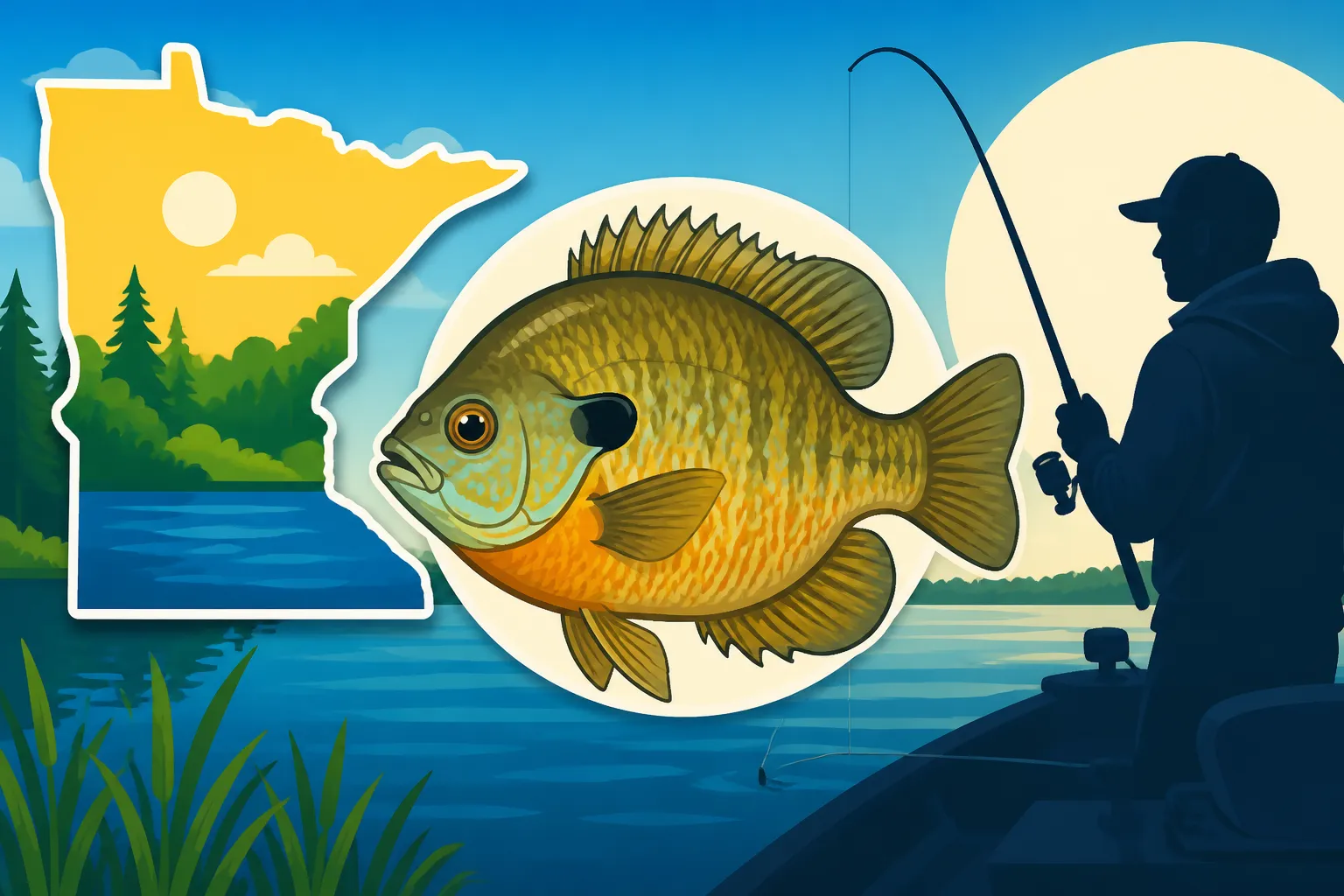
The most common sunfish you’ll encounter is the Bluegill. They are identified by the solid black "ear" flap and a dark spot at the base of the dorsal fin. Pumpkinseeds are often more colorful, with bright orange spots and a red or orange tip on their ear flap. Green sunfish have a much larger mouth and a blueish-green tint. In most Minnesota lakes, the "sunfish limit" applies to the aggregate of all these species combined. If the limit is 20, you can have 10 bluegills and 10 pumpkinseeds, but you cannot have 20 of each. To help you distinguish between these and other panfish, check out our guide on Bluegill vs Sunfish vs Crappie: Panfish ID.
Hybrid Sunfish and the Law
Nature isn't always clean-cut. Sunfish species frequently interbreed, creating hybrids (like a Bluegill-Pumpkinseed cross). These hybrids can be tricky to identify. For the purposes of your bag limit, the DNR generally counts any sunfish hybrid toward your total "sunfish" bag. Don't try to argue that a hybrid shouldn't count toward your limit of five; you will lose that argument every time. If it looks like a sunfish, smells like a sunfish, and fights like a sunfish, count it toward your sunfish limit.
Table: Minnesota Sunfish Limit Scenarios
| Lake Type | Daily Bag Limit | Possession Limit | Notes |
|---|---|---|---|
| Standard MN Lake | 20 Sunfish | 20 Sunfish | The default rule unless posted otherwise. |
| Quality Sunfish Lake | 5 Sunfish | 5 Sunfish | Common in the Brainerd/Alexandria areas. |
| High-Pressure Metro | 10 Sunfish | 10 Sunfish | Specific to select Twin Cities area lakes. |
| Border Waters | Varies (e.g., 15) | Varies | Check specific rules for WI/SD/ND/Canada borders. |
Tips for Teaching Kids About Limits and Conservation
Panfishing is the gateway to the sport for most children. It is where we all learned to watch a bobber and master the hookset. This makes it the perfect time to teach the next generation about the ethics of limits and the importance of conservation.
Catch and Release for Future Generations
When you are on a lake with a 5-fish limit, it's a great opportunity to explain "selective harvest." Tell your kids that by putting the biggest ones back, we are making sure they can have babies that grow up to be big, too. This turns a restrictive rule into a positive action. If you're planning a family trip, make sure you understand the requirements for a Minnesota Fishing License for Kids & Youth so everyone is legal from the start.
Turning Identification Into a Game
Since How to Catch Bluegill: Easy Beginner Tactics often results in a lot of action, use that time to teach kids how to identify different species. Have them look for the red spot on a Pumpkinseed or the vertical bars on a Bluegill. When children feel like they are part of the "management team," they are much more likely to respect the regulations as they grow into adult anglers.
Finding the Best Spots for a Fish Fry
If you are strictly looking for a meal and want to keep a full 20-fish limit, you might want to avoid the "Quality Sunfish" lakes and target some of the Best Panfish Lakes in Minnesota that still operate under the statewide standard. These lakes often have higher populations of mid-sized fish where a larger harvest is actually beneficial to the ecosystem.
Staying Legal During the Winter Months
The rules don't change just because the water turned to ice. Ice fishing for sunfish is a Minnesota tradition, but it brings its own set of challenges regarding limits. In the winter, fish often school up in deep holes, making it incredibly easy to catch your limit in a matter of minutes.
The Problem with Culling
Culling—the act of replacing a smaller fish in your bucket with a larger one caught later—is illegal in Minnesota once you have reached your limit. This is especially important in the winter. Because of the pressure changes when pulling a fish from deep water (barotrauma), many sunfish will not survive being released after being in your bucket for an hour. Once a fish goes into your bucket or on the ice, it counts toward your limit. If you catch a sixth fish on a 5-limit lake, that fish must be released immediately, regardless of its size.
Double Checking Early Season Ice Limits
Late winter, often called "late ice," is when sunfish start moving toward their spawning bays. They become very aggressive and easy to target. This is also the time when DNR officers are most active on the ice. Before you head out on your Spring Crappie Fishing in Minnesota or sunfish excursions, do one last check of the LakeFinder. Regulations can technically change with the new season opener, and you don't want to be caught using last year's rules.
Minnesota Fishing Regulations Disclaimer
While I strive to provide the most accurate and up-to-date information regarding Minnesota fishing regulations, rules can change due to emergency DNR orders, legislative updates, or specific lake management shifts. Always consult the official Minnesota Department of Natural Resources (MN DNR) Handbook and the LakeFinder tool before heading out on the water. This guide is for informational purposes and does not replace the legal authority of the official state regulations. Be sure to carry a valid license and follow all posted signage at public access points.