What Happens If You Fish Without a License in Minnesota?
We've all been there: you're itching to get out on the water, the sun is shining, and the fish are practically jumping into the boat in your mind. Maybe you forgot to renew your license, or perhaps you thought that quick cast from shore wouldn't hurt anyone. Whatever the reason, the idea of fishing without a valid license in Minnesota can seem like a minor oversight, but let me tell you, the reality can hit you harder than a trophy muskie on a topwater lure. This guide is here to walk you through exactly what happens if you find yourself in that sticky situation, from the initial encounter with a conservation officer to the lasting legal and financial impacts, so you can avoid those unwelcome surprises.
Understanding Minnesota's Fishing License Requirements
Before we even dive into the "what if," it's absolutely crucial to grasp the "what should be." Minnesota has a well-structured licensing system designed to help manage our incredible fisheries, and knowing the rules is your first line of defense against any mishaps. It's not about being a rule-follower just for the sake of it; it's about contributing to the health and sustainability of the very waters we love to fish.
Who Needs a License?
This is probably the most common question, and sometimes the source of confusion for many anglers. Generally speaking, anyone 16 years of age or older needs a valid Minnesota fishing license to fish in public waters, with some specific exceptions. If you're a resident, you'll need a resident license. If you're visiting our beautiful state, you'll need a nonresident license. The rules are pretty straightforward for most, but there are always nuances. For instance, children under 16 can usually fish without a license, which is fantastic for introducing the next generation to the sport. Likewise, certain individuals with disabilities or those actively serving in the military might have different requirements or even exemptions. It's always best to check the Minnesota Department of Natural Resources (DNR) official regulations, which you can often find in print at most bait shops or easily online. Don't assume your buddy knows all the ins and outs; take a few minutes to verify for yourself.
Types of Licenses Available
Minnesota offers a variety of fishing licenses to fit different needs, which can sometimes add to the confusion if you're not paying close attention. The most common is the annual license, which covers you from March 1st through the end of February the following year. This is your bread and butter if you plan on fishing regularly throughout the open water and ice fishing seasons. We also have combination licenses that bundle fishing with small game hunting, which can be a good deal if you enjoy both outdoor pursuits. For those just visiting or only planning a quick trip, there are shorter-term options, like a 24-hour or three-day nonresident license. These are super convenient if you're only going to be here for a long weekend and don't want to commit to a full annual nonresident fee. Additionally, there are special licenses like the White Earth Reservation fishing license, which allows fishing within the reservation boundaries under specific agreements. Understanding the nuances of each type can save you money and ensure you're compliant. You can learn more about specific costs and how to purchase them in a detailed guide like Minnesota Fishing License: Cost, Types & How to Buy (2026).
How to Obtain a License
Gone are the days when you absolutely had to trek to a bait shop or a county auditor's office. While those options are still perfectly valid and often a great way to support local businesses, convenience has vastly improved. You can easily buy your Minnesota fishing license online through the DNR's licensing system. It’s quick, efficient, and you can usually print out a temporary copy or save it to your phone right away. This is my go-to method these days, especially when I realize the opener is just around the corner! Many bait shops, sporting goods stores like Fleet Farm or Cabela's, and even some general stores across the state are authorized license agents. This is a great choice if you prefer a physical license card or need to pick one up on your way to the lake. And don't forget the phone option – you can call the DNR's licensing hotline during business hours. No matter how you choose to get yours, the key is to ensure it's purchased before your line hits the water. A guide on How to Get a Minnesota Fishing License Online can walk you through the digital process step-by-step.
The Immediate Consequences of Getting Caught
Okay, so you've made a mistake. Maybe you genuinely forgot, maybe you were trying to skirt the rules, or maybe you just didn't realize you needed one. Regardless, the moment a Minnesota DNR conservation officer pulls up to your boat or approaches you on the shore, the situation changes from a peaceful day of fishing to a potential legal headache. It's a scenario no one wants, and frankly, it can be quite unnerving.
The Initial Interaction with a Conservation Officer
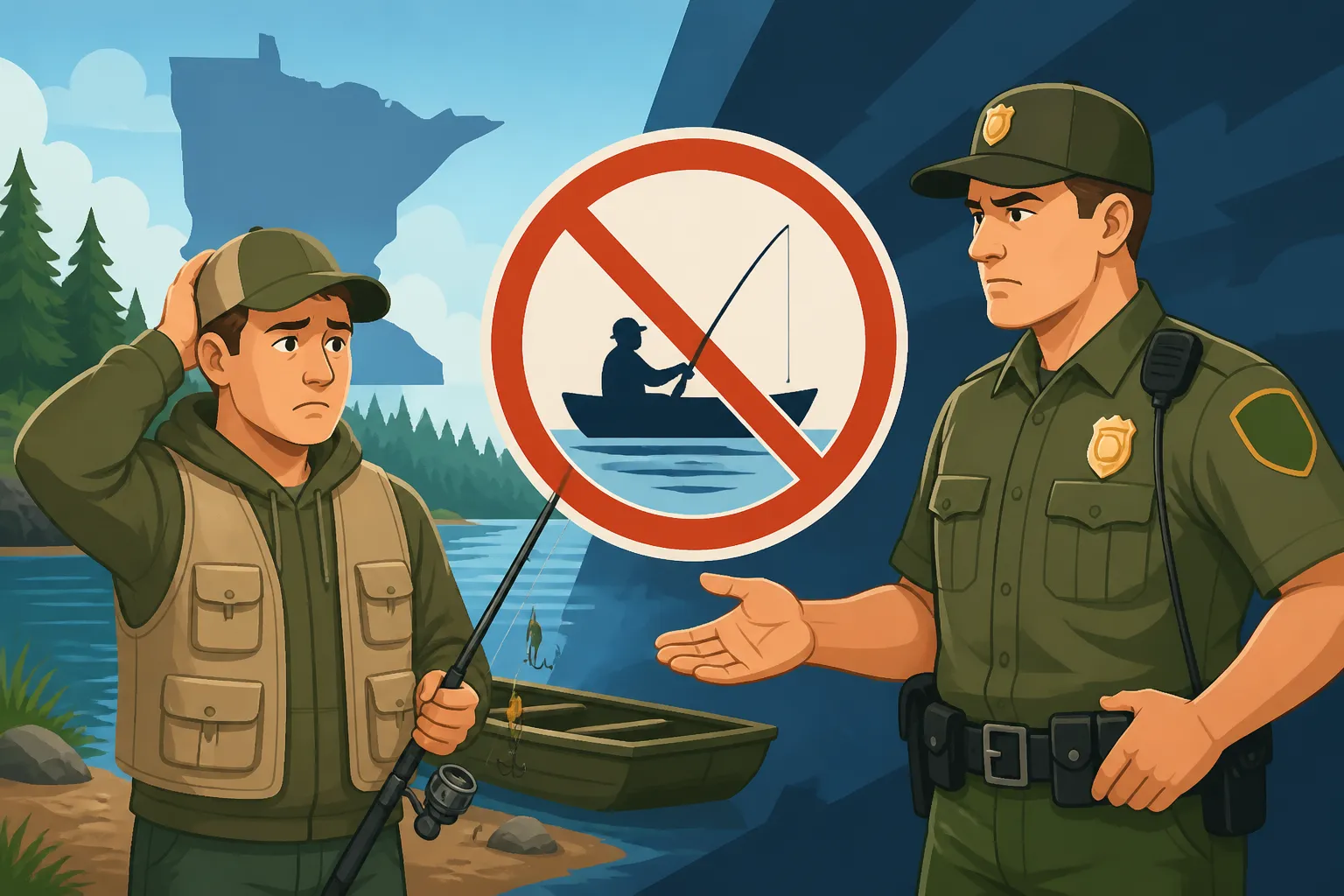
Let me tell you, these officers are out there to protect Minnesota's natural resources, and they take their jobs seriously. When they approach you, they'll typically identify themselves and ask to see your fishing license, proof of identification, and potentially check your catch for compliance with Minnesota Fishing Limits: Bag & Possession (2026). This isn't a friendly chat; it's an official interaction. It's natural to feel a bit flustered or even defensive, but the absolute best thing you can do is remain calm, cooperative, and respectful. Arguing or being confrontational will only make things worse, potentially leading to additional charges or a less favorable outcome. If you genuinely forgot your license at home, explain the situation calmly. They might be able to verify it in their system, but that's not a guarantee they'll let you off with a warning. Their primary job is enforcement, and a missing license is a clear violation.
Issuance of a Citation or Summons
If you're caught fishing without a valid license, the most common immediate consequence is receiving a citation, often referred to as a ticket or a summons. This isn't just a slap on the wrist; it's a formal legal document. The citation will outline the specific violation (fishing without a valid license), the Minnesota Statute violated, and details about how to respond. Often, it will include a fine amount that you can pay directly, essentially admitting guilt and avoiding a court appearance. However, depending on the severity of the offense, your history of violations, or if there are other accompanying infractions (like having over-limit fish or using illegal gear), the officer might issue a summons requiring you to appear in court. This means you'll have to stand before a judge and address the charges, which is a much more involved and stressful process than simply paying a fine.
Confiscation of Gear or Fish
This is where things can get particularly painful, beyond just a monetary penalty. In certain situations, conservation officers have the authority to confiscate any fish you've caught illegally, and in some cases, even your fishing equipment. Imagine losing your prized fishing rod, tackle box, or even your boat if the violation is severe enough. While full confiscation of a boat for a first-time license violation might be rare, it's certainly within the realm of possibility for repeat offenders or in conjunction with more serious violations. The fish you've caught, regardless of how beautiful or hard-won they were, will almost certainly be seized. This might seem harsh, but it's part of the deterrent to ensure fair play and conservation. It’s a stark reminder that those regulations are there for a reason, and ignoring them carries real consequences.
Financial Penalties: Fines and Surcharges
Let's talk money, because fishing without a license can hit your wallet harder than you might expect. It's not just a small "oopsie" fee; these fines are designed to deter illegal activity and help fund the very programs that stock fish, monitor water quality, and manage wildlife for everyone's enjoyment.
Base Fines for License Violations
The base fine for fishing without a valid license in Minnesota typically falls into the misdemeanor category. While the exact amount can vary depending on the county, the specific judge, and any additional circumstances, it's generally in the range of $100 to $300 for a first offense. This might not sound like a fortune, but it's often significantly more than the cost of an annual resident fishing license, which usually hovers around $25-$35. Think about that: forgoing a $35 license could easily cost you ten times that amount in a fine alone. If you're a nonresident, an annual license is typically more expensive, but so too can be the fines for violations. Some offenses might also carry higher fines if they're considered more egregious, like using illegal methods or taking protected species. It's a classic case of penny-wise, pound-foolish.
Additional Surcharges and Court Costs
Unfortunately, the base fine is rarely the end of it. Minnesota citations often come with additional surcharges and court costs that can quickly balloon the total amount due. These can include a criminal surcharge, law library fees, and other administrative costs. It's not uncommon for these added fees to nearly double the initial fine. So, that $180 fine for fishing without a license could easily turn into a bill closer to $300 or more once all the statutory charges are tacked on. If your violation requires a court appearance, expect even more expenses due to the time taken off work, potential attorney fees, and the hassle of navigating the judicial system. It all adds up, making that inexpensive license look like a steal in retrospect.
Understanding Restitution for Illegally Taken Fish
Here's another potential financial blow that many anglers don't consider: restitution. If you are caught illegally taking fish, especially game fish like walleye, northern pike, or muskie, you could be ordered to pay restitution to the state. This isn't a fine; it's compensation for the value of the natural resources you've unlawfully removed from the ecosystem. The DNR has established values for different species, and these can be surprisingly high for trophy fish or species that are particularly important to the state's fisheries. For example, a single walleye might have a restitution value of $10, but a large muskie or lake sturgeon could be hundreds of dollars. If you've got a stringer full of illegally caught fish, those restitution costs can escalate rapidly.
To give you a clearer picture, here's a simplified look at potential costs, though these can vary wildly based on specifics:
| Violation Type | Base Fine (Estimated Range) | Surcharges/Court Costs (Estimated) | Potential Restitution (Per Fish) | Total Potential Cost (Estimate) |
|---|---|---|---|---|
| Fishing Without License | $130 – $180 | $75 – $150 | N/A (unless fish taken) | $205 – $330+ |
| Fishing W/o License + 1 Walleye | $130 – $180 | $75 – $150 | $10 | $215 – $340+ |
| Fishing W/o License + 3 Walleye | $130 – $180 | $75 – $150 | $30 | $245 – $360+ |
| Taking Over-Limit Fish (e.g., 2 Walleye over) | $180 – $250 | $75 – $150 | $20 | $275 – $420+ |
| No License + Exceeding Possession Limit | $250 – $400+ | $100 – $200+ | Varies by species/count | $350 – $600+ |
Note: These are estimated ranges and can change based on statute updates, county, judge, and specific circumstances of the violation.
Beyond the Fine: Other Legal Repercussions
While the immediate financial hit is certainly painful, the consequences of fishing without a license can extend far beyond a simple fine. These are the "hidden" impacts that can affect your ability to enjoy fishing in the future and even show up in other aspects of your life.
Loss of Fishing Privileges
One of the most significant long-term repercussions is the potential loss of your fishing privileges. If you are convicted of fishing without a license, or any other serious fishing violation, the Minnesota DNR has the authority to suspend or revoke your angling license for a period of time. This means you won't be able to legally purchase a fishing license in Minnesota for a year, two years, or even longer, depending on the severity and frequency of your offenses. Imagine looking forward to the Minnesota Walleye Opener 2026 or an exciting ice fishing trip, only to realize you can't participate because your license has been revoked. It's a heartbreaking reality for many who've made poor choices on the water. This suspension often extends beyond just fishing; hunting and trapping privileges can also be affected.
Criminal Record Implications
Here's a detail many folks overlook: fishing without a license is generally classified as a misdemeanor offense in Minnesota. While it's not a felony, a misdemeanor conviction does go on your permanent criminal record. This isn't something to take lightly. A criminal record, even for a misdemeanor, can have unexpected consequences down the road. It might come up on background checks for employment, housing applications, or even when applying for certain professional licenses. While a fishing violation might not be a deal-breaker for every job, it can certainly raise questions and reflect poorly on your judgment. It's a reminder that respecting wildlife laws isn't just about conservation; it's about maintaining a clean legal slate.
The Impact on Future Licensing and Other State Privileges
A conviction for fishing without a license can also complicate your ability to obtain future licenses, not just for fishing, but potentially for other state-issued permits or professional licenses. While it might not outright prevent you from getting a driver's license, for example, it could be a factor in broader evaluations. Furthermore, Minnesota is part of the Interstate Wildlife Violator Compact. This means that if your fishing privileges are suspended or revoked in Minnesota, that suspension can be recognized and enforced in other member states across the country. So, if you live in Minnesota but love to fish in Wisconsin or the Dakotas, a violation here could prevent you from buying a license there too. It's a far-reaching network designed to ensure that wildlife law violators can't simply move to another state to continue their illegal activities. This compact ensures accountability and sends a clear message that responsible angling is a collective effort across state lines.
Preventing License Violations
The best way to deal with the consequences of fishing without a license is, of course, to never be in that situation in the first place. A little foresight and planning can save you a lot of grief, money, and stress down the line. It really boils down to simple habits and being proactive.
Double-Checking Regulations and Dates
It sounds obvious, but you'd be surprised how many people get caught simply because they assumed or forgot. Before every fishing season, or even before a specific trip if you haven't been out in a while, take five minutes to verify your license status. Look up the Minnesota Fishing Seasons & Opener Dates (2026) and confirm your license is current. The DNR updates regulations annually, and sometimes even makes in-season adjustments, especially for sensitive fisheries like Mille Lacs Lake. A quick glance at the official DNR website or the physical regulations booklet can clarify any doubts about specific species limits, size restrictions, or special regulations on certain bodies of water. Don't rely solely on what you "heard" from another angler; misinformation spreads like wildfire on the lake, so always go to the official source.
Keeping Your License Accessible
Once you have your license, make sure it's with you whenever you're fishing. Whether it's a physical card in your wallet, a printed copy in your tackle box, or a digital copy on your smartphone, ensure you can readily present it to a conservation officer if asked. Many anglers, myself included, rely on having a digital copy on their phone. Just make sure your phone is charged and protected from the elements! I know several people who have invested in waterproof phone cases specifically for this reason. A lost or forgotten license is still considered fishing without one, even if you can prove you purchased it later. The key is immediate access during your fishing activity. This also applies to any required stamps, such as a Minnesota Trout Stamp if you're fishing designated trout waters.
Educating Others and Being a Responsible Angler
One of the most powerful ways to prevent violations is to foster a culture of responsible angling. If you're fishing with friends or family, especially those new to the sport, take the time to explain the importance of licenses and regulations. Remind them about Aquatic Invasive Species (AIS) Rules for Boaters and the importance of practicing Catch and Release Best Practices in Minnesota for healthy fisheries. Lead by example by always having your license, knowing the rules, and adhering to them. If you see someone who might be unknowingly making a mistake, a friendly, non-confrontational reminder can often prevent a future violation. We all share these precious resources, and it's up to each of us to ensure they remain vibrant for generations to come. Being a good steward of our lakes and rivers means more than just catching fish; it means respecting the rules that protect them.
Disclaimer
Please remember that this guide provides general information based on current Minnesota fishing regulations and laws. Laws can change, and specific circumstances can significantly impact legal outcomes. It is always best to consult the official Minnesota Department of Natural Resources (DNR) regulations and, if facing a legal issue, seek advice from a qualified legal professional.