What Size Trolling Motor Do I Need for My Boat?
Trying to figure out the right size trolling motor for your boat can feel like navigating a maze, especially with all the jargon and options out there. You just want to push a button and silently glide to your next fishing spot without battling the wind or running out of juice halfway through the day. This guide will help demystify the process, ensuring you pick a trolling motor perfectly matched for your Minnesota fishing adventures.
Understanding Trolling Motor Thrust: The Power You Need
When you first start looking at trolling motors, the term "thrust" is probably the first thing that jumps out at you. It's often presented as the ultimate measure of a motor's power, and while it's certainly important, it's not the only factor to consider. Many anglers get hung up on just getting the biggest number, thinking it automatically means the "best." But a true understanding of thrust goes a lot deeper than that.
What is Thrust and How is it Measured?
Thrust is quite simply the amount of pushing or pulling power a trolling motor can generate, and it's measured in pounds (lbs). Think of it like horsepower for your outboard, but specifically for silent, low-speed maneuvering. A 55-pound thrust motor can exert 55 pounds of force to move your boat through the water. This force is what allows you to hold your position against the wind, slowly sneak up on a shallow weed bed, or creep along a contour line while jigging for walleye.
The key to choosing correctly isn't just picking the highest number. It's about matching that number to the specific demands of your boat and your fishing style. A smaller Jon boat on a calm backwater pond will have vastly different thrust requirements than a 20-foot fiberglass walleye boat trying to hold steady on a windy Mille Lacs Lake flat.
Factors Influencing Thrust Requirements
Several elements play a crucial role in how much thrust your boat truly needs. Overlooking any of these can lead to frustration on the water – either you're constantly fighting to maintain control, or you've overspent on power you'll never use.
First, the size and weight of your boat are paramount. A good general rule of thumb is to have at least 2 pounds of thrust for every 100 pounds of fully loaded boat weight. This includes the boat itself, your motor, fuel, gear, and all your fishing buddies. A heavier boat simply requires more force to move and control, especially when you factor in momentum.
Second, environmental conditions are huge, particularly here in Minnesota. Our lakes can go from glass-calm to white-capping in a matter of minutes. Strong winds can make holding a precise position a constant battle, pushing your boat around like a toy. Rivers like the Mississippi also introduce strong currents that demand significant thrust to navigate effectively. If you frequently fish large, exposed lakes or rivers, you'll want to lean towards higher thrust.
Third, the type of fishing you do and how you use your trolling motor also dictates needs. Are you primarily using it for minor adjustments while drifting? Or do you rely on it for extended periods of slow trolling, or to hold your boat precisely over structure with GPS anchoring? If your fishing involves constant maneuvering, battling weeds, or holding tight in strong conditions, more thrust will translate to less battery drain and better boat control.
Common Misconceptions About Thrust
It's easy to fall prey to a few common myths when it comes to trolling motor thrust. One of the biggest is that "more is always better." While having a bit of extra power in reserve is never a bad thing, an excessively powerful motor can drain your batteries faster than necessary if you're constantly running it at high speeds. It can also be overkill for smaller boats, leading to a less precise feel when maneuvering.
Another misconception is that higher thrust automatically means faster speeds. Trolling motors are designed for low-speed propulsion and precise control, not for getting you across the lake quickly. Even the most powerful trolling motors will only push your boat to a few miles per hour. Your outboard is for speed; your trolling motor is for finesse.
Finally, some anglers assume that their bow-mounted trolling motor will act as their primary propulsion if their main engine fails. While it can get you back to the ramp in a pinch, it's not designed for that sustained effort and will quickly deplete your batteries, especially if you're underpowered for your boat. Think of it as an auxiliary control system, not a backup engine.
Determining Your Boat's Specific Needs
Now that we've covered the basics of thrust, let's get down to the nitty-gritty of figuring out what your boat specifically requires. It's a combination of simple calculations and a bit of practical consideration for how you actually fish our beautiful Minnesota waters.
Calculating Minimum Thrust Based on Boat Size
As mentioned, a great starting point for thrust calculation is the "2 pounds of thrust per 100 pounds of boat weight" rule. Let's walk through an example.
Example Calculation:
- Find your boat's dry weight: Check your boat's specifications or manufacturer website. Let's say your 18-foot aluminum fishing boat weighs 1,200 lbs.
- Add the weight of your main motor: A typical 90 HP outboard might weigh around 350-400 lbs. Let's use 380 lbs.
- Estimate gear and passenger weight: Consider two adults (180 lbs each = 360 lbs), a full tank of gas (say 30 gallons at 6 lbs/gallon = 180 lbs), and all your tackle, coolers, batteries (maybe two deep cycle batteries at 60 lbs each = 120 lbs), and other gear (another 100 lbs).
- Total additional weight: 360 + 180 + 120 + 100 = 760 lbs.
- Calculate total loaded weight: 1,200 lbs (boat) + 380 lbs (motor) + 760 lbs (people & gear) = 2,340 lbs.
- Apply the thrust rule: 2,340 lbs / 100 lbs = 23.4. Multiply by 2 lbs of thrust = 46.8 lbs of thrust.
So, a minimum of about 47 lbs of thrust would be adequate for this boat in ideal conditions. However, here in Minnesota, "ideal conditions" are often a fleeting dream! This is where you add a buffer. Most experienced anglers recommend adding another 10-20% to this minimum to account for wind, current, and weeds. In our example, adding 20% (around 9-10 lbs) would put you in the 55-60 lb thrust range. A 55lb thrust motor would be a good minimum, but moving up to a 70lb or 80lb thrust would give you more versatility and better battery life when conditions get tough.
Considering Environmental Factors
Minnesota's diverse waterways present unique challenges. You wouldn't use the same approach on a small, sheltered pond as you would on Lake of the Woods.
- Wind: Our large, open lakes like Mille Lacs, Red Lake, or Lake Winnie can get incredibly windy. When 20 mph gusts kick up, even a well-powered trolling motor can struggle to hold your boat perfectly still. If you frequent these bigger bodies of water, err on the side of more thrust. A 70-80 lb thrust motor is often considered a minimum for an 18-20 ft boat on these larger, wind-prone lakes.
- Current: Fishing the Mississippi River or the St. Croix River means dealing with constant current. This demands more consistent power from your trolling motor to maintain position or slowly drift a bait. A motor with robust thrust and a good GPS anchoring feature (like those offered by Minn Kota or MotorGuide) is invaluable here.
- Weeds: Minnesota lakes are famous for their healthy weed growth. Punching through thick lily pads or heavy cabbage requires significant power. A weedless prop design also helps, but without enough thrust, your motor will bog down, or you'll burn through battery trying to force your way through.
Think about the conditions you most often fish in, not just the best-case scenarios. If you're a fair-weather angler on smaller lakes, you might get away with less, but if you're out there in all but the gnarliest weather on big water, you'll appreciate the extra muscle.
Battery and Voltage Considerations
The thrust your motor provides is directly tied to its voltage system. Trolling motors typically operate on 12V, 24V, or 36V systems, with higher voltage systems delivering more thrust.
| Voltage System | Typical Thrust Range | Number of Batteries | Common Boat Size |
|---|---|---|---|
| 12V | 30-55 lbs | 1 (deep cycle) | Small to Medium (up to 16 ft) |
| 24V | 70-80 lbs | 2 (deep cycle) | Medium to Large (16-20 ft) |
| 36V | 100-112 lbs | 3 (deep cycle) | Large to Very Large (19 ft+) |
- 12V Systems: These are common for smaller boats and offer decent thrust for calmer waters. They require a single deep-cycle battery. Easy to install and manage.
- 24V Systems: This is a very popular choice for many walleye and bass boats, offering a good balance of power and battery life for mid-sized boats (16-20 feet). They require two deep-cycle batteries wired in series.
- 36V Systems: For the biggest boats, or those who demand maximum power and extended run time in challenging conditions, 36V systems are the way to go. They require three deep-cycle batteries wired in series. This setup provides the highest thrust levels (100-112 lbs), making them ideal for larger fiberglass boats and heavy winds.
Remember that more batteries mean more weight in your boat and a larger upfront investment in batteries and a compatible charger. You also need to consider your charging setup – a multi-bank charger is essential for 24V and 36V systems to properly maintain your batteries. Brands like Minn Kota and MotorGuide offer excellent onboard charging solutions that make this less of a hassle.
Shaft Length: Keeping Your Propeller in the Water
Once you've nailed down the thrust, the next critical measurement is shaft length. This often gets overlooked, but getting it wrong can lead to frustrating performance issues and even damage to your motor. No matter how much thrust you have, if your propeller isn't consistently in the water, it's useless.
Why Shaft Length Matters
The shaft is the long rod connecting the motor head (where the controls are) to the lower unit (where the prop is). Its length determines how deep your propeller sits in the water.
- Too Short: If the shaft is too short, your prop will frequently come out of the water in choppy conditions, especially if you're on a larger lake with decent waves. This causes the propeller to "cavitate" – spinning in the air or aerated water – losing thrust, making a racket, and causing you to lose control of your boat. It also puts undue strain on the motor.
- Too Long: A shaft that's too long isn't as critical as one that's too short, but it can still be an issue. It can make deploying and stowing the motor more cumbersome, potentially reduce propeller efficiency by putting it deeper than necessary, and increase the risk of hitting underwater obstructions in shallow areas.
The goal is to find that sweet spot where your propeller stays submerged even in moderate chop, but isn't excessively deep.
Measuring for Optimal Shaft Length
Measuring for the correct shaft length is straightforward but crucial. You'll need a tape measure and your boat positioned as if it's in the water (either floating or on a trailer with the bow at riding height).
- Measure from the mounting surface: For bow-mounted motors, measure from the top of the bow where the motor will be mounted, down to the waterline.
- Add 20 inches: Once you have that measurement, add approximately 20 inches to it. This extra length ensures the prop remains submerged, accounting for waves, boat movement, and varying loads.
Example:
If the distance from your bow mounting surface to the waterline is 30 inches:
30 inches (to waterline) + 20 inches (buffer) = 50 inches.
You would then look for a trolling motor with at least a 50-inch shaft.
Here's a general guideline for common shaft lengths based on boat type and size:
| Boat Type/Length | Approximate Shaft Length (Inches) |
|---|---|
| Jon boats (under 14 ft) | 36 – 45 |
| Small V-hull (14-16 ft) | 45 – 52 |
| Medium V-hull (16-18 ft) | 52 – 60 |
| Large V-hull (18-20 ft) | 60 – 72 |
| Pontoon boats | 52 – 60+ (depending on deck height) |
Keep in mind these are general recommendations. If you frequently fish rough waters like Lake Superior's North Shore or the bigger areas of Lake Vermilion, you might consider going a bit longer to be safe. It's always better to have a slightly longer shaft than one that's too short.
Adjustable Shafts and Mounts
Many modern trolling motors offer some degree of adjustability, either through a collar on the shaft itself or the mounting bracket. This is a fantastic feature, especially if you fish various water depths or conditions. An adjustable shaft allows you to fine-tune the prop depth. You can run it shallower in skinny water to avoid snags, then extend it deeper when facing heavy chop on a wide-open lake.
Some specialized mounts, particularly for transom-mounted motors, also offer adjustable height. This flexibility means you can optimize your motor's performance no matter where you're fishing. When purchasing a new trolling motor, whether from a local dealer like Cabela's or online from Bass Pro Shops or Amazon, make sure to check if the model you're eyeing offers this kind of adjustability.
Mounting Options and Features to Consider
Beyond thrust and shaft length, the type of mount and the array of features available on modern trolling motors can dramatically impact your fishing experience. Knowing what's out there and what truly benefits you can make a huge difference in convenience and effectiveness.
Bow Mount vs. Transom Mount
The first major decision you'll face is where the motor attaches to your boat.
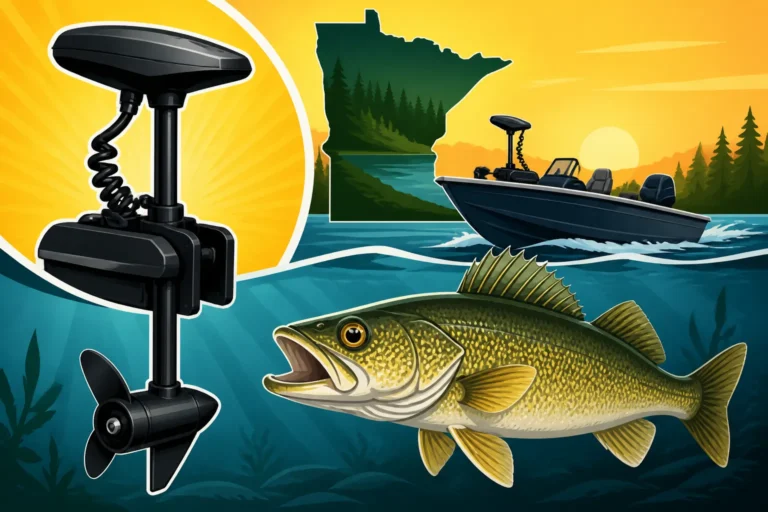
- Bow-Mount Trolling Motors: These are mounted on the front (bow) of your boat and are by far the most popular choice for serious anglers. They pull the boat through the water, which offers superior control and maneuverability, especially when trying to hold a precise line or navigate complex structure. Imagine trying to push a string versus pulling it – pulling is far more effective for steering. Bow mounts also keep the motor out of the way of your main engine and offer a better vantage point for spotting fish or navigating. Most modern bow-mount motors come with advanced features like GPS anchoring and sophisticated sonar integration. They require a dedicated mounting plate on the bow.
- Transom-Mount Trolling Motors: These attach to the back (transom) of your boat, typically with a clamp-on bracket. They push the boat from the rear. Transom mounts are generally more affordable, easier to install, and ideal for smaller boats like canoes, kayaks, or smaller Jon boats where bow space is limited or a bow mount isn't practical. They are also a common choice for those who only need occasional assistance or an emergency backup. However, they offer less precise control, especially in wind, and can interfere with the operation of your main outboard motor.
For most dedicated fishing boats 14 feet and up, especially those targeting walleye, bass, or pike on Minnesota's larger lakes, a bow-mount motor is almost always the preferred choice due to its superior control and integrated features.
Key Features for Minnesota Anglers
Modern trolling motors are packed with technology that can significantly enhance your time on the water. Here are some features particularly beneficial for Minnesota anglers:
- GPS Spot-Lock / Anchor Mode: This is arguably the most revolutionary feature in recent years. Using GPS, the motor automatically adjusts thrust and direction to hold your boat precisely on a spot, even in wind and current. Imagine not having to drop an anchor or constantly mess with your foot pedal! This is invaluable for holding over a productive reef on Lake Vermilion, staying on a hot crappie brush pile, or working a specific piece of structure. Brands like Minn Kota's Spot-Lock and MotorGuide's Pinpoint GPS are industry leaders here.
- Remote Control / Foot Pedal: Most bow-mount motors offer both options. A wireless remote lets you control the motor from anywhere in the boat – super handy when fighting a fish or netting. A foot pedal provides hands-free control, which many traditional anglers prefer for intuitive steering while casting. Some models offer a hybrid approach, letting you switch between them.
- Integrated Sonar / Universal Sonar: Many trolling motors now come with a transducer built right into the lower unit. This simplifies wiring and protects the transducer, providing a clean view of what's under your boat directly to your fish finder. Some are "universal," meaning they are compatible with multiple fish finder brands, while others are specific (e.g., Minn Kota's Built-In MEGA Down Imaging for Humminbird units). This integration means less clutter on your boat and a more streamlined setup for your fish finder and electronics. You might want to check out our guide on the Best Fish Finders & Electronics for Minnesota Fishing.
- Weedless Propeller: Minnesota lakes are often rich with aquatic vegetation. A prop specifically designed to shed weeds, like Minn Kota's Weedless Wedge 2 prop, can save you a ton of time and frustration from constantly clearing tangled weeds. This allows your motor to maintain efficiency and prevent overheating.
- Lift-Assist / Stow and Deploy: Larger bow-mount motors can be heavy. Features like lift-assist mechanisms make stowing and deploying the motor much easier, reducing physical strain and potential for fumbling.
Brand Specifics and Technology
While the core principles of thrust and shaft length apply to all brands, each manufacturer offers its own unique technological advancements and product lines.
- Minn Kota: This is arguably the most dominant brand in the trolling motor market, particularly in Minnesota. Their Terrova, Ulterra, and Ultrex series are incredibly popular. The Minn Kota Terrova vs Ulterra vs Ultrex article provides an excellent deep dive into these models, but briefly:
- Terrova: Known for its reliability, power, and excellent Spot-Lock. It's a workhorse for many anglers.
- Ulterra: Adds auto-deploy and stow features, making it incredibly convenient for hands-free operation.
- Ultrex: Combines the feel of a cable-steer foot pedal with the GPS features of a power-steer motor, beloved by bass and walleye pros.
- MotorGuide: Another strong contender, MotorGuide offers powerful and feature-rich trolling motors, often seen as a direct competitor to Minn Kota. Their Xi3 and Xi5 series with Pinpoint GPS are highly regarded for accuracy and durability.
- Garmin Force: A newer player in the trolling motor game, Garmin Force integrates seamlessly with Garmin's fish finder ecosystem and boasts impressive power and efficiency, plus a wireless foot pedal that feels like a cable-steer.
When considering specific models, think about how much technology you truly need and how it integrates with your existing electronics. Many great models are available at local outdoor retailers or through online platforms like Amazon. For anyone just starting out, our article on the Best Fishing Gear for Beginners in Minnesota By Budget might offer some helpful initial guidance.
Ultimately, choosing the right size trolling motor for your boat in Minnesota is about balancing power, control, and convenience with your specific fishing habits and the environments you frequent. By carefully considering thrust, shaft length, and key features, you'll be well on your way to a more enjoyable and productive time on the water. And remember, understanding regulations like the Minnesota AIS Drain Plug Law Explained is also key to responsible boating. For a broader look at boat choices, you might find our guide on the Best Fishing Boats for Minnesota Lund Ranger & More useful. If you're pondering specific boat brands, check out Lund vs Ranger Which Walleye Boat Is Better for an in-depth comparison.
Disclaimer
Fishing regulations, equipment specifications, and product availability can change. Always consult the latest Minnesota Department of Natural Resources (DNR) regulations and manufacturer specifications before making any purchases or heading out on the water. This guide is for informational purposes only and should not be considered legal or professional advice.