Best Fishing Apps for Minnesota (Fishbrain, Navionics)
It's incredibly frustrating, isn't it? You've got your gear, your boat, and a burning desire to hit the Minnesota waters, but pinning down where the fish are biting, understanding complex regulations, or even just finding a good access point can feel like a full-time job. Between scattered online forums, outdated paper maps, and conflicting advice, it's tough to truly feel prepared. This comprehensive guide is here to cut through that noise, exploring the best fishing apps available for Minnesota anglers and showing you how to leverage them to transform your fishing trips from guesswork into genuinely successful outings.
Why Fishing Apps Are a Game Changer for Minnesota Anglers
Gone are the days when a beat-up paper map and a scribbled note from the bait shop were your only sources of intel. Today's fishing apps are powerful tools, practically putting a seasoned guide and a marine cartographer right in your pocket. They don't just tell you where the lake is; they reveal its secrets, helping you fish smarter, not just harder, and ultimately, enjoy your time on the water even more.
Overcoming Information Overload
Let's be real, the sheer volume of information out there about Minnesota fishing can be overwhelming. You've got lake maps, depth charts, weather forecasts, moon phases, bite predictions, fishing reports, and of course, the ever-changing Minnesota fishing regulations to keep track of. Trying to piece all this together from disparate sources before every trip can eat into your valuable fishing time, or worse, lead to missing critical details that could make or break your day.
Fishing apps streamline this process by consolidating much of this data into one user-friendly interface. Instead of flipping through several documents or browsing multiple websites, you can get a holistic view of the conditions and potential hotspots with a few taps. This integration means less time planning and more time actually fishing, ensuring you're working with the most current and relevant information at your fingertips, which is a massive relief for any angler.
Maximizing Your Time on the Water
Every minute on the lake is precious, especially when you've got limited daylight or a specific window to target active fish. Fumbling with physical maps, trying to interpret cryptic contour lines, or constantly checking a separate weather app eats away at that valuable time. Modern fishing apps are designed to make you more efficient, helping you quickly identify promising structure, navigate safely, and even predict when fish are most likely to feed.
Imagine being able to confidently motor to a specific hump on Mille Lacs Lake, knowing its exact depth and bottom composition, rather than blindly idling around. Or, being able to quickly locate an overlooked weed line on a smaller metro lake like Lake Minnetonka because your app showed detailed vegetation. These efficiencies aren't just about catching more fish; they're about reducing frustration and increasing the overall enjoyment of your fishing experience by allowing you to focus on the actual act of fishing.
Staying Compliant with Regulations
Minnesota's fishing regulations can be intricate, with specific limits, seasons, and slot sizes that often vary by lake or even by species within the same water body. It's not uncommon for anglers, even experienced ones, to get tripped up by a minor change or a lake-specific rule they weren't aware of. The consequences of unintentional violations can range from a warning to hefty fines, or even the loss of your catch and gear. Nobody wants that kind of headache during a relaxing day on the water.
Many top fishing apps now offer integrated access to official regulations, or at least provide direct links and summaries to help you stay informed. Some even allow you to mark your catches and check them against current limits, acting as a personal game warden (in a good way!). This instant access to crucial information helps you avoid mistakes and ensures you're fishing legally and responsibly, protecting both your pocketbook and Minnesota's precious natural resources. Understanding details like the current Minnesota Fishing Limits: Bag & Possession (2026) or the nuances of the Mille Lacs Walleye Regulations (2026) becomes much easier with a reliable app in hand.
Top Contenders: Navionics and Fishbrain
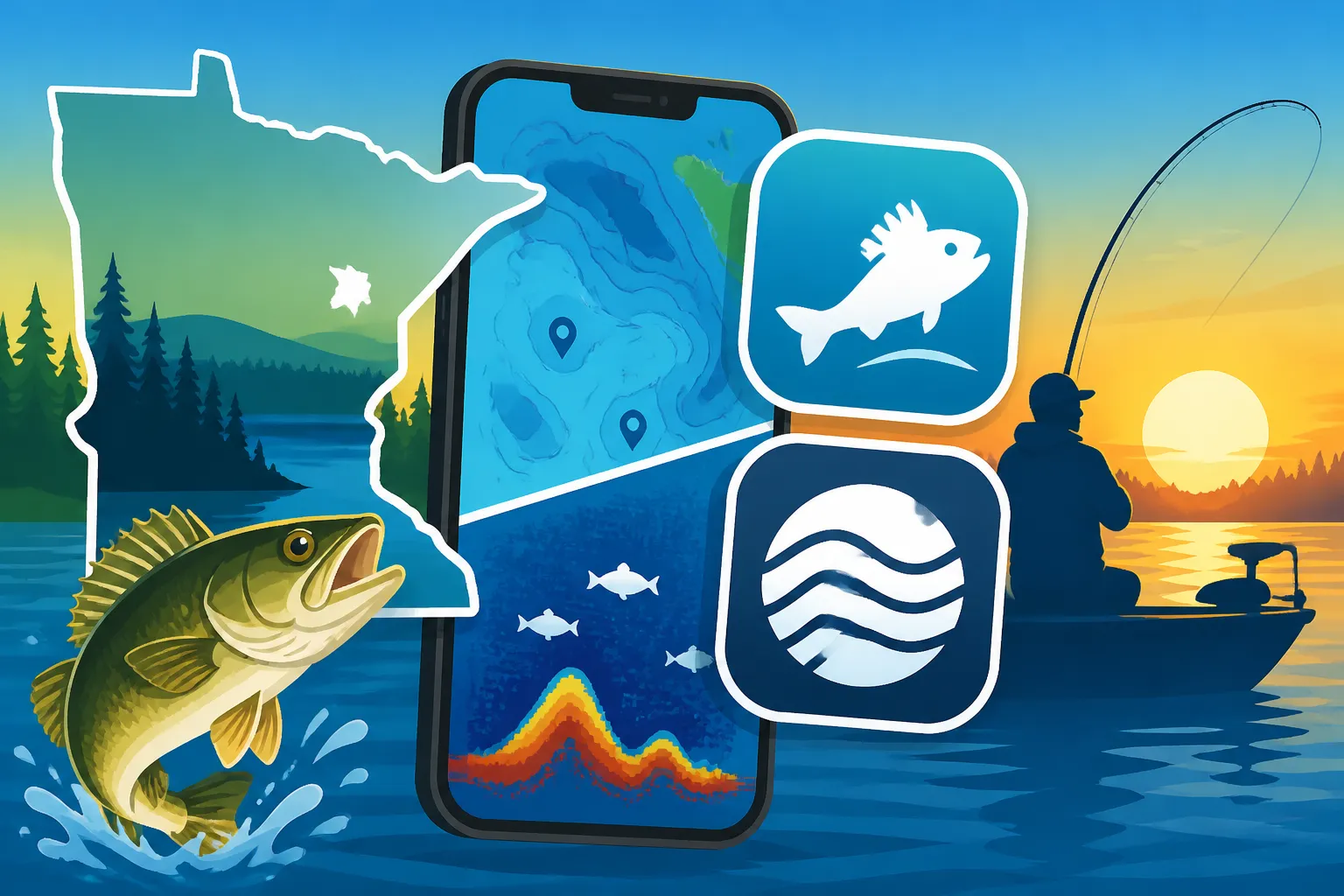
When it comes to fishing apps that most Minnesota anglers talk about, two names consistently rise to the top: Navionics and Fishbrain. While both aim to enhance your fishing experience, they approach it from slightly different angles, catering to distinct preferences and needs. Understanding their core strengths and weaknesses is key to choosing the right digital companion for your tackle box.
Navionics: The Detailed Charting Master
Navionics has long been synonymous with marine cartography, and for good reason. Their Boating app is a powerhouse of detailed lake maps, bathymetry, and navigation features, making it an indispensable tool for anyone running a boat, whether it's a dedicated bass rig or a family pontoon. The depth of detail in their charts, which often include high-definition contours, bottom composition, and even navigation aids, is truly exceptional.
The app's cornerstone feature is its SonarChart, which compiles sonar data from Navionics users worldwide to create incredibly detailed, up-to-date depth contours. This community-driven mapping means that even smaller, lesser-known Minnesota lakes can have incredibly precise contours, revealing hidden humps, submerged points, and subtle breaks that might not appear on older maps. Anglers frequently use Navionics to scout new water or pinpoint exact fishing spots for walleye, bass, and crappies. Another huge plus is the Plotter Sync feature, allowing you to wirelessly transfer routes and markers between your mobile device and compatible chartplotters from brands like Humminbird, Lowrance, and Garmin. This creates a seamless experience from planning at home to executing on the water.
Navionics operates on a subscription model, which might be a sticking point for some, but the annual fee grants you access to regular chart updates, advanced features, and a vast library of maps. While it's primarily a mapping and navigation tool, its accuracy and detailed contours are invaluable for finding structure, which is a fundamental aspect of successful fishing for species like walleye. Many anglers find deals on subscriptions or related accessories through online retailers like Amazon. The drawback, if there is one, is that it's less focused on the "social" aspect of fishing reports and more on the raw data.
Fishbrain: The Social Angler's Hub
Fishbrain, on the other hand, takes a decidedly social approach to fishing. Think of it as a fishing-specific social media platform blended with useful mapping and analytics tools. It thrives on community-generated data, where anglers log their catches, share photos, and even disclose the baits and techniques they used. This collective knowledge forms a dynamic, real-time fishing report that can be incredibly valuable for understanding what's biting where in your local Minnesota lakes.
Key features include catch logging, which allows you to record species, size, weight, location (private or public), and even the bait used. This personal log helps you identify patterns over time. The app also offers "bite time" predictions based on a variety of factors, as well as species identification tools. Its social feed lets you see what other anglers are catching nearby, offering immediate insights into local hotspots or active fish. For someone exploring a new lake or just starting out, seeing recent catches on a lake like Lake Harriet or Lake Nokomis can be a huge confidence booster. It's a fantastic resource for discovering new fishing spots and learning from other anglers, whether you're targeting big northern pike or trying to figure out how to catch more crappie and sunfish.
While Fishbrain offers basic mapping, its depth and detail typically don't rival Navionics or LakeMaster. The accuracy of "hotspots" can also be variable, as it relies on user-generated data which sometimes lacks precise coordinates or can be influenced by individual fishing styles. However, for sheer accessibility to recent fishing activity and community insights, Fishbrain is hard to beat. The free version offers substantial functionality, with premium subscriptions unlocking more detailed data and features.
Essential Features to Look for in a Fishing App
Beyond the specific strengths of Navionics or Fishbrain, there are fundamental features that any truly helpful fishing app for Minnesota anglers should possess. These core functionalities are what separate a novelty app from a truly indispensable tool that can consistently put you on fish and keep you informed.
Mapping and Lake Depth Contours
This is arguably the most critical feature of any serious fishing app. High-quality mapping, especially with detailed depth contours (bathymetry), is like having x-ray vision into the underwater world. In Minnesota, where lakes vary from shallow, fertile basins to deep, clear glacial scars, understanding the topography beneath the surface is paramount for finding fish. Look for apps that provide:
- High-Definition Contours: The more detailed the contour lines (e.g., 1-foot or even 0.5-foot intervals), the better you can identify subtle changes in depth that fish use as ambush points or travel routes. This is especially crucial on large, complex lakes like Lake Vermilion or Leech Lake, where structure can be vast and varied. Understanding these nuances helps you effectively target different fish species.
- Shaded Depth Ranges: Visual aids that color-code different depth ranges make it much easier to quickly identify flats, sharp drop-offs, humps, and submerged islands. This graphical representation saves you time interpreting lines and allows for faster decision-making on the water.
- Bottom Composition: Some advanced maps indicate areas of rock, sand, mud, or gravel. Knowing the bottom type can be a huge clue for certain species – walleye often prefer gravel or rocky bottoms, while crappies might relate to softer, weedier areas.
- Vegetation Layers: Identifying weed lines, submerged grasses, or lily pad fields is vital, particularly for targeting bass and panfish. Apps that offer these overlays give you a distinct advantage in locating prime habitat.
Without accurate and detailed maps, you're essentially fishing blind. A good mapping feature allows you to visually dissect a lake, identify potential fish-holding structure like the famous mud flats on Mille Lacs, and formulate a precise game plan before you even cast a line. It's the foundation upon which all other successful fishing strategies are built.
Weather and Bite Time Predictions
Fish behavior is heavily influenced by environmental factors, and a good fishing app can help you anticipate these changes. While nothing beats real-time observation, predictive tools can guide your planning and on-the-water adjustments.
- Current Weather Conditions and Forecasts: This might seem obvious, but having real-time temperature, wind speed and direction, precipitation, and barometric pressure readily available within your fishing app is incredibly convenient. Wind direction, for example, heavily impacts how you approach a spot or how fish might position themselves. Knowing when a front is moving in can also impact safety on the water.
- Barometric Pressure Trends: Many anglers swear by the effect of changing barometric pressure on fish activity. A stable or rising barometer often correlates with more active fish, while a rapidly falling barometer can shut them down. Apps that track this trend can help you choose the best days to fish.
- Solunar Tables/Bite Time Predictions: These predictions, based on moon phases and celestial positions, suggest peak feeding times for fish. While not foolproof, they can be a useful guide for planning your casts during prime windows. Some apps integrate this data with weather and other factors to provide a more refined "bite score." For instance, knowing the best time of day to catch walleye can significantly boost your success rate.
Having these environmental insights integrated into your fishing app means you can make more informed decisions about when and where to fish, adjusting your tactics to match the prevailing conditions rather than just hoping for the best.
Regulation and Species Identification Aids
Navigating the rules and identifying your catch correctly are crucial for responsible angling, especially in a state with diverse fisheries like Minnesota. An app that helps with this can save you from potential headaches and ensure you're contributing to sustainable fishing practices.
- Up-to-Date Regulations: As mentioned earlier, Minnesota's fishing regulations can be complex and change annually. An app that provides quick, accurate access to the current rules for specific lakes and species is invaluable. This might include bag limits, possession limits, size restrictions, and season dates for everything from walleye to lake sturgeon. You'll want to avoid any instance of "Penalties for Keeping Over-Limit Fish in Minnesota."
- Species Identification Guides: Sometimes, you catch a fish and aren't quite sure what it is. Is it a walleye or a sauger? A black crappie or a white crappie? Many apps include visual guides, distinguishing features, and even photos to help you correctly identify your catch. This is particularly useful for new anglers or when targeting less common species. Knowing how to identify a walleye vs sauger can be important for legal compliance and bragging rights.
- Aquatic Invasive Species (AIS) Information: With the growing threat of AIS in Minnesota, information on prevention and compliance is increasingly important. While less common, some apps may offer tips or links to resources on how to properly clean, drain, and dry your boat to prevent the spread of invasive species, aligning with important guidelines like the Minnesota AIS Drain Plug Law Explained.
By integrating these features, fishing apps empower anglers to be more knowledgeable and responsible, ensuring that every trip is both enjoyable and compliant with the rules designed to protect Minnesota's incredible fishing heritage.
Other Notable Apps for Specific Needs
While Navionics and Fishbrain often steal the spotlight, the world of fishing apps is far from limited to just these two. Depending on your specific fishing style, the electronics you already own, or what kind of data you prioritize, several other powerful tools can significantly enhance your time on Minnesota's waters.
LakeMaster: Hyper-Detailed Minnesota Mapping
For many serious Minnesota anglers, especially those running Humminbird fish finders, LakeMaster maps are the gold standard. While not a standalone mobile app in the same way Navionics is (it typically requires a Humminbird unit or a PC program), LakeMaster offers incredibly precise, high-definition mapping data specifically tailored for Midwestern waters. Their "SmartStrike" feature, for example, allows users to enter conditions like depth, temperature, and season, and the map will highlight areas likely to hold fish.
The detail in LakeMaster's maps often includes contours down to 1-foot intervals, shallow water highlight, and depth highlight features, making it incredibly easy to visualize structure. If you fish the Brainerd Lakes Area Fishing, for instance, a LakeMaster chip will give you unparalleled detail for Gull Lake, Pelican Lake, and others. The integration with Humminbird units is seamless, allowing for unparalleled navigation and fish-finding capabilities directly on your boat's console. For those who invest in premium marine electronics, LakeMaster data is often considered a must-have upgrade, providing a level of local specificity that can be hard to match.
ANGLR: Log Your Catches and Learn Patterns
ANGLR carves out its niche as a dedicated catch logging and personal data analysis tool. While it offers some mapping functionality, its primary strength lies in helping you meticulously record every detail of your fishing trips and then analyze that data to identify personal patterns and improve your success. It's less about social sharing (though that's an option) and more about self-improvement through data.
With ANGLR, you can track not just what you caught, but where (with precise GPS coordinates), what bait or lure you used, the retrieve speed, water temperature, wind conditions, and much more. This detailed logging allows you to look back at your past trips and understand what worked (and what didn't) under specific conditions. For example, if you're trying to figure out the best walleye fishing tactics in Minnesota, reviewing your ANGLR data might reveal that a specific jig color performs better in stained water, or that you consistently catch bigger fish off deep breaks after a certain moon phase. It also integrates with some smart fishing devices, like the ANGLR Tracker, for automatic data capture, making the process even more effortless.
NOAA Weather and Local DNR Apps
Sometimes, the simplest tools are the most effective, especially when it comes to safety and official information. While many fishing apps integrate weather data, having a dedicated weather app from a reliable source like NOAA (National Oceanic and Atmospheric Administration) on your phone is always a smart move. These apps often provide hyper-local, real-time weather radar, severe weather alerts, and detailed forecasts that can be critical for planning a safe trip, especially on large, open waters like Lake of the Woods where conditions can change rapidly.
Similarly, having a direct link or the official app from the Minnesota Department of Natural Resources (DNR) is essential. While fishing apps try to keep up with regulations, the DNR's official sources are always the definitive authority. This is where you'll find the most current Minnesota Fishing Seasons & Opener Dates (2026), specific lake regulations, fishing license information, and vital updates like AIS warnings. It's a critical backup and a primary source for understanding everything from Minnesota Fishing License: Cost, Types & How to Buy (2026) to details on dark house spearing. Always double-check critical regulations with the official DNR site if you have any doubts.
Choosing the Right App for Your Fishing Style
With so many options, picking the "best" fishing app really comes down to your personal fishing style, priorities, and budget. There's no one-size-fits-all solution, but by considering what kind of angler you are, you can narrow down the choices and find the digital tool that truly enhances your time on the water.
For the Data-Driven Angler and Tournament Fisherman
If you're the kind of angler who meticulously plans every trip, obsesses over contour lines, and tracks every detail of your catches, then accuracy, precision, and comprehensive mapping will be your top priorities. Tournament anglers, in particular, need every edge they can get, and detailed cartography can be the difference between finding a winning school of fish and coming up empty.
For this group, Navionics is often the front-runner due to its unparalleled marine charts, SonarChart Live capabilities, and seamless integration with boat electronics. The ability to create your own high-definition maps in real-time or sync data with your chartplotter is a massive advantage. Paired with a dedicated logging app like ANGLR, which allows for deep dive analysis of your personal fishing history, you'll have a powerful combination. These apps give you the tools to scout specific structure, understand seasonal patterns, and make data-backed decisions on the fly. You're looking for apps that help you refine your Walleye Fishing Techniques: Complete Minnesota Guide or pinpoint optimal Bass Fishing Techniques for Minnesota Lakes.
For the Casual Angler and Family Outings
If your fishing trips are more about relaxation, spending time outdoors with loved ones, and catching a few fish for dinner, your app needs might lean more towards ease of use, general information, and perhaps some social connection. You might not need ultra-fine contour lines, but knowing where people are catching fish and what regulations apply is still super helpful.
Fishbrain shines here, offering a friendly, community-oriented platform where you can see what's biting, get recommendations, and easily log your catches to share with friends and family. Its bite prediction features can add a fun element to planning, and the general fishing reports can point you to active areas without requiring extensive scouting. For mapping, a simpler, perhaps free, version of Navionics (with less detailed features) or even just Google Maps can get you to the lake access. The focus here is on convenience and fun, making the whole experience more enjoyable rather than intensely analytical. This is perfect for those looking for Best Family-Friendly Fishing Lakes in Minnesota or just trying to figure out How to Catch Bluegill: Easy Beginner Tactics.
Budget-Friendly and Free Options
Not everyone wants to invest in a premium subscription, especially if fishing is an occasional hobby. Luckily, there are plenty of ways to leverage technology without breaking the bank. Many apps offer robust free versions with optional paid upgrades, allowing you to try before you buy or simply stick with the free features if they meet your needs.
Fishbrain has a very functional free tier that provides access to the social feed, catch logging, and basic maps. This is an excellent starting point for any angler. For mapping, while Navionics is a subscription, its free trial period can be long enough for a few trips, and many boaters will find the paid version worth it. Alternatively, generic mapping apps like Google Maps or Apple Maps can help with navigation to boat launches and shore fishing spots, and often include satellite imagery that can reveal visible structure. For regulations, the official Minnesota DNR website or its dedicated app (if available) is always free and the most accurate source. Combining these free resources can still give you a powerful digital toolkit without costing a dime, ensuring you can still prepare effectively, even if you’re looking for the Best Budget Ice Fishing Setup Under $200.
| App Name | Primary Focus | Key Strengths | Subscription Model | Best For |
|---|---|---|---|---|
| Navionics | Marine Cartography | Ultra-detailed depth charts, SonarChart Live, Plotter Sync | Annual Fee | Boaters, tournament anglers, serious structure fishermen |
| Fishbrain | Social Fishing Network | Community reports, catch logging, bite predictions, species ID | Free (Paid Premium) | Casual anglers, social sharing, discovering hotspots |
| LakeMaster | Hyper-Local Mapping | Extreme detail for specific regions (MN), SmartStrike, Humminbird integration | Chip/PC Software | Anglers with Humminbird units, highly specific lake detail |
| ANGLR | Personal Catch Analytics | Detailed trip logging, pattern identification, device integration | Free (Paid Premium) | Data-driven anglers, self-improvement, detailed record-keeping |
| NOAA Weather | Weather Forecasting | Real-time radar, severe alerts, accurate forecasts | Free | Safety-conscious anglers, planning around conditions |
| MN DNR | Official Regulations | Current state fishing rules, license info, updates | Free | Compliance, official information, licensing |
Maximizing Your App's Potential on the Water
Having the right fishing app is only half the battle; knowing how to integrate it effectively into your fishing routine is what truly unlocks its power. These digital tools aren't just for looking at pretty maps; they're dynamic assets that can be used before, during, and after your trips to improve your angling skills and success.
Pre-Trip Planning and Scouting
Before you even hook up the boat or pack your tackle box, your chosen fishing app should be your first stop for planning. This is where you leverage its mapping capabilities to gain a virtual understanding of the lake you intend to fish. Zoom in on areas you’ve never fished before, or revisit old favorites with a fresh perspective.
Start by identifying potential fish-holding structures based on the detailed contours. Are there sharp drop-offs, submerged humps, points extending into deep water, or extensive weed beds? Use the app to mark these as waypoints. If you're targeting walleye, for example, you might look for transition zones where hard bottom meets soft, or areas with current. For bass, focus on docks, lily pads, or timber. Check the integrated weather forecasts, especially wind direction and speed, as this can dictate which parts of the lake will be fishable or offer a better bite. For ice fishing, you might use the app to identify safe travel routes to offshore structure, especially if you're pulling a larger portable shelter like a Clam or Otter. Don't forget to review the current regulations for that specific body of water. A few minutes of digital scouting can save you hours of aimless searching on the water.
Real-Time Navigation and Decision Making
Once you're on the water, your fishing app transforms into a dynamic navigational and decision-making tool. Instead of being anchored to your boat's console, your phone or tablet can serve as a portable display, helping you stay oriented and on top of the action.
Use the GPS functionality to navigate directly to those waypoints you marked during your pre-trip planning. Watch your boat's icon move precisely along contour lines, allowing you to make perfect drifts or troll effectively. If your app has SonarChart Live, you can even be building and refining your own high-definition map as you go, uncovering previously uncharted subtleties in the lake bed. Should a spot not pan out, quickly consult the app for alternative nearby structures or check the community feed on Fishbrain for recent reports from other anglers. If the wind suddenly shifts, your app's weather updates can help you find a protected bay or adjust your drift. When jigging for walleye or trying out a Lindy Rig for Walleye, knowing your exact position relative to structure is crucial for consistent success. This real-time feedback loop allows you to be highly adaptive and reactive to changing conditions, leading to more productive fishing.
Post-Trip Analysis and Learning
The utility of fishing apps doesn't end when you pull your boat off the ramp. The post-trip phase is where the true learning happens, especially if you're diligent about logging your catches and observations. Many apps allow you to review your entire trip history, analyzing patterns and identifying factors that contributed to your success (or lack thereof).
Look at your catch log: which baits were most effective on certain days? At what depths were you consistently finding fish? Were there specific times of day or moon phases that produced better results? Cross-reference this with the weather data from that day – did a rising barometer correspond with better fishing? Over time, this personal data will build into an invaluable knowledge base, helping you understand Seasonal Fishing Patterns in Minnesota and refine your strategies for different species and conditions. This systematic approach, aided by your fishing app, transforms every outing into a learning experience, making you a more skilled and knowledgeable angler over the long run.
Disclaimer
The information provided in this guide is for general informational purposes only and is not intended as legal advice or an official interpretation of fishing regulations. Fishing regulations in Minnesota can change frequently and vary by specific water bodies. Always consult the official Minnesota Department of Natural Resources (DNR) website or their current fishing regulations handbook for the most accurate and up-to-date information before heading out on the water.