Largemouth Bass Season & Limits in Minnesota
It can feel like you need a law degree to understand Minnesota's fishing regulations sometimes, especially when you're out on the water and staring at a beautiful largemouth bass, wondering if you can keep it or if it needs to go back. Navigating the specific seasons and possession limits for largemouth bass in our state can be confusing, but don't worry – this guide is here to break down everything you need to know, so you can fish with confidence and stay on the right side of the rules.
Understanding Largemouth Bass Seasons in Minnesota
The bass season in Minnesota, particularly for largemouth bass, is designed to protect these incredible fish during their most vulnerable periods, especially spawning. Knowing when you can target them and when you can keep them is crucial for any angler.
The Statewide General Season Overview
Generally, Minnesota's statewide fishing regulations for largemouth bass kick off with a specific opener date, usually in late spring or early summer, and typically run through the winter. This timing is critical because it generally opens after the main spawning period has concluded in many of our lakes. For instance, the largemouth bass season typically opens on a Saturday two weeks prior to the Saturday of Memorial Day weekend. This allows the fish to complete their reproductive cycle without undue pressure, which is vital for maintaining healthy populations.
During the open season, you can actively fish for largemouth bass, employing various techniques from casting crankbaits in the shallows to working Texas-rigged worms along weed lines. The duration means you'll have ample opportunity to chase these hard-fighting fish through the warm summer months, into the cooler autumn, and often even into the early ice fishing season. It's a long window, but always remember that regulations can change, so checking the current Minnesota Fishing Seasons & Opener Dates (2026) is always a good practice before heading out.
Catch-and-Release Only Periods
Here's where things can sometimes get a little tricky and where anglers need to pay close attention. Even within the broader season, certain periods or specific bodies of water might be designated as "catch-and-release only" for largemouth bass. The most notable of these is often the early part of the season in some areas, sometimes even prior to the general opener, intended to offer an early fishing opportunity while still providing maximum protection to spawning bass.
For example, the Minnesota Bass Season (New 2026 Catch-and-Release) might outline an early catch-and-release period. During these times, any largemouth bass caught must be immediately returned to the water unharmed. This regulation is put in place for a very good reason: to ensure that the breeding population isn't depleted before they've had a chance to reproduce successfully. If you're planning to fish early in the season, particularly in shallower, warmer waters where bass are actively spawning, assume it might be catch-and-release only until you confirm the regulations for your specific lake. It's about preserving the fishery for future generations, and every angler plays a part in that.
Exceptions and Special Regulations by Lake
While there are statewide general rules, Minnesota is a state of 10,000 lakes, and it's simply impossible for one-size-fits-all regulations to work everywhere. Many lakes, rivers, and even sections of larger bodies of water will have their own unique, special regulations that supersede the statewide rules. This is particularly true for largemouth bass, often influenced by population dynamics, size structures, and management goals specific to that fishery.
These special regulations might include different opener dates, shorter seasons, or more commonly, specific slot limits. For instance, a lake known for producing trophy bass might have a stricter slot limit to protect larger, older fish. Conversely, a lake with an overpopulation of smaller bass might have a more liberal limit to encourage harvest and improve the overall size structure. When planning a trip to a new lake, or even one you haven't fished in a while, it is absolutely essential to consult the Minnesota DNR's fishing regulations specifically for that body of water. You can usually find these detailed regulations in the official guide or often by searching the DNR website. It saves you a potential headache and ensures you're fishing legally.
Navigating Largemouth Bass Possession Limits
Once you understand when you can fish for largemouth bass, the next crucial step is knowing how many you can keep and of what size. This is where daily and possession limits, along with slot limits, come into play.
The General Statewide Daily & Possession Limits
Let's start with the basics. The statewide general regulation for largemouth bass typically allows for a certain number of fish per angler per day. This is your daily limit. Often, this is a reasonable number, like six fish, but it's crucial to confirm this number in the current regulations, as it can be adjusted. This means that once you've caught and kept your daily limit, any additional largemouth bass you catch must be immediately released.
Beyond the daily limit, there's also a possession limit. This refers to the maximum number of fish you can have in your possession at any given time, whether that's in your livewell, cooler, freezer at home, or during transport. For many species in Minnesota, the possession limit is often the same as the daily limit, or sometimes twice the daily limit, particularly if you're on a multi-day trip. However, for largemouth bass, it's typically the same as the daily limit, meaning you can only ever have six largemouth bass in your possession, regardless of how many days you've been fishing. This rule is designed to prevent overharvest and ensure fish populations remain stable. Always consult the Minnesota Fishing Limits: Bag & Possession (2026) for the most accurate and up-to-date information.
Slot Limits and Protected Sizes
Slot limits are a critical management tool, particularly for species like largemouth bass, and understanding them is paramount. A slot limit means that fish within a certain size range (the "slot") must be immediately released, while fish outside that slot (either smaller or larger than the slot) can be kept, up to your daily limit. This might sound counterintuitive at first, but it’s a brilliant way to protect the breeding stock and often allows for the harvest of smaller, more abundant fish, or larger, older fish that may have already contributed significantly to spawning.
A common example for largemouth bass might be a regulation stating: "All largemouth bass from 14-18 inches must be immediately released. One fish over 18 inches may be kept as part of a six-fish daily limit." This means you can keep bass under 14 inches and one over 18 inches, but anything in the 14-18 inch range has to go back. These specific size restrictions are always implemented on a lake-by-lake basis, so knowing your chosen lake's specific regulations is key. Misinterpreting a slot limit can quickly lead to a citation, so always read the fine print!
How to Measure Your Catch Correctly
Okay, so you've caught a beautiful largemouth, and you're trying to figure out if it's a keeper. Measuring correctly is vital, especially with slot limits in play. The standard method for measuring fish in Minnesota is from the tip of the snout to the tip of the tail, with the tail pinched to achieve its maximum length. This isn't a casual measure; it needs to be precise.
Here's how to do it properly: Lay the fish flat on a measuring board or tape. Push its snout against a flat surface (like the end of the measuring board). Gently squeeze the tail fin together to get its full extension. Read the measurement at the very end of the pinched tail. Don't measure along the curve of the body, and don't just let the tail lie naturally – pinch it! Having a good, accurate measuring board is incredibly helpful. You can find sturdy, clearly marked fish measuring boards on Amazon, which can be invaluable when you're out on the water trying to make a quick and legal decision. Remember, when in doubt, it's always better to release the fish.
Here's a quick summary of typical statewide largemouth bass regulations, but always confirm for your specific lake:
| Regulation Type | Statewide General Rule (Typical) | Notes |
|---|---|---|
| Season Opener | Saturday two weeks prior to Memorial Day weekend | May vary; always check current year's regulations. |
| Season Closes | Late February/Early March (often concurrent with other gamefish) | Fishing generally allowed through ice season. |
| Daily Limit | 6 largemouth bass | Can vary by lake with special regulations or slot limits. |
| Possession Limit | 6 largemouth bass | Typically same as daily limit for largemouth. |
| Slot Limits | None statewide, but common on specific lakes (e.g., 14-18" protected) | Crucial to check specific lake regulations for protected sizes. |
| Catch-and-Release | Possible early season special periods on certain lakes | May precede general opener, check for specific rules. |
Best Practices for Sustainable Largemouth Bass Fishing
Being a responsible angler means more than just following the rules; it's about actively participating in the conservation of our fisheries. Largemouth bass are an incredible sportfish in Minnesota, and their future depends on all of us.
The Importance of Catch and Release
While limits allow for harvest, the practice of catch and release, especially for larger breeding fish, is incredibly important for maintaining healthy and robust largemouth bass populations. A large female bass can lay tens of thousands of eggs, contributing significantly to the next generation of fish. Releasing these "big mamas" ensures they can continue to spawn and contribute to the fishery for years to come.
When practicing catch and release, it's essential to handle the fish with care. Minimize air exposure, support the fish horizontally, and use wet hands to avoid removing their protective slime coat. Remove hooks quickly using pliers or a dehooking tool. If a fish is deeply hooked, it's often best to cut the line as close to the hook as possible rather than trying to rip it out. These simple actions make a huge difference in the survival rate of released fish. You can learn more about proper handling in our guide on Catch and Release Best Practices in Minnesota. Many anglers find high-quality pliers and dehookers on Amazon that make releasing fish quickly and safely much easier.
Identifying Largemouth Bass and Avoiding Look-Alikes
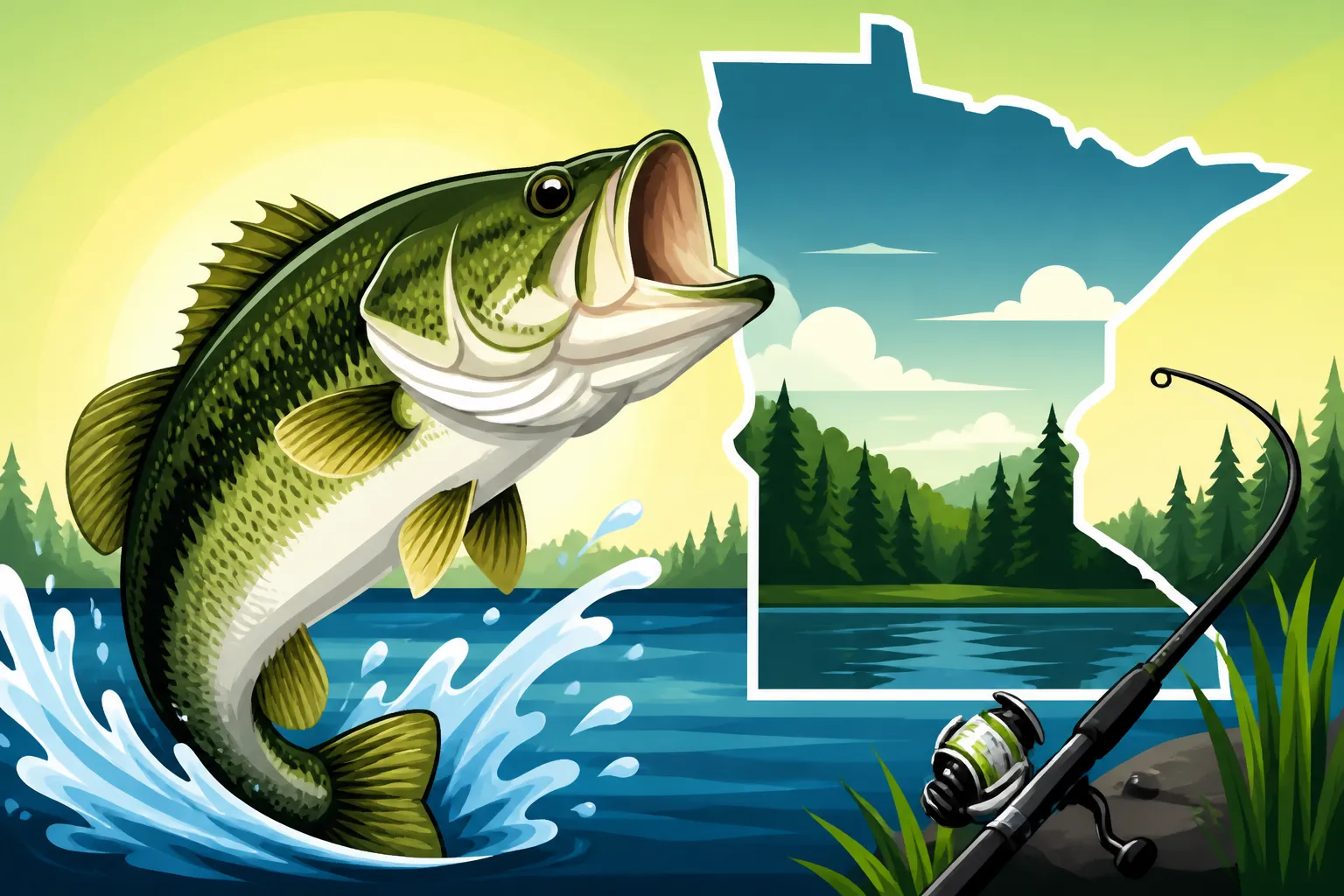
Knowing your target species is fundamental to following regulations correctly. While most anglers can easily identify a largemouth bass, especially the classic "bucketmouth" look, it's still good to know the key differentiating features to avoid confusion with its cousin, the smallmouth bass, or other similar fish. Largemouth bass typically have a jaw that extends beyond the eye when closed, and their dorsal fin is deeply separated, appearing almost like two distinct fins. They also usually have a prominent dark, horizontal band running along their sides.
Smallmouth bass, on the other hand, have a jaw that doesn't extend past the eye and a more uniform, brownish color, often with vertical bars. The dorsal fin on a smallmouth is not as deeply separated. Regulations for Smallmouth & Largemouth Bass in Minnesota can differ, so proper identification ensures you're applying the correct limits and seasons. A quick glance at a fish identification guide (many are available as waterproof laminated cards) can prevent any accidental misidentification.
Locating Regulations for Specific Minnesota Lakes
As we've discussed, statewide regulations are a good starting point, but they are not the final word. Many of Minnesota's best bass lakes have their own unique rules. Trying to guess or assume the regulations for a specific lake is a recipe for trouble. The best way to ensure you're compliant is to consult the official source: the Minnesota Department of Natural Resources (DNR).
Every year, the DNR publishes a comprehensive fishing regulations handbook. This is your bible on the water. You can pick up a physical copy at bait shops, sporting goods stores, or DNR offices, or find the Minnesota Fishing Regulations PDF: Where to Find It on the DNR's official website. These resources will list specific regulations for individual lakes and rivers, often alphabetically or by region. Before you launch your boat or head out for a day of shore fishing, take a few minutes to look up your chosen body of water. A few moments of research can prevent a costly fine and ensure you're contributing to sustainable fishing in our beautiful state. Learning How to Catch Largemouth Bass in Minnesota (Step by Step) also often includes a reminder to check local regulations.
Disclaimer
Fishing regulations can change. While we strive to provide the most up-to-date and accurate information, it is the angler's responsibility to consult the current official Minnesota DNR fishing regulations before heading out on the water. This guide is for informational purposes only and does not supersede state law.