How to Catch Stream Trout in the Driftless Area
The tranquil, spring-fed streams of Minnesota's Driftless Area offer some of the most rewarding, yet often challenging, trout fishing experiences imaginable. For many anglers, the thought of navigating these picturesque waters, with their fickle trout and often demanding presentations, can feel overwhelming. This comprehensive guide is designed to demystify the art of catching stream trout in this unique region, providing you with the knowledge and tactics to make your next outing a success.
Understanding the Driftless Area's Unique Trout Streams
The Driftless Area, primarily in southeastern Minnesota, is a geological marvel that escaped the last glacial advance. This distinct lack of glacial "drift" is what gives it its name and unique characteristics, making it a trout angler's paradise.
Geography and Habitat: Why is it Special?
Unlike many regions carved and reshaped by glaciers, the Driftless Area boasts a stunning landscape of steep valleys, towering bluffs, and deeply incised river systems. But it's what lies beneath the surface that truly sets these streams apart for trout. The underlying limestone bedrock acts like a natural sponge, absorbing rainwater and releasing it slowly as countless cold, clean springs. These spring creeks, such as those feeding the Root River and Whitewater River systems, maintain remarkably consistent water temperatures year-round – cool in summer and relatively warm in winter. This thermal stability, coupled with the mineral-rich limestone, creates ideal conditions for robust aquatic insect life, which in turn supports healthy trout populations. The stream bottoms are a mix of gravel, rock, and silt, often interspersed with submerged vegetation and vital undercut banks where trout seek shelter and ambush prey.
Anglers exploring these waters will quickly notice the crystal-clear conditions that often prevail, demanding a heightened sense of stealth and careful presentation. The lack of glacial till means fewer natural lakes but a proliferation of these dynamic, productive stream environments. It's a truly special place, a biological hotspot distinct from the rest of the state's fishing landscape, offering a unique opportunity to connect with nature and some genuinely wild fish.
Trout Species You'll Encounter
The Driftless Area streams are home to three primary trout species, each offering a different angling experience. Understanding their habits and preferences is key to success.
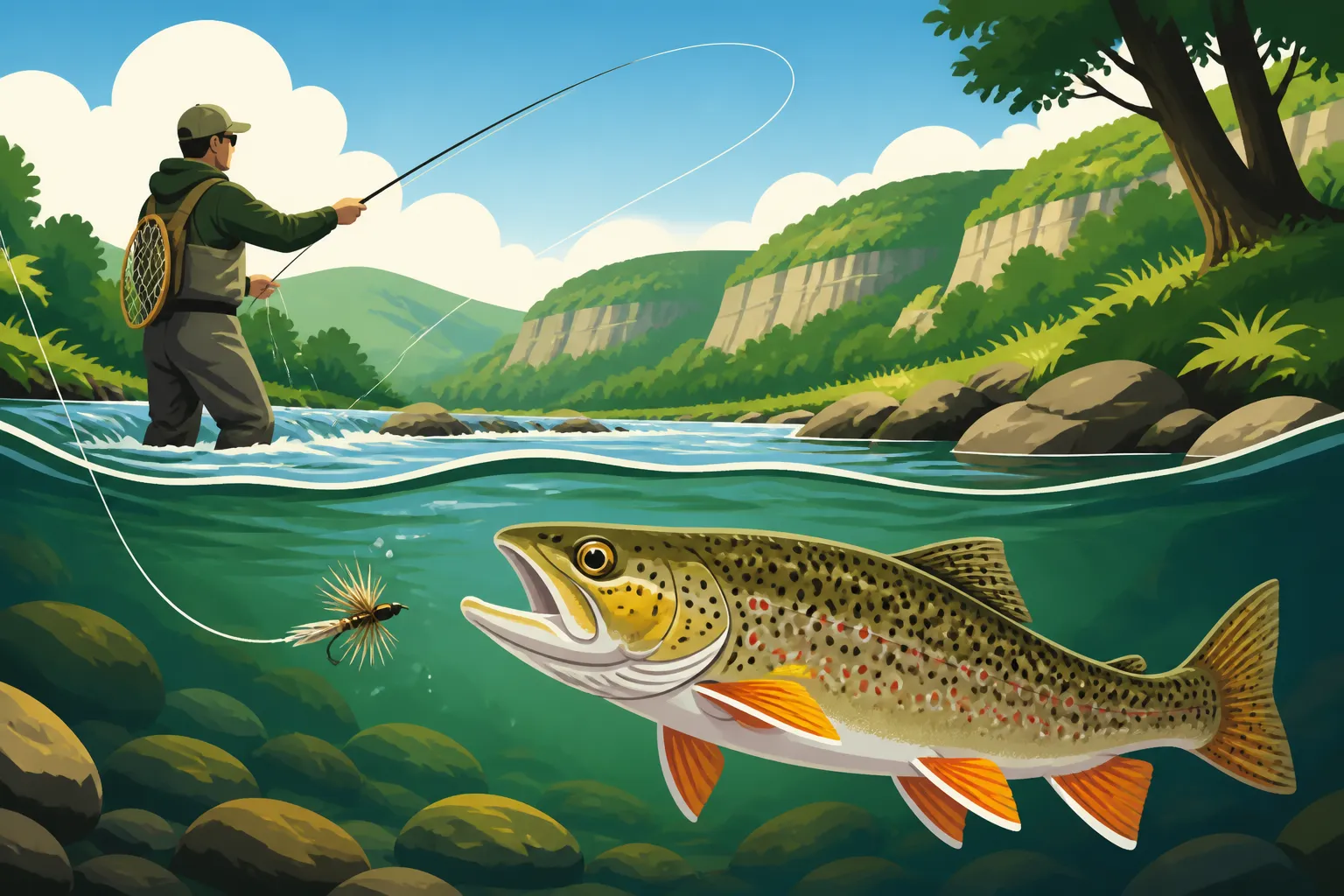
Brown Trout: By far the most common and widely distributed trout in the Driftless, brown trout are prized for their wary nature and strong fighting ability. Many streams are managed primarily for browns, both wild and stocked. They are often more tolerant of slightly warmer water temperatures than their brook trout cousins and tend to grow larger. Brown trout are opportunistic feeders, willing to take a variety of flies, lures, and even small natural baits (where legal). They are masters of using stream structure, often holding in deep pools, under undercut banks, or behind large rocks, waiting for food to drift by. For a detailed guide on targeting these cunning fish, check out our piece on How to Catch Brown Trout in Minnesota (Step by Step).
Brook Trout: These beautiful, native fish are true gems of the Driftless. Brook trout prefer the coldest, most pristine headwaters of the spring creeks and are often indicators of excellent water quality. While typically smaller than brown trout, their vibrant colors and aggressive strikes make them a joy to catch. Many areas manage brook trout as a wild, self-sustaining fishery, and catch-and-release is often encouraged or even mandated in specific stretches to protect these precious populations. Finding brook trout usually means venturing into the smaller, brushier tributaries where access might be more challenging but the rewards are often worth the effort. Learn more about these beauties in our guide to How to Catch Brook Trout in Minnesota (Step by Step).
Rainbow Trout: While not native to Minnesota, rainbow trout are stocked in some designated trout streams throughout the Driftless Area, especially in stretches with easier public access, to provide additional angling opportunities. They are known for their acrobatic jumps and spirited fights. Stocked rainbows tend to be less wary than wild browns or brookies, making them a popular target for beginners or those looking for a more consistent bite. They adapt well to diverse stream conditions and are often found in larger runs and pools. If you're interested in pursuing these lively fish, our article on How to Catch Rainbow Trout in Minnesota (Step by Step) offers great insights.
Seasonal Considerations for Driftless Trout
Fishing in the Driftless Area is a year-round possibility, thanks to those stable spring temperatures, but each season presents its own unique challenges and opportunities.
Spring (April-May): The Opener and Early Season Excitement. The stream trout season typically opens in April in Minnesota, bringing with it a rush of eager anglers. Water levels can be higher due to snowmelt and spring rains, and temperatures are cool. Trout are often hungry after a long winter and willing to chase larger offerings. Early spring often sees good nymphing action and streamer fishing as fish forage aggressively. As May progresses, insect hatches begin in earnest, and trout may start looking up for dry flies. This is a fantastic time for active fish, but be prepared for variable weather and potentially swift currents. It's also important to be aware of specific regulations as the season kicks off; our guide on Stream Trout Season & Limit in Minnesota will have all the details.
Summer (June-August): Stealth and Low Light. As summer settles in, water levels drop, and clarity increases dramatically. Trout become much warier, and direct sunlight can push them into deeper, shadier lies. Early mornings and late evenings become prime fishing times, coinciding with insect activity and cooler temperatures. Terrestrial patterns (hoppers, ants, beetles) become effective, alongside small nymphs and emergers. During the bright parts of the day, focus on fishing deep, slow pools and undercut banks with subtle presentations. This is when stealth truly pays off, requiring careful wading and long casts to avoid spooking fish.
Fall (September-October): Aggressive Feeding and Vibrant Colors. Many seasoned Driftless anglers consider fall to be the absolute best time to fish. The cooler air temperatures bring water temperatures down, invigorating the trout. Brown trout, especially, become very aggressive as they prepare for their spawning season in late fall, often chasing large streamers and nymphs. Hatches can still occur, but the overall feeding behavior shifts towards opportunistic gorging. The vibrant fall foliage creates an absolutely stunning backdrop for fishing, making every cast a picturesque moment. This season offers a perfect blend of active fish and comfortable weather, making it an ideal time to visit.
Winter (November-March): The Quiet Pursuit. While ice fishing dominates much of Minnesota's winter scene, the spring-fed streams of the Driftless often remain open year-round, or at least have significant open stretches, particularly during mild spells. Winter trout fishing is a quiet, contemplative affair, demanding patience and precision. Trout are less active but will still feed. Small nymphs, midge patterns, and tiny streamers presented slowly and subtly are often effective. This is a time to escape the crowds and enjoy the solitude of the frozen landscape, with the added reward of a hard-earned winter trout. Always prioritize safety and be mindful of changing ice and snow conditions near stream banks.
Essential Gear for Driftless Stream Trout
Having the right gear won't guarantee you catch every fish, but it will certainly make your time on the water more comfortable, efficient, and ultimately, more successful. Driftless trout fishing often calls for specialized, lighter tackle.
Rods, Reels, and Line: Matching the Challenge
Choosing the right rod, reel, and line setup is paramount when targeting the wary trout of the Driftless. The clear water and typically smaller stream sizes demand finesse.
Fly Fishing Setup:
- Rods: A light fly rod, typically 2 to 5-weight, is ideal. A 7 to 8.5-foot length is versatile, offering good control for delicate presentations in tighter quarters. A 3-weight, 7.5-foot rod is a popular choice for smaller streams and spooky fish, allowing for precise casts of small dry flies and nymphs. Brands like Orvis, Sage, and Redington offer excellent options across various price points. For beginners, a combo kit from Redington or Cabela's can be a great starting point, providing a balanced setup right out of the box.
- Reels: A simple, lightweight fly reel that balances your rod is all you need. The drag system doesn't need to be heavy-duty; its main purpose is to hold your line. Brands like Lamson, Pflueger, and Orvis make reliable reels.
- Line: A weight-forward floating fly line matching your rod's weight is standard. This allows for easier casting and keeps your flies on the surface or just below. Leaders and tippet are also crucial. A 7.5-to 9-foot tapered leader (3X to 6X) connected to a lighter tippet (4X to 7X) is common. The lighter the tippet, the more natural your fly's drift, but it also increases the risk of break-offs on larger fish.
Spin Fishing Setup:
- Rods: An ultralight spinning rod, typically 5 to 6.5 feet in length, is perfect for throwing small spinners, spoons, and jigs. A fast or extra-fast action rod provides the sensitivity needed to detect subtle bites and the backbone for accurate casting. The Fenwick Eagle or Ugly Stik Elite series are popular and durable choices among stream anglers.
- Reels: Pair your ultralight rod with a small, smooth spinning reel in the 500-1000 size range. Look for a reel with a smooth drag system, as even small trout can put up a surprising fight on light line. Shimano Sedona or Pflueger President are excellent mid-range options that offer great performance without breaking the bank.
- Line: Stick with light monofilament or fluorocarbon line, typically 2 to 4-pound test. Monofilament offers good knot strength and some stretch, which can be forgiving. Fluorocarbon is nearly invisible underwater, more abrasion-resistant, and has less stretch, providing increased sensitivity. Some anglers prefer a thin braided main line with a fluorocarbon leader for maximum casting distance and sensitivity.
| Gear Type | Fly Fishing Recommendation | Spin Fishing Recommendation | Key Consideration |
|---|---|---|---|
| Rod | 2-5 wt, 7-8.5 ft, light action | Ultralight, 5-6.5 ft, fast/extra-fast action | Finesse and delicate presentation are key. |
| Reel | Lightweight, balances rod, holds line | 500-1000 size, smooth drag | Drag system matters more for spin; balance for fly. |
| Main Line | Weight-forward floating fly line | 2-4 lb Monofilament or Fluorocarbon | Visibility (fly) vs. sensitivity/invisibility (spin). |
| Leader/Tippet | Tapered leader (7.5-9 ft, 3X-6X), tippet (4X-7X) | Optional Fluorocarbon leader (2-4 lb) | Critical for stealth and natural presentation. |
| Target Fish | Wary trout, matching hatches | Active trout, covering water, small lures | Both methods are effective, choose based on preference/conditions. |
Waders, Boots, and Apparel: Staying Comfortable and Safe
Your personal gear is just as important as your fishing tackle, especially when wading cold streams for hours. Comfort and safety are paramount.
Waders: Chest waders are almost a non-negotiable for serious Driftless stream fishing. They keep you dry and, more importantly, warm in the often chilly spring waters. Breathable waders, typically made from GORE-TEX or similar proprietary fabrics, are worth the investment for comfort, especially during warmer months or when you're hiking to your spot. Brands like Simms, Orvis, and Patagonia are top-tier, known for their durability and features. If you're on a tighter budget, Frogg Toggs or Cabela's brand waders offer decent performance. Make sure they fit well; ill-fitting waders can be cumbersome and a safety hazard. Pay attention to the type: stockingfoot waders require separate wading boots, while bootfoot waders have integrated boots.
Wading Boots: For stockingfoot waders, a good pair of wading boots is crucial for traction and ankle support. The rocky, often slippery bottoms of Driftless streams demand excellent grip.
- Felt soles: Offer superior grip on slick, algae-covered rocks. However, they are highly prone to carrying Aquatic Invasive Species (AIS) Rules for Boaters like New Zealand mud snails, so if you use felt, extreme care must be taken to thoroughly clean and dry them between uses and between different watersheds. Many states and some areas within Minnesota restrict felt soles due to this risk. Always check current regulations.
- Rubber soles: Are more versatile and easier to clean, making them the preferred choice for AIS prevention. Many rubber-soled boots now incorporate specialized compounds or even tungsten carbide studs (which can be added post-purchase) to enhance grip on wet rocks. Good ankle support is vital for navigating uneven stream beds, preventing twists and sprains.
Apparel and Layering: Dressing in layers is key. Start with moisture-wicking base layers, add insulating mid-layers (fleece or down), and top with a waterproof and breathable outer shell. Quick-drying fabrics are essential for shirts and pants worn under waders. Don't forget a good hat for sun protection or warmth, and polarized sunglasses are an absolute must for spotting fish, reading water, and protecting your eyes from errant hooks. In cooler weather, fingerless gloves can provide warmth while maintaining dexterity for tying knots.
Must-Have Accessories
Beyond the basics, a few essential accessories will significantly improve your Driftless trout fishing experience.
- Net: A small, lightweight landing net with a rubberized or knotless mesh bag is critical. Rubberized nets are gentler on fish, reducing slime removal and damage to fins, which is crucial for catch-and-release. Look for one with a short handle that can be easily attached to your back with a magnetic release or zinger.
- Forceps/Hemostats: These are invaluable for quickly and safely removing hooks from a trout's mouth, especially if you're using barbless hooks. They allow for minimal handling of the fish, contributing to better survival rates.
- Nippers: Small, sharp line clippers (often combined with a needle for clearing hook eyes) are essential for trimming tag ends of knots.
- Strike Indicators (Fly Fishing): These small floats help you detect subtle takes when nymphing. Yarn, foam, or slip indicators all have their place.
- Split Shot/Weight (Fly & Spin Fishing): Non-toxic split shot allows you to get your nymphs or baits down to the fish's feeding zone in deeper currents.
- Fly Boxes/Lure Trays: Keeping your flies and lures organized and protected is vital. Slim, waterproof fly boxes are perfect for fly anglers, while small, compartmentalized lure trays keep spin fishing offerings sorted.
- Thermometer: A stream thermometer can be a valuable tool, helping you understand water temperature preferences for different trout species and influencing your fly or lure selection.
- Camera: To capture memories of those beautiful Driftless trout!
Mastering Driftless Trout Fishing Techniques
Trout fishing in the Driftless is less about brute force and more about subtlety, observation, and understanding fish behavior. Whether you prefer fly fishing or spin fishing, mastering specific techniques will elevate your success.
Fly Fishing Tactics: Dry Flies, Nymphs, and Streamers
Fly fishing is deeply intertwined with the Driftless trout experience, offering a range of approaches to match the varying conditions and insect life. Our Fly Fishing the Driftless Area: A Beginner's Guide covers even more details.
Dry Fly Fishing: This is perhaps the most iconic form of fly fishing, where you present an artificial fly that imitates an adult insect floating on the water's surface. The thrill of seeing a trout rise and sip your fly is unmatched.
- When to use: Dry flies are most effective when trout are actively "rising," meaning they are visibly feeding on insects floating on the surface. This often occurs during specific hatches (e.g., Caddisflies, Mayflies) or when terrestrials (grasshoppers, ants) fall into the water during summer.
- Technique: The key to dry fly success is a "drag-free drift." Your fly must float naturally with the current, mimicking a real insect. This requires careful casting to avoid creating drag with your line, and often involves mending your line upstream to achieve the perfect drift. Common patterns include Parachute Adams, Elk Hair Caddis, Stimulator, and various Tricos or Blue-Winged Olives depending on the hatch. A delicate presentation is crucial; trout in clear Driftless waters are incredibly spooky.
- Real-life Scenario: Imagine a warm evening in late May on Pine Creek. You spot trout dimpling the surface in a slow pool near an undercut bank. Observing closely, you notice small, dun-colored insects floating by. You tie on a size 16 Light Cahill dry fly, cast upstream of a rising fish, and let it drift naturally over its suspected lie. A gentle sip, a subtle set of the hook, and the fight is on.
Nymph Fishing: While dry fly fishing gets the glory, nymphing is often the most consistent and productive method for catching trout, as trout feed on subsurface insects (nymphs) up to 90% of the time.
- When to use: Nymphs are effective almost year-round, especially when trout are not actively rising or when insect activity is primarily subsurface.
- Technique: Nymphs are weighted flies designed to sink and drift naturally along the bottom or in the water column, imitating immature aquatic insects.
- Indicator Nymphing: This involves attaching a small strike indicator (like a small bobber) to your leader, which helps suspend your nymph at the desired depth and signals a bite when it dips or twitches. Weight is often added via split shot or weighted nymphs.
- Euro Nymphing (Tightline Nymphing): A more advanced technique, Euro nymphing uses a specialized leader and heavier nymphs without an indicator. The angler maintains direct contact with the nymphs, feeling for subtle takes. It's incredibly effective in faster currents and for getting flies deep quickly.
- Common patterns: Pheasant Tail Nymph, Hare's Ear Nymph, Prince Nymph, Walt's Worm, various midge larvae patterns. You can combine techniques from our guide on How to Catch Stream Trout: Nymphs & Dries.
- Real-life Scenario: It’s a chilly April afternoon on the South Branch of the Root River. No fish are rising. You rig up with a yarn indicator, a size 14 Hare's Ear Nymph, and a small split shot, casting into a riffle that transitions into a deeper run. You watch the indicator carefully, mending your line to keep it drifting naturally. Suddenly, the indicator hesitates and then dips slightly. You set the hook firmly, and a feisty brown trout pulls back.
Streamer Fishing: Streamers imitate baitfish, leeches, or larger aquatic invertebrates, appealing to the predatory instincts of larger trout, especially brown trout.
- When to use: Streamers are excellent for targeting aggressive, larger fish, particularly in higher or slightly off-color water, during cooler water temperatures (spring and fall), or when trying to cover a lot of water quickly.
- Technique: Unlike dry flies or nymphs that drift passively, streamers are typically stripped or jigged through the water to imitate movement. Cast across or slightly upstream, let it sink, then retrieve with varying strips and pauses, mimicking a fleeing baitfish. Focus on casting into known holding water like deep pools, undercut banks, and current seams.
- Common patterns: Woolly Bugger (various colors), Clouser Minnow, Sculpzilla.
- Real-life Scenario: On a cloudy October morning on the Whitewater River, you're looking for a trophy brown. You tie on a black Woolly Bugger, cast it across a deep bend where a fallen log creates an eddy, and let it sink. You strip it back in short, erratic pulls. Suddenly, your line goes tight, and your rod bends deeply as a large brown trout slams the streamer, putting up a formidable fight.
Spin Fishing Tactics: Spinners, Spoons, and Small Jigs
Spin fishing offers a highly effective and often simpler approach to catching Driftless trout, relying on artificial lures that mimic baitfish or insects.
Spinners: These are classic trout lures, incredibly effective due to their flash and vibration, which mimic a wounded baitfish or darting insect.
- When to use: Spinners are versatile and can be used in almost any condition, but they shine in moving water (riffles and runs) where their blades can rotate freely.
- Technique: Cast your spinner upstream and retrieve it just slightly faster than the current. This allows the blade to spin, creating flash and vibration, while also giving the impression of a natural drift. Experiment with retrieve speeds and pauses. Aim to work spinners through pockets, eddies, and the edges of current seams. Popular brands include Mepps Aglia, Panther Martin, and Roostertail, typically in sizes #00 to #2. Natural colors like silver, gold, and black are consistent producers, but don't shy away from brighter colors like chartreuse or fire tiger in stained water.
- Real-life Scenario: You're working a section of Beaver Creek with moderate current and scattered rocks. You cast a size 1 Mepps Aglia upstream and retrieve it slowly, feeling the blade throb. As it passes a large boulder, you feel a sharp strike, and your ultralight rod bends as a scrappy rainbow trout takes the lure.
Spoons: Small casting spoons are less commonly used than spinners in tiny streams but can be deadly in larger pools or deeper runs, especially when targeting larger, more aggressive trout.
- When to use: Ideal for deeper water, or when you want a slower, more wobbling presentation than a spinner.
- Technique: Cast the spoon across or slightly upstream, letting it sink to the desired depth before beginning a slow, wobbling retrieve. The flutter on the fall can often trigger strikes. Small Kastmasters, Little Cleos, or Dardevles in 1/16 to 1/8 oz are good choices. Silver, gold, or brass finishes are generally effective.
- Real-life Scenario: Approaching a large, deep bend in a wider section of the Whitewater River, you decide to try a 1/8 oz silver Kastmaster. You cast it to the far bank, letting it sink for a few seconds, then reel it in with a slow, erratic retrieve. Near a submerged log, a heavy thud indicates a fish, and your rod bends deeply as a strong brown trout tries to dive for cover.
Small Jigs: Jigs, especially those dressed with marabou, bucktail, or soft plastics, offer a very subtle and natural presentation, mimicking aquatic insects or small fry.
- When to use: Jigs are incredibly versatile and can be effective in almost any water condition, particularly in slower pools, eddies, or when trout are less aggressive.
- Technique: The beauty of jigs lies in their versatility. You can cast them upstream and let them drift naturally with the current, occasionally twitching them, or slowly retrieve them along the bottom. Marabou jigs in black, olive, or white, ranging from 1/32 to 1/16 oz, are highly effective. Small soft plastics like Berkley Gulp! Minnows or Earthworms, rigged on a lightweight jig head, can also be deadly when drifted.
- Real-life Scenario: You’ve fished a promising run with spinners without luck. Switching tactics, you tie on a 1/32 oz olive marabou jig. You cast it into the head of a slower pool, letting it sink and drift with the current. You maintain a semi-tight line, watching for any subtle twitch or pause. Halfway through the drift, your line momentarily stops, you set the hook, and a plump brook trout comes to hand, having gently inhaled the jig.
Reading the Water: Where Trout Hide
Trout are masters of their environment, instinctively seeking out areas that offer food, shelter, and comfort from strong currents. Learning to "read the water" is perhaps the most important skill an angler can develop.
Riffles: These are shallow, fast-moving sections of the stream with turbulent water.
- What they offer: High oxygen levels and a conveyor belt of dislodged insects.
- Where trout hide: Trout will often be found just below the fastest current, in pockets behind rocks, or along the edges of the riffle, waiting to ambush food without expending too much energy. Smaller, more active fish often feed here.
- Angling approach: Fish nymphs or small spinners through and around these areas, targeting the seams and slower patches.
Pools: Deeper, slower-moving sections of the stream, often found on the outside bends or below waterfalls/rapids.
- What they offer: Resting areas, safety from predators, and a collection point for food.
- Where trout hide: Larger trout often reside in the deepest parts of pools, especially near the bottom. Look for them around any submerged structure like logs, boulders, or ledges. Undercut banks along the edges of pools are prime hiding spots.
- Angling approach: Approach pools stealthily. Fish them thoroughly with nymphs, jigs, or streamers that get down deep. Dry flies can be effective if fish are rising in the calmer water.
Runs: Sections of the stream with a relatively consistent current and depth, often connecting riffles and pools.
- What they offer: Stable holding water and consistent food delivery.
- Where trout hide: Trout will position themselves in "lanes" within the current where food is concentrated but the current is slightly slower, often behind or alongside submerged structure.
- Angling approach: Runs are excellent for drifting nymphs and wet flies, or for working spinners and spoons. Try to identify the seams where faster and slower currents meet – these are often productive.
Undercut Banks and Submerged Structure: These are essentially trout fortresses.
- What they offer: Excellent cover from predators, shade, and a consistent supply of food drifting past.
- Where trout hide: Directly under the bank, inside submerged logs, or behind large boulders. These spots often hold the largest and wariest trout.
- Angling approach: These areas demand precise casting and presentation. For fly anglers, a roll cast or specific reach cast might be needed to get a fly under an overhanging branch and into the undercut. For spin anglers, casting spinners or jigs as close as possible without getting snagged is key. Be prepared for an immediate strike once your lure or fly enters these zones.
Seams: The demarcation line where two different currents meet, or where fast water transitions to slow water.
- What they offer: A convenient holding spot where trout can conserve energy in slower water while waiting for food to be delivered by the faster current.
- Where trout hide: Just on the slow-water side of the seam.
- Angling approach: Always target seams. Drift your flies or lures along these lines, as trout will often be positioned with their noses pointing into the faster water, ready to dart out for a meal.
Navigating Regulations and Conservation in the Driftless
Fishing in Minnesota's Driftless Area isn't just about catching fish; it's about respecting the resource and contributing to its sustainability. Understanding and adhering to regulations, as well as practicing ethical angling, is crucial.
Special Regulations and Catch Limits
Minnesota's stream trout regulations can be quite specific and vary significantly from lake fishing rules. The Minnesota Department of Natural Resources (DNR) manages these streams to protect and enhance trout populations.
Designated Trout Streams: Not all streams in the Driftless Area are designated trout streams. Only those specifically listed by the DNR are managed for trout, and they often have unique rules. These streams are categorized, and regulations can change annually based on population assessments and environmental factors. You'll find specific regulations for these waters in the annual Minnesota fishing regulations booklet, which is essential reading before you head out. This booklet will detail the specific Minnesota Trout Season Dates & Streams for the upcoming year.
Catch and Release Sections: Many of the most productive and sensitive trout streams, particularly those with strong wild trout populations, have designated catch-and-release-only sections. In these areas, all trout must be immediately released back into the water. Often, these sections also restrict anglers to single, barbless hooks and artificial lures or flies only. This is a critical conservation measure that helps sustain healthy fisheries.
Size and Bag Limits: Even on streams where harvest is allowed, there are strict size and bag limits. For example, there might be a minimum size for brown trout, a maximum size for brook trout, or a total daily aggregate limit for all trout species combined. These limits are designed to protect spawning fish and allow younger fish to grow. Always verify the current Stream Trout Season & Limit in Minnesota for the specific stream you plan to fish, as these can change year-to-year. Remember that possession limits apply, meaning the total number of fish you can have in your possession at any time (at home, in the cooler, etc.) cannot exceed the daily bag limit. A Minnesota Trout Stamp & Trout Regulations is also required for anyone 18 or older who wishes to fish in designated trout streams or lakes, demonstrating your contribution to trout habitat management.
Bait Restrictions: It's common for designated trout streams to have restrictions on bait. Live bait, such as worms, minnows, or grubs, may be prohibited in certain sections, especially catch-and-release areas, to reduce fish mortality and prevent the introduction of invasive species or diseases. Always check if a stream is "artificial lures and flies only" before bringing live bait. Using single, barbless hooks is a common regulation in many trout streams to facilitate easier and safer release, minimizing harm to the fish.
Practicing Ethical Angling
Beyond following the rules, responsible angling involves a commitment to ethical practices that ensure these beautiful resources remain vibrant for generations to come.
Leave No Trace Principles: This philosophy is vital when fishing remote or pristine streams.
- Pack it in, pack it out: Carry out everything you carry in, including all trash, discarded fishing line, and even organic waste like fruit peels. Don't leave any trace of your visit.
- Stay on designated paths: Where possible, use existing trails. If bushwhacking, try to minimize your impact on stream banks and vegetation. Repeated foot traffic can erode banks, damage vegetation, and degrade fish habitat.
- Respect private property: Many Driftless streams flow through private land. Always know where you're allowed to be and ask for permission if you're unsure. Public easements are common, but they have specific boundaries.
Catch and Release Best Practices: For the health of the fish and the fishery, especially in designated catch-and-release zones, proper handling is paramount.
- Minimize fight time: Bring fish to hand quickly to avoid over-stressing them.
- Keep fish in water: Whenever possible, keep the fish submerged while unhooking it. If you must remove it, do so for the absolute shortest time possible – a few seconds at most for a photo.
- Wet hands: Always wet your hands before touching a fish. Dry hands can remove the protective slime coat, making the fish susceptible to disease.
- Barbless hooks: Crimp down the barbs on your hooks, even if not legally required. This makes unhooking much faster and less damaging to the fish. Forceps or hemostats are invaluable for quick hook removal.
- Revive gently: If a fish seems sluggish after being released, hold it gently facing upstream in the current until it can swim away under its own power. Never squeeze a fish, especially around its belly or gills. Learn more about proper handling in our guide to Catch and Release Best Practices in Minnesota.
Aquatic Invasive Species (AIS) Prevention: The clean, clear waters of the Driftless are highly susceptible to aquatic invasive species. Your waders, boots, and gear can easily transfer these harmful organisms from one stream to another.
- Clean, Drain, Dry: This mantra is critical. Thoroughly inspect and clean your waders, boots, nets, and all fishing gear. Remove any visible mud, plants, or debris before leaving the stream bank.
- Drain all water: Ensure no water is trapped in your waders, boots, or livewells (if applicable for other fishing).
- Dry completely: Allow all gear to dry completely for at least 5 days, or if that's not possible, freeze it for 24-48 hours. This kills many microscopic invaders. If you can't dry or freeze, consider a thorough scrub with a stiff brush and hot, soapy water, or even a diluted bleach solution (then rinse thoroughly). This is especially important for felt-soled boots. Our guide on Aquatic Invasive Species (AIS) Rules for Boaters has more information that applies broadly to all gear.
- Never transport water or live bait: Do not move water or live bait from one body of water to another.
By embracing these regulations and ethical practices, you not only protect the incredible trout fishing resources of the Driftless Area but also ensure that future generations can enjoy the same pristine waters and challenging angling opportunities that make this region so special.
Disclaimer
Please note that fishing regulations, seasons, and limits can change frequently. Always consult the most current Minnesota Department of Natural Resources (DNR) fishing regulations handbook or website before planning your fishing trip to ensure compliance with all state and local rules. The information provided in this guide is for general informational purposes only and does not constitute legal advice.