Crappie Spawn in Minnesota: When and Where
There's nothing quite like the excitement of spring fishing in Minnesota, especially when you're thinking about those delicious crappies. We've all been there: seeing a buddy post a picture of a massive stringer of slabs, or hearing rumors about a lake "turning on," and you just know it's time to hit the water. But figuring out exactly when and where those crappies are going to gather to spawn can feel like cracking a secret code. This comprehensive guide is here to demystify the crappie spawn in Minnesota, giving you the insights you need to find those fish and make the most of this prime fishing window.
Understanding the Crappie Spawn Cycle in Minnesota
The crappie spawn is truly one of the most anticipated events for panfish anglers across Minnesota. It's a magical time when these usually elusive fish move into predictable, shallow areas, making them more accessible and often more aggressive. But it's not a single "on-off" switch; it's a gradual process driven by specific environmental cues, primarily water temperature.
The Crucial Role of Water Temperature
If you take one thing away from this guide, let it be this: water temperature is king when it comes to the crappie spawn. Crappies are cold-blooded creatures, and their biological clock for reproduction is heavily tied to the warming waters of spring. They don't just wake up one day and decide it's time; there's a distinct temperature range that triggers their spawning instincts.
Generally speaking, crappies begin to stage for the spawn when water temperatures consistently reach the mid-50s Fahrenheit, typically around 55°F. This is the "pre-spawn" phase where they move closer to their eventual spawning grounds, feeding heavily to build energy for the big event. The actual spawning — where they lay and fertilize their eggs — kicks into high gear when the water hits the 60-68°F range. This is the sweet spot, where males prepare nests and females move in to deposit eggs. If you're out on the lake, keep an eye on your fish finder's temperature gauge, or even better, invest in a handheld thermometer to check the shallows where you expect fish to be. That little bit of information can be a game-changer.
Timing the Spawn: North vs. South Minnesota
Minnesota is a big state, stretching from the temperate south up to the Canadian border, and that means the crappie spawn doesn't happen uniformly across all our lakes. You can't expect the crappies in Lake Minnetonka to spawn at the exact same time as those in Lake of the Woods. There's a noticeable progression from south to north, following the general warming trends of spring.
In southern Minnesota, where lakes often shed their ice earlier and warm up faster, you might see the crappie spawn kick off as early as late April or early May. Think of lakes like Lake Pepin or those in the Twin Cities metro area. As you move north, towards central Minnesota around the Brainerd Lakes Area, it typically shifts to mid-May. And for our northernmost lakes, like those in the Voyageurs National Park area or near Baudette, it might not really get going until late May or even early June. This staggered timing is fantastic because it means dedicated anglers can often follow the spawn northward, enjoying an extended season of prime crappie action. Keeping tabs on local fishing reports, especially those updated by guides or bait shops, can give you a hyper-local edge on the precise timing for your chosen body of water.
Early Signs and Pre-Spawn Activity
Before the main event, crappies exhibit some clear pre-spawn behaviors that are worth paying attention to. They're not just waiting around; they're actively preparing. During this pre-spawn phase, as water temperatures nudge into the low to mid-50s, crappies will often school up in slightly deeper water adjacent to their eventual spawning areas. They might be found near the first significant break lines, creek channels, or deeper edges of shallow flats.
This is a fantastic time for aggressive feeding. They're trying to pack on calories before the energy-intensive process of spawning. You might find them suspended over basins, cruising channel edges, or holding tight to cover a bit deeper than where they'll eventually make their nests. Look for large schools on your electronics, especially near areas that offer easy access to warm, shallow water, like a protected bay or a shallow flat with plenty of emergent vegetation. This staging behavior can offer some of the fastest fishing of the year, as they're often willing to chase baits with enthusiasm. Many anglers find success using a strategy of actively searching for these schools, often by slow trolling jigs or small crankbaits until they connect.
Crappie Spawning Habitats: Where to Find Them
Once the water hits that magic temperature range, crappies move into specific areas to complete their spawning rituals. Knowing what to look for and where to focus your efforts is paramount to finding these fish. It's not just about hitting any shallow water; it's about understanding their preferred nesting sites.
Shallow Water Havens
Crappies are notorious for heading into surprisingly shallow water to spawn. We're talking anywhere from a foot or two down to six or eight feet, depending on water clarity and available cover. They seek out areas that offer protection for their nests and fry, as well as plenty of sunlight to warm the water.
Prime locations include dense stands of emergent vegetation like cattails and bulrushes, particularly on the leeward side of the lake where winds are less likely to disrupt the nests. Submerged wood is another huge draw – think fallen trees, brush piles, old dock pilings, or even submerged logs left over from logging operations. These structures provide excellent cover and a solid substrate for the males to fan out their nests. If you're on a lake with a lot of shoreline development, don't overlook residential docks. The shade and protection offered by dock structures can be crappie magnets. Shallow, calm bays with dark bottoms also tend to warm up quickly, drawing crappies in before other areas of the lake. These areas provide the perfect blend of warmth, cover, and a somewhat protected environment for their eggs to develop.
Key Structural Elements for Spawning Beds
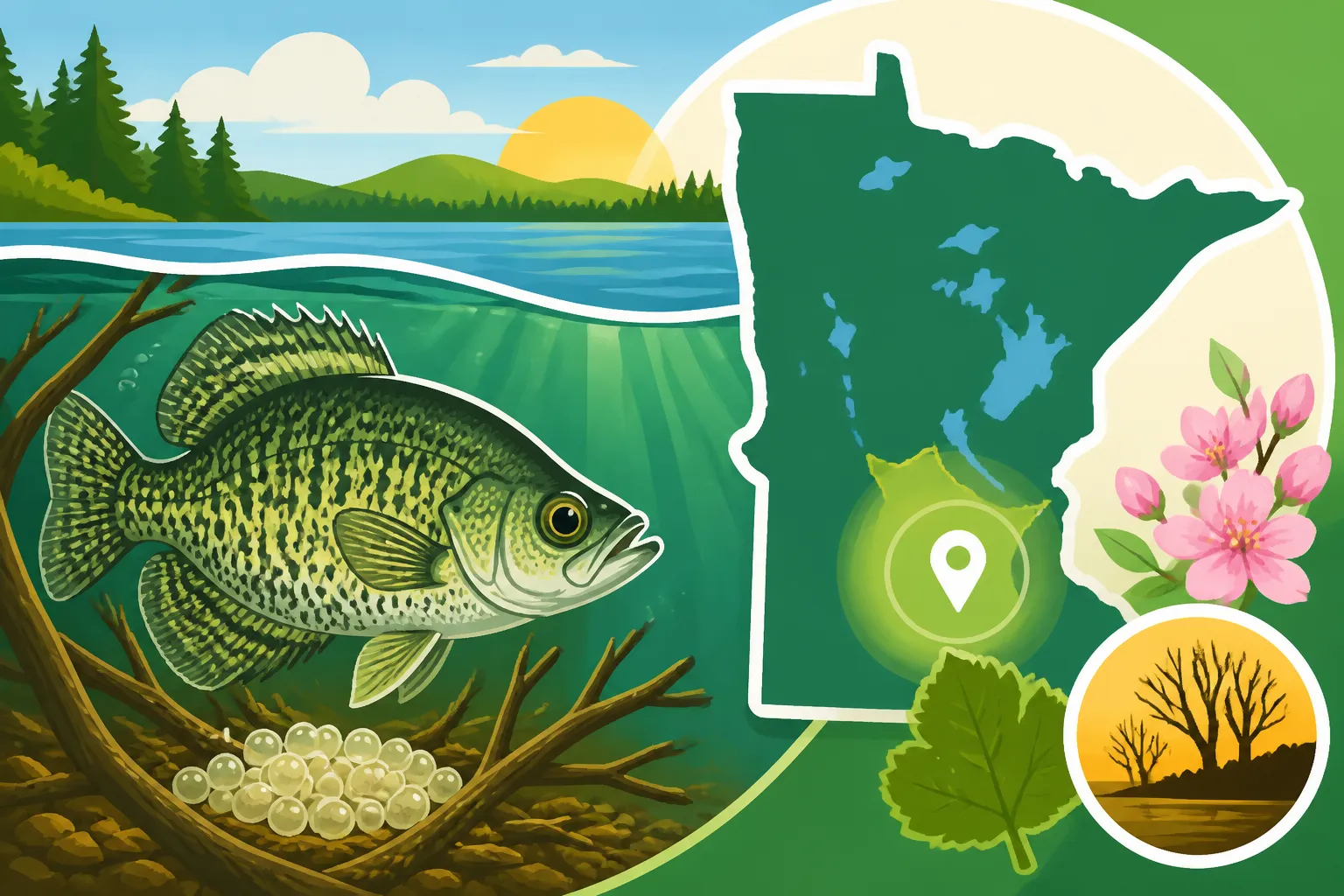
While shallow water and cover are important, crappies are quite particular about the specific structures they choose for their spawning beds. Male crappies are the architects here, fanning out circular depressions in the substrate, typically 6-12 inches in diameter. They often choose areas with a firm bottom, like sand or gravel, but will also use root masses of weeds or submerged woody debris.
Look for a combination of factors:
- Vegetation Edges: The inside and outside edges of developing weed lines, especially coontail or cabbage, provide excellent cover. Fish will often hold just inside the denser stuff or along the perimeter.
- Woody Debris: Submerged timber, brush piles, and fallen trees are absolute gold mines. The fish will set up their nests around the branches, using the structure for protection.
- Hard Bottom: While they prefer firm bottoms, in softer lakes, they’ll adapt to whatever solid structure is available. That might mean an old tire, a sunken bucket, or even just a stiffer patch of mud near some reeds.
- Proximity to Deeper Water: While they spawn shallow, they generally don't venture too far from the safety of slightly deeper water. A shallow bay with a quick drop-off to 10-15 feet is often more productive than a vast, uniformly shallow flat with no easy escape route. This allows them to quickly retreat if disturbed.
Spotting the Spawn Beds
Sometimes, if the water is clear enough and conditions are right, you can actually see crappie spawn beds. This is particularly true in shallower, clearer lakes. Look for circular, lighter-colored depressions on the bottom, often in areas with some sparse vegetation or a sandy/gravelly bottom. The males keep these beds clean by fanning away silt, which makes them stand out.
You might also spot the crappies themselves. During the spawn, especially if it’s a calm, sunny day, you can often see male crappies hovering over their nests, guarding them diligently. They will typically appear darker than usual, a characteristic often associated with spawning males of many species, as they develop "breeding colors" to attract females and ward off rivals. If you spot one, there are likely more nearby. Be sure to approach these areas quietly and carefully to avoid spooking the fish. A good pair of polarized sunglasses is an essential tool for visually identifying fish and structure in clear water. For those tougher-to-spot areas, a shallow water anchor like a Minn Kota Talon can keep your boat silently in place while you explore.
Here's a quick overview of ideal crappie spawning conditions:
| Factor | Ideal Range/Description | Why it Matters |
|---|---|---|
| Water Temperature | 60-68°F (Fahrenheit) | Triggers spawning activity and optimal egg development. |
| Depth | 1-8 feet (highly dependent on water clarity and cover) | Provides warmth from sunlight, accessible cover for nests. |
| Bottom Content | Sand, gravel, firm mud, root masses of weeds, submerged wood | Provides a stable substrate for the male to fan out a nest. |
| Cover/Structure | Emergent weeds (cattails, bulrushes), submerged brush, fallen trees, docks | Protection from predators, shelter for fry, visual break. |
| Location | Protected bays, channels, leeward shorelines, north-facing banks | Minimizes wave action, warms up faster, provides shelter. |
| Clarity | Clear to moderately stained (too turbid reduces visibility/light) | Allows sunlight penetration for warmth, helps crappies see predators/mates. |
Fishing Strategies During the Crappie Spawn
Knowing when and where crappies spawn is half the battle; the other half is knowing how to catch them without disturbing their vital reproductive process too much. This phase of their life cycle calls for specific tactics and a mindful approach. If you're looking for more general advice, our guide to Crappie & Panfish Fishing Techniques is an excellent resource.
Presentation is Key: Light Tackle and Subtle Baits
When crappies are spawning, they aren't necessarily "feeding" in the aggressive sense. Their primary drive is reproduction. However, they will often strike out of territoriality or annoyance to protect their nests, or simply because a meal of opportunity presents itself. This means your presentation needs to be subtle and enticing.
Light tackle is absolutely crucial. A sensitive ultralight or light action spinning rod (4-6 lb test line, monofilament or fluorocarbon) is perfect for detecting those subtle "thunks" or pauses that indicate a crappie has mouthed your bait. As for baits, smaller is generally better. Tiny jigs (1/32 to 1/16 oz) tipped with a small plastic grub, tube jig, or even a simple piece of Gulp! Alive! are highly effective. Live bait, especially small minnows (like fatheads) or a wax worm, fished under a sensitive slip bobber, is often deadly. The natural movement and scent can be irresistible to a territorial crappie. Remember, the goal isn't to blast them with a power fishing technique; it's to gently present a meal or an intruder that they can't ignore. For detailed steps on rigging a bobber, check out our article on How to Set Up a Slip Bobber Rig Step by Step.
Approaching Spawning Crappie with Stealth
Spawning crappies are sensitive to disturbances. Loud noises, heavy footfalls on a dock, or carelessly banging around in a boat can send them scattering, making them much harder to catch. Stealth is your best friend during the spawn.
If you're fishing from shore, walk softly and minimize vibrations. If you're in a boat, use your trolling motor sparingly and at low speeds, or better yet, drift quietly with the wind or use shallow water anchors to hold your position. Try to cast beyond the spawning beds and retrieve your bait through them, rather than casting directly on top, which can sometimes spook the fish. This also allows the bait to settle naturally into the strike zone. Wearing natural colors can also help you blend in, reducing your visual profile. Many successful crappie anglers understand that the fish are often right beneath them or very close by, so making too much noise can turn what should be a hot bite into a frustrating outing.
Post-Spawn: What Happens Next?
The crappie spawn isn't a permanent condition, and understanding the post-spawn phase is vital for continued success. Once the females have deposited their eggs and the males have guarded the nests for a period (which can be a few days to a week or more, depending on water temperature), the crappies will typically disperse.
Females, exhausted from the spawning process, will often retreat to slightly deeper water to recover and feed heavily. They might move to the first major break line, suspending over brush piles or deeper weed beds. The males might hang around the shallow areas for a bit longer, still guarding any remaining fry, but eventually, they too will move off to recover. Fishing during the immediate post-spawn can be a bit tougher as the fish are scattered and less predictable. However, as they recover and begin to feed again aggressively, often in predictable summer patterns, fishing can pick right back up. You might find them suspended over deep structure or schooling in open water, chasing baitfish. Knowing these transitions helps you adapt your tactics and keep catching fish throughout the spring and into summer. You can find more targeted advice in our guide on Spring Crappie Fishing in Minnesota.
Factors Affecting the Spawn and Your Success
While water temperature is the primary driver, other environmental factors play a significant role in influencing the crappie spawn and, consequently, your fishing success. Ignoring these can lead to frustration, even if you're otherwise on the right track.
Weather, Water Levels, and Clarity
Mother Nature always has the final say, and her moods can definitely impact the crappie spawn.
- Weather Stability: A stable period of warm, sunny weather is ideal for a strong, consistent spawn. This allows water temperatures to rise gradually and stay within that optimal 60-68°F range. Sudden cold fronts, especially those accompanied by strong winds or significant temperature drops, can halt the spawn in its tracks. Crappies will often retreat to deeper water during these cold snaps, becoming less active until conditions stabilize. Patience is key during unpredictable spring weather.
- Water Levels: Rising or falling water levels can have a dramatic effect. If water levels are consistently high, crappies might push further into flooded shoreline vegetation, making them harder to reach. Conversely, rapidly falling water can pull them off their nests or make areas that were previously excellent spawning grounds too shallow, forcing them to relocate. Gradual, stable water levels are always preferred for a successful and accessible crappie spawn.
- Water Clarity: Water clarity dictates how deep crappies will spawn and how visible their beds might be. In very clear lakes, they might spawn a bit deeper to feel more secure from overhead predators. In murkier water, they'll often be shallower, where sunlight can penetrate, and visibility is still adequate for them to identify their nests and potential threats. Too much turbidity, often caused by heavy rains and runoff, can scatter fish and make locating them challenging.
Conservation and Responsible Angling
During the spawn, crappies are particularly vulnerable. They're concentrated in shallow areas, often focused on reproduction, and can be easy targets. This is why practicing responsible angling and understanding Minnesota Fishing Limits: Bag & Possession (2026) is more important than ever.
- Respecting Limits: Minnesota has specific limits on how many crappies you can keep, and these are in place to ensure the long-term health of our fisheries. Always check the current regulations for the specific lake you're fishing, as special regulations or slot limits might apply. Our guide on How Many Crappie Can You Keep in Minnesota? provides further details. Taking only what you need and leaving plenty for the next generation is crucial.
- Catch and Release Practices: If you plan to release fish, handle them with care. Minimize their time out of the water, use a soft, rubberized net, and release them gently headfirst into the water. Avoid excessive handling, especially if they are actively spawning. A healthy release ensures they can continue their reproductive cycle.
- Targeting Other Species: Sometimes, during the peak of the crappie spawn, it's worth considering targeting other species if you're having too much success or if the fish seem particularly stressed. Bass, northern pike, or even walleyes might be in different stages of their own seasonal patterns and can provide a fun alternative without impacting the crappie population during their most vulnerable time.
- Support Fisheries Management: The Minnesota DNR works tirelessly to manage our crappie populations. Following regulations, reporting any suspicious activity, and even participating in local conservation efforts helps ensure that future generations can enjoy the same fantastic crappie fishing we do today. Understanding the differences between Black Crappie vs White Crappie can also help with accurate identification and compliance with regulations.
Finding crappies during the spawn is one of the true joys of Minnesota fishing. It's a time when the fish are concentrated, often aggressive, and provide some fantastic action. By paying close attention to water temperature, understanding their preferred habitats, and employing subtle, stealthy tactics, you can unlock the secrets of the crappie spawn. Remember to fish responsibly, respect the resource, and enjoy every moment out on Minnesota's beautiful waters.
Disclaimer
Please note that fishing regulations, seasons, and limits are subject to change by the Minnesota Department of Natural Resources (DNR). Always consult the most current Minnesota fishing regulations guide before heading out on the water. This article is for informational purposes only and does not supersede official DNR publications.