How to Catch Flathead Catfish in Minnesota
If you've ever dreamt of battling a true river monster, the flathead catfish might just be your ultimate Minnesota challenge. These powerful, elusive fish lurk in the depths of our larger rivers, growing to impressive sizes and putting up an incredible fight, yet many anglers feel intimidated or unsure how to even begin targeting them. This comprehensive guide is dedicated to demystifying the pursuit of Minnesota's flathead catfish, offering a roadmap to understanding their habits, gearing up properly, and successfully reeling in these magnificent, whiskered giants.
Understanding Minnesota's Flathead Catfish
Flathead catfish are truly unique creatures in Minnesota's diverse fisheries. They aren't your typical panfish or walleye; they are apex predators of the river bottom, and understanding their biology and behavior is the first step to catching them.
Identifying the Flathead Catfish
Before you can target them, you need to know what you're looking for. Flathead catfish ( Pylodictis olivaris) have several distinctive features that set them apart from their more common cousins, the channel catfish. Imagine a fish that looks like it's been squashed from above, and you're halfway there! Their head is noticeably broader and flatter than a channel cat's, hence the name. Their lower jaw also protrudes beyond the upper jaw, giving them a perpetual frown.
The most defining feature for identification, though, is their tail. Unlike the deeply forked tail of a channel catfish, the flathead's tail is only slightly notched, appearing almost squared or rounded. Their coloration is also different: flatheads typically have a mottled brown, yellow, and olive green pattern, which provides excellent camouflage against rocky or woody river bottoms, whereas channel catfish are usually silvery-gray with scattered dark spots. These differences aren't just cosmetic; they reflect their distinct hunting styles and habitat preferences. Being able to correctly identify the species is crucial, especially when considering Catfish in Minnesota: Channel & Flathead.
Where Flathead Catfish Call Home in Minnesota
Flathead catfish are not found in every lake and river in Minnesota. They are primarily river dwellers, preferring large, slow-moving rivers with plenty of deep holes, woody cover, and strong current breaks. They are ambush predators, and these environments provide perfect hiding spots for them to wait for unsuspecting prey.
In Minnesota, your best bet for finding flatheads is in the major river systems. The Mississippi River is undoubtedly the most famous flathead stronghold, particularly its lower pools in the southern half of the state. From the Twin Cities metro area stretching south towards Iowa, the Mississippi offers expansive habitat. The Minnesota River, especially its lower reaches before it joins the Mississippi, is another prime location, though access can be a bit more challenging. Finally, the St. Croix River, forming part of the border with Wisconsin, boasts a healthy population of flatheads, including some truly monstrous specimens. These rivers provide the perfect combination of deep water, strong currents, and abundant structure that flatheads absolutely thrive in. You won't find them in every shallow, sandy stretch; they seek out the deeper, snag-filled hideouts.
Essential Gear and Bait for Flatheads
Chasing flathead catfish isn't a finesse game. These are big, powerful fish that live in tough environments, and your gear needs to be up to the task. Trying to land a 30-pound flathead on a walleye rod is a recipe for heartbreak and lost fish.
Heavy-Duty Rods and Reels
When it comes to flatheads, think power. You'll need a rod with a strong backbone and enough sensitivity to detect subtle bites in current. A medium-heavy to heavy power baitcasting rod, typically 7 to 9 feet long, is ideal. Look for rods designed for saltwater applications or heavy-duty freshwater species like muskie or pike. A good example would be a rod rated for 15-50 lb line and lures up to 8 ounces. Shorter rods can be used from a boat for maneuverability, while longer rods are great for casting from shore or gaining leverage in a fight.
Pair this rod with a robust baitcasting reel that has a smooth, powerful drag system. Brands like Penn or Abu Garcia are popular choices among serious catfishermen because their reels are built to withstand the immense pressure a large flathead can exert. You'll want a reel capable of holding at least 200 yards of heavy line.
For line, braided line is the way to go for your main line. Its zero-stretch quality provides excellent sensitivity, allowing you to feel every bump and bite, and its incredible strength-to-diameter ratio means you can run a lighter pound test than monofilament while still having immense pulling power. Fifty to 80-pound test braided line is common. Since flatheads often live in abrasive, snag-filled environments, a heavy monofilament or fluorocarbon leader (40-80 lb test) of 1-3 feet is essential to protect your main line from nicks and cuts. For more general advice on setups, check out Best Fishing Gear for Beginners in Minnesota By Budget – just remember to scale up!
Preferred Bait: Live and Cut
This is where flathead fishing truly differs from targeting other species. Flatheads are voracious predators, and unlike channel catfish which are often scavengers, flatheads overwhelmingly prefer live bait. They are not typically interested in stink baits or dip baits.
-
Live Bait: This is the undisputed king for flatheads. The fresher and livelier, the better. Common choices in Minnesota include:
- Suckers: These are probably the most popular choice. Creek chubs, white suckers, or redhorse suckers, ranging from 6-12 inches, are excellent. The bigger the flathead you're after, the bigger the bait you can use.
- Bullheads: Yellow or black bullheads, especially smaller ones (4-8 inches), are incredibly tough and attractive to flatheads. Make sure to check regulations on using bullheads as bait; some waters have restrictions.
- Chub: Various species of chub can also be effective.
- Panfish: Bluegills or crappies can be excellent live bait, but always check the Minnesota DNR regulations carefully. In Minnesota, you generally cannot use game fish (like bluegill or crappie) as bait unless you caught them from the same water body you are fishing, and they must count towards your daily limit. This is a critical rule to avoid violations.
-
Cut Bait: While live bait is preferred, fresh cut bait can also entice flatheads, especially larger, oily fish like carp or fresh dead suckers. The key word here is fresh. Flatheads are picky, and old, thawed-out bait rarely produces. If you use cut bait, make sure it's from a fish species that is legal to use as bait and was obtained legally. For tips on sourcing live bait, some general principles discussed in Best Live Bait for Walleye Leeches, Minnows, Crawlers can be adapted, though you'll be looking for much larger specimens!
Mastering Flathead Fishing Techniques
Catching flathead catfish is less about frantic casting and more about strategic placement and patience. These fish are masters of their environment, and you need to play to their strengths.
Rigging for Success
The type of rig you use is paramount for presenting your bait effectively in strong river currents and snag-filled areas.
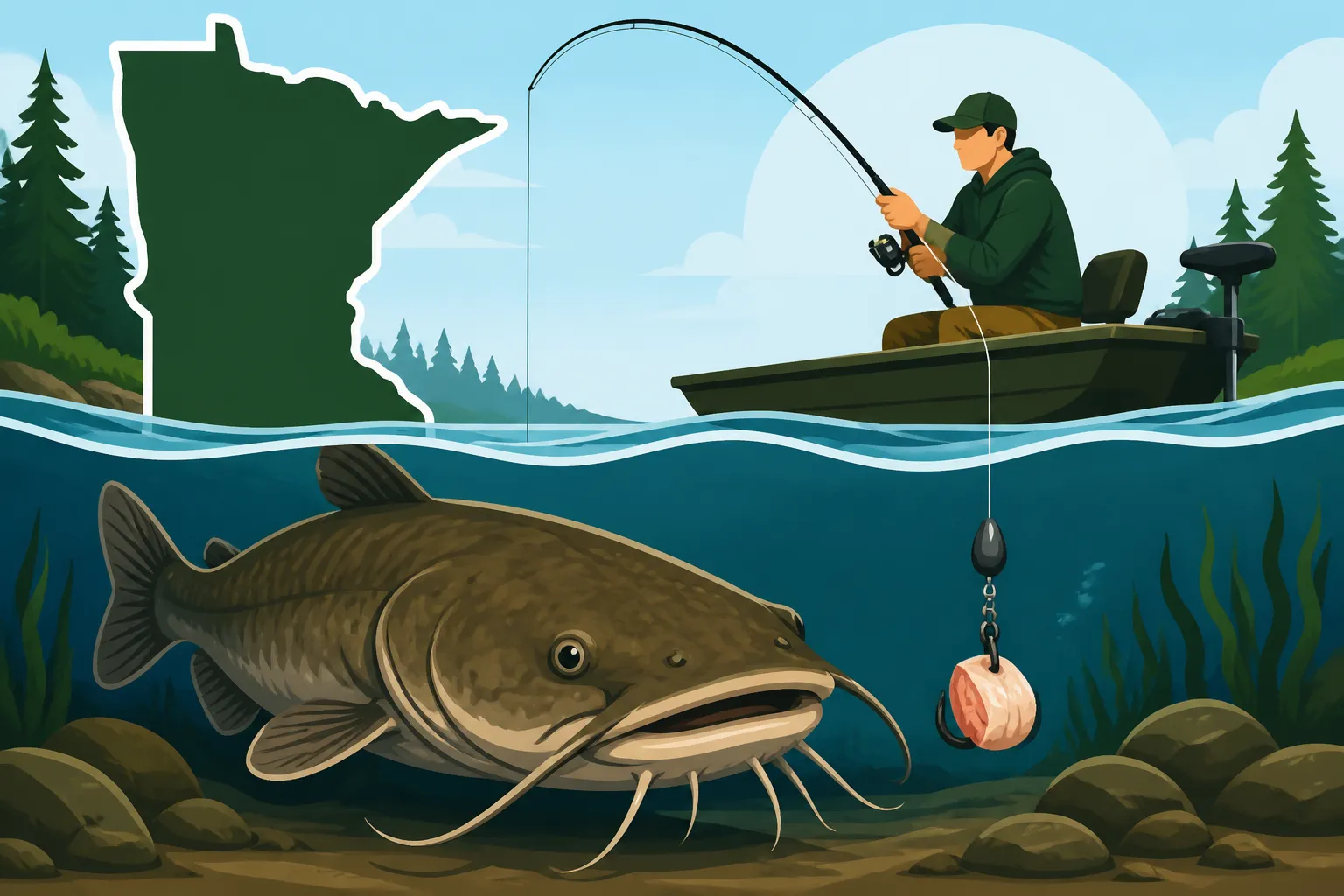
- Slip Sinker Rig (Carolina Rig Variation): This is a very popular and effective rig. Thread a heavy slip sinker (1-6 ounces, depending on current) onto your main line, followed by a bead to protect your knot. Tie on a heavy-duty swivel (100 lb test is not overkill). To the other end of the swivel, attach a 1 to 3-foot monofilament or fluorocarbon leader. Finally, tie on a sturdy circle hook.
- Why it works: The slip sinker allows the line to run freely, so a biting fish doesn't feel the weight of the sinker, giving them time to fully engulf the bait. The swivel prevents line twist, and the leader provides abrasion resistance.
- Three-Way Swivel Rig: This rig is excellent for maintaining control in heavy current or over specific structure. Tie your main line to one eye of a three-way swivel. To a second eye, tie a short leader (6-12 inches) with your heavy sinker. To the third eye, tie a longer leader (1-3 feet) with your hook and bait.
- Why it works: It keeps your bait suspended off the bottom slightly, which can be advantageous in certain situations, and the sinker lead is easily sacrificial if it gets snagged.
For hooks, circle hooks are highly recommended, especially when using live bait. Flatheads tend to swallow bait deeply, and circle hooks are designed to hook the fish in the corner of the mouth as the fish swims away, greatly reducing gut hooking. This is critical for fish health, especially if you plan on releasing larger specimens. Sizes 7/0 to 10/0 are common for flatheads.
Strategic Spot Selection
This is perhaps the most critical aspect of flathead fishing. You can have the best gear and bait, but if you're not where the fish are, you won't catch anything.
- Structure is Key: Flatheads are almost always found near some type of cover or structure. Think log jams, fallen trees, brush piles, submerged rock piles, bridge pilings, and scour holes around wing dams. These provide current breaks where they can rest and ambush prey. Look for eddies and slack water created by these features.
- Deep Holes and Bends: Rivers often have their deepest sections on the outside bends. These deep holes are prime holding areas for large flatheads. Use your boat's electronics or a depth finder if fishing from a boat to locate these depressions. If fishing from shore, look for obvious signs of deeper water or consult a river map.
- Night Shift: While flatheads can be caught during the day, they are primarily nocturnal feeders. Their large, light-sensitive eyes are perfectly adapted for low-light conditions. Many serious flathead anglers fish exclusively at night, from dusk until dawn, positioning their baits on the edges of deep holes or near snag-filled cover where flatheads will venture out to hunt. You'll often find that the biggest fish bite in the darkest hours.
- Current Breaks: Flatheads are powerful, but they don't want to fight the current constantly. They'll position themselves just out of the main flow, in a "current seam" or eddy, where they can expend minimal energy but still ambush prey that drifts by. This requires careful observation and understanding of river dynamics. For deeper insights into river fishing, consider reading Mississippi River Pool Fishing in Minnesota or Minnesota River Fishing: Mississippi, Minnesota & St. Croix.
Handling and Releasing Flatheads
Catching a giant flathead is an exhilarating experience, but proper handling is crucial for the fish's well-being and your safety.
- Gear for Handling: Always have a large, rubberized landing net or a sturdy set of fish lip grippers (like a BogaGrip) ready. Heavy-duty gloves are also highly recommended to protect your hands from their sandpaper-like teeth and sharp pectoral and dorsal fin spines.
- Control the Fish: Once landed, try to keep the fish in the water as much as possible, especially if you plan to release it. If you need to bring it on shore or into the boat, do so quickly and carefully. Grip the fish firmly by the lower jaw, using a lip gripper or your gloved hand, supporting its belly with your other hand, especially for larger fish to prevent organ damage.
- Hook Removal: With circle hooks, removal is usually straightforward from the corner of the mouth. Use long-nose pliers or a hook remover. If a fish is deeply hooked, consider cutting the line as close to the hook as possible, as attempts to dig it out can cause more harm.
- Release with Care: If releasing, get the fish back into the water as quickly as possible. Hold it upright by the tail and jaw in the current until it vigorously swims away. Don't just toss it back; make sure it's revived. These fish are slow growers, and releasing big females helps ensure future generations. Review Catch and Release Best Practices in Minnesota for more general guidelines.
- Regulations: The statewide regulation for catfish in Minnesota generally allows a bag limit of 5, with only one over 24 inches. Always double-check the current Minnesota DNR fishing regulations booklet before heading out, as rules can change. This is usually grouped under general "Catfish" regulations, encompassing both channel and flathead, as discussed in Channel Catfish Season & Limits in Minnesota.
Key Minnesota Flathead Hotspots
Minnesota offers some fantastic opportunities for flathead fishing, primarily in its major river systems. Knowing where to focus your efforts can dramatically increase your chances of success.
Mississippi River
The mighty Mississippi is the undisputed king for flathead catfish in Minnesota. Its vast expanse and varied structure provide ideal habitat.
- Pools 2, 3, and 4: These pools, located downstream from the Twin Cities, are particularly renowned.
- Pool 2 (St. Paul to Hastings): This stretch, including areas near St. Paul, South St. Paul, and Hastings, has excellent fishing. Look for flatheads in the deep holes and current breaks created by the numerous islands, bridge pilings, and lock and dam structures. The area around Lock and Dam 2 is a known hotspot.
- Pool 3 (Hastings to Red Wing): Another fantastic section, featuring significant wing dams and rocky structures that break the current and create ambush points. The areas around Red Wing are very productive.
- Pool 4 (Red Wing to Alma, WI): This massive pool includes Lake Pepin, but the flatheads are primarily found in the main river channel and its tributaries, particularly in the deeper, snaggier sections below the dam at Red Wing.
- Access: Numerous public boat launches and shore fishing access points exist along these pools. Check with local bait shops for up-to-date information on river conditions and specific productive areas.
Minnesota River
Often overlooked by anglers heading to the Mississippi, the Minnesota River holds its own impressive population of flathead catfish, particularly in its lower reaches.
- Lower Sections: From Henderson downstream to where it joins the Mississippi near Fort Snelling in St. Paul, the Minnesota River becomes a formidable flathead fishery.
- Challenges: This river can be notoriously muddy after rains, and access can be limited in some areas due to steep banks or private land. However, for those willing to explore, the rewards can be substantial. Look for deep scour holes, fallen timber, and rocky banks, especially where smaller tributaries enter the main river. The slower, deeper stretches near its confluence with the Mississippi are prime territory for these powerful fish.
St. Croix River
The federally protected St. Croix River is a national treasure and home to a robust population of flathead catfish, including some truly trophy-sized fish.
- Southern Stretches: From Stillwater downstream to where it meets the Mississippi, the St. Croix offers fantastic fishing. The bluffs create deep channels, and the river boasts abundant woody cover and rock formations.
- Taylors Falls Area: While more famous for its scenic Dalles of the St. Croix, the deeper holes and rock structure in this northern section can also hold flatheads, though the river here is narrower and faster.
- Interstate Park: Both Minnesota and Wisconsin sides of Interstate Park offer unique geological formations that create excellent flathead habitat. Just remember that fishing here means being aware of Border Water Fishing Rules Minnesota-Ontario, Wisconsin.
- Quiet Waters: Unlike the often busy Mississippi, parts of the St. Croix offer a more serene fishing experience, allowing for quiet nights targeting these giants.
Other Potential Waters
While the "Big Three" rivers are your primary destinations, flatheads might occasionally be found in the lower reaches of their larger tributaries or even in a few of Minnesota's very large, river-fed lakes, especially near river mouths. However, these are generally isolated occurrences, and dedicated flathead anglers will always point you to the major rivers for consistent action and trophy potential. The key is finding that combination of deep water, strong current, and abundant structure that these bottom-dwelling predators crave.
| Feature | Flathead Catfish | Channel Catfish |
|---|---|---|
| Head Shape | Broad, flat, lower jaw protrudes | Rounded, upper jaw protrudes or is equal |
| Tail Shape | Slightly notched or square/rounded | Deeply forked |
| Coloration | Mottled brown, yellow, olive green | Silvery-gray, often with dark spots (younger fish) |
| Primary Diet | Live fish (predatory) | Omnivorous (scavengers, insects, small fish) |
| Habitat | Deep, slow-moving rivers, heavy cover, current breaks | Rivers and lakes, various depths, less cover-dependent |
| Typical Size | Larger (often 10-50 lbs, can exceed 70 lbs) | Smaller (often 2-10 lbs, rarely over 20 lbs) |
| Best Bait | Live bait (suckers, bullheads, chub) | Stink bait, cut bait, worms, chicken liver |
Disclaimer
Fishing regulations, seasons, and limits can change. Always consult the latest official Minnesota Department of Natural Resources (DNR) fishing regulations handbook or website before planning any fishing trip to ensure compliance. This guide is for informational purposes only and does not replace official DNR guidelines.