Whitefish & Tullibee (Cisco) in Minnesota
It's easy to get confused when you hear terms like "whitefish" and "tullibee" tossed around in Minnesota fishing circles. Are they the same thing? Is one just a fancy name for the other? The reality is, while often grouped, these fish are distinct species that play vital roles in our state's incredible aquatic ecosystems. This guide will cut through the jargon, helping you understand these fascinating "forage fish," learn where to find them, and how to successfully target them, especially during the long Minnesota winters.
Understanding Whitefish and Tullibee in Minnesota
For many anglers, the first time they encounter a whitefish or tullibee, it's a bit of a head-scratcher. They don't have the aggressive strikes of a northern pike or the iconic yellow fins of a walleye, but they are incredibly important, and increasingly, a fun target in their own right. Let's break down what these fish are all about.
The Identity Crisis: Are They the Same?
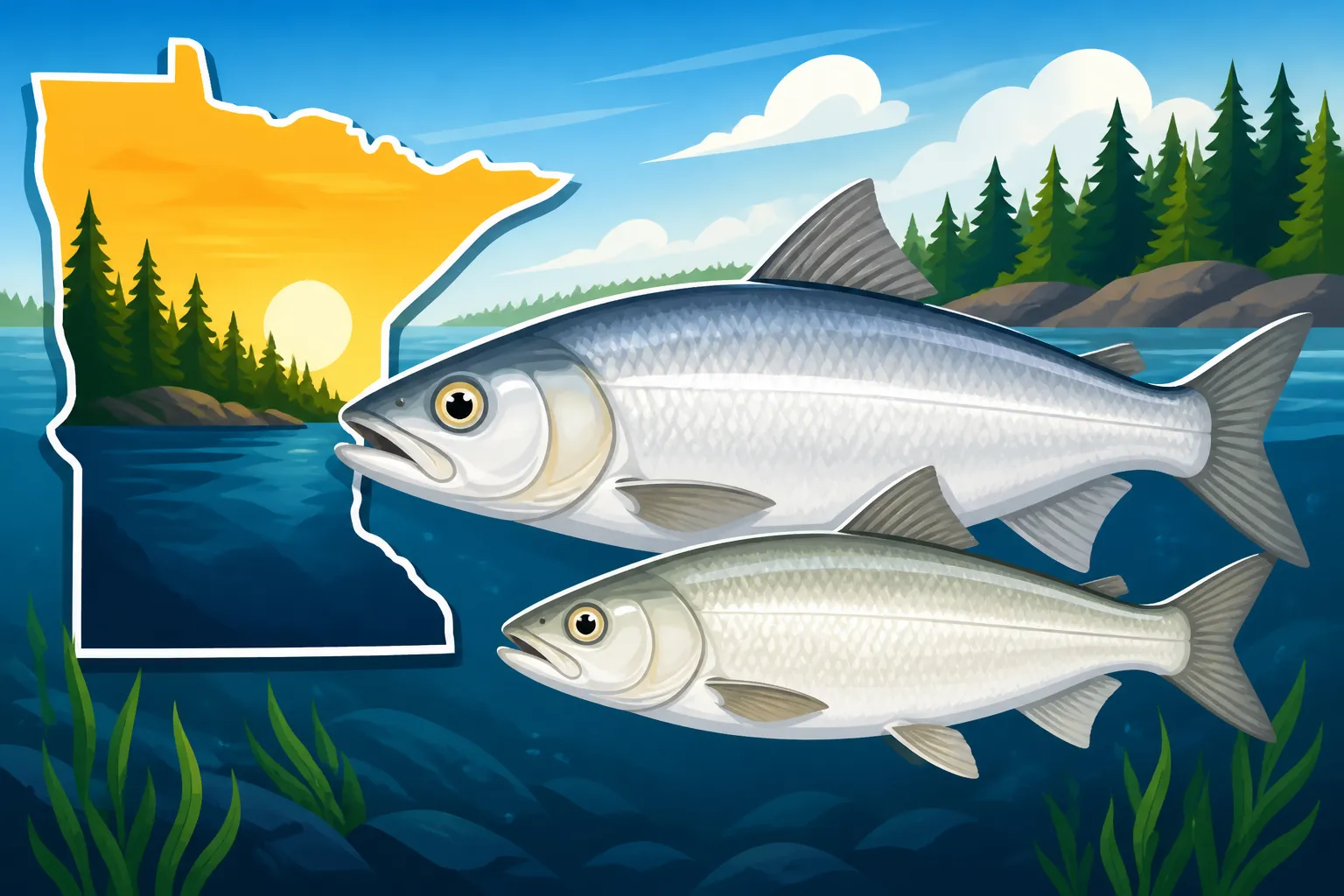
This is perhaps the most common question, and it's a valid one! In common parlance, especially around many Minnesota lakes, the terms "tullibee" and "cisco" are often used interchangeably. Scientifically speaking, a tullibee is a cisco, specifically the lake cisco (Coregonus artedi). Whitefish, on the other hand, usually refers to the lake whitefish (Coregonus clupeaformis). Both belong to the Coregonidae subfamily, which is part of the salmon family (Salmonidae), but they are indeed separate species.
Think of it this way: a Labrador Retriever and a Poodle are both dogs, but they're different breeds. Similarly, tullibee and lake whitefish are both "coregonids" – a group of salmonids characterized by their silvery bodies, small, soft-rayed fins, and a mouth designed for bottom-feeding or filtering. The confusion often stems from their similar appearance and the fact that they often inhabit the same deep, cold-water environments. However, knowing the difference can help you identify your catch and understand the specific habits of each.
Key Characteristics and Identification
While they share a family resemblance, there are some noticeable differences once you know what to look for. These can be subtle, but they become clearer with experience.
- Lake Whitefish: Generally, lake whitefish tend to be chunkier and larger than tullibee, with a more pronounced hump behind their head. Their mouth is small and inferior (points downwards), making them excellent bottom feeders, perfectly adapted for vacuuming up insects and small invertebrates. Their coloration is typically silvery, sometimes with a greenish-brown back. They can grow quite large, often exceeding 20 inches and occasionally reaching well over 30 inches and hefty weights. The Minnesota state record for lake whitefish is an impressive 12 pounds, 4 ounces!
- Tullibee (Cisco): Tullibee are usually more slender and streamlined than lake whitefish. Their mouth is typically terminal (at the very end of their snout) or slightly superior (points slightly upwards), which helps them filter plankton and small prey from the water column. They are also silvery, often with a darker, bluish-green back. While they can reach respectable sizes, they generally don't get as large as lake whitefish, with average catches in the 10-15 inch range being common, though some can push past 20 inches. The state record tullibee is 5 pounds, 11 ounces.
When you're out on the ice or open water, observing the mouth position and overall body shape can be your best bet for distinguishing between these two. Both have that tell-tale adipose fin – a small, fleshy fin between the dorsal fin and the tail, characteristic of salmonids.
Where These Species Thrive
Both whitefish and tullibee are true cold-water specialists. They absolutely adore deep, oxygen-rich lakes, especially those that stratify in the summer, leaving a cool, dark refuge below the thermocline. In Minnesota, this means you'll find them primarily in our larger, deeper lakes, often in the central and northern parts of the state.
- Lake Whitefish are typically found closer to the bottom, often over hard-bottomed areas, humps, reefs, and rocky structures where they can forage for benthic (bottom-dwelling) invertebrates. They prefer depths of 30-100 feet, sometimes even deeper, depending on the season and oxygen levels.
- Tullibee (Cisco) are often found higher in the water column, suspended over deep basins or roaming open water in large schools. They're primarily plankton feeders but will also consume small invertebrates and insect larvae. Their depth preference can vary widely throughout the day and seasons, following their food sources, but they'll typically be in water deeper than 20 feet.
It's not uncommon to find both species in the same lake, sometimes even in the same general area, though often at different depths or associating with slightly different structures. For instance, on a big lake like Lake Superior, you'll find robust populations of both. Smaller, shallower, or warmer lakes simply don't have the cool, deep water these fish need to survive and thrive, especially during the peak of summer.
The Biology and Life Cycle of Minnesota's Coregonids
Understanding the life history of whitefish and tullibee gives us incredible insights into why they behave the way they do and how to effectively fish for them. These fish have adapted remarkably to their deep-water environments.
Spawning Habits and Reproduction
Unlike many of our popular game fish that spawn in the spring, whitefish and tullibee are fall/early winter spawners. This is a crucial distinction when considering their lifecycle and angling pressure.
- Lake Whitefish typically spawn in late October through December, often right after ice formation on some lakes. They migrate to shallow, rocky shoals, reefs, or even river mouths, usually in depths of 2 to 15 feet. The female deposits thousands of small, non-adhesive eggs over the rocky substrate, which are then fertilized by the males. The eggs settle into the crevices, where they overwinter and hatch in the spring as water temperatures rise. During this vulnerable spawning period, they are often less interested in feeding, but their presence in shallower water can still make them accessible to anglers.
- Tullibee (Cisco) also spawn in the fall, generally from late October to early December, sometimes a bit earlier or later than whitefish depending on water temperatures. Like whitefish, they move into shallower water, usually over sandy or gravelly bottoms, often in depths ranging from 5 to 25 feet. Their eggs are similar, settling into the substrate and developing over winter, hatching in early spring. The timing of this spawn can sometimes coincide with the early ice season in Minnesota, making them a target for brave anglers venturing out.
The precise timing of spawning can vary from lake to lake, influenced by water temperature and photoperiod (daylight length). This fall spawning ritual is essential for their survival, allowing their young to hatch into the abundance of spring plankton, giving them a head start on growth.
Diet and Forage
The diet of whitefish and tullibee is a primary reason why they are such a critical component of Minnesota's aquatic food webs. They act as a vital link, converting microscopic organisms into larger biomass that can sustain predatory fish.
- Lake Whitefish are primarily benthic feeders, meaning they graze on organisms living on or in the lake bottom. Their diet includes a wide array of invertebrates such as midge larvae (bloodworms), aquatic insect nymphs (mayflies, caddisflies), small crustaceans (amphipods like scuds, copepods), and even small snails and clams. This bottom-dwelling diet is perfectly suited to their inferior mouth. They will occasionally consume small fish if available, but it's not their primary food source.
- Tullibee (Cisco), with their more terminal mouth, are largely pelagic planktivores, meaning they feed on zooplankton suspended in the open water column. They are incredibly efficient filter feeders. However, they are also opportunistic and will readily consume aquatic insects, especially midge larvae and nymphs, when available. Larger tullibee might even eat tiny fish. Their schooling behavior often relates to concentrating on patches of zooplankton, making them a moving feast for predators.
It’s easy to see why they are a primary food source for many of our coveted game fish. Their soft-rayed bodies, high fat content, and schooling nature make them an ideal, energy-rich meal for species like walleye, northern pike, and especially lake trout.
Growth Rates and Longevity
The growth rate and lifespan of whitefish and tullibee can vary significantly depending on the lake's productivity, water temperature, and population density. However, they generally grow relatively slowly and can live for quite a long time in ideal conditions.
- Lake Whitefish typically reach sexual maturity around 3 to 6 years of age. In productive lakes, they can grow to 12-15 inches within a few years, but larger, trophy-sized fish often take 10 years or more to reach their impressive dimensions. It's not uncommon for lake whitefish to live for 15-20 years, with some individuals in exceptionally cold, deep lakes living even longer. Their slower growth contributes to their firm, flaky flesh, which many consider a delicacy.
- Tullibee (Cisco) mature a bit faster than lake whitefish, usually between 2 and 4 years of age. They generally grow to 8-12 inches within a few years. While they don't achieve the same maximum size as lake whitefish, they can still live for 10-12 years, sometimes longer, especially in northern Minnesota lakes. Their relatively fast maturity and schooling behavior make them very effective at producing large numbers of offspring, which further fuels the forage base for other species.
Understanding their longevity underscores the importance of proper management and conservation. These are not fast-growing, quickly replaceable fish; they are long-lived residents that form the backbone of a healthy aquatic ecosystem.
Why Whitefish and Tullibee Matter to Minnesota's Ecosystem
These often-overlooked fish species are far more than just a novelty catch; they are absolutely fundamental to the health and vitality of many of Minnesota's most cherished lakes. Without healthy populations of whitefish and tullibee, the entire food chain would suffer dramatically.
Crucial Forage for Predatory Fish
This is arguably their most significant ecological role. Whitefish and tullibee are the "prime rib" of the lake for many apex predators. They are relatively easy for larger fish to catch, packed with calories, and often found in abundant schools.
- Walleye: While walleye are opportunistic feeders, in lakes where tullibee are present, these silvery baitfish often become a primary food source, especially for larger walleyes. The presence of a strong tullibee population can lead to faster-growing, bigger walleye. Anglers often find the largest walleye suspending in open water, gorging on schools of tullibee, rather than hugging the bottom structure. This is particularly true in deeper, colder lakes. Understanding this can be a game-changer when you're out chasing those elusive Minnesota walleye.
- Northern Pike: Pike are notorious for their voracious appetites, and a mouthful of tullibee or smaller whitefish is a welcome meal. Big pike will often stalk the edges of deep-water structures where these forage fish congregate, or cruise the open water looking for an easy target.
- Lake Trout: For lake trout, tullibee and whitefish are an absolutely essential dietary component. Lake trout thrive in deep, cold, clear lakes, precisely the same environments where whitefish and tullibee flourish. Without these forage species, lake trout simply cannot reach their trophy potential. In places like Lake Superior or some of the deep BWCA lakes, the health of the lake trout population is directly tied to the abundance of their coregonid prey.
- Muskie: Even muskie, the "fish of 10,000 casts," will occasionally target larger tullibee and whitefish, especially in lakes where they form significant schools.
The ripple effect is clear: a decline in tullibee or whitefish populations due to habitat loss, overfishing, or climate change can have devastating consequences for the trophy potential and overall health of these popular game fish species. It’s why scientists pay such close attention to their numbers.
Indicators of Water Quality
Because whitefish and tullibee are so sensitive to their environment, their populations can serve as a vital "canary in the coal mine" for the overall health of a lake ecosystem. They require cool, oxygen-rich water year-round.
- Oxygen Depletion: If a lake experiences prolonged periods of low oxygen in its deeper, cooler waters (hypolimnion), these fish are among the first to suffer. Eutrophication (excessive nutrient enrichment) can lead to algal blooms that eventually die and decompose, consuming vast amounts of oxygen in deeper areas. A decline in whitefish and tullibee populations can signal that a lake is becoming anoxic (lacking oxygen) at depth, making it unsuitable for cold-water species.
- Temperature Sensitivity: As climate change leads to warmer water temperatures, especially in summer, the thermal refuge these fish rely on can shrink, stressing populations. Lakes that historically supported robust whitefish and tullibee may see their numbers dwindle if summer temperatures become too warm for too long.
- Pollution and Habitat Degradation: Like all fish, they are susceptible to various pollutants. Spawning habitat degradation, such as siltation of rocky shoals or development along shorelines, can directly impact reproductive success. A healthy population of these coregonids often indicates a healthy, undisturbed, and well-oxygenated deep-water habitat.
Monitoring the health and abundance of whitefish and tullibee allows fishery managers to assess the long-term ecological trends of Minnesota's deep, cold-water lakes and implement strategies to protect them.
Commercial and Recreational Value
Historically, and to some extent still today, whitefish and tullibee have held both commercial and recreational importance in Minnesota.
- Commercial Fishing: For generations, particularly on Lake Superior and some of Minnesota's larger inland waters, whitefish and tullibee were targeted by commercial netters. Their firm, flavorful white meat was, and still is, highly prized. While commercial fishing operations on inland lakes have largely scaled back, there are still commercial fisheries on Lake Superior for whitefish, contributing to local economies and providing a unique culinary experience.
- Recreational Angling: For a long time, whitefish and tullibee were considered "incidental" catches by anglers targeting other species. However, their reputation as a delicious eating fish, combined with the challenge and unique tactics required to catch them, has led to a growing recreational following, particularly among ice anglers. Many anglers now specifically target whitefish and tullibee, enjoying the fight and the reward of some fantastic table fare. They offer a great opportunity to explore new techniques and fish different parts of the lake than you might for walleye or bass.
It’s exciting to see more anglers appreciating these incredible fish. Targeting them successfully often requires a different approach than what you might use for other species, making it a rewarding pursuit for those looking to expand their angling horizons.
Best Practices for Fishing Whitefish and Tullibee in Minnesota
So, you're ready to try your hand at catching some of these elusive deep-water dwellers? Awesome! It's a fantastic experience, and the rewards are delicious. But it does require some specialized knowledge and gear.
Seasonal Strategies and Timing
Success with whitefish and tullibee often comes down to knowing when and where to find them throughout the year.
- Ice Fishing is King: Without a doubt, the prime time for targeting both whitefish and tullibee recreationally in Minnesota is during the hardwater season. The cold, oxygenated water under the ice distributes them more evenly throughout the water column, and they become more accessible as they cruise deeper basins and breaklines. Early ice can be especially good as they finish up their spawning activities and begin to feed aggressively before mid-winter slumps. Late ice also sees a surge in feeding activity as they prepare for the spring. Our comprehensive guide to Ice Fishing in Minnesota: Complete Beginner-to-Pro Guide covers many general tactics that apply.
- Open Water Opportunities (Spring/Fall): During the spring and fall, when lake temperatures are cool throughout the water column, whitefish and tullibee can be found in shallower waters, making them more accessible to boat anglers. Trolling small spoons or crankbaits near the bottom or suspending over deep water can be effective. As summer progresses and lakes stratify, they retreat to the deepest, coolest parts of the lake, making them harder to find without advanced electronics.
- Summer Deep Water: In the dog days of summer, these fish will be concentrated in the deepest, coolest parts of the lake with adequate oxygen. This often means fishing depths of 40-100 feet or more. Downriggers or heavy lead-core setups are often necessary to get baits down to these depths. Finding them during summer is a real test of your electronics and deep-water angling skills.
Top Techniques and Baits
When it comes to specific tactics, finesse and subtlety are often key, especially for whitefish. Tullibee can be a bit more aggressive, especially when actively feeding on schools of plankton.
- Jigging Small Spoons and Jigs: This is a go-to tactic, particularly for ice fishing. Small, slender spoons (like a Northland Forage Minnow, Swedish Pimple, or Acme Kastmaster) in silver, gold, or glow colors are excellent for both species. Tip them with a couple of wax worms, a minnow head, or a tiny piece of plastic. The flash and vibration attract fish, and the bait provides scent. A small tungsten jig tipped with maggots or wax worms can also be deadly, especially for tullibee. The "Best Ice Fishing Lures for Walleye" and "Best Tungsten Ice Jigs for Crappie" articles actually have some overlap for smaller presentations that work for these fish too.
- Deadsticking: Often used in conjunction with active jigging, a deadstick rod with a plain hook, minnow head, or wax worms suspended just off the bottom can be incredibly effective, especially for wary whitefish. The lack of movement can sometimes entice a bite when active jigging spooks them.
- "Mooching" or Drifting: On open water, mooching (slowly drifting or backtrolling with a weighted bait) or drifting with live bait like small minnows or shiners can work.
- Trolling: For open water, small crankbaits or spoons trolled slowly can entice bites. Matching the hatch to the natural forage base (often small minnows or plankton in a silver or white profile) is often key. You might use techniques similar to "Trolling Crankbaits for Walleye: Speed & Depth" but often at slower speeds and with smaller lures.
- Bait Choice: For live bait, small minnows (crappie minnows or fatheads), minnow heads, wax worms, maggots, and even small pieces of cut bait can be effective. For artificials, small spoons, blade baits, and ice jigs are top performers. Remember, their mouths are often small, so don't use baits that are too large.
Essential Gear for Success
Having the right equipment can make a significant difference in your whitefish and tullibee angling success.
- Rods and Reels: For ice fishing, sensitive panfish or light walleye rods are perfect. A good graphite rod with a fast or extra-fast action will help you detect subtle bites. Pair it with a small spinning reel (size 500-1000) spooled with light monofilament (2-4 lb test) or fluorocarbon. For open water, a light to medium-light spinning setup will do, allowing for good sensitivity and easy casting of small baits.
- Line: Light line is crucial. Fluorocarbon leader material (2-4 lb) is excellent for its invisibility and abrasion resistance. A sensitive braided mainline with a fluorocarbon leader is also a popular choice for detecting those light bites.
- Electronics (Flashers/Sonar): This is where you really boost your chances. A good flasher or fish finder is invaluable for locating schools of whitefish and tullibee, determining their depth, and observing their reaction to your bait. Seeing how fish react (or don't react) on your screen can help you adjust your presentation. Check out "How to Read a Flasher (Vexilar/Humminbird)" for a deep dive into these essential tools. Brands like Vexilar, MarCum, and Humminbird offer excellent ice fishing flashers.
- Ice Auger: You'll likely be drilling a lot of holes to find these schooling fish. A fast, efficient ice auger, whether it's a hand auger, gas, or electric like a StrikeMaster Lithium 40V Auger, is a must.
- Small Tackle: Bring a variety of small spoons, jigs, and hooks. Size 8 or 10 treble hooks, or small single hooks (size 10-14) are common. Split shots or small lead weights will help get your bait down quickly.
Notable Minnesota Lakes for Whitefish and Tullibee
Minnesota is blessed with thousands of lakes, but only a select few offer truly exceptional whitefish and tullibee fishing opportunities due to their specific habitat requirements.
Deep, Cold-Water Havens
When seeking out these coregonids, you're looking for lakes that have ample deep, cool, and oxygenated water year-round. These are often some of Minnesota's most iconic lakes.
- Lake Superior: The undisputed champion. Lake Superior holds massive populations of both lake whitefish and tullibee, especially in the Minnesota waters off the North Shore. Trolling for whitefish and lakers is popular, and ice anglers often find whitefish in the Apostle Islands region or near harbor mouths.
- Mille Lacs Lake: While famous for walleye, Mille Lacs also holds a very healthy tullibee population. Anglers targeting walleye often find themselves catching tullibee, and increasingly, anglers are targeting them specifically. They are a significant part of the forage base here. For specific information, check out "Mille Lacs Lake Fishing Guide: Walleye, Bass & More".
- Lake of the Woods: This vast border water is another powerhouse. Lake of the Woods is renowned for its walleye and northern pike, but its deep water also supports strong numbers of whitefish and tullibee, especially in the main lake basin. They contribute heavily to the incredible growth rates of the lake's predatory fish.
- Leech Lake: Known for its massive walleye and muskie, Leech Lake also has a robust tullibee population that supports these trophy fisheries. Anglers often find tullibee suspending over the deep water near areas like Walker Bay.
- Lake Vermilion: A picturesque northern Minnesota lake, Vermilion is deep, cold, and clear, making it ideal habitat for whitefish and tullibee. It's a fantastic multi-species lake where you can target these fish alongside walleye and muskie.
- Ten Mile Lake (Cass County): This deep, clear lake near Hackensack is known for its excellent lake trout and whitefish populations, making it a prime destination for cold-water species.
- Lake Winnie (Winnibigoshish): Another large, productive lake in northern Minnesota, Winnie also has good tullibee populations that contribute to its renowned walleye fishery.
- Other notable lakes: Consider Cass Lake, Lake Bemidji, Lake Kabatogama, and Namakan Lake in Voyageurs National Park, which also hold good numbers of these species.
Locating Hot Spots on the Ice
Ice fishing for whitefish and tullibee is a dynamic process that often involves covering a lot of ground and drilling many holes.
- Deep Basins and Breaklines: Start by looking for deep, open basins, often in 30-70 feet of water. Don't be afraid to fish deeper, especially for whitefish. Whitefish will often be found near the bottom or suspending slightly above it over deep flats, while tullibee can be anywhere in the water column over these same areas. Look for sharp breaks or points that drop into deep water.
- Mud Flats and Hard Bottom Transitions: While whitefish prefer hard bottoms, they will often cruise the edges of mud flats or areas where hard bottom transitions to soft, searching for invertebrates. Tullibee might be found suspended over mud basins feeding on plankton.
- Follow the Forage: If you have side imaging or 360-degree sonar like Garmin LiveScope on open water, or a quality flasher like a Vexilar FLX-28 during ice season, look for schools of baitfish. Whitefish and tullibee often travel in large schools, and where you find the bait, you'll often find them, along with the larger predators that feed on them.
- Drill, Drop, and Observe: The best strategy is often to drill a series of holes over a promising area, drop your transducer down each one, and actively watch your flasher. If you mark fish, stay and work that hole. If not, move on. This "run-and-gun" approach is often key to success when targeting schooling fish. For more tips on finding fish, refer to our guide on "How to Find Fish While Ice Fishing".
Regulations and Conservation Efforts
Like all fish species in Minnesota, whitefish and tullibee are managed by the Department of Natural Resources (DNR) to ensure healthy populations for both ecological balance and recreational opportunities. Understanding the rules is part of being a responsible angler.
Understanding Limits and Rules
While many general fishing regulations apply to all species, whitefish and tullibee often have specific rules, especially regarding possession limits, and sometimes even methods.
- General Regulations: Always consult the current Minnesota Fishing Regulations PDF, available on the DNR website, for the most up-to-date and specific rules. Regulations can change annually, and lake-specific regulations are common.
- Possession Limits: Whitefish and tullibee often have generous possession limits compared to game fish like walleye or northern pike. This is partly due to their abundance in specific lakes and their role as a forage fish. For example, in many lakes, the daily and possession limit for whitefish and tullibee (cisco) is 10 in combination. However, there can be exceptions for certain lakes, especially for whitefish.
- Spearing: In some areas, whitefish are a legal species for dark house spearing, alongside northern pike. If you're interested in Dark House Spearing in Minnesota: Rules & License, be sure to understand the specific rules and licensing requirements for whitefish.
- Gear Restrictions: While typically fished with standard rod and reel, always be aware of any special gear restrictions that might apply to certain waters or species. The article "How Many Lines Can You Fish in Minnesota?" details general line limits for both open water and ice fishing.
It's your responsibility as an angler to know and follow these rules. Ignorance is not an excuse, and violating regulations can lead to significant penalties.
Protecting These Unique Species
The conservation of whitefish and tullibee is intrinsically linked to the health of Minnesota's entire cold-water fishery. Several factors threaten these species, and conservation efforts aim to mitigate these risks.
- Habitat Protection: Protecting the deep, cold, oxygenated waters they inhabit is paramount. This includes efforts to reduce nutrient runoff into lakes, prevent the spread of aquatic invasive species (AIS) that can alter food webs or habitats, and manage shoreline development to protect crucial spawning grounds. Understanding and following AIS rules for boaters is critical to protecting all Minnesota waters.
- Climate Change: As mentioned, warmer water temperatures pose a significant threat to these cold-water species. Long-term climate monitoring and adaptive management strategies by the DNR are essential to predict and respond to these changes.
- Research and Monitoring: The DNR actively researches whitefish and tullibee populations through netting surveys, age and growth studies, and diet analyses. This data helps them set appropriate harvest limits and identify lakes that may be struggling. This scientific approach ensures that regulations are based on sound ecological principles.
- Responsible Angling: Even with generous limits, practicing responsible angling is vital. Only keep what you will eat, and consider releasing larger whitefish, which are often the prime spawners. Handle fish gently if you plan to release them. Catch and Release Best Practices in Minnesota are good guidelines for any species you intend to let go.
By understanding the importance of whitefish and tullibee, respecting their habitat, and adhering to regulations, we can all contribute to the long-term health of Minnesota's incredible fishing heritage.
Disclaimer
Fishing regulations, seasons, and limits are subject to change. Always consult the most current Minnesota Department of Natural Resources (DNR) fishing regulations before heading out on the water. This guide provides general information and should not be considered a substitute for official DNR publications.