How to Catch Brook Trout in Minnesota (Step by Step)
Minnesota's pristine, coldwater streams hold a special secret: the elusive and beautiful brook trout. Many anglers dream of catching these vibrant fish, but the reality is, brook trout often hide in challenging, overgrown environments, making them tricky to locate and even harder to coax onto a line. This guide will walk you through the essential steps, from understanding their preferred habitats to mastering the techniques needed to successfully catch brook trout in the Land of 10,000 Lakes, helping you overcome those common frustrations and find success on the water.
Understanding Minnesota's Brook Trout Habitat
Catching brook trout in Minnesota isn't like casting a line in a big lake for walleye. These fish are incredibly particular about their environment, preferring specific conditions that often lead anglers to some of the most scenic, yet rugged, parts of the state. Knowing where they live and why they choose those spots is the first, and arguably most important, step.
Identifying Prime Stream Trout Waters
Brook trout, whether they're native or stocked, thrive in cold, clean, well-oxygenated water. This means you're generally looking for smaller streams and rivers, often fed by springs that maintain a consistently low water temperature, even in the heat of summer. They absolutely despise warm, stagnant water, so forget about finding them in typical warm-water lakes or slow-moving river sections.
The southeastern part of Minnesota, often called the Driftless Area, is a prime example of brook trout heaven. This region, untouched by the last glaciers, features steep bluffs, spring-fed valleys, and hundreds of miles of coldwater streams perfect for trout. Think about places like those found in the Root River or Whitewater River watersheds. Further north, you can find them in the streams flowing into Lake Superior on the North Shore, where the cold runoff from the ancient bedrock creates ideal conditions. When you're scouting, look for streams with gravel or rocky bottoms, plenty of submerged cover like fallen logs, undercut banks, and overhanging vegetation that provides shade and hides them from predators. These features aren't just for aesthetics; they're vital for brook trout survival and comfort. For a deeper dive into these unique fishing grounds, check out our guide on Driftless Area Trout Streams Southeast Minnesota.
Seasonal Movements and Behavior
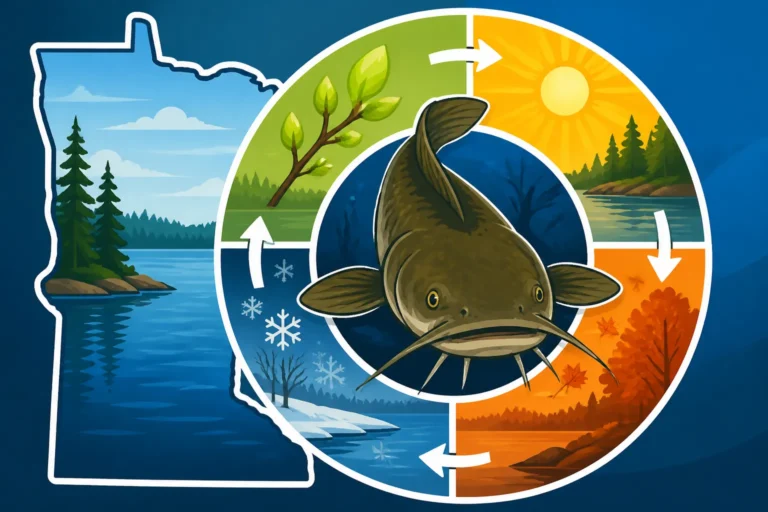
Brook trout behavior changes quite a bit with the seasons, mainly dictated by water temperature and their spawning cycle. Understanding these shifts can drastically improve your chances of success.
In the spring, after the long Minnesota winter and once the ice is gone and water levels stabilize, brook trout become very active. They're hungry from the lean winter months and will often spread out through the stream, taking advantage of increased food availability. This is a fantastic time to target them, as they're less spooky and more willing to chase a variety of baits and lures. The initial rush of spring can be a bit challenging with high water, but as things settle, the fishing can be superb. Our article on Minnesota Fishing Seasons & Opener Dates 2026 can give you an idea of when to plan your spring outings.
As summer progresses and water temperatures rise, brook trout seek refuge in the coldest parts of the stream. This often means deep pools, shady spots under dense canopy, spring-fed tributaries, or areas with significant subsurface cover where cold water wells up. During this time, they become much more cautious and lethargic, making them harder to catch. You might need to fish during cooler parts of the day, like early mornings or late evenings, and use more subtle presentations.
By fall, as water temperatures drop again, brook trout become incredibly aggressive. This is their spawning season, and the males, in particular, will display brilliant colors – deep oranges, reds, and greens – making them one of the most visually stunning fish to catch. They'll often move into shallower, gravelly areas to build redds (nests), and they'll aggressively defend these spots. This can be one of the best times for trophy brook trout, but remember that during spawning, catch-and-release is especially important to protect future generations.
Essential Gear for Brook Trout Fishing
You don't need a boatload of expensive gear to catch brook trout, but having the right tools for these smaller, often brush-choked streams makes a world of difference. Think light, sensitive, and agile.
Rod, Reel, and Line Selection
When it comes to brook trout, ultralight tackle is king. These fish typically aren't giants; even a "big" brook trout in Minnesota might be 12-14 inches, with many being smaller. An ultralight setup allows for delicate presentations, makes even a small brook trout feel like a monster, and handles the tight casting quarters of small streams much better than heavy gear.
For a rod, look for something 5 to 6 feet long, with an ultralight power and a fast or moderate-fast action. A shorter rod is easier to maneuver in brushy areas, while the ultralight power provides sensitivity and prevents you from overpowering these smaller fish. A good quality ultralight spinning rod can be found from brands like Ugly Stik or St. Croix, available on platforms like Amazon. Pair this with a small spinning reel, perhaps a 1000 or 2000 series, which balances well with the light rod.
Your fishing line should be equally light. 4-pound test monofilament or fluorocarbon is a great starting point. Monofilament offers a bit more stretch, which can be forgiving with light bites, while fluorocarbon is nearly invisible underwater and has less stretch, offering more direct feel. Avoid anything heavier; it will be too visible and reduce your casting distance with light lures. If you're using braided line, consider a 6-pound test braid with a short leader of 4-pound fluorocarbon for stealth. Our guide on Best Fishing Line for Walleye Braid vs Mono vs Fluoro offers more insights into line choices, though for trout, stealth and low diameter are paramount.
Lures, Baits, and Flies
Brook trout aren't terribly picky when they're actively feeding, but choosing the right presentation for the conditions is key.
For spin fishing, small artificial lures work wonders. Think inline spinners like Mepps Aglias or Panther Martin spinners in sizes #0 to #2. The flash and vibration mimic small baitfish or insects, and brookies just can't resist them. Small, lightweight spoons (e.g., Kastmaster, Little Cleo) in 1/16 to 1/8 oz can also be effective, especially in deeper pools. Tiny crankbaits or jerkbaits that imitate minnows, typically 1-2 inches long, are excellent for imitating forage fish. Colors like gold, silver, black, and natural browns or greens are usually reliable.
When it comes to live bait, nothing beats the classics. Small earthworms or garden worms are brook trout candy. A single small worm threaded onto a tiny hook (#8 or #10 Aberdeen or baitholder hook) with a split shot or two to get it down is a deadly combination. Small minnows can also be effective, especially if you know the stream has a good population of them. Crickets or grasshoppers, especially during summer, can be irresistible when twitched naturally on the surface. You can find robust bait containers on Amazon to keep your live bait fresh.
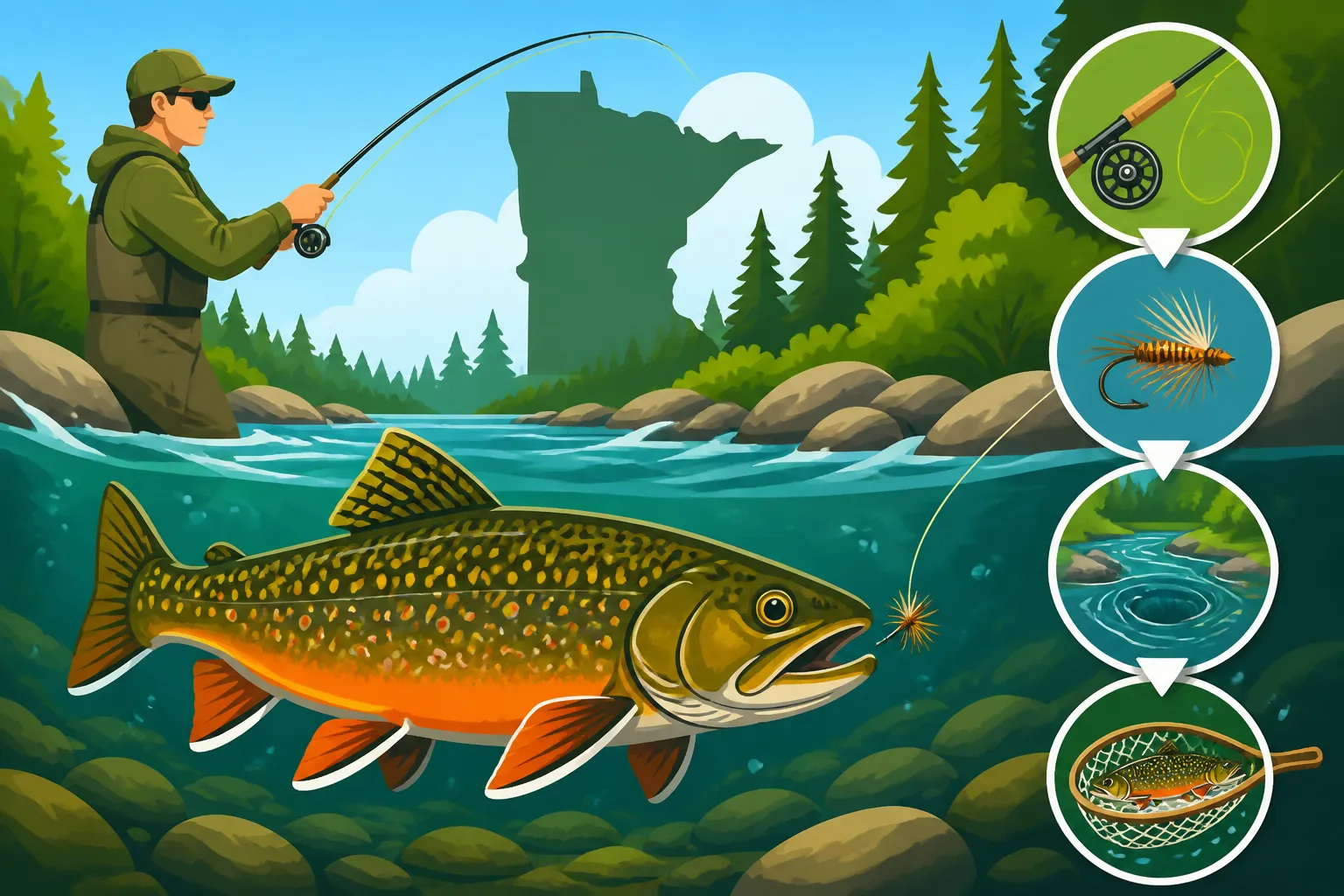
For the fly fishing enthusiasts, brook trout are incredibly responsive to a variety of flies. Dry flies like Adams, Elk Hair Caddis, or Royal Wulff in sizes #12-18 are great for mimicking adult insects on the surface, especially during hatches. Nymphs such as Pheasant Tail, Hare's Ear, or Prince Nymph in sizes #12-20 are excellent for imitating aquatic insect larvae clinging to the bottom. For a more aggressive take, small streamers like Woolly Buggers or muddler minnows can entice larger brook trout. If you're keen to learn more about fly fishing techniques for stream trout, our guide How to Catch Stream Trout Nymphs & Dries is an excellent resource.
Here's a quick comparison of common brook trout baits and lures:
| Bait/Lure Type | Best Conditions | Pros | Cons |
|---|---|---|---|
| Small Worms | All conditions, especially clear | Natural, universally appealing, easy to rig | Can be messy, fish swallow deep, less active |
| Small Minnows | Pools, deeper runs, aggressive fish | Highly attractive, bigger fish | Harder to keep alive, can get snagged |
| Inline Spinners | Moving water, actively feeding fish | Flashy, vibrating, covers water quickly | Can twist line, less subtle |
| Small Spoons | Deeper pools, current seams | Good casting distance, simple presentation | Less action than spinners |
| Dry Flies | Surface activity, insect hatches | Visually exciting, delicate presentation | Requires specific conditions, skill-intensive |
| Nymphs/Streamers | Subsurface, all conditions | Consistent, targets feeding zones | Less visual feedback, can be snag-prone |
Step-by-Step Brook Trout Fishing Techniques
Now that you know where they live and what gear to use, let's talk about the actual fishing. Brook trout are wary creatures, and a successful outing often boils down to a stealthy approach and a precise presentation.
Approaching the Stream and Reading the Water
One of the biggest mistakes new trout anglers make is stomping right up to the bank. Brook trout have excellent eyesight and are extremely sensitive to vibrations. They'll scatter at the first sign of danger.
Approach the stream slowly and cautiously. If possible, stay low, use bankside vegetation for cover, and avoid casting a shadow over the water. Wear natural, muted colors, not bright, flashy clothing. Think of yourself as a hunter stalking prey.
Once you're at the stream, take a moment to "read the water." This means identifying potential holding lies where a brook trout might be hiding. Look for:
- Deep pools: Often at the bend of a stream or behind a large obstruction, these offer refuge and ambush points.
- Undercut banks: Where the current has eroded the bank, creating a hollow space underneath. Trout love to hide here, out of sight.
- Fallen logs and submerged rocks: These provide current breaks and cover.
- Riffles and runs: The faster, shallower sections where oxygen is abundant and food washes by. Trout will often sit just downstream of these, in the slightly calmer water, waiting for a meal.
- Confluence points: Where two streams meet, creating a diverse feeding zone.
- Overhanging vegetation: Provides shade and drops terrestrial insects into the water.
Start by fishing the water closest to you first, then gradually extend your casts. This way, you don't spook fish that might be holding right at your feet.
Casting and Presentation
Precision is paramount when fishing for brook trout. Often, you're trying to hit a very specific pocket of water, sometimes no bigger than a dinner plate.
For spin fishing, a simple roll cast or a short, accurate overhead cast is usually all you need. Focus on getting your lure or bait to land softly, without a big splash, a few feet upstream of where you think the fish are holding. This allows it to drift naturally into their strike zone. If using a spinner or spoon, let it sink for a moment, then retrieve it just fast enough to get the blade spinning or the spoon wobbling. For worms, let the current carry your bait naturally downstream, often with little to no weight if the current is sufficient. If you do need weight, use the smallest split shot possible, placed 6-12 inches above your hook.
When fly fishing, stealthy presentations are even more critical. A well-executed upstream cast, allowing your dry fly or nymph to drift drag-free, is essential. Drag occurs when your line pulls the fly unnaturally across the surface, immediately alerting wary trout. Learning how to mend your line – making small adjustments mid-drift to keep slack out or to prevent drag – is a game-changer. For a detailed breakdown of these techniques, our comprehensive guide on How to Catch Stream Trout Nymphs & Dries is an excellent resource. Target the seams between fast and slow water, the edges of submerged cover, and the "tail-outs" of pools where the water speeds up before a riffle.
Regardless of your method, remember that brook trout often take baits and lures very subtly. Watch your line for any twitch or hesitation, or feel for the lightest tap. Set the hook quickly with a gentle sweep of the rod, not a hard jerk, to avoid breaking your light line or pulling the tiny hook out of the fish's mouth.
Hooking and Landing
Once you feel that tell-tale tap or twitch on your line, setting the hook swiftly but gently is key. Since you're using light tackle, a strong, sweeping motion of the rod tip is usually sufficient. Avoid a hard, aggressive jerk, as this can easily break your line or tear the hook free from the fish's soft mouth, especially with small hooks.
After hooking a brook trout, fight it with consistent pressure. Don't let it get slack, but don't horse it in either. These fish are feisty, especially in cold water, and will make quick runs or dive into cover. Your ultralight rod will bend deeply, absorbing the shock and protecting your line. Try to steer the fish away from snags like submerged branches or rocks that could break your line. When it comes close, use a small, soft net, ideally rubberized to protect the fish's slime coat, to scoop it up. Avoid dragging the fish onto dry land or handling it excessively with dry hands, which can remove its protective slime and increase stress. For more detailed instructions on handling fish responsibly, our article on Catch and Release Best Practices in Minnesota can be very helpful.
Conservation and Best Practices for Brook Trout
Minnesota's brook trout fisheries are a precious resource, and responsible angling ensures these beautiful fish will be around for future generations.
Catch and Release Practices
While it's perfectly legal to keep brook trout within the specified limits, practicing catch and release, especially for larger, wild brook trout, is highly encouraged. These fish are slow-growing and vital for maintaining healthy populations.
If you choose to release a fish:
- Minimize handling: Try to keep the fish in the water as much as possible.
- Wet your hands: Before touching the fish, wet your hands thoroughly to protect its delicate slime coat, which acts as a barrier against disease.
- Use barbless hooks: Or, better yet, crimp down the barbs on your regular hooks with a pair of pliers. Barbless hooks make removal much quicker and less damaging to the fish.
- Remove the hook quickly: Use hemostats or needle-nose pliers to gently back out the hook. If the hook is deeply swallowed, it's often best to cut the line as close to the hook as possible rather than tearing at the fish's internal organs.
- Revive the fish: Hold the fish gently upright in the water, facing upstream into the current. Allow water to flow over its gills until it regains its strength and can swim away on its own. Don't just toss it back; make sure it's ready.
Regulations and Limits
The Minnesota Department of Natural Resources (DNR) carefully manages trout streams, and regulations can vary by stream section or region. Always consult the current Minnesota Fishing Regulations handbook or the DNR website before you head out. These regulations cover everything from seasons to daily bag and possession limits, and even tackle restrictions for certain streams (e.g., artificial lures only, single hook only).
For example, many designated trout streams have special regulations to protect sensitive populations. You might encounter specific size limits, reduced bag limits, or even mandatory catch-and-release sections. Knowing these rules is not just about avoiding fines; it's about being a responsible steward of the resource. You'll also need a valid Minnesota fishing license, and often, a trout stamp is required to fish designated trout waters. You can find more information on this requirement in our article Do You Need a Trout Stamp in Minnesota?. Always double-check the specific rules for the stream you plan to visit.
Planning Your Brook Trout Adventure
Embarking on a brook trout fishing trip is about more than just catching fish; it's about immersing yourself in the wild beauty of Minnesota's hidden gems. Proper planning ensures a safe and enjoyable experience.
Scouting and Research
Before you even tie on a fly or lure, dedicate some time to scouting and research. Start with the DNR's trout stream maps and resources. They often provide detailed information on stream access, designated trout waters, and specific regulations. Websites like the Minnesota DNR are invaluable.
Beyond maps, consider online fishing forums or local bait shops in towns like Lanesboro, Preston, or Grand Marais. These local experts can offer invaluable, up-to-date insights into current conditions, recent hatches, and general fish activity. However, be respectful; specific "honey holes" are often guarded secrets! Remember, brook trout streams are often small and can be impacted by heavy rains, so checking recent weather and water levels is always a good idea. Our Trout Fishing in Minnesota Streams & Lakes guide can also offer broader planning tips for trout adventures.
Essential Stream-Side Gear
While your rod and reel are crucial, a few other items can make your brook trout outing much more comfortable and successful:
- Waders and Boots: Waders (chest or waist-high) allow you to safely navigate the stream, get to prime casting positions, and stay warm and dry. Felt-soled or rubber-soled wading boots with good ankle support are essential for slippery, rocky bottoms.
- Small Backpack/Vest: To carry water, snacks, extra líderes, a small first-aid kit, insect repellent (ticks can be prevalent in stream environments), and perhaps a lightweight rain jacket.
- Polarized Sunglasses: These aren't just for comfort; they cut glare on the water, allowing you to spot submerged structure and, crucially, the fish themselves.
- Nippers and Hemostats: For quickly cutting line and safely removing hooks.
- Map and Compass/GPS: Many trout streams are in remote areas with limited cell service. Know your way in and out.
- Camera: To capture the beauty of the fish and the scenery (remember to minimize fish handling for photos!).
- Insect Repellent: Especially important during warmer months, as mosquitoes and ticks can be abundant near water and in tall grass.
Having these items organized, perhaps in a compact fishing vest or small backpack you might find on Amazon, will ensure you're prepared for whatever the stream throws your way.
Conclusion
Catching brook trout in Minnesota is a truly rewarding experience that connects you with some of the state's most beautiful and wild places. It demands patience, stealth, and a keen eye, but the payoff of seeing those vibrant colors emerge from a clear, cold stream is unparalleled. By understanding their unique habitat, preparing with the right ultralight gear, and practicing careful, ethical angling techniques, you'll be well on your way to unlocking the secrets of Minnesota's brook trout. So grab your gear, respect the regulations, and get ready for an unforgettable adventure in pursuit of these stunning fish.
Disclaimer
Fishing regulations can change frequently. Always consult the latest Minnesota Department of Natural Resources (DNR) fishing regulations before heading out on the water. This guide is for informational purposes only and does not supersede official regulations.