Lake Bemidji Walleye Limit & Slot
You are standing at the public boat launch near the giant Paul Bunyan and Babe the Blue Ox statues, looking out over the water and wondering if that 19-inch walleye you just caught is a keeper or a ticket waiting to happen. Navigating the maze of specific lake regulations in Minnesota is a common headache for every angler. This guide clarifies the exact Lake Bemidji walleye limit & slot for the 2026 season so you can fish with confidence and stay legal.
Understanding the Specific Walleye Regulations on Lake Bemidji
Lake Bemidji is one of the crown jewels of Beltrami County, but its proximity to the city and the university means it faces significant fishing pressure year-round. Because of this, the Minnesota Department of Natural Resources (DNR) has implemented special regulations that differ from the standard statewide rules. If you are used to the general four-walleye limit found on many other lakes, you need to adjust your expectations before hitting these waters.
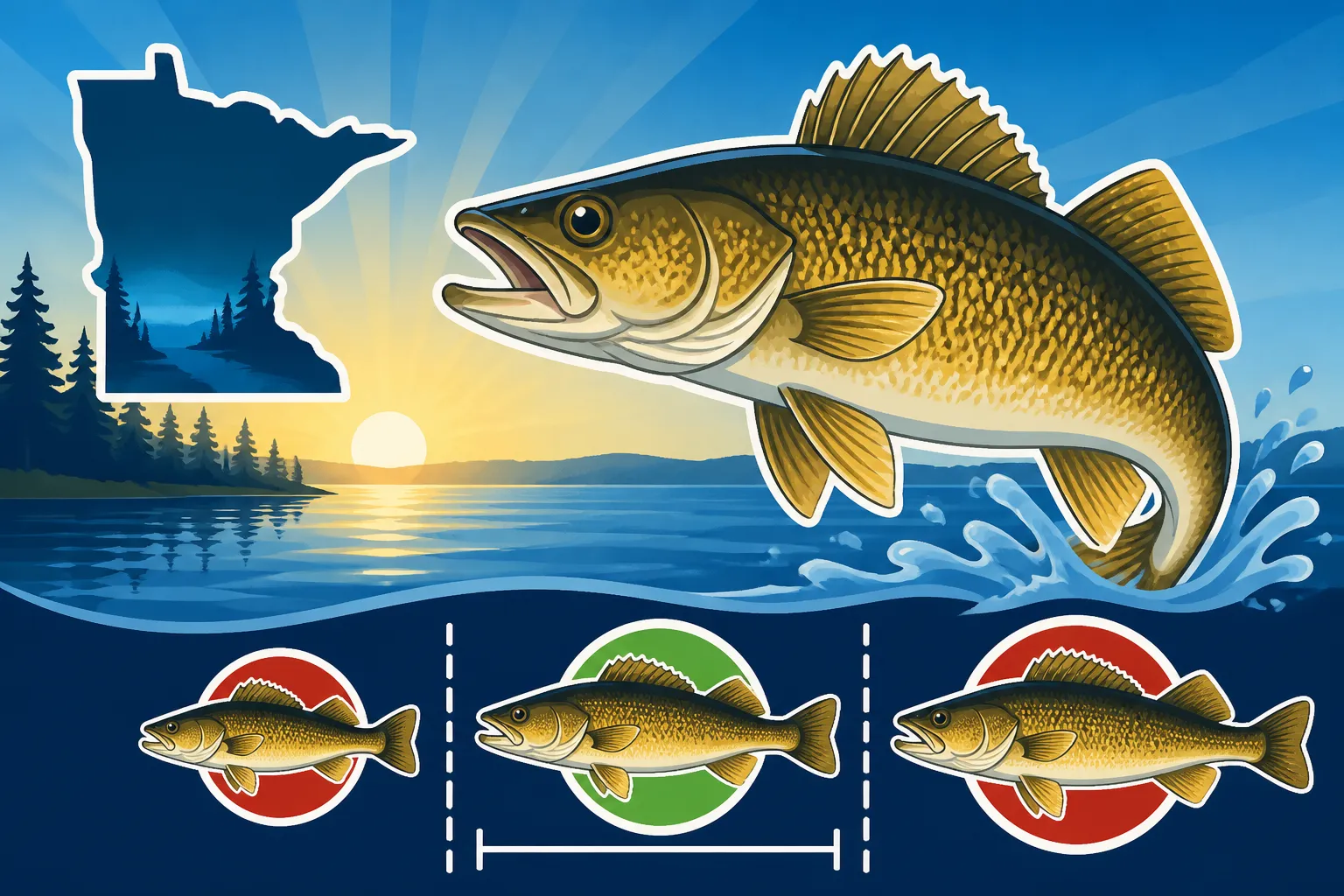
On Lake Bemidji, the daily and possession limit for walleye is three fish. However, it is not just about the number of fish in your livewell; it is about the size. The current regulation includes a protected slot limit where all walleye between 18 and 24 inches must be immediately released. You are allowed to keep fish that are under 18 inches, and you may keep exactly one walleye that is over 24 inches as part of your three-fish limit.
This specific regulation is designed to protect the "prime" spawners. Fish in that 18-to-24-inch range are the most productive members of the population. By letting them go, the DNR ensures that Lake Bemidji remains a self-sustaining fishery despite the thousands of boats that cross its surface every summer. Understanding Minnesota Slot Limits: Which Lakes & Why is essential for any serious angler who wants to understand the biology behind these rules.
The Daily vs Possession Limit Distinction
A common mistake among visitors is confusing the daily limit with the possession limit. On Lake Bemidji, these numbers are the same: three fish. This means you cannot catch three fish on Monday, put them in your freezer at the cabin, and catch three more on Tuesday. Once you have three walleye in your possession—whether they are on a stringer, in a livewell, or in a freezer—you are done until you consume one of those fish.
If you are planning a multi-day trip, it is vital to keep track of your tally. The DNR officers frequently check resorts and public landings, and having more than the legal Minnesota Possession Limits Explained can result in heavy fines and the confiscation of your gear. Always remember that your possession limit follows you from the lake to your home.
Measuring Your Catch Accurately
When you are dealing with a slot limit where a half-inch determines if a fish is a "keep" or a "release," your measuring technique must be flawless. To measure a walleye legally in Minnesota, the fish should be laid flat on its side. The mouth must be closed and pressed against a vertical headboard. The tail should be pinched or rotated to get the maximum length.
If that walleye touches the 18-inch mark on your ruler, it is officially in the protected slot. Many local experts suggest that if a fish is "too close to call," you should let it go. A 17.75-inch fish is a great meal, but an 18.25-inch fish in your livewell is a violation. Being precise prevents a great day on the water from turning into an expensive legal lesson.
Why Lake Bemidji Has a Special Slot Limit
You might wonder why a lake as large and productive as Bemidji needs a three-fish limit when other lakes allow four or even six. The answer lies in the unique geography and accessibility of the lake. Lake Bemidji is directly connected to the Mississippi River system and acts as a major staging area for walleye during the Minnesota Walleye Spawning: When and Where cycle.
Because the lake is so accessible to the public—with major launches at Lake Bemidji State Park and Diamond Point Park—the "harvest pressure" is much higher than on more remote lakes. Without the 18-to-24-inch protected slot, the average size of the walleye population would plummet quickly as anglers naturally keep the biggest fish they can find.
Protecting the Spawning Biomass
The 18-to-24-inch range is often referred to as the "sweet spot" for egg production. Larger, older females produce more eggs and, perhaps more importantly, higher-quality eggs that have a better chance of survival. By protecting these specific fish, the DNR is essentially using the lake’s natural biology to do the "stocking" for them. This keeps the lake healthy without requiring the massive financial investment of a heavy stocking program every year.
When you release a 22-inch walleye on Lake Bemidji, you aren't just following a rule; you are contributing to the future of the fishery. Those fish are the ones that will provide the next generation of 12-to-15-inch "eaters" for your kids to catch in three or four years. If you want to dive deeper into how these populations are managed, check out the Minnesota Walleye Limit & Size Rules for a broader perspective.
Managing the Trophy Potential
While most people fish for a Friday night fish fry, Lake Bemidji also has the potential to produce genuine trophies. The "one over 24 inches" rule allows an angler to keep a true fish of a lifetime while still protecting the majority of the large fish in the system. However, in recent years, the culture around Lake Bemidji has shifted toward catch-and-release for these giants.
Many local guides encourage clients to take a photo and a measurement of a 28-inch fish and order a replica mount rather than keeping the actual fish. This allows that trophy to continue patrolling the depths and perhaps reach the status of a state record. If you are looking for tips on how to target these bigger fish, studying Lake Bemidji Walleye Fishing Tips can give you the edge you need.
| Regulation Category | Lake Bemidji Walleye Rule (2026) | Standard MN Statewide Rule |
|---|---|---|
| Daily Limit | 3 Fish | 6 Fish (Typical) |
| Possession Limit | 3 Fish | 6 Fish (Typical) |
| Protected Slot | 18" to 24" (Must be released) | None (Unless specified) |
| Trophy Allowance | 1 Fish over 24" allowed | 1 Fish over 20" allowed |
| Bait Restrictions | None (Follow AIS Rules) | Varies by Zone |
Planning Your Trip to Lake Bemidji
Before you hook up the boat and head north, you need to make sure your paperwork is in order. Every person fishing on Lake Bemidji who is 16 years of age or older must have a valid license. You can easily find How to Get a Minnesota Fishing License Online through the DNR’s electronic licensing system. Keeping a digital copy on your phone is legal and highly recommended so you don't have to worry about a soggy paper license in your tackle box.
It is also important to note the specific dates for the season. The walleye season does not run year-round on Lake Bemidji. You need to be aware of the Minnesota Fishing Seasons & Opener Dates (2026) to ensure the lake is actually open for walleye when you arrive. Fishing for walleye out of season—even if you intend to release them—is a violation of state law.
Gear and Tackle for Bemidji Walleyes
Because of the clear water and the savvy nature of the fish in this high-pressure lake, your gear matters. Many successful anglers on Bemidji utilize a finesse approach. A medium-light spinning rod with a sensitive tip is the gold standard here. Pairing this with a high-quality reel and 6-to-8-pound test monofilament or fluorocarbon is essential for detecting the subtle "thump" of a walleye hitting a jig.
For those looking to upgrade their setup before the trip, reviewing the Best Walleye Rods & Reels can help you pick a kit that handles both the small eaters and the occasional 25-inch bruiser that might crush your bait. In the early summer, a simple 1/8-ounce jig tipped with a shiner minnow near the weeds is hard to beat. As the water warms, transitioning to a Lindy Rig with a jumbo leech along the deeper drop-offs is the classic "Bemidji move."
Navigating the Lake Safely
Lake Bemidji can get surprisingly rough when the north wind blows down the length of the lake. It is a relatively bowl-shaped lake, but it has several key structural features like the bars near the power plant and the humps in the center that attract both fish and boats. If you are new to the lake, using a high-quality GPS map is non-negotiable.
Beyond the walleye regs, make sure you are up to speed on Aquatic Invasive Species (AIS) Rules for Boaters. Beltrami County is very strict about the "Clean, Drain, Dry" policy. Zebra mussels and other invasives are a constant threat, and you must pull your drain plug and clear all weeds from your trailer before leaving the access. Failure to do so can result in a ticket before you even get your boat back on the highway.
Best Practices for Catching and Releasing Walleye in the Slot
Since the majority of your 18-to-24-inch fish must be returned to the water, how you handle them is the difference between a fish that survives to spawn and a fish that becomes seagull food. Catch-and-release is only effective if the fish lives. This starts with the moment you hook the fish. Try to land the fish quickly to avoid exhausting it, which leads to lactic acid buildup in the muscles.
Once the fish is in the boat, keep it in the water as much as possible. If you must take a photo, have the camera ready before you lift the fish. Hold the walleye horizontally, supporting the belly. Never hold a large walleye vertically by its jaw, as this can damage its internal organs and spinal column.
Dealing with Deep Water Barotrauma
In the heat of the summer, Bemidji walleyes often move to the deeper structure in 30 to 40 feet of water. When you pull a fish up quickly from these depths, their swim bladder can expand—a condition known as barotrauma. If you see the fish's stomach protruding from its mouth or it is unable to dive back down after release, it may be suffering from this condition.
To minimize this, reel slowly when fishing deep to allow the fish to "burp" or acclimate to the pressure change. If you find you are catching a lot of "slot fish" in deep water that aren't surviving the release, the ethical thing to do is move to a shallower flat where the fish are under 20 feet deep. Practicing Catch and Release Best Practices in Minnesota is a hallmark of a veteran angler who respects the resource.
Using the Right Bait to Stay Legal
While Lake Bemidji doesn't have the same complex bait restrictions as some of the border waters, you still need to be careful about where your bait comes from. Always buy your minnows, leeches, or nightcrawlers from a licensed local bait shop in the Bemidji area. Never transport lake water in your bait bucket from one body of water to another.
If you are looking for a step-by-step approach to mastering this lake, I recommend reading How to Catch Walleye in Minnesota (Step by Step). It breaks down the seasonal movements that are specific to our northern lakes, ensuring you aren't just fishing where the fish were last month, but where they are now. Whether you are jigging the weeds near the stadium or trolling the deep basin, staying within the Lake Bemidji walleye limit & slot ensures we all have fish to catch for years to come.
Disclaimer
This guide is intended for informational purposes and reflects the regulations as of the 2026 season. Fishing regulations in Minnesota are subject to emergency changes by the DNR. Always check the current Minnesota Fishing Regulations handbook or the official DNR website before heading out on the water.