What Is the Walleye Possession Limit in Minnesota?
It's incredibly frustrating when you're out on the water, having a fantastic day of walleye fishing, and then that nagging doubt creeps in: Am I actually allowed to keep this many fish? What's the real limit? Minnesota's fishing regulations, especially for our beloved walleye, can feel like a labyrinth of rules, exemptions, and special provisions that change annually. This guide is here to clear up that confusion, specifically tackling the walleye possession limit in Minnesota so you can fish with confidence and stay on the right side of the law.
Understanding Minnesota’s Walleye Regulations
The Minnesota Department of Natural Resources (DNR) works tirelessly to manage our state’s incredible fisheries, but sometimes, that means regulations can get a bit complex. It’s not just about what you catch in a day; it’s also about what you can legally have in your possession once you leave the lake.
Daily Bag Limit vs. Possession Limit Explained
This is where a lot of the confusion really starts. People often use “bag limit” and “possession limit” interchangeably, but in Minnesota fishing lingo, they’re two very distinct things, and understanding the difference is absolutely crucial.
The daily bag limit refers to the maximum number of fish you can take from a particular body of water in a single calendar day. So, if you're fishing on Lake X and the daily walleye bag limit is four, you can only keep four walleye between midnight and midnight. Simple enough, right? But here's the kicker: once those fish are "in your possession" – meaning you've kept them, maybe even cleaned them, and are heading home or back to your cabin – the possession limit comes into play.
The possession limit is the total number of fish of a particular species that an individual can have in their actual possession, whether that's on your boat, in your livewell, in your cooler, at your cabin, in your freezer at home, or even processed into fillets. It's essentially the maximum number of fish you can accumulate and keep. Think of it this way: your daily bag limit is what you can catch today, while your possession limit is what you can own at any given time. For most species in Minnesota, the possession limit is twice the daily bag limit. This allows multi-day fishing trips where you might keep fish from several days' angling, but it's never an unlimited free-for-all. Ignoring this distinction can lead to some pretty hefty fines, and no one wants that after a relaxing fishing trip. It’s always smart to have a clear understanding of Minnesota Fishing Limits: Bag & Possession (2026).
Why Walleye Limits Vary So Much
You might wonder why these limits aren’t just one consistent rule across the entire state. The reality is, Minnesota’s lakes and rivers are incredibly diverse, and so are their walleye populations. The DNR sets these varying limits based on extensive scientific research, population surveys, and environmental factors specific to each body of water.
Several key factors influence these decisions. The most important is the health of the walleye population in a given lake. Is it thriving? Is it struggling? Has there been a recent boom or bust in reproduction? They also look at fishing pressure – how many anglers are targeting walleye on that particular lake? Popular lakes like Mille Lacs or Leech Lake often see intense pressure, requiring more restrictive limits. Habitat quality, forage base (what the walleye are eating), and water quality all play a role. Sometimes, limits are adjusted to allow smaller fish to grow, to protect larger spawning females, or to reduce competition for food among fish. These regulations are dynamic, meaning they can and do change, sometimes even within a season, to adapt to new data or unforeseen circumstances. It's a complex balancing act aimed at ensuring sustainable fishing for generations to come, even if it makes keeping up with the rules a bit of a headache for us anglers! This is why it’s always important to consult the Minnesota Fishing Regulations Changes for 2026 to stay updated.
The Statewide Walleye Possession Limit: What You Need to Know
When you’re planning a fishing trip, it’s always best to start with the general statewide regulations. These are the baseline rules that apply unless a specific lake or river has its own, more restrictive, special regulations in place.
The General Rule
For most of Minnesota’s lakes and rivers, the statewide walleye daily bag limit is six, and the **statewide possession limit is ten**. This means that on any given day, you can keep up to six walleye from the water you’re fishing. However, you cannot *have* more than ten walleye in your total possession at any one time, regardless of how many days you’ve been fishing or how many lakes you’ve visited.
Let's break that down with a common scenario. Say you go fishing on a Friday and catch and keep six walleye. You bring them back to your cabin. On Saturday, you go out again. You can catch and keep four more walleye to reach your possession limit of ten. If you catch more than four on Saturday, you'd need to release them, as you cannot exceed the ten-fish possession limit. If you plan to fish for several days and keep fish, you absolutely must be mindful of this cumulative possession total. This rule applies to each individual angler, so if you're fishing with a buddy, you each have your own daily bag and possession limits. Understanding What Is the Walleye Possession Limit in Minnesota? is key for a legal trip.
Special Regulations and Lake-Specific Rules
Here’s where it gets a bit more complicated, but it’s also incredibly important to pay close attention. Many popular Minnesota lakes have specific, often more restrictive, walleye regulations that supersede the statewide limits. These are usually in place to protect specific fisheries, manage unique population dynamics, or address heavy fishing pressure.
For example, a lake like Upper Red Lake, known for its excellent walleye fishing, might have a much lower daily bag limit, often a total of three walleye with only one over a certain length. Similarly, Mille Lacs Lake, a trophy walleye fishery, frequently has highly dynamic regulations, which can change even in-season, often featuring reduced bag limits and strict slot limits. Leech Lake and Lake Winnibigoshish are other examples of major lakes that often have their own unique rules. It's not uncommon to find a daily limit of four walleye on a particular lake, with a possession limit of six, or even a daily limit of three with a possession limit of three, meaning you can only possess what you caught that day. These special regulations are usually clearly posted at public access points, in the annual fishing regulations booklet, and on the Minnesota DNR website. Always, always check the specific regulations for the lake you plan to fish before you even launch your boat. A quick search for the specific lake, like "Mille Lacs Walleye Regulations (2026)" or "Lake of the Woods Fishing Regulations (2026)" can save you a lot of grief.
Navigating Slot Limits and Protected Lengths
Beyond just the number of fish you can keep, Minnesota’s walleye regulations often include specific length restrictions known as “slot limits” or “protected lengths.” These are designed to protect certain size classes of fish, typically larger, reproductively mature females, to ensure the long-term health of the fishery.
How Slot Limits Affect Your Possession
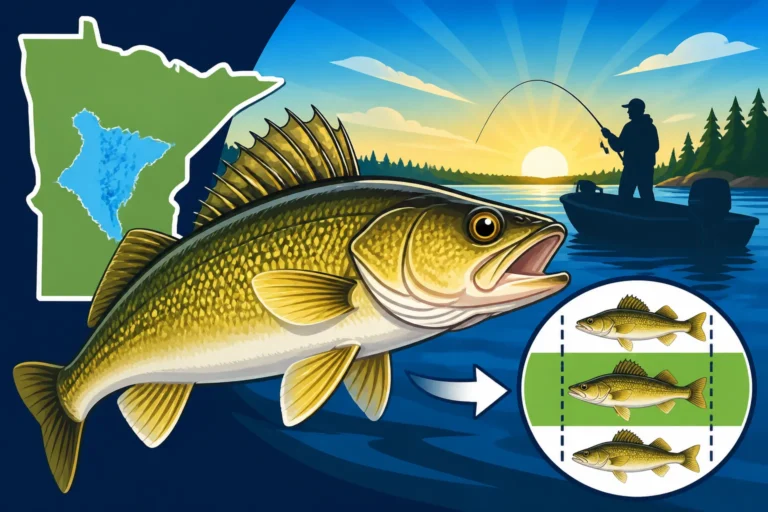
A slot limit means that walleye within a specific length range *must* be immediately released. For example, a common slot limit might be “all walleye between 17 and 26 inches must be immediately released.” This means you can keep fish shorter than 17 inches and fish longer than 26 inches, up to your daily bag and possession limits.
The presence of a slot limit significantly impacts what you can actually take home. Even if the statewide possession limit is ten, if you're fishing a lake with a slot, you might struggle to reach that ten-fish mark, or you might end up with a very different size distribution of fish. For instance, if you're only catching walleye in the 18-inch range all day on a lake with a 17-26 inch slot, you won't be able to keep any of them, regardless of the bag limit. This system encourages anglers to keep smaller, more abundant fish and release the larger, valuable breeders. It’s a conservation tool that directly impacts your possession. This is distinct from a simple "size limit" where you might only be allowed to keep fish over a certain length. Understanding Minnesota Slot Limits: Which Lakes & Why is crucial before hitting the water.
The “One Over” Rule and Other Nuances
To add another layer of complexity, many lakes with slot limits will have a special provision, often called the “one over” rule. This typically allows you to keep one walleye over the maximum length of the slot limit. For example, on a lake with a 17-26 inch slot, you might be allowed to keep a daily bag of four walleye, with one of those four being over 26 inches. The other three would then have to be under 17 inches.
This "one over" rule is often a way to give anglers a chance at a trophy fish while still protecting the majority of the larger, mature spawning fish. It's a compromise that makes the regulations a little more palatable for those hoping for a wall-hanger.
When dealing with length limits, accurate fish measurement is paramount. You measure a fish from the tip of its snout to the tip of its tail, with the fish lying flat and its mouth closed. Pinching the tail to extend its length is usually acceptable, but always check the exact wording in the regulations for any specific instructions. A small mistake in measurement could mean keeping an illegal fish. This is why paying close attention to details, even those that seem minor, can make a huge difference in staying compliant.
Practical Tips for Staying Compliant and Enjoying Your Catch
Keeping track of all the walleye regulations can feel like a part-time job, but a little preparedness goes a long way in ensuring a stress-free and legal fishing experience.
Always Check Current Regulations
I cannot stress this enough: **always, always check the current Minnesota Fishing Regulations** before you head out. Don’t rely on what you remember from last year, or what your buddy told you, or even what you read in an article from a few months ago. Regulations change!
The absolute best sources for the most up-to-date information are:
- The Minnesota DNR Website: The DNR updates its site regularly, and you can search for specific lakes and species.
- The Printed Fishing Regulations Booklet: Available where you buy your Minnesota Fishing License: Cost, Types & How to Buy (2026) (like bait shops, sporting goods stores, or DNR offices). Keep a copy in your boat or tackle box.
- Lake-Specific Regulations at Public Accesses: Often, special regulations for a particular lake are posted clearly at boat launches. Take a moment to read them.
Changes can occur seasonally, or even as emergency measures if a fishery's health is rapidly declining or improving. A quick check of the rules for "Walleye Season & Limit in Minnesota" and your specific body of water can save you from a frustrating encounter with a conservation officer.
Proper Fish Handling and Storage to Avoid Issues
Once you’ve caught your walleye and decided to keep them, proper handling and storage are crucial, not only for the quality of your catch but also for proving compliance with regulations.
One of the most common issues arises when multiple anglers are fishing from the same boat. If each person has their own limit, you must keep each individual's fish separate and identifiable until you reach your lodging or home. This means using separate stringers, coolers, or bags clearly marked with each angler's name. Mixing everyone's fish into one big cooler makes it impossible to determine if individual limits have been adhered to, and you could all be cited for over-possession.
When it comes to transporting fish, especially if you've cleaned them, there are specific rules. Walleye fillets, for example, must often have a portion of skin with the length limit still attached, or be cut in a specific way, to allow for identification and measurement if a conservation officer requests it. These rules are detailed in the regulations booklet and are designed to prevent people from trying to hide illegal fish. Always keep your fish on ice immediately to maintain freshness. Proper handling also means using Catch and Release Best Practices in Minnesota for any fish you choose not to keep, ensuring they swim away healthy.
| Walleye Limit Type | Statewide General Rule | Common Lake-Specific Example (e.g., Mille Lacs, Upper Red Lake) |
|---|---|---|
| Daily Bag Limit | 6 walleye | Varies (e.g., 2, 3, or 4) |
| Possession Limit | 10 walleye | Varies (often 1 or 2 times the daily bag limit for that lake) |
| Slot Limit | None (generally) | Common (e.g., 17-26 inch release, only one over 26 inches) |
| Length Restrictions | None (generally) | Common (e.g., all fish under 13 inches must be released) |
Remember, the goal of these regulations is to protect Minnesota's incredible fishing heritage. By understanding and following the rules, you're not just avoiding fines; you're contributing to the sustainability of our fisheries for everyone.
Disclaimer
Please note that fishing regulations, including walleye possession limits, are subject to change by the Minnesota Department of Natural Resources (DNR). While every effort has been made to provide accurate and up-to-date information, this guide is for informational purposes only. It is the responsibility of each angler to consult the official Minnesota DNR fishing regulations booklet or their website for the most current and specific rules pertaining to the waters they intend to fish.