Big Detroit Lake Walleye Limit & Slot
You are out on Big Detroit Lake, the sun is just beginning to dip below the horizon, and you finally feel that heavy, characteristic "thump" on the end of your line. After a day of dodging jet skis and searching for the right weed line, you have a beautiful walleye boat-side, but suddenly, a wave of anxiety hits. Is this fish legal to keep, or is it in that dreaded "no-man's land" of the protected slot? This guide clears up the confusion surrounding the Big Detroit Lake Walleye Limit & Slot so you can fish with confidence and stay on the right side of the law.
Understanding the Big Detroit Lake Walleye Regulations
Navigating the specific rules for Big Detroit Lake can feel a bit like trying to read a sonar screen in a heavy gale if you aren't prepared. Because this lake is a focal point for tourism in Becker County, the Minnesota Department of Natural Resources (DNR) keeps a very close eye on the walleye population. The regulations here are designed to balance the high fishing pressure with the need to maintain a healthy, self-sustaining population of Minnesota's favorite fish.
The Current Slot Limit and Bag Limit
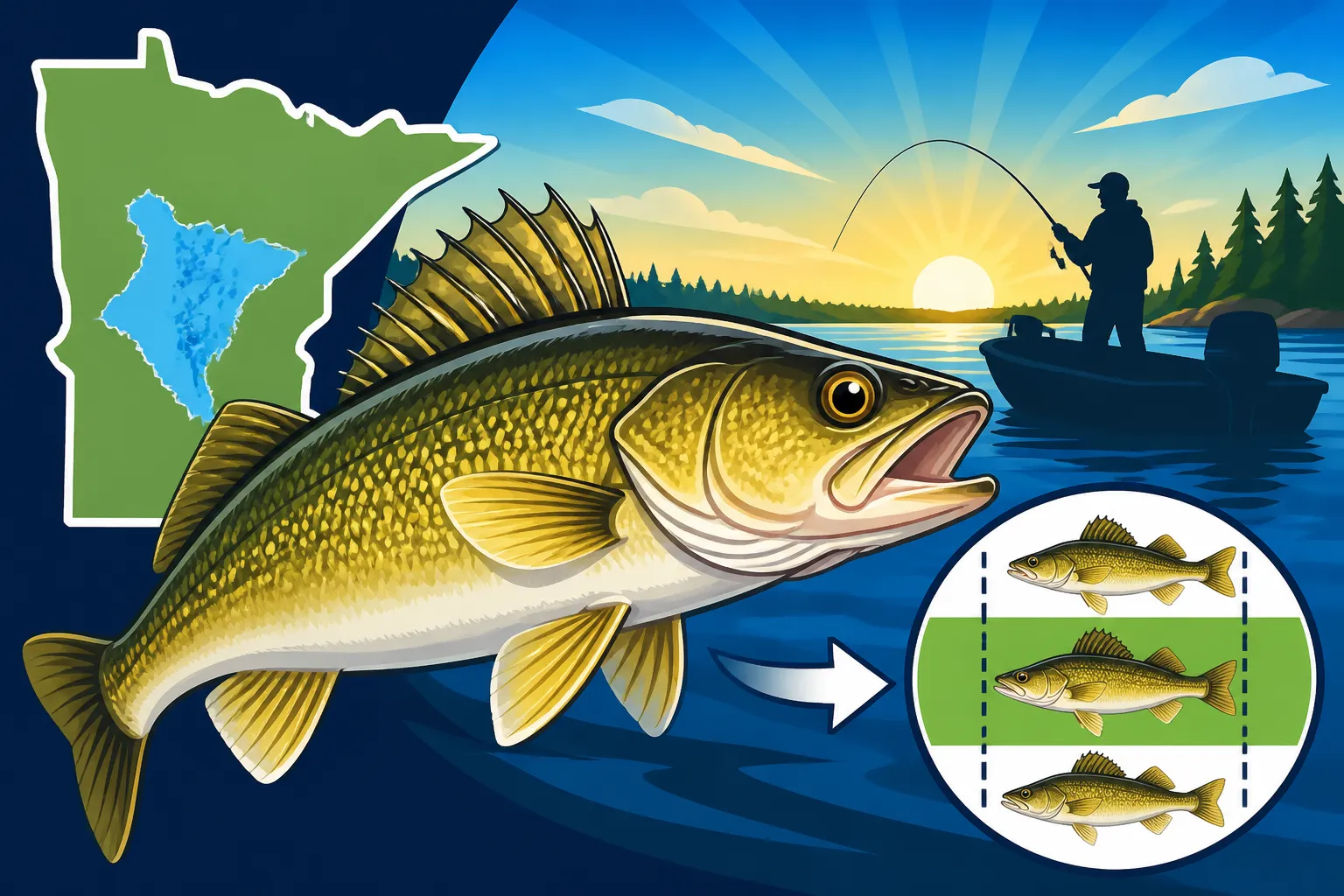
For the 2026 season, Big Detroit Lake follows the general inland water regulations for walleye, but with specific nuances that every angler needs to memorize. Currently, the daily bag limit is 6 walleye. However, the most important part of this rule is the size restriction: only one walleye in your possession may be over 20 inches. This is often where people get tripped up. It isn't just about what you catch in a single afternoon; it is about what you have in your cooler, your livewell, or your freezer back at the cabin.
If you are lucky enough to land a 24-inch trophy early in the morning, your "over 20" slot is filled for the day. Any subsequent fish caught that are over 20 inches must be returned to the water immediately. This encourages the harvest of "eater" sized fish—typically those in the 14 to 18-inch range—while protecting the larger spawning females that keep the lake's population booming. Before you head out, make sure you have checked the Minnesota Walleye Limit & Size Rules to ensure no mid-season emergency tweaks have been implemented.
Possession vs Daily Limits
One of the biggest frustrations for weekend warriors is the confusion between a daily limit and a possession limit. Let’s say you are staying at a resort on the shores of Big Detroit for four days. You might think you can keep 6 fish every day and go home with 24 walleye. That is a quick way to earn a very expensive ticket. In Minnesota, your possession limit is the same as your daily limit for walleye.
This means at no point—whether you are on the water, in your car, or at your permanent residence—can you have more than 6 walleye per licensed angler. If you eat two fish for dinner on Friday night, you can go back out on Saturday and catch two more to "fill" your limit back to 6. Understanding Minnesota Possession Limits Explained is vital for anyone planning a multi-day trip to the Detroit Lakes area. It keeps the playing field level for everyone and ensures that the local freezer-fillers don't deplete the resource for the kids fishing off the public piers.
Why Size Rules Matter for Big Detroit
Big Detroit is a unique beast. It is a large, relatively shallow, and fertile lake that produces a lot of baitfish, specifically yellow perch and tullibee. This high-protein diet means walleyes grow fast. However, because the lake is so accessible and sits right in the heart of a major town, the "fishing pressure" is through the roof. Without these size restrictions, the "eater" class of fish would be wiped out in a single season.
The DNR uses these slot and size limits to ensure that there is a "recruitment" of fish moving from the juvenile stage into the breeding stage. When you release that 19-inch fish because you already have your "one over 20" or because you want to let it grow, you are contributing to the future of the lake. It’s an empathetic approach to conservation—giving up a meal today so your grandkids can feel that same "thump" twenty years from now.
Why Big Detroit Lake Has Special Management Needs
When you look at a map of Becker County, Big Detroit stands out not just for its size, but for its connectivity. It is linked to Deadshot Bay and Lake Sallie, creating a complex ecosystem where fish move frequently. This movement makes management difficult because a fish tagged in Big Detroit in May might be caught in Lake Sallie in July.
Protecting the Spawning Biomass
The "one over 20 inches" rule is specifically aimed at protecting the "biomass"—the total weight of breeding fish in the lake. Large female walleyes are exponentially more productive than smaller ones. A 28-inch walleye doesn't just produce more eggs than a 15-inch walleye; she produces higher-quality eggs that have a better chance of surviving the harsh Minnesota spring.
By limiting the harvest of these big girls, the DNR ensures that even if we have a "bad" weather year for spawning, there are enough eggs in the system to produce a viable year-class. This management style is a huge reason why Big Detroit remains a top-tier destination. If you are new to the state and wondering about the legalities of getting started, you should read about the Minnesota Fishing License: Cost, Types & How to Buy (2026) to make sure you are contributing your fair share to these conservation efforts.
Managing Human Impact and Tourism
Detroit Lakes is a hub. On any given Saturday in July, you have thousands of people on the water. You have professional bass tournaments, families in pontoons, and die-hard walleye anglers all vying for the same spots. This human "noise" affects fish behavior. Walleyes in Big Detroit are famously "educated." They have seen every jig color, heard every outboard motor, and lived through countless catch-and-release encounters.
The slot limits help buffer the population against this extreme pressure. Even if the fish are easy to find on electronics like Mega Side Imaging or LiveScope, the law prevents people from taking too many. This keeps the "catch rate" high, even if the "keep rate" is strictly controlled. It’s a trade-off that most locals are happy to make in exchange for having a world-class fishery right in their backyard.
Seasonal Tactics to Find Keeper Walleye
Finding a walleye on Big Detroit is one thing; finding one that fits perfectly into your "keeper" window (under 20 inches) is a different challenge. Depending on the time of year, these fish will congregate in very different areas, often segregating themselves by size.
Early Season Success Near the Sandbar
Right around the Minnesota Fishing Seasons & Opener Dates (2026), the walleyes are often finishing up their spawn. In Big Detroit, the large "over 20" fish tend to head toward the deeper drop-offs fairly quickly to recover. However, the smaller males—the perfect 15 to 17-inch "eaters"—often hang around the shallow sandy flats and the moving water near the channels.
Targeting these fish usually involves light jigs (1/16 or 1/8 ounce) tipped with a shiner minnow. You want to work the edges of the emerging weed growth. These fish are hungry and aggressive. Because they are smaller, they often school up in large numbers. If you catch one 16-inch fish, stay put. There are likely twenty more just like it in the immediate vicinity. For those who don't want to deal with the hassle of physical stores, you can find out How to Get a Minnesota Fishing License Online and be ready for the opener in minutes.
Summer Deep Structure and the "Mud"
As the water warms up in July and August, the walleyes on Big Detroit head for the structure. We are talking about the underwater "islands," rock piles, and the deep edges of the weed lines that drop from 12 feet down to 25 feet. This is when the Best Walleye Fishing Tactics in Minnesota really come into play. Trolling with bottom bouncers and crawler harnesses is a local favorite.
The trick during the summer is that the bigger fish often hold on the very tips of the points or the steepest breaks, while the "eaters" might be scattered along the flat top of the structure. If you find yourself catching nothing but 22-inch fish, as beautiful as they are, you aren't filling the frying pan. Try moving slightly shallower or deeper along that same structure to find the school of smaller, legal-sized fish.
Compliance and Safety on the Water
Nothing ruins a great day on the lake faster than the sight of a green DNR truck waiting at the boat ramp or a patrol boat pulling alongside you. Staying compliant isn't just about avoiding a fine; it's about being a respected member of the angling community.
How to Measure Your Fish Properly
A "19.9-inch" fish and a "20.1-inch" fish look almost identical to the naked eye, especially when the fish is flopping around and you are trying to keep your hands away from its dorsal spines. To stay legal on Big Detroit, you need a high-quality, flat measuring board. Do not rely on a flexible tape measure or the "notches" carved into the side of your boat.
- Lay the fish flat on its side.
- Close the mouth and press the snout firmly against the head of the board.
- Squeeze the tail lobes together to get the maximum length.
- If the tip of the tail touches or crosses the 20-inch mark, that is your "one over."
If you are in doubt, let it go. The Minnesota DNR officers are generally very reasonable people, but they hear "my tape measure must be off" every single day. Taking the time to practice Catch and Release Best Practices in Minnesota ensures that if you do have to put a fish back, it survives to be caught again when it's even bigger.
Dealing with Conservation Officers
In the Detroit Lakes area, you should expect to be checked at least once or twice a season. The officers will ask for your license, check your livewell, and ensure you have the proper safety equipment. They may even use their own certified measuring boards to double-check your catch.
Be polite and have your documentation ready. If you have kids with you, this is a great "teachable moment." Show them that the rules apply to everyone and that the officer is there to protect the fish they love to catch. If you are bringing friends from out of state, make sure they understand the rules too, as the boat owner can sometimes be held responsible for what is in the shared livewell.
Comparative Table: Big Detroit vs. Nearby Lakes
Regulations can change from one lake to the next, even if they are only a few miles apart. Here is a quick look at how Big Detroit compares to other popular spots in the Detroit Lakes Fishing Guide area.
| Lake Name | Walleye Daily Limit | Size Restrictions | Best Season |
|---|---|---|---|
| Big Detroit | 6 | Only 1 over 20" | Late Spring / Fall |
| Pelican Lake | 3 | Special Slot (18"-26" released) | Summer Mid-depths |
| Lake Sallie | 6 | Only 1 over 20" | Early Morning |
| Mellon Lake | 6 | General Inland Rules | Winter Ice |
| Long Lake | 6 | Only 1 over 20" | Late Evening |
Essential Gear for Success on Big Detroit
To consistently catch walleye that fit within the legal slot, you need the right tools. You don't need a $100,000 bass boat, but you do need gear that allows for precision.
The Importance of Precision Electronics
Big Detroit has a lot of "dead water"—areas that look good but hold no fish. Using a fish finder to locate the schools of baitfish is half the battle. Once you find the bait, the walleyes won't be far behind. Many local experts use GPS mapping to stay on the very edge of the weed lines. This allows you to keep your lure in the "strike zone" longer.
If you are just starting out, don't feel overwhelmed. A basic spinning rod with 8-lb test monofilament is often all you need. Once you have mastered the basics and have your first few limits in the freezer, you can look into How to Fillet a Walleye (Step by Step) so you don't waste any of that delicious, flaky white meat.
Using the Right Bait
While artificial lures like crankbaits work well in the heat of summer, the "keeper" walleyes in Big Detroit are often suckers for live bait.
- Spring: Spottail shiners are king. They are native to the lake and what the fish are actively hunting.
- Summer: Leeches and nightcrawlers on a Lindy Rig or a slip bobber.
- Fall: Large fathead minnows or rainbows.
Using the right bait for the season not only helps you catch more fish but often helps you target the specific size class you are looking for. Larger baits tend to attract larger fish, so if you are specifically looking for "eaters," don't be afraid to downsize your presentation.
Disclaimer
Fishing regulations in Minnesota, including those for Big Detroit Lake, are subject to change by the Department of Natural Resources at any time. While this guide provides the most current information for 2026, always check the official Minnesota Fishing Regulations handbook or the DNR website before your trip to ensure compliance with the latest emergency orders or regional adjustments. Keep your license on you at all times while fishing.