Stream Trout Season & Limit in Minnesota
Navigating the ever-changing landscape of Minnesota's fishing regulations can feel like trying to tie a fly in the dark – confusing and frustrating, especially when it comes to specific species like stream trout. It's tough to know exactly when and where you can chase those elusive browns, rainbows, and brookies, let alone how many you're allowed to keep. This guide is here to shed some light on the stream trout seasons, limits, and special rules so you can hit the water with confidence, knowing you're compliant and ready for a great day of fishing.
Understanding Minnesota's Stream Trout Seasons
Minnesota's stream trout season isn't a one-size-fits-all affair, and that's often where the confusion begins. Different areas of the state, particularly the beloved Driftless Region in the southeast and the rugged North Shore, have their own unique calendars. Getting these dates straight is crucial for planning your trips and avoiding any unwelcome surprises from a conservation officer.
General Stream Trout Season Dates
For most of Minnesota's designated trout streams, the general season typically runs from mid-April through October. This period allows anglers ample time to enjoy the spring hatches, summer flows, and vibrant fall colors while pursuing stream trout. However, it's vital to remember that "general" doesn't always mean "universal." Many anglers are surprised to learn about the nuances that exist, even for streams that appear straightforward. For instance, the exact opening day often falls on a Saturday in mid-April, which for 2026 will be April 18th. The season generally closes on October 31st for most stream segments. It’s always a good idea to double-check the latest regulations booklet or the Minnesota DNR website before heading out, as these dates can see minor adjustments from year to year.
A common misconception is that all trout fishing closes at the same time. While the primary season has clear start and end points, there are specific waters with extended catch-and-release opportunities, which we'll touch on shortly. These extensions are usually designed to allow year-round angling pressure without negatively impacting the fish populations during sensitive spawning periods. Knowing these windows means you can extend your trout fishing adventures well beyond the traditional season if you're prepared to practice catch and release.
Special Regulations for Specific Streams or Areas
Minnesota's commitment to its trout fisheries is evident in the detailed, site-specific regulations for certain highly-valued areas. These special rules are in place to protect unique genetics, manage population densities, and enhance the angling experience.
The Driftless Area (Southeast Minnesota)
Ah, the Driftless! This unglaciated region of southeast Minnesota, with its cold, spring-fed streams cutting through rolling bluffs, is a true gem for trout anglers. Here, the season can often extend beyond the general dates, offering a continuous catch-and-release season for stream trout outside of the standard harvest season. This means you can fish these beautiful waters almost year-round, provided you release all trout caught. During the traditional harvest season (mid-April to October 31st), you can keep fish according to the daily limits, but outside of those dates, it's strictly catch and release.
Many streams in the Driftless Area, like the legendary Root River system near Lanesboro or Spring Valley Creek, often have additional special regulations, such as specific size limits or bait restrictions, on certain stretches. For example, some stream segments might be designated as "artificial lures only" or have a "single hook" requirement to minimize harm to released fish. It's truly essential to consult the specific lake and stream regulations in the DNR's fishing handbook or their online "A to Z" list for the stream you plan to visit. Missing these details could lead to fines or, worse, unintended harm to the fishery. If you're looking for more detailed insights, our guide on Driftless Area Trout Streams Southeast Minnesota is a fantastic resource.
North Shore Tributaries (Lake Superior)
The streams flowing into Lake Superior along Minnesota's North Shore offer a completely different, yet equally captivating, trout fishing experience. These rivers, like the Lester, Knife, and Baptism, are renowned for their runs of steelhead (rainbow trout) and Kamloops rainbow trout, as well as brook trout further upstream. The regulations here are often geared towards managing these migratory populations.
For many North Shore streams, particularly during the spring and fall spawning runs, seasons can be highly regulated with specific opening and closing dates that differ from inland streams. For instance, some sections of these rivers may close to all fishing during certain periods to protect spawning fish, while others might have very specific windows for targeting steelhead. Additionally, some streams might have tackle restrictions, such as barbless hooks only, to promote safe release. The confluence areas near Lake Superior are often under their own set of rules, which can include limits on the type of bait or lures you can use. Understanding the specific regulations for each stream segment is paramount, especially when targeting larger, migratory trout species. Our article on Trout Fishing in Minnesota Streams & Lakes offers a broader look at the opportunities available throughout the state.
Decoding Stream Trout Limits
Once you've got the season dates locked down, the next big hurdle is understanding the limits. It’s not just about how many fish you can keep in a day; it’s also about what you can have in your possession and whether there are any size restrictions that apply. These rules are designed to ensure sustainable trout populations for future generations of anglers.
Daily Bag Limits for Different Trout Species
Minnesota's daily bag limits for stream trout can vary by species and by location. Generally, the statewide aggregate daily limit for stream trout (Brown, Brook, Rainbow) is five fish. However, within that five-fish limit, there are often sub-limits for specific species.
For example, you might be allowed to keep a total of five trout, but only one of them can be a brown trout over a certain length, or perhaps only one brook trout. These variations are put in place because different trout species have different growth rates, reproductive cycles, and susceptibilities to angling pressure.
- Brown Trout: Often, brown trout have specific size limits, sometimes with only one fish over 16 or 20 inches allowed as part of the daily bag. This helps protect the larger, older breeding fish that contribute significantly to the fishery.
- Brook Trout: Native brook trout populations are particularly sensitive. Some areas might have lower daily limits for brook trout (e.g., three fish) or specific size restrictions to protect them. You can learn more about identifying these beautiful fish in our guide, Lake Trout vs Brook Trout vs Brown Trout.
- Rainbow Trout (including Steelhead): Rainbow trout often follow the general limits, but in North Shore tributaries during migratory runs, there can be very specific regulations regarding size and number, often to distinguish between resident rainbows and larger, anadromous steelhead.
It's not uncommon to find waters where the daily limit is a simple "five total stream trout," but then you stumble upon a stream with a special regulation like "only one brown trout over 16 inches, and all brook trout under 12 inches must be released." These nuances are why carrying a current regulations booklet or having the DNR's app on your phone is absolutely essential.
Possession Limits: What You Can Have at Home
The possession limit is distinct from the daily bag limit. While the daily bag limit refers to the number of fish you can harvest in a 24-hour period, the possession limit refers to the total number of fish you can have in your physical possession at any given time, whether that's in your cooler, your vehicle, your freezer at home, or at your cabin. For most stream trout in Minnesota, the possession limit is twice the daily bag limit.
So, if the daily bag limit is five stream trout, your possession limit would generally be ten. This is important for anglers who might spend several days fishing in an area. For example, if you catch and keep five trout on Monday and return to the stream on Tuesday, you can catch and keep another five, bringing your total possession to ten. However, if you already have ten trout at your cabin, you cannot keep any more until some of those fish are consumed or given away.
Violating possession limits can lead to serious penalties, as it's often viewed as a more significant infraction than a simple over-the-limit daily catch. Always be mindful of your total fish count, especially if you're on a multi-day trip or have other anglers in your party. Our comprehensive guide to Minnesota Fishing Limits Bag & Possession provides a deeper dive into these important regulations across all species.
Size Restrictions and Protected Slots
Size matters when it comes to stream trout, and Minnesota uses various size restrictions to help manage its fisheries. These typically fall into two categories: minimum size limits and slot limits.
- Minimum Size Limits: Many trout streams, especially those with managed populations, will have a minimum size limit. This means any trout caught under that specified length must be immediately released. For example, a regulation might state "no trout under 9 inches." This protects juvenile fish, allowing them to grow and reach sexual maturity, contributing to future spawning.
- Slot Limits: Slot limits are a bit more complex but highly effective conservation tools. They specify a range of sizes within which fish must be released. A common slot limit might be "no fish between 12 and 16 inches may be kept." This means you can keep fish under 12 inches and over 16 inches, but anything in the protected slot must go back. Slot limits are often used to protect the prime breeding stock (the fish within the slot), while allowing anglers to harvest smaller, more abundant fish and larger, less common trophy fish.
You'll often find these specific size and slot limits detailed for individual stream sections or specific lakes within the larger trout program. They're particularly common in popular trout destinations like the numerous streams in the Whitewater Wildlife Management Area in southeast Minnesota. Always measure your fish carefully and accurately before deciding to keep it. Remember, if there's any doubt about the length, it's always best to release the fish.
Here’s a quick summary of typical Minnesota stream trout seasons and limits, but always check the current DNR regulations for precise, up-to-date information for your specific fishing location:
| Regulation Type | General Inland Streams (Southeast & North Shore often vary) | Driftless Area (Special Regulations) | North Shore Tributaries (Lake Superior) |
|---|---|---|---|
| Primary Harvest Season | Mid-April to Oct 31st | Mid-April to Oct 31st | Varies widely by stream segment and species (check specific rules) |
| Catch & Release Season | N/A (closed outside primary season) | Year-round (Strictly Catch & Release outside primary harvest season) | Often includes specific catch & release windows for Steelhead |
| Daily Bag Limit | 5 total (aggregate of Brown, Brook, Rainbow) | 5 total, with specific limits for individual species & sizes (e.g., 1 brown over 16") | Varies by stream/species; often 1-3 fish, with strict size requirements |
| Possession Limit | 10 total (aggregate of Brown, Brook, Rainbow) | Twice the daily bag limit | Twice the daily bag limit for specific stream/species |
| Size Restrictions | Often minimum 9-10 inches; some slot limits | Minimums and slot limits common (e.g., 12-16 inch protected slot) | Minimums (e.g., 10", 16") very common, especially for migratory fish |
| Bait/Tackle Restrictions | Generally none, unless specified for a stream | Artificial lures only, single hook often required in special areas | Barbless hooks, artificial lures only, or bait restrictions common |
Disclaimer: This table provides general guidance. Always consult the official Minnesota DNR Fishing Regulations for the most current and specific rules for your intended fishing location.
Essential Considerations for Minnesota Trout Anglers
Beyond just seasons and limits, there are a few other critical pieces of information every Minnesota stream trout angler needs to know to ensure a legal and enjoyable experience. These cover everything from special permits to ethical angling practices.
Trout Stamp Requirements
One of the most frequently asked questions is, "Do you need a trout stamp to fish in Minnesota?" The answer is generally yes, if you are 18 years of age or older and plan to fish for trout in designated trout waters. This includes both stream trout and lake trout. The revenue generated from trout stamps goes directly back into managing and improving Minnesota's trout fisheries, funding stocking programs, habitat restoration, and access improvements. It's a small investment that makes a big difference for the resource we all enjoy.
You can purchase a trout stamp along with your regular Minnesota Fishing License Cost Types & How to Buy 2026. Even if you plan on strictly practicing catch and release, if you're targeting trout in a designated trout stream or lake, you'll need that stamp. The only exceptions are typically for youth under 18 or for residents who are fishing during the designated "Free Fishing Weekends in Minnesota." But outside of those specific scenarios, consider the trout stamp an essential part of your gear list, right up there with your rod and reel. If you want more details, check out our piece on Do You Need a Trout Stamp in Minnesota?.
Catch and Release Best Practices for Trout
Many trout anglers, myself included, are passionate about catch and release, especially when fishing in highly pressured streams or when targeting larger, wild trout. However, merely releasing a fish isn't enough; doing it correctly is vital for the fish's survival. Trout are delicate creatures, and improper handling can lead to delayed mortality, even if they swim away initially.
Here are some best practices:
- Minimize Handling: The less you touch a trout, the better. Try to keep the fish in the water as much as possible.
- Wet Hands: Always wet your hands before touching a fish. Dry hands can remove the fish's protective slime layer, making it susceptible to disease.
- Handle Gently: Support the fish horizontally, never vertically by the jaw or tail, which can damage its internal organs or spine.
- Use Barbless Hooks: Crushing the barb on your hook or using barbless hooks makes removal much easier and quicker, reducing stress on the fish.
- Proper Hook Removal: Use hemostats or needle-nose pliers to quickly remove the hook. If the hook is deeply swallowed, cut the line as close to the hook as possible rather than trying to rip it out.
- Revive Carefully: If the fish seems sluggish, hold it gently in the current, facing upstream, until it can swim away on its own. Don't vigorously pump it back and forth; this pushes water the wrong way over its gills.
By following these simple steps, you significantly increase the chances of that trout surviving to fight another day and contribute to the fishery. For a more exhaustive guide, our article on Catch and Release Best Practices in Minnesota covers these techniques in greater detail.
Identifying Different Trout Species
Minnesota is home to several species of trout, and correctly identifying them is not only helpful for bragging rights but also crucial for adhering to species-specific limits. While some anglers might think "a trout is a trout," there are distinct differences between brown, brook, and rainbow trout.
- Brown Trout: Often identifiable by their light-colored bodies (brown to olive green) with prominent dark spots, many of which are surrounded by a lighter halo. They often have reddish-orange spots along their flanks. Their tails are typically square or slightly forked, and they usually lack spots on the tail fin itself.
- Brook Trout: These are arguably the most beautiful and easily distinguished. They have a dark, marbled pattern (vermiculations) on their backs and dorsal fin, with scattered red spots (often with blue halos) along their sides. Their most defining feature is the white leading edge on their lower fins, bordered by a black line. These are Minnesota's only native stream trout.
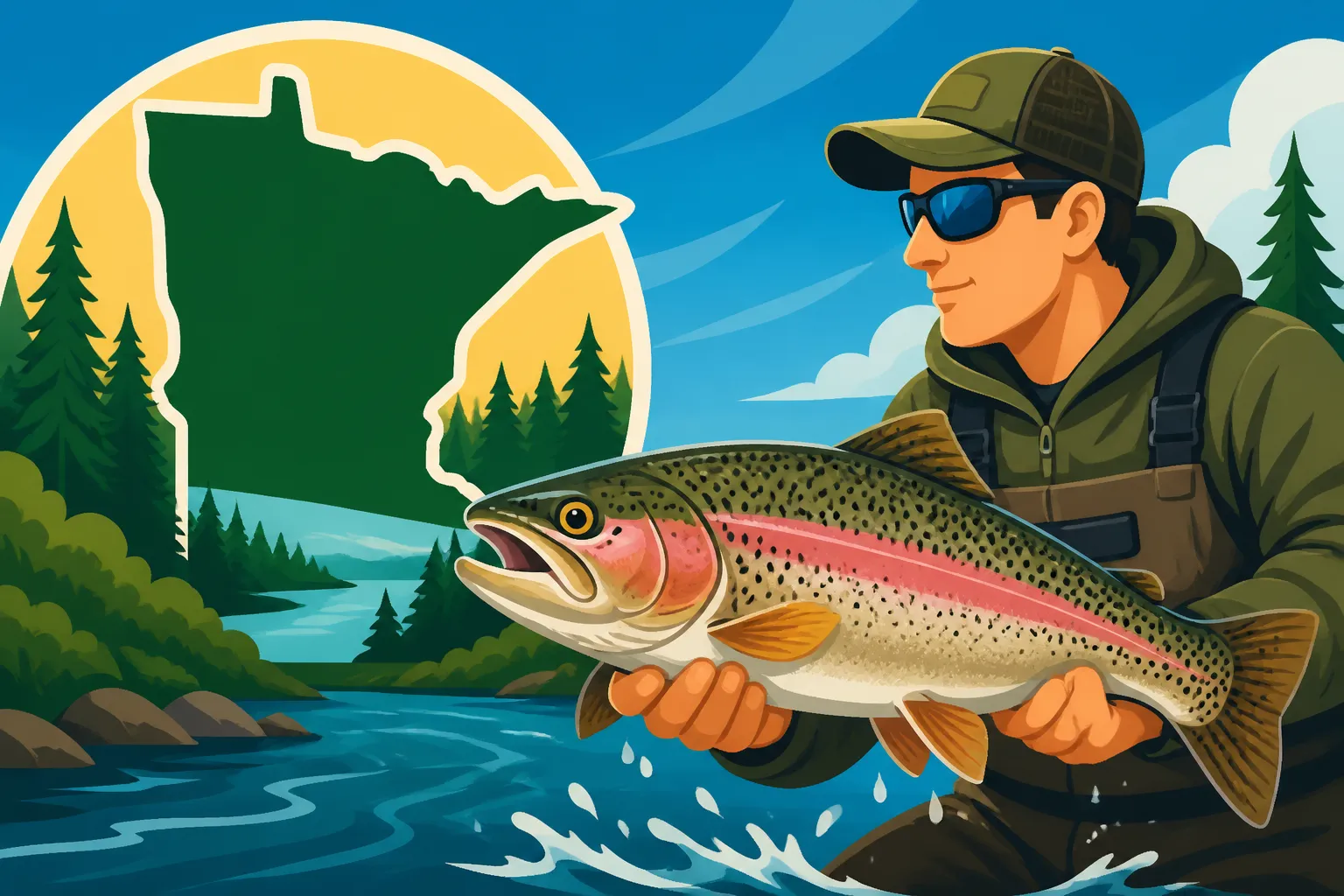
- Rainbow Trout: Known for their distinct iridescent pink or red stripe running along their lateral line, especially noticeable in larger fish. Their bodies are typically silver to brassy green, covered with numerous small black spots on their back, sides, and tail fin. Their tails are usually moderately forked.
Being able to quickly tell these species apart will ensure you're compliant with any specific regulations that apply to one species over another. For instance, some streams might have a higher minimum size for brown trout, or a lower bag limit for brook trout to protect native populations. Knowing your trout will make you a more confident and responsible angler. You can also dive into our species guides, like How to Catch Brown Trout in Minnesota Step by Step, How to Catch Rainbow Trout in Minnesota Step by Step, and How to Catch Brook Trout in Minnesota Step by Step for more in-depth information.
Disclaimer
The information provided in this guide is for general informational purposes only and is based on typical Minnesota fishing regulations. Fishing regulations are subject to change at any time. It is the angler's sole responsibility to consult the official, current Minnesota Department of Natural Resources (DNR) fishing regulations before engaging in any fishing activity. Always refer to the latest printed DNR regulations booklet or their official website for the most accurate and up-to-date information. Failure to do so may result in fines or penalties.