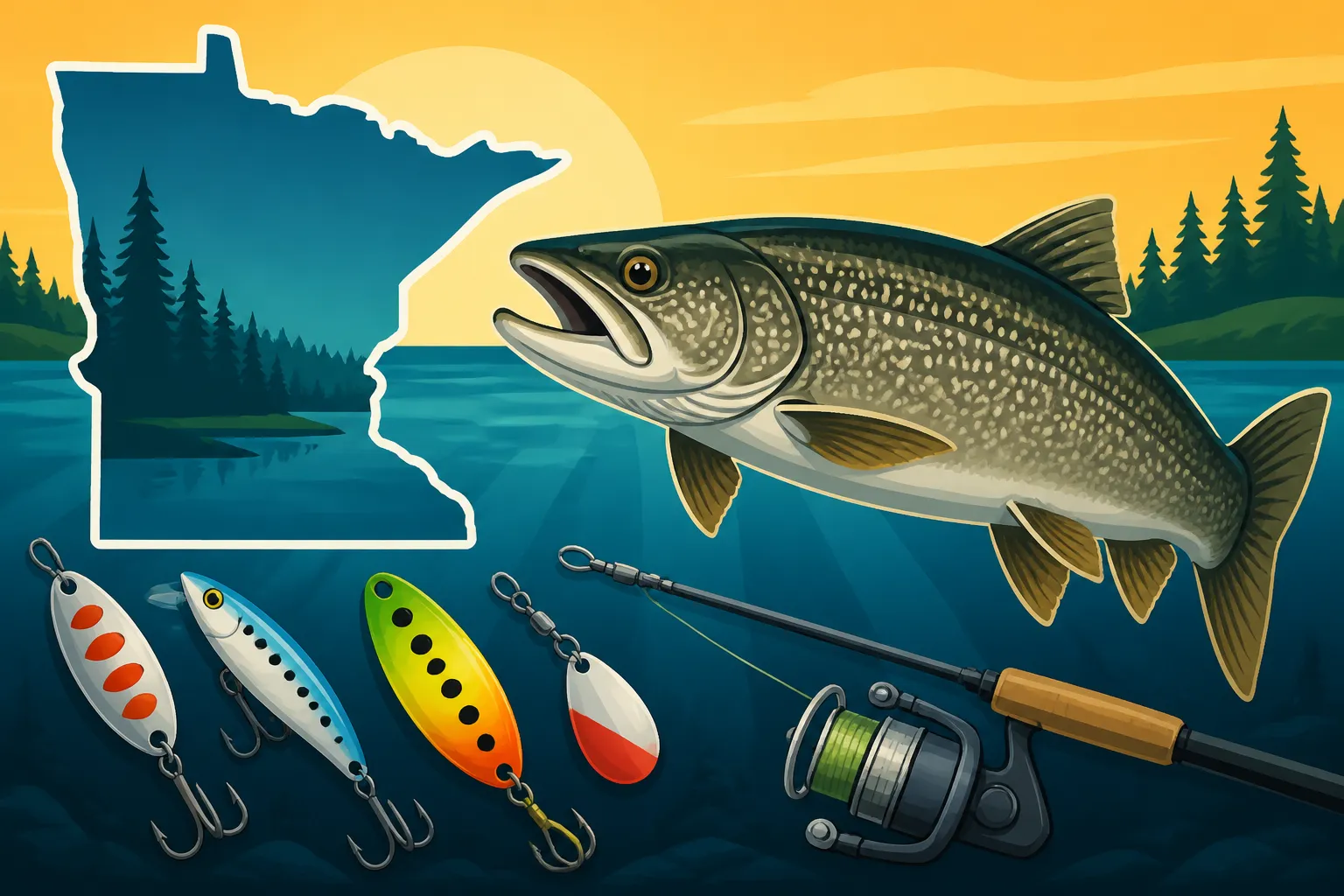
Best Tackle for Lake Trout in Minnesota
Chasing lake trout in Minnesota is an exhilarating experience, but let's be real, it can also be incredibly frustrating if you don't have the right gear. These powerful, deep-dwelling fish require a specific approach, and many anglers struggle with choosing tackle that can stand up to their immense strength and the challenging conditions of their cold-water habitats. This comprehensive guide will strip away the confusion, walking you through the essential rods, reels, lines, lures, and additional gear you’ll need to confidently target and land trophy lake trout across Minnesota's diverse waters.
Understanding Lake Trout and Their Habitat in Minnesota
Before we dive into specific tackle, it’s crucial to understand the magnificent creature we're after and the unique environments they call home in Minnesota. Lake trout aren't your typical panfish; they're apex predators that thrive in particular conditions, and knowing these factors directly impacts your gear choices.
The Deep, Cold World of Minnesota Lake Trout
Minnesota's lake trout are primarily found in deep, cold, oxygen-rich waters, making them somewhat elusive compared to their walleye or northern pike counterparts. Lakes like the legendary Lake Superior, the Boundary Waters Canoe Area Wilderness (BWCA), and many of the state's deep, pristine northern lakes such as Saganaga, Gunflint, and Basswood are prime lake trout territory. These fish are highly sensitive to water temperature, preferring chilly environments, typically below 55°F (13°C), which means they often retreat to the depths during warmer months.
This deep-water preference means your tackle needs to be capable of effectively reaching and working at significant depths, sometimes 60 to 150 feet or even more, especially in the summer. During the winter, when the lakes freeze over, the entire water column cools down, and lake trout can be found shallower, but still often relate to deep structure like humps, points, and steep drop-offs. Imagine trying to feel a subtle bite on a light rod with too much line out – it's nearly impossible. The sheer depth dictates heavier lines, more powerful rods, and lures designed to sink quickly and maintain their action.
Common Lake Trout Forage in Minnesota
Lake trout are opportunistic predators, and their diet heavily influences the types of lures and presentations that will tempt them. In Minnesota's lake trout waters, their primary forage often consists of cold-water baitfish like cisco (also known as tullibee), smelt, whitefish, sculpins, and various species of suckers. These baitfish are typically silvery or white, but also have natural olive, brown, or black markings depending on their environment.
Understanding their diet is your secret weapon when selecting lures. You want your artificial presentations to mimic these natural food sources in terms of size, shape, color, and action. A lure that looks and moves like an injured cisco might just be the ticket to triggering a strike from a wary laker. This is why you'll often see anglers using larger spoons, minnow-imitating crankbaits, or even large live baits when targeting these impressive fish. The more accurately you can "match the hatch," the better your chances of success.
Essential Rods and Reels for Powerful Fighters
When it comes to lake trout fishing, your rod and reel are the backbone of your setup. These aren't dainty panfish, and a powerful, smooth system is crucial for managing long casts, deep presentations, and the blistering runs of a hooked laker.
Rod Selection for Powerful Fighters
Choosing the right rod for lake trout means prioritizing power and action. You’ll want a rod with a medium-heavy to heavy power rating, coupled with a fast or extra-fast action. The "power" refers to the rod's strength or its ability to lift weight, which is essential when trying to bring a heavy, strong fish up from the depths. The "action" describes where the rod bends; a fast action rod bends mostly in the tip, providing excellent sensitivity for detecting subtle bites and ample backbone for solid hooksets.
For general lake trout fishing, whether you're casting large spoons or trolling deep-diving crankbaits, a rod between 7 to 8.5 feet long is a great starting point. Longer rods offer better line control, longer casts, and can absorb the shock of a powerful run more effectively. If you're specifically jigging heavy lures in deeper water or ice fishing, a slightly shorter, stiffer rod around 6 to 7 feet can offer better control and leverage. For instance, imagine you've hooked into a tenacious 15-pound lake trout in the Boundary Waters. A rod with insufficient backbone will feel like you're fighting the fish with a noodle, making it incredibly difficult to turn its head and gain line. A quality graphite or composite rod will provide the necessary strength while still offering enough sensitivity to detect those deep-water taps.
Reel Choices for Durability and Drag
The reel you pair with your lake trout rod needs to be robust, reliable, and equipped with an exceptionally smooth and powerful drag system. For most anglers, a high-quality spinning reel in the 3000 to 5000 size range, or a baitcasting reel in a 200 or 300 size, will be appropriate. Spinning reels are versatile, often preferred for casting lighter presentations, and can be easier for beginners. Baitcasting reels, on the other hand, excel at handling heavier lines and lures, offer superior cranking power, and are often favored for trolling or precise jigging with heavy jigs.
Regardless of the type, pay close attention to the reel's drag system. Lake trout are renowned for their powerful, sustained runs, especially when hooked in deeper water. A sticky or weak drag can lead to sudden line breaks or pulled hooks. Look for reels from reputable brands like Shimano, Daiwa, or Penn, which are known for their sealed and reliable drag washers. A lower gear ratio (e.g., 5.1:1 or 4.8:1) can provide more cranking power for retrieving heavy lures or fighting big fish from deep, while a slightly higher ratio might be suitable for faster jigging techniques. Think about a monster laker making a blistering run on Lake Superior; a smooth, consistent drag is the only thing standing between you and a snapped line.
Lines and Terminal Tackle
The connection between you and the fish relies entirely on your line and terminal tackle. Skimping here is a sure way to heartbreak, especially with hard-fighting lake trout that often inhabit rocky, abrasive environments.
Choosing the Right Line Strength and Type
When targeting lake trout, braided line is almost universally recommended for your main line due to its superior strength-to-diameter ratio, zero stretch, and incredible sensitivity. The lack of stretch means you'll feel even the subtlest bites from deep below and achieve more direct hooksets. For lake trout, consider a braided line in the 30 to 50-pound test range. While this might seem heavy, it provides the necessary power to handle large fish, heavy lures, and withstand accidental encounters with underwater structure. Popular brands like PowerPro or Sufix are great choices for durability and consistent performance.
However, braided line is highly visible in clear water, which can spook wary lake trout. It also lacks abrasion resistance compared to monofilament or fluorocarbon. This is where a leader comes in. You’ll want to tie on a fluorocarbon leader, typically 15 to 30-pound test, between 3 to 10 feet long. Fluorocarbon is nearly invisible underwater, extremely abrasion-resistant, and provides a slight amount of stretch which can be beneficial during a fight. The connection between your braid and fluorocarbon leader is critical; a strong knot like the FG knot or an Albright knot is essential. In clear lakes, especially those in the BWCA, the stealth offered by a fluorocarbon leader is non-negotiable. For a deeper dive into line choices, check out our guide on Best Fishing Line for Walleye (Braid vs Mono vs Fluoro).
Hooks, Swivels, and Leaders
Your terminal tackle—hooks, swivels, and leaders—needs to be robust enough to withstand the power of a lake trout. When using spoons or plugs, ensure they come equipped with strong, sharp treble hooks. If they don't, or if you're replacing old hooks, opt for heavy-duty, corrosion-resistant trebles from brands like VMC or Gamakatsu. Some anglers prefer to switch to strong single hooks on their lures for easier fish release and reduced snagging.
Swivels are often overlooked but play a vital role, especially when trolling or jigging with lures that spin. Ball-bearing swivels are highly recommended as they prevent line twist, which can weaken your line and make fishing a nightmare. Use robust swivels with a rating that matches or exceeds your line strength. For leaders, as mentioned, fluorocarbon is key. However, if you're fishing in areas where northern pike are prevalent (and they often share lake trout habitats), you might consider a short, heavy wire leader or much heavier fluorocarbon (50-80 lb test) to prevent bite-offs from their razor-sharp teeth. Imagine a big laker rolling and twisting at the surface; a weak swivel or hook can fail instantly under that kind of pressure.
Top Lures and Baits for Minnesota Lake Trout
Now for the fun part: what to tie on! Lake trout respond to a variety of presentations, but selecting lures that get down to their depth and effectively mimic their forage is paramount.
Jigging Lures for Vertical Presentations
Jigging is an incredibly effective technique for lake trout, especially when you’ve located a school of fish on your electronics or are fishing through the ice. The goal is to present a lure vertically, often mimicking a dying or injured baitfish.
- Jigging Spoons: These are absolute staples for lake trout. Classic choices include the Luhr Jensen Crippled Herring, Swedish Pimple, and Luhr Jensen Krocadile. Their erratic, fluttering fall perfectly imitates struggling baitfish. Weights can range from 3/4 oz to 2 oz or more, depending on depth and current. Common colors include chrome, gold, silver/blue, and sometimes glow patterns for deeper or darker conditions. You can often find a wide selection of these at your local Bass Pro Shops.
- Jigging Raps/Shiver Minnows: Lures like the Rapala Jigging Rap and Moonshine Shiver Minnow are fantastic. They have a distinct swimming action when lifted and dropped, darting side-to-side. Again, natural baitfish colors (silver, blue/silver, chrome) are excellent, but don't shy away from brighter, more aggressive colors like firetiger or perch patterns, especially when trying to trigger reaction bites.
- Tube Jigs and Soft Plastics: Large tube jigs (4-6 inches) or other creature-style soft plastics, rigged on heavy jig heads (1/2 oz to 1 oz+), can be incredibly effective, offering a more subtle, natural presentation. These are often fished slower, allowing the tentacles or tails to undulate naturally.
Picture this: your fish finder shows a cluster of lake trout suspended 70 feet down. Dropping a 1.5 oz silver Crippled Herring right into that zone, giving it a sharp lift and letting it flutter back down, often results in an aggressive strike. For even more detailed jigging strategies, our guide on How to Catch Lake Trout: Jigging & Trolling offers great insights.
Trolling Lures for Covering Water
Trolling is perhaps the most popular and efficient method for covering vast expanses of water and locating active lake trout, particularly on larger lakes like Lake Superior or the expansive waters of Lake Vermilion. The goal is to present your lures at the correct depth and speed to entice strikes.
- Trolling Spoons: Larger, heavier trolling spoons are deadly for lake trout. Brands like Daredevle, Little Cleo, and Northport Nailer have been catching lakers for decades. These spoons typically have a wider wobble and flash designed to attract fish from a distance. Again, silver, blue, green, and copper patterns are excellent, mimicking cisco or smelt. These are often deployed behind downriggers or on lead core line to reach specific depths.
- Deep-Diving Plugs/Crankbaits: Crankbaits that can dive to significant depths are also fantastic trolling options. Think Rapala Deep Tail Dancers, Storm ThunderSticks Deep, or similar baits. These lures have a tight wiggle that mimics a fleeing baitfish. Colors should again lean towards natural baitfish patterns, but sometimes a vibrant chartreuse or firetiger can provoke a strike in stained water or during low light.
- Flashers/Dodgers: While not lures themselves, flashers and dodgers are often used in conjunction with smaller spoons or flies to attract attention. These large, reflective blades create a lot of commotion and flash, drawing lake trout closer to your trailing lure. They are particularly popular on Lake Superior.
When trolling, precise depth control is paramount. Using tools like downriggers, Dipsy Divers, or lead core line allows you to present your lures right in the strike zone where lake trout are holding. Experiment with different speeds, typically between 1.5 to 3.0 mph, until you find what the fish prefer. Our guide on Trolling for Walleye: Crankbaits & Leadcore offers principles that can be adapted to lake trout trolling for understanding line dynamics.
Live Bait and Dead Bait Options
While artificial lures are highly effective, live bait and dead bait can often entice wary or less aggressive lake trout, especially when fished slowly or on a deadstick.
- Large Minnows or Suckers: For trophy lake trout, a large shiner, chub, or even a small sucker (4-8 inches) fished live can be irresistible. These can be suspended under a float, bottom-fished with a weight, or slow-trolled on a quick-strike rig. The natural scent and movement are often what's needed to trigger a bite.
- Cut Bait: Strips of oily fish like herring, smelt, or even a piece of a cisco can be fished on a jig or behind a flasher. The scent trail they leave is a powerful attractant, drawing in lakers from a distance.
When using bait, make sure your hooks are sharp and appropriately sized for the bait and the fish you're targeting. A circle hook can be a great option for live bait, promoting hookups in the corner of the mouth for easier release. Imagine slow-trolling a large sucker near a deep breakline in the early spring; the natural, subtle presentation can often draw strikes when artificials are ignored.
Essential Ice Fishing Tackle for Lake Trout
Ice fishing for lake trout is a uniquely Minnesota experience, offering incredible opportunities to battle these giants through the ice. The gear needs some specialized adjustments for cold weather and vertical presentations.
Specialized Rods and Reels for Ice Fishing
Just like open water fishing, ice fishing for lake trout requires specific rods and reels designed to handle the cold and the powerful fight of a laker.
- Ice Rods: You'll want medium-heavy to heavy power ice rods, typically ranging from 30 to 42 inches in length. These rods need a sensitive tip to detect subtle bites, but a strong backbone to hoist a fish from deep water and absorb its powerful runs. Fiberglass or composite blanks are often preferred for their durability in extreme cold, though high-quality graphite options exist.
- Ice Reels: Standard open-water spinning reels in the 2500-4000 size range work well for ice fishing, as long as they have a good, smooth drag system that won't freeze up in the cold. Some anglers prefer specific ice reels designed with larger handles and cold-weather lubricants. The key is durability and reliable drag performance in sub-zero temperatures.
Picture sitting over 80 feet of water on a frozen Lake of the Woods, watching your Vexilar. You feel a subtle tap, set the hook, and suddenly a powerful fish is peeling line. That's when you appreciate a rod with the right balance of sensitivity and backbone. For a general overview of ice fishing gear, our Best Ice Fishing Gear for Minnesota (2027 Guide) is a great resource.
Ice Fishing Lures and Techniques
Ice fishing for lake trout primarily involves vertical jigging, often enhanced with electronics and a second, stationary rod.
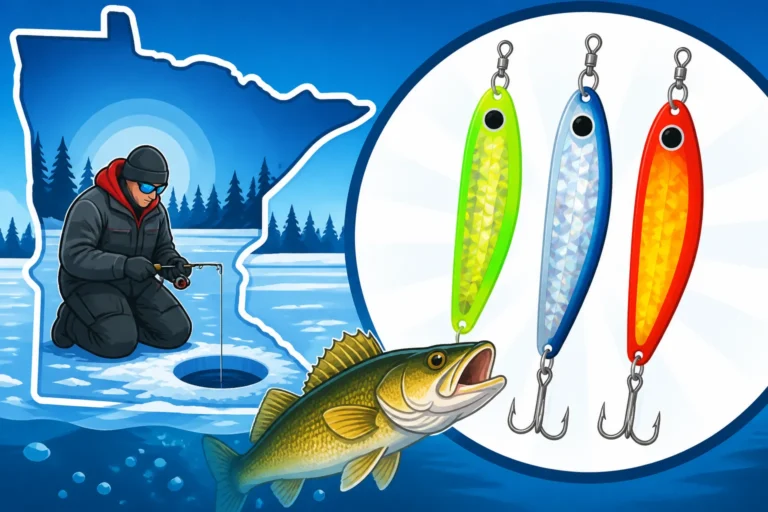
- Heavy Jigging Spoons and Raps: These are your bread and butter for ice fishing lake trout. Large jigging spoons (1 to 3 oz) like the Lindy Darter, Acme Kastmaster, or the Northland Buck-Shot Rattle Spoon, often tipped with a minnow head or scent, are incredibly effective. Similarly, large Rapala Jigging Raps or Moonshine Shiver Minnows (sizes 9-14) work wonders with their erratic darting action. Gold, silver, glow, and firetiger are all excellent color choices.
- Deadsticking: This technique involves setting up a second rod in a rod holder (your "deadstick") with a live or dead minnow (often a large shiner or sucker) suspended just off the bottom or in the fish zone. The natural movement or scent of the bait can entice a cautious laker.
- Tip-Ups: These are fantastic for covering more area, especially if you have multiple lines allowed. Rigged with a large shiner or sucker, tip-ups can be set across a structure or drop-off, waiting for a cruising lake trout to take the bait and trigger the flag.
Imagine you're watching your Humminbird Ice Helix display a powerful fish rising quickly towards your jigging Rap. The excitement is palpable as you feel the thump, set the hook, and begin the fight through the ice. To delve deeper into ice fishing for these magnificent fish, refer to our comprehensive guide on How to Catch Lake Trout Through the Ice in Minnesota.
Additional Gear Considerations
Beyond rods, reels, and lures, several other pieces of equipment can significantly improve your lake trout fishing experience and ensure your safety.
Electronics and Navigation
In the deep, often featureless environments that lake trout inhabit, electronics become more than a luxury; they're almost a necessity.
- Fish Finders/Flashers: A quality fish finder or flasher is crucial for locating deep structure, identifying baitfish schools, and most importantly, spotting individual lake trout. Brands like Garmin (especially with LiveScope), Humminbird (with their Mega Imaging), and Vexilar (a classic for ice fishing) offer excellent options. These units help you pinpoint depths, gauge fish activity, and present your lures accurately.
- GPS and Lake Maps: Accurate GPS units loaded with detailed lake maps (e.g., Navionics, LakeMaster) are invaluable for navigating large lakes, marking productive spots, and returning to them. These maps often highlight depth contours, breaklines, and other submerged structures where lake trout congregate.
Think about trying to find a specific hump in 100 feet of water without electronics. It would be like looking for a needle in a haystack. With a good fish finder, you can quickly scan for key features and target fish more efficiently. For comparing different options, check out our guide on Best Ice Fishing Flashers: Vexilar vs Humminbird vs Garmin.
Landing Gear and Safety
Successfully hooking a lake trout is only half the battle; landing it safely for both you and the fish is equally important.
- Landing Nets: A large, sturdy landing net with rubberized mesh is highly recommended. The large size helps you safely scoop up powerful fish, while the rubberized mesh is gentler on the fish's slime coat and prevents hooks from getting tangled. Trying to hand-land a thrashing laker in a choppy boat or on slick ice can be dangerous and often results in lost fish. You can find excellent options online at retailers like Amazon or at your local tackle shop.
- Pliers/Hook Removers: Long-nosed pliers or specialized hook removers are essential for quickly and safely unhooking fish, especially those caught on large treble hooks. This minimizes stress on the fish and keeps your fingers out of harm's way.
- Safety Gear: Always prioritize safety, especially when fishing large, cold bodies of water like Lake Superior or during the ice fishing season. This includes wearing appropriate clothing for cold weather, a quality life vest when on open water, and having a well-stocked first-aid kit. When ice fishing, proper ice safety equipment like picks, a spud bar, and knowing ice conditions are paramount.
Lake Trout Tackle at a Glance
Here's a quick summary of the tackle components discussed, categorized by common fishing techniques:
| Component | Jigging (Open Water) | Trolling (Open Water) | Ice Fishing |
|---|---|---|---|
| Rod | 6-7 ft, Med-Heavy/Heavy, Fast Action | 7-8.5 ft, Med-Heavy/Heavy, Moderate-Fast Action | 30-42 inch, Med-Heavy/Heavy, Sensitive Tip |
| Reel | Spinning (3000-4000) or Baitcasting (200-300) | Baitcasting (200-300) or Large Spinning (4000-5000) | Spinning (2500-4000), reliable in cold |
| Main Line | 30-50 lb Braided | 30-50 lb Braided (or Lead Core for depth) | 20-40 lb Braided or specialized Ice Line |
| Leader | 15-30 lb Fluorocarbon (3-6 ft) | 20-30 lb Fluorocarbon (5-10 ft) | 10-25 lb Fluorocarbon (1-3 ft) |
| Lures | Jigging Spoons (1-2 oz), Jigging Raps, Tube Jigs | Large Trolling Spoons, Deep-Diving Crankbaits, Dodgers | Heavy Jigging Spoons, Jigging Raps, Large Jigs |
| Bait (Optional) | Large Minnows/Suckers (deadstick) | Large Minnows/Suckers (slow troll) | Large Minnows/Suckers (deadstick, tip-up) |
| Terminal Tackle | Heavy-duty Trebles, Ball-bearing Swivels, Strong Snaps | Heavy-duty Trebles, Ball-bearing Swivels, Strong Snaps | Strong Split Rings, Sharp Trebles/Single Hooks |
| Electronics | Fish Finder/GPS | Fish Finder/GPS/Downriggers | Flasher/Fish Finder (Vexilar, Humminbird, Garmin) |
| Landing Gear | Large Rubberized Net | Large Rubberized Net | Large Rubberized Net, Gaff (optional for big fish) |
Disclaimer
Fishing regulations, seasons, and limits for lake trout in Minnesota can change. Always consult the latest Minnesota Department of Natural Resources (DNR) fishing regulations before heading out on the water. This guide provides general information and recommendations, but it is your responsibility to be aware of and adhere to all current rules.