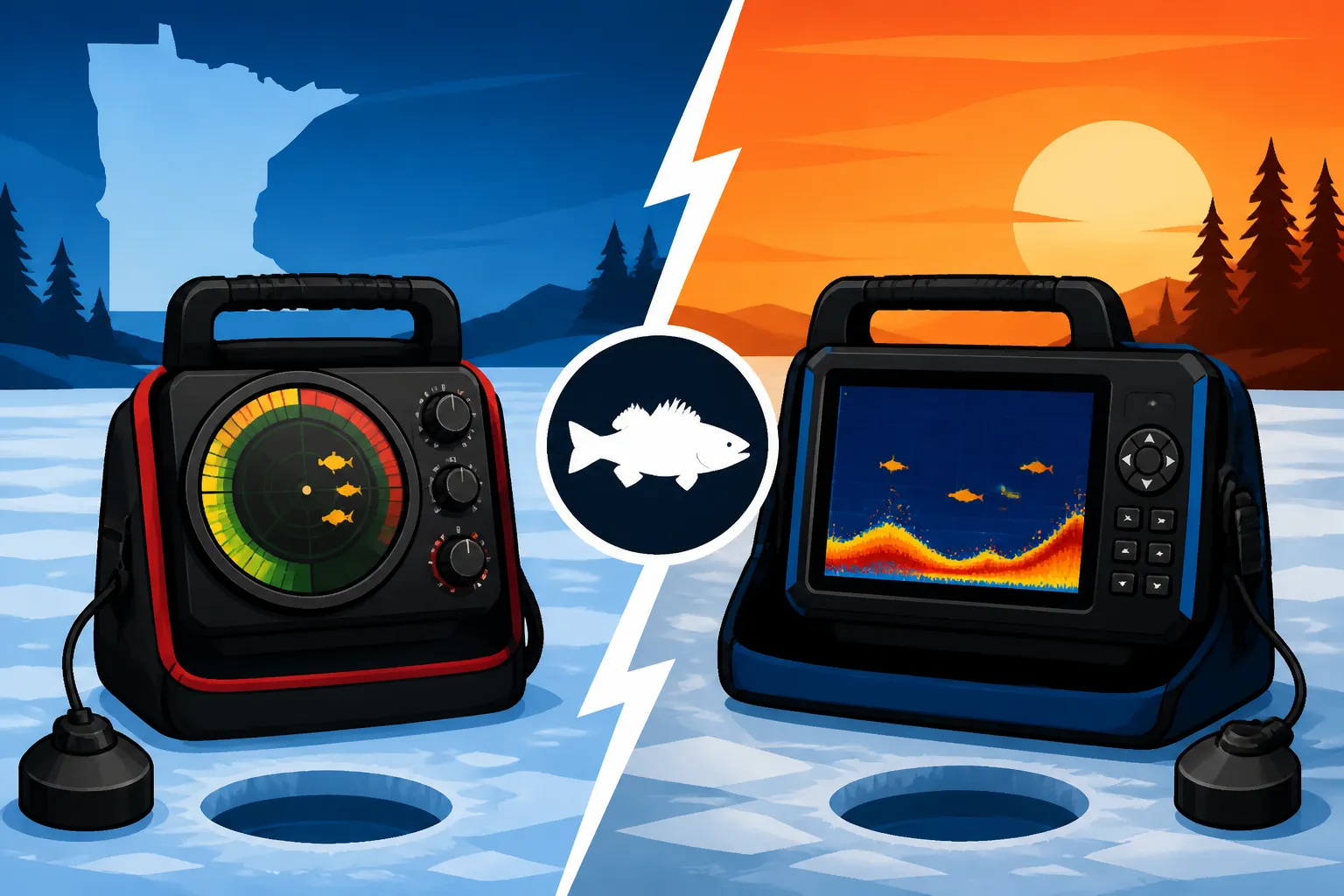
Vexilar vs Garmin Ice Flasher: Which to Buy?
Deciding on the right ice flasher can feel like navigating a frozen maze, especially when you’re torn between tried-and-true classics like Vexilar and modern powerhouses like Garmin. Many anglers find themselves scratching their heads, wondering if the traditional "wheel" is still king or if the latest digital tech is the undisputed future. This guide aims to cut through the noise, offering a deep dive into the practical realities of choosing between a Vexilar and a Garmin ice flasher so you can confidently pick the one that best fits your fishing style and the hard-water conditions you'll face.
The Core Philosophy Behind Each Brand
When you look at the landscape of ice fishing electronics, Vexilar and Garmin represent two distinct approaches to helping you find fish. It’s not just about features; it’s about the fundamental design philosophy that guides each brand. Understanding this helps frame the entire comparison, giving you insight into why one might resonate more with your personal style of fishing.
Vexilar: The Traditional Workhorse
Vexilar is, for many, synonymous with ice fishing. They've been building dedicated ice fishing flashers for decades, and their core philosophy is rooted in simplicity, reliability, and direct, real-time feedback. When you’re looking at a Vexilar unit, you're seeing a mechanical flasher, often described as a "wheel," that provides an almost instantaneous display of what's happening under your hole. This direct signal processing means minimal lag, which is crucial when fish are finicky or moving quickly.
Imagine a grizzled veteran angler, ice-cold hands, bundled in layers, sitting over a hole on a vast frozen lake. They’re not looking for complex menus or fancy graphics; they need to know, without a shadow of a doubt, if that red line is their jig and if that yellow line rising towards it is a walleye. That’s the Vexilar experience. Units like the Vexilar FLX-28 are a testament to this, offering enhanced target separation and digital depth readout but still retaining that iconic flasher display. Their rugged build quality is legendary, designed to withstand the brutal cold and inevitable bumps of an ice shanty. You won't find many frills here, but what you will find is a piece of equipment that simply works, day in and day out, season after season, making them a favorite for many anglers who appreciate an "old school" charm with modern refinements.
Garmin: The Innovator with Modern Tech
Garmin, while a giant in marine electronics and GPS, entered the dedicated ice fishing flasher market more recently, bringing with it a philosophy centered on innovation, versatility, and advanced digital sonar technology. Unlike Vexilar's mechanical flasher, Garmin’s ice fishing offerings are essentially adaptations of their open-water fish finders, repackaged for the ice. This means they often boast features like CHIRP sonar, high-resolution digital displays, and, in some cases, the game-changing forward-facing sonar like LiveScope.
Consider the tech-savvy angler who thrives on data and likes to see every detail, perhaps even exploring structure off to the side of their hole. Garmin caters to this desire for more information and flexibility. Their units, like the Striker series Ice Bundles, offer clear, colorful LCD screens, GPS mapping capabilities, and the ability to record waypoints – features that go far beyond what a traditional flasher provides. While this can mean a steeper learning curve for some, it opens up a world of possibilities for those who want their ice fishing electronics to do more than just show them what's directly below. If you're someone who uses a sophisticated fish finder on your boat during the open water season and wants a similar level of technology when the lakes freeze over, Garmin’s approach will likely appeal to you.
Key Features and How They Stack Up
Now that we’ve touched on the core philosophies, let’s get down to the brass tacks: the actual features that differentiate these two brands and how they impact your time on the ice. The devil, as they say, is in the details, and when you’re out on a frozen lake, those details can make all the difference.
Sonar Technology and Display
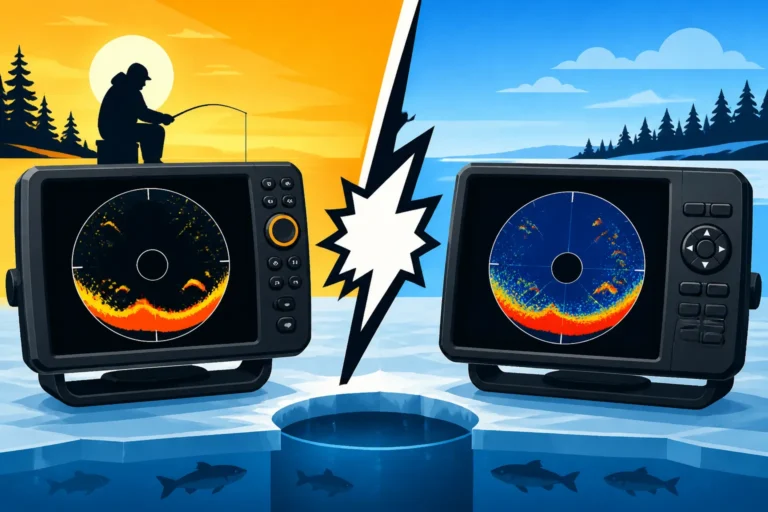
This is perhaps the biggest differentiator between Vexilar and Garmin. Vexilar’s signature is its mechanical flasher display, typically showing three colors (red for strong returns, orange for medium, green for weak) in a circular pattern. This is a direct, unfiltered representation of the sonar signal, meaning there’s virtually no lag. You see your jig and the fish almost exactly as they pass through the sonar cone. The purity of this signal and the directness of the display make it incredibly responsive, which is why so many anglers swear by it for vertical jigging, especially for panfish or finicky walleye. The target separation on modern Vexilars is excellent, allowing you to clearly distinguish your bait from a fish even when they are very close. If you're curious about how these displays translate the underwater world, diving into a guide on how to read a flasher (Vexilar/Humminbird) can be incredibly insightful.
Garmin, on the other hand, utilizes digital sonar technology with high-resolution LCD screens. This means they process the raw sonar data and present it as a graphical representation. Their CHIRP sonar technology offers incredible target separation and clarity, often allowing you to distinguish individual fish in a school or even see the subtle movements of a minnow on your hook. The visual fidelity on a Garmin display is generally higher, with more colors and detailed mapping options. The biggest leap for Garmin is their LiveScope system, which offers real-time, forward-facing and downward-facing sonar views, essentially allowing you to see fish swimming around your hole and their reactions to your bait in real-time. This is a revolutionary technology for many, but it's also a significant investment. While the digital processing can introduce a tiny bit of lag compared to a mechanical flasher, for most anglers, it’s negligible. The clear, bright screens on Garmin units are also fantastic in various light conditions, from bright sun to low-light shanty fishing.
User Interface and Ease of Use
When it comes to the user experience, Vexilar champions simplicity. Most Vexilar units feature physical knobs for gain, range, and other adjustments. There are no complicated menus or sub-menus to navigate. You turn the unit on, set your depth range, adjust the gain, and you're ready to fish. This "what you see is what you get" approach is incredibly appealing to those who want to spend more time fishing and less time fiddling with settings. It's an intuitive system that doesn't require a manual to understand, and once you get the hang of interpreting the colored bands, it becomes second nature.
Garmin’s interface, being digital, is more menu-driven. While entry-level units might have simpler button layouts, many higher-end Garmin ice bundles feature touchscreens and a more complex operating system. This allows for a vast array of customization options – from different sonar views and color palettes to GPS map overlays and data fields. For anglers who are comfortable with modern electronics, this level of control is a huge advantage. However, for a beginner or someone who prefers a minimalist approach, it can feel overwhelming at first. The initial learning curve is definitely steeper with a Garmin, but once you master it, the customization can significantly enhance your fishing experience. Many find that taking the time to learn their Garmin unit fully pays off with more productive days on the ice.
Portability and Build Quality
Ice fishing demands gear that can withstand abuse, extreme cold, and plenty of travel across rough ice. Both brands address this, but with different form factors.
Vexilar units typically come in a rugged, almost iconic "bucket" style case, often referred to as a Genz Pack, designed by ice fishing legend Dave Genz. These cases are extremely durable, providing excellent protection for the unit, transducer, and battery. They're designed to be tossed in a sled, sit on the ice, and generally take a beating. While perhaps not the most compact, their integrated design means everything you need is in one self-contained, robust package. The units themselves are known for their solid construction and longevity. You'll hear stories of Vexilars passed down through generations.
Garmin ice bundles often feature their fish finder head unit mounted on a portable shuttle, complete with a battery and transducer. These shuttles are usually lighter and more compact than the traditional Vexilar bucket, making them easy to carry in a backpack or pull in a smaller sled. Brands like Garmin often prioritize a sleek, modern design. While the individual components are well-made, the overall "kit" feel can sometimes be perceived as less integrated than a Vexilar, which feels like it was born for the ice. Both brands offer excellent battery life, typically lasting a full day or more on a single charge, depending on usage and battery size. When considering overall robustness for severe conditions, both excel, but Vexilar's heritage in dedicated ice fishing gear often gives it a slight edge in perceived bulletproof durability for the core unit itself.
The Experience on the Ice: Practical Considerations
Beyond the technical specs and features, how do these flashers actually perform when you’re out on the frozen expanses of a Minnesota lake? The true test of any piece of fishing gear is its real-world application, and both Vexilar and Garmin offer distinct advantages depending on your specific needs and fishing style.
Walleye, Panfish, and Pike: Species-Specific Performance
When you're chasing different species, the ideal flasher can change. For panfish like crappies and sunfish, Vexilar's unparalleled sensitivity and real-time feedback make it a dream. The ability to see your tiny jig and the subtle ascent of a bluegill towards it without any lag is a massive advantage. Many seasoned panfish anglers, especially those sight-fishing in a portable shelter, find the Vexilar's direct display superior for this nuanced bite. The target separation on models like the FLX-28 allows you to literally pick your fish out of a school.
For walleye, both brands excel, but in different ways. A Vexilar is fantastic for vertical jigging over structure or for deadsticking, offering that clear, immediate visual of the fish interacting with your bait. It’s excellent for understanding fish behavior directly under your hole. However, if you're a mobile walleye angler constantly drilling new holes, a Garmin with its built-in GPS and mapping can be a huge asset. You can quickly mark productive spots, navigate back to them, and visually cover more ground. The advanced sonar on Garmin units might also give you a slight edge in deeper water or when marking walleye on complex contours. And if you're thinking about investing in advanced tech, understanding if Garmin LiveScope is worth it for walleye fishing is a critical consideration.
When it comes to northern pike, especially if you're targeting them with tip-ups or larger baits, the visual aspect of a flasher might be less critical than covering water. However, both can help. A Vexilar will clearly show a pike investigating your bait below, while a Garmin with its broader sonar cone or LiveScope can help you locate those predatory fish around weed edges or structure before they even come into range of your hole. For dark house spearing, the Vexilar’s direct, wide cone is often preferred to spot approaching pike from a distance.
Versatility Beyond Ice Fishing
This is where Garmin often shines brightly. Since many of their ice bundles are essentially open-water fish finders packaged for winter use, they offer incredible versatility. You can remove the head unit from its ice fishing shuttle and mount it on your boat or kayak during the open water season. This means your investment works year-round, giving you more bang for your buck, especially if you're an avid angler who transitions from hard water to open water seamlessly. Most Garmin units are compatible with various transducers, including transom mounts for boat use. This dual-season functionality is a significant advantage for many anglers looking for a single, powerful unit.
Vexilar, on the other hand, is almost exclusively an ice fishing brand. While you can adapt some Vexilar units for open water use with different transducers, it's not their primary design, and they don't offer the same GPS mapping or side-imaging capabilities that a Garmin might. For the hardcore ice angler who only cares about what's happening under the ice, this isn't a drawback. But if you're looking for a multifaceted tool that serves you through all four seasons, Garmin's flexibility is a clear winner.
Accessories and System Integration
Both brands have a thriving ecosystem of accessories. Vexilar boasts a strong aftermarket for specialized transducers, cases, and battery upgrades. You can find everything from different cone angle transducers for specific fishing situations to custom soft packs and larger batteries to extend your time on the ice. The simplicity of the Vexilar system means accessories are generally straightforward and focused on enhancing the core ice fishing experience. Many of these specialized items can be found at local tackle shops or larger retailers like Bass Pro Shops.
Garmin’s system integration is much broader, reflecting its roots in marine electronics. Many Garmin units can integrate with other Garmin devices, share waypoints, or even network with trolling motors. Accessories often include more advanced transducers (like the GT series for CHIRP and ClearVü/SideVü), external GPS antennas, and various mounting solutions for different boats and ice setups. Their focus on digital solutions means you might find more software updates and new features being rolled out. If you already own other Garmin marine electronics, their ice flasher might seamlessly fit into your existing setup, offering a cohesive experience across all your fishing platforms. You can often find a wide array of Garmin accessories on Amazon or through dedicated marine electronics dealers.
Making Your Decision: Who Is Each Flasher For?
Ultimately, the choice between a Vexilar and a Garmin comes down to your personal fishing style, priorities, and budget. There's no single "best" option; only the best one for you. Let's break down who each brand truly serves.
When a Vexilar Is Your Best Bet
A Vexilar is the go-to choice for the angler who values tradition, simplicity, and bulletproof reliability above all else. If you spend most of your time vertically jigging in a single hole, trying to coax finicky fish, the Vexilar’s real-time, lag-free display is incredibly effective. It’s perfect for seeing the subtle movements of your jig and the instant reaction of a fish. Many seasoned anglers who have spent decades on the ice swear by their Vexilar units, appreciating the intuitive, knob-based controls that work flawlessly even with thick gloves on.
You'll particularly love a Vexilar if:
- You're on a budget: Entry-level Vexilar models often offer excellent performance at a more accessible price point than comparable Garmin units with advanced features.
- You're a traditionalist: You appreciate gear that's proven over time and doesn't rely on complex menus or digital screens. You want to focus on fishing, not navigating electronics.
- You prioritize ultimate simplicity: Turn it on, adjust two knobs, and fish. It’s as straightforward as it gets.
- Your primary focus is vertical jigging: The direct, immediate feedback of a Vexilar is unmatched for precise lure presentation and detecting soft bites. This makes it ideal for crappie & panfish fishing techniques.
- You need rugged durability: Vexilars are built like tanks and designed to endure the harshest Minnesota ice conditions year after year.
- You fish primarily from a permanent ice house: If you're staying in one spot for extended periods, the robust nature and clear display are perfect.
Models like the Vexilar FLX-12, FL-8SE, or the more advanced FLX-28 are fantastic choices if these points resonate with your fishing philosophy.
When Garmin Shines Brightest
Garmin is the ideal choice for the tech-forward angler who wants to leverage the latest in sonar technology and demand maximum versatility from their electronics. If you're constantly on the move, exploring new spots, or want a comprehensive understanding of the underwater environment, Garmin's feature-rich units provide an undeniable advantage. The ability to use your flasher as a robust chartplotter or even forward-looking sonar changes the game for many.
A Garmin unit will truly shine for you if:
- You're a tech enthusiast: You love having access to advanced features like CHIRP sonar, GPS mapping, and potentially LiveScope.
- You want year-round versatility: You can easily transition your unit from ice to open water, getting more value from your investment. This is a huge benefit if you want to fish year-round in Minnesota.
- You need GPS mapping: For exploring new lakes, marking waypoints, or navigating complex structures, built-in GPS is invaluable.
- You desire detailed screen displays: The high-resolution, color LCD screens offer a wealth of information and excellent visibility.
- You often fish big water or search for aggressive fish: Features like LiveScope can help you locate scattered fish or anticipate their movements over a wider area. If you're specifically targeting walleye, the detailed feedback from a Garmin can be incredibly effective for ice fishing for walleye: tactics & setups.
- You appreciate a cohesive electronics ecosystem: If you already use Garmin products for boating or other outdoor activities, their ice flashers will likely integrate seamlessly.
Units from the Garmin Striker series, such as the Striker Plus 4 Ice Bundle or the Striker Vivid series, offer fantastic performance and feature sets. For those pushing the boundaries, adding the LiveScope system to a compatible Garmin unit opens up a truly revolutionary way to ice fish.
| Feature | Vexilar (Traditional Flasher) | Garmin (Digital Flasher/Fish Finder) |
|---|---|---|
| Sonar Technology | Mechanical flasher (e.g., FL-8, FLX-28) | Digital CHIRP, traditional flasher view, LiveScope |
| Display Type | Segmented LED "wheel" (3-color) | High-resolution color LCD screen |
| Lag/Real-Time | Virtually none, direct signal | Minimal, but present digital processing lag |
| User Interface | Knob-based, extremely simple & intuitive | Menu-driven, buttons/touchscreen, more complex |
| Target Separation | Excellent, especially on newer models | Exceptional, highly detailed |
| Versatility | Primarily ice fishing | Year-round (ice, open water, kayak) |
| GPS/Mapping | None (some models have digital depth) | Often built-in, detailed lake maps |
| Portability | Rugged "bucket" style, self-contained | Compact shuttle, often lighter |
| Learning Curve | Low | Moderate to high (depending on features) |
| Typical Cost | Mid-range to upper-mid | Entry-level to premium (especially with LiveScope) |
| Best For | Vertical jigging, panfish, traditionalists | Mobile anglers, tech-savvy, year-round use, walleye |
Choosing between these two incredible brands isn't about one being inherently better than the other, but rather about which one is better suited to your personal journey on the ice. Consider your priorities, the species you target, and how much you value modern technology versus timeless reliability. Both a Vexilar and a Garmin will undoubtedly enhance your ice fishing experience, helping you catch more fish and understand the underwater world beneath your feet.
Disclaimer
The information provided in this guide is for general informational purposes only. Fishing regulations, equipment specifications, and technological advancements can change rapidly. Always consult the most current Minnesota Department of Natural Resources (DNR) regulations and product manuals for up-to-date and accurate information before heading out on the ice.