Humminbird vs Garmin Ice Flasher: Which to Buy?
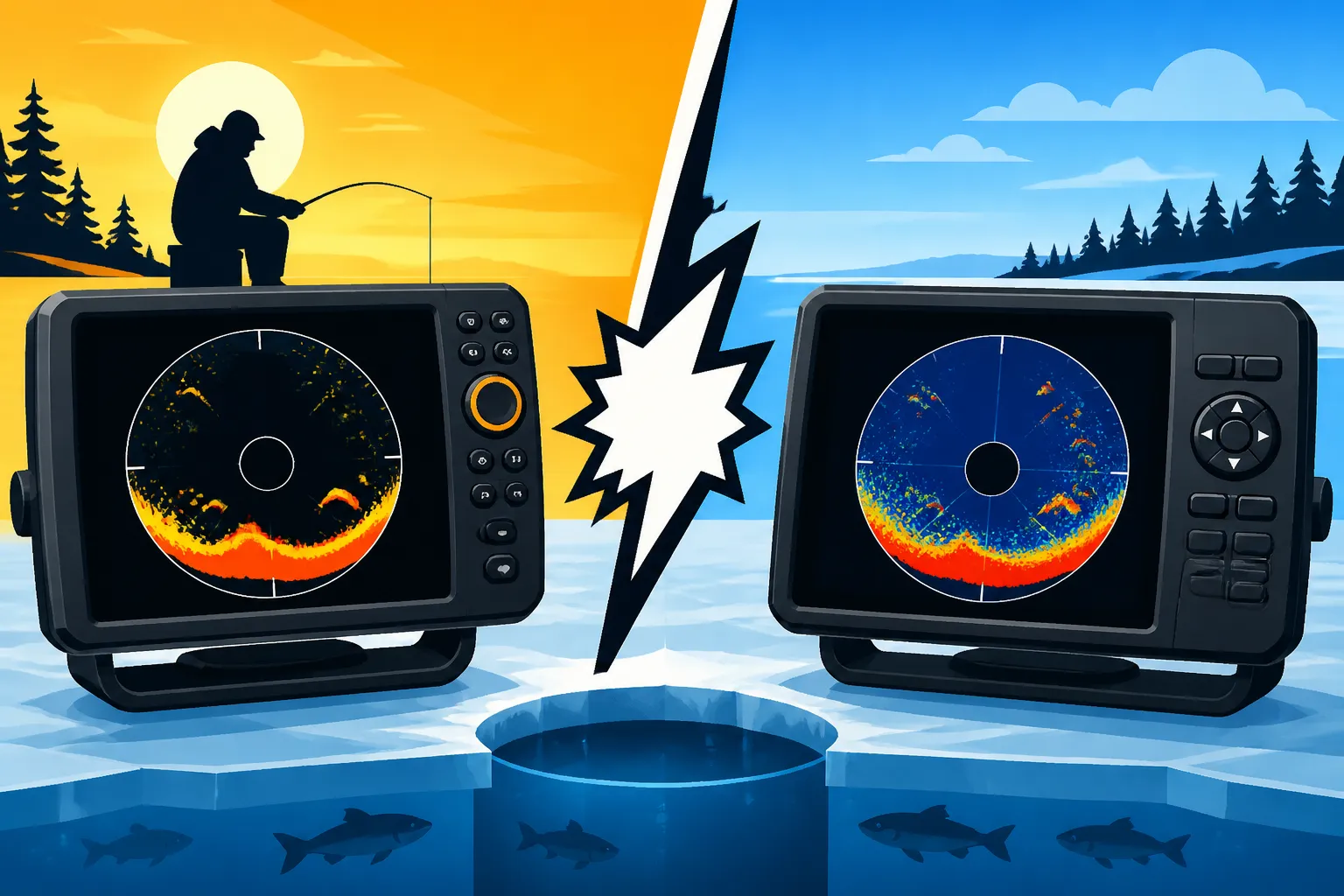
Alright, fellow ice anglers, let's be real. Stepping into a tackle shop or browsing online for a new ice flasher can feel like walking into a foreign country where everyone speaks a different language. You're bombarded with specs, features, and brand loyalties, all while trying to figure out which glowing screen is actually going to help you put more fish on the ice. Deciding between a trusted name like Humminbird and an innovative player like Garmin is a common headache, and this guide is here to untangle that knot, breaking down the crucial differences so you can make an informed choice that truly elevates your hardwater game.
The Evolution of Ice Flashers: Beyond the Bleeps and Bloops
Remember the good old days when an ice flasher was just a series of blinking lights around a dial, telling you something was down there? While those classic units still have their place, modern ice flashers from companies like Humminbird and Garmin have evolved into sophisticated underwater eyes, offering a level of detail and functionality that can genuinely change how you approach ice fishing. It's no longer just about seeing a fish; it's about understanding its behavior, the structure it's relating to, and making precise presentations.
The Core Functionality: What Every Angler Needs
At its heart, an ice flasher's job is simple: to show you what's beneath your hole in real-time. This means displaying your lure, any fish that come into view, and the bottom contour. For any serious angler, a reliable flasher needs to excel at these basics. You need instant feedback when a fish approaches your bait, whether it's a curious panfish or a trophy walleye. The best units provide a clear, bright display that's easy to interpret, even in glaring sunlight or a dimly lit ice shelter. Think about those tense moments when a faint red line suddenly pops up on your screen – that immediate visual cue is everything.
Key Features to Look For in an Ice Flasher
Beyond the core job, modern ice flashers pack a punch with additional features that can make a real difference. For instance, adjustable zoom functions allow you to hone in on a specific part of the water column, like just above the bottom where walleyes might be cruising. Target separation is another huge one; it determines how clearly the unit can distinguish between two close objects, like your lure and a fish hovering right next to it. High-resolution screens offer crisp images, while interference rejection helps clean up the signal when you're fishing in a crowded shanty town. And let's not forget about portability and battery life – hauling a heavy unit with a dead battery across a frozen lake is no fun for anyone. For a broader perspective on what to consider, check out our guide on the Best Ice Fishing Electronics for Beginners.
Humminbird Ice Flashers: A Deep Dive into the Helix Series
Humminbird has been a staple in the fishing electronics world for decades, and their Helix ice series has really carved out a niche, especially for anglers who prioritize detailed sonar and robust mapping capabilities. If you've spent any time researching fish finders, you've undoubtedly seen the distinctive Helix screen. On the ice, these units bring a lot of that open-water prowess to the hardwater. Many anglers find great deals on these units, especially at retailers like Bass Pro Shops, where you can often compare models side-by-side.
Humminbird's Strengths: Detailed Sonar & Imaging
When you talk about Humminbird, you're often talking about incredible sonar clarity. Their units, particularly the Helix 7 and Helix 9 models designed for ice, come equipped with features like Dual Spectrum CHIRP sonar. This isn't just a fancy name; it provides incredibly detailed returns, allowing you to discern individual fish, your jig, and even changes in bottom hardness with remarkable precision. Many anglers also appreciate the ability to switch between traditional flasher view, 2D sonar, and even combine them on a split-screen. This versatility means you can customize your display to exactly how you like to interpret the underwater world. Being able to see the distinct separation between a minnow on a hook and a lurking crappie can be the difference between a missed opportunity and a successful hookset.
Practical Applications for Humminbird on Ice
Imagine you're targeting perch on a vast flat, and you notice slight variations in the bottom composition – perhaps a patch of softer mud next to firmer gravel. A Humminbird unit, with its clear sonar, can often highlight these subtle changes, helping you identify prime feeding zones. For those chasing walleye, the crisp target separation is invaluable. When you're using a small spoon and a jumbo walleye cruises in, you want to know if it's inspecting your lure or just passing by. The detailed display allows you to react instantly, whether it's a slight jigging motion or a deadstick presentation. The units often come with pre-loaded LakeMaster maps, which are incredibly detailed contour maps of many popular Minnesota lakes, giving you an edge in finding structure before you even drill a hole. This is especially helpful for those looking to fine-tune their Walleye Fishing Techniques: Complete Minnesota Guide.
Garmin Ice Flashers: Exploring the ECHOMAP and Striker Options
Garmin, while perhaps a more recent major player in the dedicated ice flasher scene compared to some legacy brands, has quickly made a name for itself, primarily by integrating its exceptional GPS mapping and groundbreaking LiveScope technology into its ice fishing lineup. If you're an angler who loves technology and wants to see the underwater world in a more dynamic way, Garmin has certainly brought some exciting options to the table. You can find their diverse range of products, from entry-level Striker units to advanced ECHOMAP bundles, on online platforms like Amazon.
Garmin's Strengths: GPS Mapping & Live Sonar Integration
Garmin's undeniable strong suit is its GPS mapping, often featuring highly accurate mapping software like LakeVü g3. These maps, combined with their powerful GPS, allow you to navigate precisely, mark waypoints, and return to hot spots with ease. But where Garmin truly stands out is with its forward-facing sonar technology, primarily LiveScope. While not every Garmin ice flasher includes LiveScope, many of their bundles are built around its integration. LiveScope provides a real-time, almost video-game-like view of what's happening around and under your hole, not just directly below it. You can see fish swimming, reacting to your bait, and even identify species with practice. This is a game-changer for many, prompting questions like, Is Garmin LiveScope Worth It for Walleye? for countless anglers.
Practical Applications for Garmin on Ice
Imagine you're fishing a hard-to-read breakline for Northern Pike in Minnesota, a common scenario in many of our bigger lakes. With a Garmin ECHOMAP unit, you can pinpoint the exact contour line you want to fish, mark a waypoint, and drill a series of holes along it, knowing you're in the prime zone. If you have LiveScope, the possibilities multiply. You can scan wide areas from a single hole, locate schools of crappie or perch, and then present your bait directly to them. This is incredibly effective for active fish or when trying to locate scattered schools. You can literally watch a fish approach your lure from 20-30 feet away, gauge its interest, and adjust your presentation in real-time. This dynamic feedback is invaluable for adapting your tactics on the fly, which is crucial for effectively learning How to Find Fish While Ice Fishing.
Direct Comparison: Humminbird vs. Garmin Key Differences
When it comes down to choosing between Humminbird and Garmin for your ice fishing needs, it’s not just about which one is "better" in a general sense; it’s about which one aligns best with your fishing style, priorities, and budget. Each brand has made specific design choices and excels in different areas, creating a clear distinction for anglers to consider. Let's really dig into the nitty-gritty.
Sonar Performance and Transducer Technology
This is often where the most passionate debates begin. Humminbird's traditional sonar, especially with their Dual Spectrum CHIRP, is renowned for its incredible detail and target separation directly below the ice hole. You get very clear, crisp returns that are easy to distinguish between your bait, individual fish, and the bottom composition. It's a fantastic system for vertical jigging and traditional flasher interpretation.
Garmin, on the other hand, also offers excellent traditional sonar, but its real technological leap for ice fishing comes with the integration of Panoptix LiveScope. This forward-facing, real-time sonar transforms your understanding of the water column around you. Instead of just a cone directly below, you get a moving picture of fish and structure up to 100 feet away, showing direction of movement and interaction with your lure. While LiveScope itself is an additional investment beyond the base unit, the Garmin ECHOMAP series is built to seamlessly integrate and power this revolutionary technology. If your primary goal is to see beyond your hole and actively hunt down moving fish, Garmin's LiveScope-compatible systems are hard to beat.
Mapping and GPS Capabilities
Both brands offer excellent mapping, but there are subtle differences in their philosophies. Humminbird leans heavily into its LakeMaster maps, which are lauded by many Minnesota anglers for their unparalleled detail, including depth contours, navigation aids, and even vegetation and bottom hardness layers on some premium versions. If you already run a Humminbird unit in your boat with LakeMaster, the transition to their ice units often feels very natural, and you can leverage your existing map cards.
Garmin utilizes its LakeVü g3 maps, which are also highly detailed and cover a vast number of lakes. Garmin's strength often lies in its overall GPS integration. Their units tend to feel very intuitive for navigation, marking waypoints, and creating custom routes. If you rely heavily on GPS for precise location marking, or if you already use Garmin GPS devices in other aspects of your life, the user interface will likely feel very familiar and easy to pick up. For complex navigation or covering large bodies of water like Lake of the Woods, Garmin's GPS capabilities are often considered top-tier.
Ease of Use and User Interface
This is highly subjective, but general trends emerge. Humminbird Helix units typically feature a straightforward menu system that many long-time anglers find logical and easy to navigate. The button layouts are usually well-spaced, and the ability to customize views with different sonar options is a strong point. Learning to interpret the various sonar views, including the traditional flasher display, might take a little time if you're new to the brand, but once you get the hang of it, it becomes second nature.
Garmin interfaces are often praised for their modern, almost smartphone-like intuitiveness, especially on their touchscreen ECHOMAP models. If you're comfortable with modern electronics and touch interfaces, you might find Garmin's system a bit more streamlined for quickly adjusting settings or zooming in on maps. For those new to advanced electronics, Garmin's user-friendly approach can be a significant advantage, reducing the learning curve. However, for those who prefer tactile buttons, some of their higher-end units can feel a bit too reliant on touch.
Battery Life and Portability Considerations
When you're out on the ice, battery life is paramount. Nobody wants their electronics to die just when the bite turns on. Both Humminbird and Garmin offer portable ice bundles that include cases, batteries, and chargers.
- Humminbird Helix Ice Bundles: Generally offer solid battery life, especially on units without constantly running LiveScope. A standard 9Ah or 12Ah battery will typically give you a full day of fishing, if not more, depending on screen brightness and sonar settings. Their cases are usually well-designed for portability.
- Garmin Ice Bundles: Units running LiveScope will consume significantly more power. If you're opting for a LiveScope setup, you'll likely need a larger battery (like a 30-50Ah lithium battery) to get a full day of continuous use, which adds to the weight and overall cost. Without LiveScope, their standard ECHOMAP or Striker units offer comparable battery life to Humminbird.
Consider how you plan to fish. Are you drilling a few holes and staying put, or are you constantly on the move, fishing light and fast? The weight and size of the battery can play a big role in your overall setup. For tips on managing your setup, check out the Best Ice Fishing Gear for Minnesota (2027 Guide).
Price Point and Value for Your Dollar
This is often the deciding factor for many anglers.
- Humminbird Helix Ice Bundles: Tend to be very competitive for their feature set. You can get a high-quality Helix 7 or 9 ice unit with excellent traditional sonar and LakeMaster mapping for a price that offers great value, especially if detailed 2D sonar is your priority. They often provide fantastic performance without breaking the bank.
- Garmin Striker/ECHOMAP Ice Bundles (without LiveScope): Also offer good value, especially if you prioritize strong GPS mapping and a user-friendly interface. These units are often priced similarly to Humminbird Helix models.
- Garmin LiveScope Bundles: This is where the price significantly increases. While the technology is revolutionary, the investment for a full LiveScope setup (unit, transducer, and larger battery) is substantial. It offers unparalleled views, but it comes at a premium.
When evaluating value, consider what features you really need. If LiveScope isn't essential for your style of fishing, a Humminbird Helix or a non-LiveScope Garmin ECHOMAP might offer better value for your dollar.
Here's a quick comparison table to help visualize the differences:
| Feature/Category | Humminbird Ice Helix Series | Garmin ECHOMAP/Striker Ice Series |
|---|---|---|
| Primary Sonar Strength | Dual Spectrum CHIRP (Vertical detail, target separation) | Standard CHIRP, LiveScope Integration (Real-time, forward-facing) |
| Mapping Software | LakeMaster (Highly detailed contours, vegetation) | LakeVü g3 (Accurate GPS, user-friendly navigation) |
| User Interface | Button-driven, customizable split-screens, traditional flasher view | Often touchscreen-enabled, intuitive, modern interface |
| GPS | Good GPS, waypoint management, robust mapping integration | Excellent GPS, precise navigation, seamless waypoint creation |
| Battery Life (Standard) | Very good, typically a full day+ (without LiveScope drain) | Good (without LiveScope), LiveScope requires larger external battery |
| Price Point | Mid-range to high-end, excellent value for 2D sonar & mapping | Mid-range for non-LiveScope, High-end for LiveScope bundles |
| Ideal User | Anglers prioritizing detailed 2D sonar, LakeMaster maps, vertical jigging | Anglers seeking cutting-edge technology, LiveScope, superior GPS, active fish finding |
Making Your Decision: Which Flasher is Right for You?
Choosing between a Humminbird and a Garmin ice flasher isn't about one being objectively "better" than the other across the board. It's about finding the best tool for your specific fishing needs, preferences, and the kind of angler you are. Don't let marketing hype overshadow what truly matters for your time on the ice.
Angler Profile: What Kind of Ice Fisherman Are You?
This is the most critical question you need to ask yourself.
- The Traditionalist / Vertical Jigger: If your ice fishing mostly involves dropping a jig or spoon straight down, watching for the reaction, and you value crystal-clear definition of your lure and approaching fish directly below, a Humminbird Helix might be your best bet. Its traditional 2D sonar and flasher view excel in this exact scenario, providing exceptional detail and target separation for finesse presentations. You're comfortable reading a flasher's color bands and react to subtle changes.
- The Mobile Hunter / Tech Enthusiast: If you're constantly moving, drilling multiple holes, and want to actively scan for fish before you even drop a line, or if you love seeing exactly how fish react to your bait in real-time and across a wider area, then a Garmin ECHOMAP with LiveScope integration will be incredibly appealing. This is for the angler who embraces new technology to find and target fish more aggressively and wants a dynamic view of the underwater world. You thrive on covering water and precise fish identification. This type of unit can really enhance your ability to catch fish like crappie, especially with our guide on How to Catch Crappie Through the Ice in Minnesota.
- The Map Lover / Structure Seeker: If you spend a lot of time studying contours, searching for specific structure like rock piles or weed lines, and relying heavily on GPS to navigate and mark spots, both brands offer strong options. However, if you're deeply ingrained in the LakeMaster ecosystem, Humminbird might feel more familiar. If you prefer a highly intuitive, modern GPS interface, Garmin could be your preferred choice.
Budgetary Considerations: Getting the Most Bang for Your Buck
Let's face it, fishing can be an expensive hobby. Your budget will play a significant role in your decision.
- Entry-Level to Mid-Range: For those operating with a tighter budget, a Humminbird Helix 5 or 7, or a Garmin Striker 4 or 5, offer fantastic performance without requiring a second mortgage. These units provide excellent 2D sonar, good GPS, and will significantly improve your fishing success compared to guessing. They are solid choices for those who want a reliable tool without all the bells and whistles. You can often find great deals on these at stores like Bass Pro Shops.
- Mid-Range to High-End: Here, you're looking at the Humminbird Helix 7 or 9 Ice G4N models, or Garmin ECHOMAP UHD units. These offer larger, higher-resolution screens, more processing power, and advanced sonar features. This is where you get into serious detail and more robust mapping.
- Premium / No Holds Barred: If you want the absolute cutting edge, the Garmin ECHOMAP with a full LiveScope setup is the top-tier option. Be prepared for a significant investment, but also for an unparalleled view of the underwater world. This is for the angler who wants every advantage and is willing to pay for it.
Remember, sometimes a slightly older model, or a refurbished unit purchased from a reputable dealer, can offer incredible value if it still meets your core needs. Don't be afraid to look for sales, especially during off-peak seasons, on platforms like Amazon.
Future-Proofing Your Investment
Think about where your fishing journey might take you in the next few years.
- Are you likely to get into open-water fishing with the same unit? Many of these ice bundles are designed to be easily transferable to a boat for open-water use during the warmer months, often with additional transducers. If versatility is key, ensure the unit you choose has good open-water capabilities.
- Do you anticipate upgrading to LiveScope down the line? If you think you might want LiveScope eventually, starting with a Garmin ECHOMAP unit that is LiveScope-compatible makes future upgrades much simpler and potentially more cost-effective than buying a new system entirely.
- How important are software updates and ecosystem integration? Both Humminbird and Garmin regularly release software updates that can enhance features or fix bugs. Consider which brand's overall ecosystem (chartplotters, trolling motors, etc.) you might want to integrate with if you plan on expanding your electronics setup in the future.
Ultimately, both Humminbird and Garmin offer exceptional ice fishing flashers that can dramatically improve your success on the hardwater. Your choice will come down to a personal blend of preferred technology, fishing style, and budget. Spend some time watching videos of each in action, and if possible, try to see them in person at a local sporting goods store. The right flasher is out there for you!
Disclaimer
Fishing regulations, seasons, and limits can change frequently. Always consult the most current Minnesota Department of Natural Resources (DNR) regulations before heading out on the water. This guide is for informational purposes only and should not be considered a substitute for official DNR publications.