Minnesota Ice House License & Rules
There's nothing quite like the feeling of settling into your ice house on a frosty Minnesota morning, coffee in hand, watching your line dance in anticipation. But before you haul that cozy portable or elaborate permanent shack onto the hard water, it's crucial to understand the ins and outs of Minnesota's ice house license and rules. It can feel like a maze sometimes, with all the different regulations depending on your shelter type, where you're fishing, and even the time of year, but this guide is here to help you navigate it all so you can focus on the fish.
Understanding Minnesota Ice Houses and Their Regulations
If you've spent any time on a frozen Minnesota lake, you've seen the incredible variety of ice shelters out there. From a simple bucket to sprawling, wheeled "castles," they're all part of the unique ice fishing culture here. But this diversity, combined with safety and environmental concerns, is precisely why the Minnesota Department of Natural Resources (DNR) has established clear rules and regulations for their use.
What Qualifies as an "Ice House" in Minnesota?
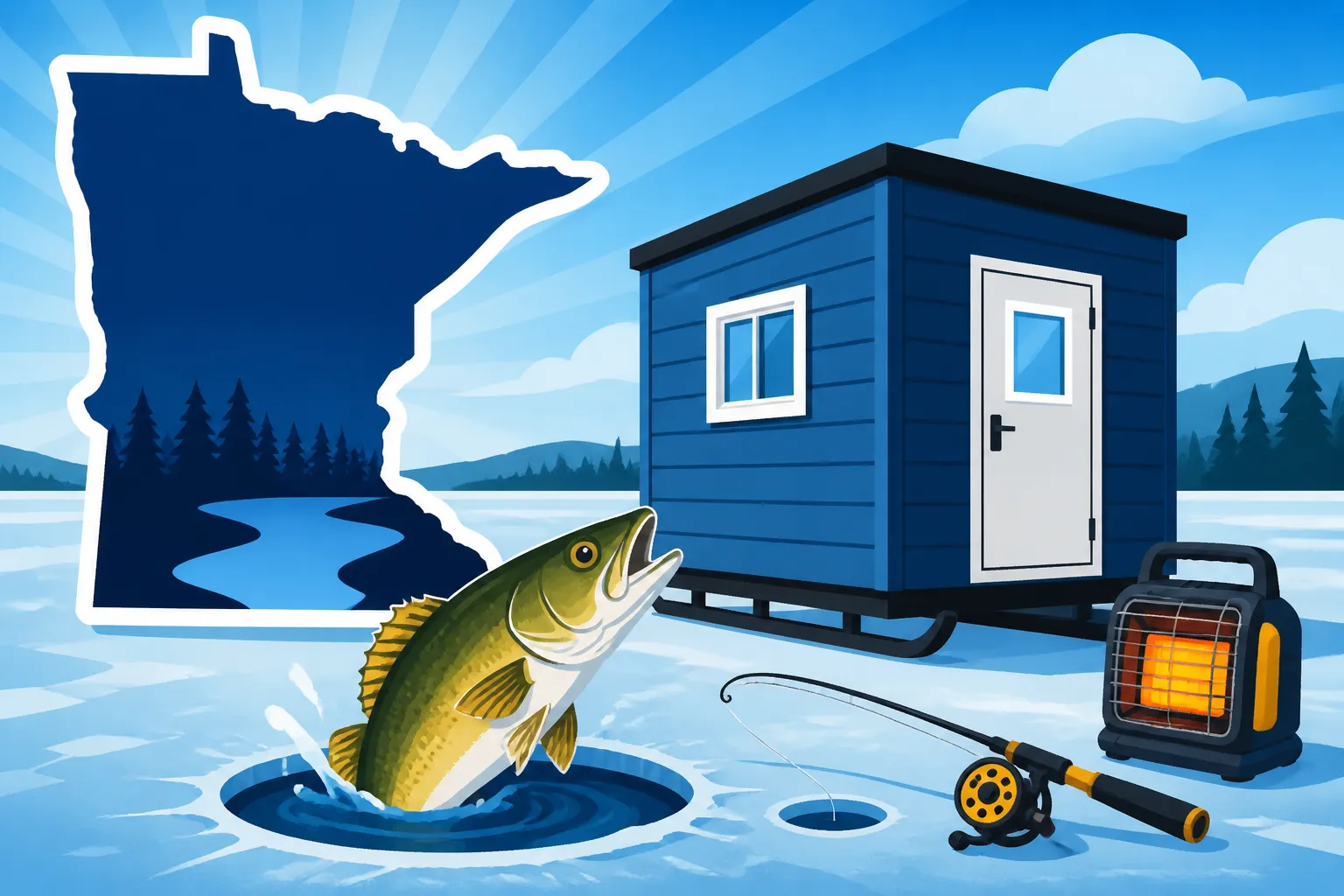
When we talk about an "ice house" or "ice shelter" in Minnesota, the DNR isn't just picturing those massive wheeled rigs you see on Lake of the Woods. It's a much broader definition. Essentially, any structure used on the ice to shelter a person while fishing falls under these rules. This includes everything from a basic portable pop-up tent, often called a hub shelter, to a more rigid, permanent structure that might be insulated and heated. Even a simple windbreak or a large umbrella could technically be considered an "ice shelter" if it's providing more than minimal protection. The key is that it's a structure offering shelter for fishing activities on the ice. This wide definition ensures that all types of shelters are held to the same safety and environmental standards, preventing abandoned shacks or unidentifiable structures from littering our beautiful lakes.
Why Are There So Many Rules for Ice Shelters?
It might feel like a lot of red tape when you're just trying to enjoy a peaceful day on the ice, but these regulations exist for very good reasons. Primarily, it's about public safety and environmental protection. Think about it: hundreds, sometimes thousands, of shelters can populate a single lake during peak ice fishing season. Without rules, you could have houses obstructing navigation, being abandoned after the season, or becoming hazards if they break through the ice.
The rules help the DNR manage the sheer volume of activity on the ice. They help ensure that:
- Safety: Proper marking helps emergency personnel identify owners if a shelter goes through the ice or there's another incident. Removal deadlines prevent shacks from becoming hazards as the ice weakens in spring, which could lead to navigation issues for boaters or even environmental pollution from materials left behind.
- Identification & Accountability: Knowing who owns a shelter allows the DNR to address issues like littering, abandoned property, or violations of fishing regulations.
- Fair Access: Rules on placement ensure that no one angler or group monopolizes prime fishing spots or obstructs access for others.
- Resource Management: While not directly about fish limits, these regulations are part of the broader framework of Minnesota Fishing & Shelter Rules that promote responsible use of our natural resources.
It’s about balancing the enjoyment of ice fishing with the sustainability of our lakes and the safety of everyone who uses them.
Navigating Ice House Licensing Requirements
One of the most common questions and sources of confusion for ice anglers is whether their ice house needs a license. The answer isn't a simple yes or no, as it depends on a couple of factors related to the type of shelter you're using.
When a License is (or Isn't) Needed
In Minnesota, not every ice shelter requires a separate license. Here's the breakdown, which largely hinges on how permanent your shelter is and whether it's left unattended on the ice:
- No License Needed for Portable Shelters: If your ice shelter is truly portable, meaning you remove it from the ice daily when you're done fishing, then you generally do not need a separate license for that shelter. This applies to most hub-style shelters, flip-over shelters, and even small, temporary structures you set up and pack away each time you fish. The assumption here is that because it's removed daily, it poses less of an abandonment risk and doesn't remain on the ice as a semi-permanent fixture. You just need your regular Minnesota Fishing License: Cost, Types & How to Buy (2026) to actually fish.
- License Is Needed for Permanent or Left-Overnight Shelters: If your ice shelter is designed to be left on the ice for more than 24 hours, or if it's considered a "permanent" structure (even if not strictly permanent, but left out), then it absolutely requires a Minnesota ice house license. This includes those large, wheeled fish houses, converted campers, or any rigid, non-portable structure. It also includes smaller portable shelters that you decide to leave out overnight or for multiple days. The key differentiator is whether it's removed daily. If it stays, it needs a license. This license is separate from your fishing license and helps the DNR track these shelters.
It’s worth noting that if you have a special Dark House Spearing in Minnesota: Rules & License, there's usually an additional endorsement or license specifically for that activity, which often ties into the ice house license.
How to Properly Display Your License
Getting the license is one thing; making sure it's properly displayed is another. If your ice house requires a license, the DNR has specific requirements for how it must be affixed and what information it needs to show. This isn't just bureaucracy for the sake of it – it's crucial for identification and enforcement.
- Clear Visibility: Your ice house license tag must be conspicuously displayed on the exterior of the house. It needs to be easily seen and readable without having to search for it. Often, this means on the side facing outward or near the door.
- Affixed Securely: The license tag should be attached in a way that it won't easily fall off due to weather, vibration, or tampering. Think screws, bolts, or heavy-duty adhesive, not just a piece of tape.
- Owner Information: In addition to the license number itself, your full name and address (or driver's license number) must be legibly printed on the exterior of the house in letters and figures at least two inches high. This is incredibly important for accountability. If your house becomes a hazard, is left beyond the removal deadline, or causes any issues, conservation officers need to be able to identify you quickly and efficiently.
Failing to display your license or owner information correctly can lead to fines, even if you technically have a valid license. It’s a common oversight that many anglers get caught on, so double-check your display before you head out.
Essential Rules for Placement, Identification, and Use
Beyond just the licensing, there are important operational rules for ice houses that help maintain order, ensure safety, and protect our fishing resources. These rules govern where you can put your shelter, how it's marked, and even how many lines you can fish.
Marking Your Ice House: Owner Information and DNR Rules
We touched on owner information for licensed houses, but it bears repeating and expanding. Every ice shelter, whether licensed or not, that is left on the ice unattended for any period of time must have the owner's full name and address (or driver's license number) legibly marked on the exterior. This isn't just for permanent houses; if you're using a portable flip-over and leave it set up while you go grab lunch from shore, that name and address needs to be visible.
The requirement for letters and figures at least two inches high is key. This isn't a suggestion; it's a rule. Small, handwritten notes scrawled on the side will likely not pass muster with a conservation officer. You can use stencils, painted letters, or commercially produced decals. The goal is easy identification from a reasonable distance. This detail becomes especially critical during inclement weather or if a shelter is found adrift or through the ice.
Placement and Proximity: Where You Can (and Can't) Put Your Shelter
While there's no official "parking spot" for your ice house, there are general guidelines about where you can place it and how close you can be to other structures. Common courtesy usually dictates giving other anglers ample space. Nobody wants their neighbor's music blasting or their light pollution interfering with their night fishing.
However, there are also specific DNR rules:
- Public Accesses: You cannot place your ice house in a way that obstructs public access points, boat launches, or roads leading onto the ice. These areas need to remain clear for everyone's use.
- Private Property: While generally understood, it's illegal to place your ice house on private property without permission, even if that property extends to the lake shore.
- Navigable Waters: While on the ice, you might think "navigable waters" don't apply, but come spring, they do. Abandoned or fallen shelters can create serious hazards for boats once the ice melts. The placement rules are part of looking ahead to that transition.
Respecting other anglers' space isn't just polite; it's often covered by the spirit of the regulations. Being too close to someone can be considered harassment in some contexts, and it just generally makes for a less enjoyable experience for everyone.
Ice Fishing Lines: How Many Can You Use Inside Your House?
This is a common question, and thankfully, the rule for how many lines you can fish in your ice house is straightforward. In Minnesota, you are generally allowed to use two lines while ice fishing. This applies whether you're in an ice house, sitting on a bucket, or standing out in the open.
However, there's a significant exception that's important to remember:
- Spearing: If you are actively dark house spearing, you are only allowed one line. This means you can't have a spear in one hole and also be jigging with a second rod in another. Spearing is considered a distinct method and has its own rules, including line limits.
Understanding this How Many Lines Can You Fish in Minnesota? rule is vital to avoid a quick conversation with a conservation officer, especially if they see multiple unattended lines through the ice.
The All-Important Ice Shelter Removal Deadlines
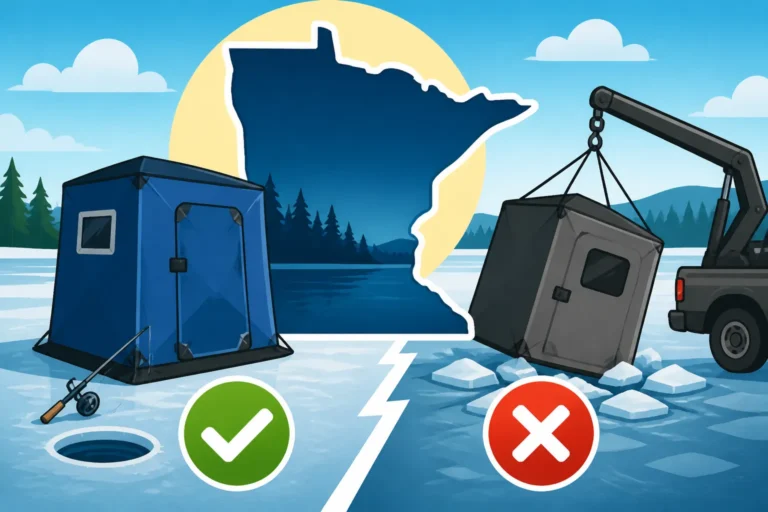
This is arguably one of the most critical regulations for ice anglers in Minnesota, and it's where many people get into trouble. The DNR is very strict about ice shelter removal deadlines because of the significant safety and environmental hazards that abandoned houses pose. Missing these dates can lead to substantial fines and even charges for cleanup costs.
Statewide Deadlines: Mark Your Calendars!
Minnesota implements two primary statewide deadlines for ice shelter removal, dependent on where you are fishing geographically. These dates are absolutely non-negotiable and are put in place to ensure shelters are off the ice before it becomes dangerously unstable.
- Southern Zone: All ice shelters must be removed from the ice south of a specific line by March 4th each year. This line generally runs east to west across the state, roughly following Highway 210 from the North Dakota border to Lake Superior.
- Northern Zone: For waters north of that same line, the deadline is a bit later: March 18th each year. This accounts for the typically longer, colder winters experienced in northern Minnesota.
These dates are fixed, regardless of the actual ice conditions that particular year. Even if the ice feels rock-solid on March 5th in the southern zone, your permanent ice house needs to be off. The DNR doesn't make exceptions based on perceived safety; the deadlines are hard dates. You can always find the exact boundary line and current regulations in the Minnesota Fishing Regulations PDF: Where to Find It, which is updated annually.
Variances for Southern and Northern Zones
The delineation between the southern and northern zones is crucial for ice anglers. If you frequently fish across different parts of the state, you need to be acutely aware of which zone each lake falls into. For instance, if you fish on Lake Minnetonka (southern zone) early in the season and then head up to Lake Vermilion (northern zone) later, you'll have different removal deadlines to contend with.
The dividing line typically runs along State Highway 210, from the western border of the state to Duluth, then east along the north shore of Lake Superior to the Canadian border. It’s always a good idea to consult the official DNR map or regulation book to confirm the zone for any specific body of water you intend to fish, especially if it’s near the boundary. Ignorance of the zone is not an excuse for missing a deadline.
Consequences of Leaving Your Shelter Behind
The repercussions for failing to remove your ice shelter by the designated deadline can be severe. This isn't just a minor infraction; it's taken very seriously by the DNR.
- Fines: Expect a significant fine if your shelter is found on the ice past the deadline. These fines can easily run into hundreds of dollars.
- Removal Costs: The DNR will often remove abandoned shelters. When they do, they will track down the owner (thanks to that required name and address) and charge them for all associated removal and disposal costs. This can include heavy equipment, labor, and dump fees, easily adding up to thousands of dollars.
- Property Seizure: In some cases, the abandoned shelter itself can be seized by the state.
- Environmental Damage: Beyond the legal and financial penalties, leaving a shelter behind can cause environmental damage. Materials like wood, metal, insulation, and even human waste can pollute the lake as the ice melts, harming aquatic life and water quality.
This is why the Ice Shelter Removal Deadlines in Minnesota are so heavily emphasized. It's a proactive measure to prevent serious issues.
Here's a quick summary table for clarity:
| Shelter Type | Left on Ice Overnight? | License Required? | Owner Info Displayed? | Removal Deadline Applies? |
|---|---|---|---|---|
| Portable Hub/Flip | No (removed daily) | No | Not explicitly, but good practice if unattended briefly | No |
| Portable Hub/Flip | Yes (left unattended) | Yes | Yes (2" letters) | Yes (March 4th/18th) |
| Permanent/Wheeled | Yes (by nature) | Yes | Yes (2" letters) | Yes (March 4th/18th) |
| Dark House | Yes (by nature) | Yes (special endorsement) | Yes (2" letters) | Yes (March 4th/18th) |
Special Considerations for Dark Houses and Spearing Shelters
Dark house spearing is a unique and traditional method of fishing in Minnesota, particularly for northern pike. Because it involves creating a darkened environment over a hole in the ice to sight-fish, there are some specific rules that apply to these types of ice houses.
Unique Licensing for Dark House Spearing
While standard ice houses might just need a general ice house license if left out, dark houses often have an additional layer of licensing. In Minnesota, if you plan to spear fish, you usually need a specific spearing license or endorsement in addition to your general fishing license. This is because spearing is a distinct fishing method, and the DNR monitors participation and harvest specifically for this activity.
The dark house itself, if left on the ice overnight, would also need the standard ice house license and visible owner identification, just like any other permanent shelter. So, if you're gearing up for a dark house adventure, make sure you have your:
- Regular Minnesota Fishing License.
- Spearing license/endorsement.
- Ice house license (if the dark house is left on the ice overnight).
It's easy to overlook one of these, so a quick double-check before heading out is always a smart move.
Identification and Safety for Dark Houses
Dark houses, by their very nature, are designed to block out light, creating a unique environment for spearing. However, this also means they can be less visible, especially at night or in low-light conditions. Because of this, safety considerations are paramount.
- Visibility: While there aren't specific requirements for reflective tape on dark houses beyond general good practice, ensuring your dark house is visible to snowmobiles, ATVs, and other ice traffic is critical. Many spearers will add reflective markings or even small, battery-operated lights to the exterior.
- Hole Size and Coverage: Dark houses typically have large holes cut in the ice for spearing. These holes must be properly covered when the house is unattended to prevent people or animals from falling in.
- Compliance with General Rules: All general ice house rules, such as displaying owner information in two-inch letters, adhering to removal deadlines, and not obstructing access, apply equally to dark houses. Even though you're engaged in a specialized activity, you're still part of the broader ice fishing community and must respect the safety and environmental regulations.
Spearing is an exciting part of Minnesota's ice fishing heritage, but it comes with its own set of responsibilities to ensure everyone's safety and the health of the resource.
Staying Compliant: Avoiding Penalties and Fines
Nobody wants their peaceful day of ice fishing to end with a ticket or a confrontation with a conservation officer. Understanding the rules thoroughly and making a conscious effort to follow them is the best way to ensure your ice fishing adventures remain enjoyable and hassle-free.
Common Violations and Their Repercussions
Most violations related to ice houses stem from a few common mistakes, often due to oversight or simply not knowing the specific rules.
- Failure to License: Leaving an overnight shelter on the ice without the required ice house license is a common and easily avoidable violation. This can result in fines and, if persistent, more severe penalties.
- Improper Display of Information: Even if you have a license, if your name, address, or license number isn't displayed correctly (e.g., not two inches high, faded, or on the wrong side), you can still receive a citation. This is often an administrative fine, but it’s still a headache.
- Missing Removal Deadlines: As discussed, this is a major one. Not only are there hefty fines, but you'll also be on the hook for cleanup costs. This is the violation that can cost you thousands of dollars and is easily the most impactful financially.
- Obstructing Access: Blocking a public access point or creating a hazard by placing your house in a thoroughfare can lead to fines and the demand to move your shelter immediately.
- Littering: Leaving trash, broken gear, or human waste on the ice or in your abandoned shelter is an environmental violation that carries significant fines and is a real black eye for the ice fishing community.
Each of these violations can tarnish your fishing experience and contribute to a negative perception of ice anglers in general. Being a responsible angler means knowing and following these rules. If you're wondering What Happens If You Fish Without a License in Minnesota?, expect similar penalties, often escalating with repeat offenses.
Enforcement by Conservation Officers
The men and women of the Minnesota DNR's Enforcement Division, our conservation officers, are out on the ice regularly. Their job isn't just to issue tickets; it's to protect our natural resources and ensure public safety. They patrol lakes by snowmobile, ATV, and even on foot, checking licenses, verifying compliance with regulations, and responding to reports of violations.
When an officer approaches your ice house, be polite and cooperative. They are performing their duty. They will likely ask to see your fishing license, check your ice house license (if applicable), and ensure your owner information is properly displayed. If they find a violation, they will explain it to you and issue a citation. Resisting or being uncooperative will only escalate the situation.
Think of them as partners in conservation. By enforcing these rules, they are helping to ensure that future generations can enjoy the same incredible ice fishing opportunities we have today. A little knowledge and a lot of respect go a long way in ensuring your time on the ice is about catching fish, not catching fines.
Disclaimer
Please remember that fishing regulations, including those for ice houses, can change annually. While this guide aims to provide comprehensive and up-to-date information for 2026, it is always your responsibility to consult the official Minnesota Department of Natural Resources (DNR) Fishing Regulations Handbook or their website for the most current rules and any last-minute updates before heading out on the ice. This content is for informational purposes only and should not be considered a substitute for the official regulations.