Dark House Spearing in Minnesota: Rules & License
The thrill of peering into the watery depths from the silent, darkened interior of an ice house, waiting for a shadowy form to glide into view, is a unique Minnesota winter experience. However, the specialized nature of dark house spearing often leaves anglers scratching their heads about the exact rules, licenses, and ethical considerations. This comprehensive guide will illuminate every aspect of dark house spearing in Minnesota, ensuring you're fully prepared, compliant, and ready to embrace this age-old tradition responsibly.
What is Dark House Spearing?
A Time-Honored Tradition
Dark house spearing isn’t just a fishing method; it’s a winter tradition deeply embedded in Minnesota’s outdoors culture. For generations, anglers have embraced the simplicity and primal thrill of sitting in a dark, heated shelter, gazing down a large hole cut in the ice. This isn’t about casting lines or jigging; it’s about observation, patience, and a precise, swift strike with a multi-tined spear. Historically, spearing was a vital means of sustenance during harsh winters, allowing communities to harvest fish when other methods were difficult. Today, while it remains a source of food for many, it’s also a cherished recreational pursuit, a way to connect with the quiet beauty of a frozen lake, and a testament to traditional angling skills.
The appeal lies in its immersive nature. Stripped of the distractions of modern fishing, you become one with the environment, observing the aquatic world below as light filters through the ice, revealing weeds, rocks, and the occasional curious fish. It’s a game of wits, a test of patience, and when a large northern pike finally glides into view, the adrenaline rush is palpable. Many families pass down spearing houses and techniques through generations, making it a truly communal and nostalgic winter activity that fosters a deep appreciation for Minnesota's natural resources.
How it Works The Basic Setup
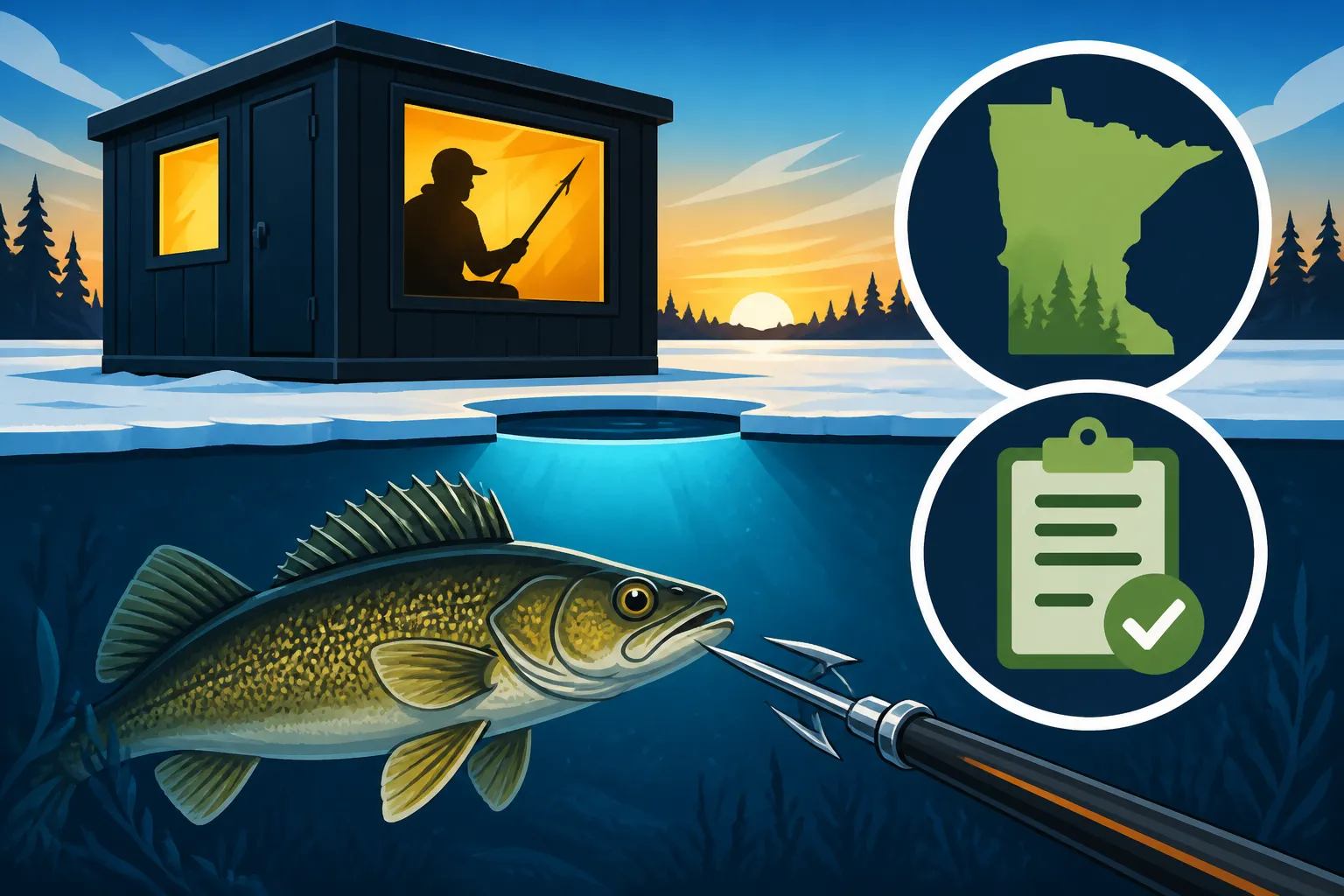
At its core, dark house spearing involves creating a controlled, dark environment above a large opening in the ice, typically 2 to 3 feet wide and 4 to 6 feet long. The darkness inside the house allows your eyes to adjust, providing an incredibly clear view into the water, often for many feet down, depending on water clarity and ice thickness. Light from outside the house illuminates the water column through the ice itself, creating a natural aquarium effect.
Within this viewing area, spearers use a decoy, often a hand-carved, painted wooden fish, to attract target species like northern pike. These decoys are strategically lowered and "swam" using a short string to mimic the erratic movements of an injured baitfish. The motion, combined with the decoy's flashing colors, is designed to draw in predatory fish close enough for a spear strike. When a fish approaches, the spearer, having already positioned their multi-tined spear, aims and thrusts it downward with force, hoping for a clean, decisive hit. The entire setup is simple yet highly effective, relying on the spearer's skill, knowledge of fish behavior, and a bit of luck. It's a method that rewards keen observation and quick reflexes, making every encounter with a fish a memorable event.
Understanding Minnesota’s Spearing Regulations
Navigating the various rules and regulations for dark house spearing in Minnesota can sometimes feel like trying to find your way through a blizzard without a compass. The Minnesota Department of Natural Resources (DNR) sets these rules to ensure sustainable fish populations and public safety. It’s not enough to just know how to spear; you absolutely need to understand the legal framework that governs this unique winter sport. Breaking these rules, even unintentionally, can lead to fines, loss of equipment, and a tarnished reputation among fellow anglers.
The regulations cover everything from when and where you can spear to what kind of house you can use and what fish you can target. These rules are frequently reviewed and sometimes adjusted, especially for species like northern pike, where management zones might dictate different limits. Before you even think about cutting that big hole, make sure you've done your homework on the most current regulations. The DNR's annual fishing regulations booklet is your best friend here, available online and at most license vendors.
General Licensing Requirements
Just like any other form of fishing in Minnesota, dark house spearing requires a license. Specifically, you’ll need a valid Minnesota fishing license. But that’s not all; if you plan to spear northern pike, which is by far the most popular species for dark house spearing, you’ll also need a separate **Spearing License**. This additional license is crucial and often overlooked by newcomers. Think of it as an endorsement on your regular fishing license, granting you the specific privilege to spear certain species.
Children under the age of 16 typically do not need a fishing license if a parent or guardian who has a license is present and fishing with them, but it’s always wise to double-check the specifics with the DNR regarding spearing licenses for youth, as rules can vary. Similarly, non-residents will need a Minnesota Nonresident Fishing in Minnesota: Licenses & Rules along with a spearing license. Always carry proof of your licenses with you when you are out on the ice, as conservation officers do conduct checks. It's not a matter of if you'll be checked, but when, and being unprepared is never a good look.
Spearing Season Dates and Hours
The season for dark house spearing in Minnesota generally aligns with the ice fishing season for many species, but it has specific opening and closing dates that differ from rod-and-reel fishing. For northern pike, the most common spearing target, the season typically opens around December 1st. However, the exact opening day can vary slightly year to year, so always confirm the Minnesota Fishing Seasons & Opener Dates (2026) well in advance. The season then generally runs through the end of February.
Regarding hours, you can usually spear from one hour before sunrise until one hour after sunset. However, check the regulations closely for any specific lake or species exceptions. It's not an all-day, all-night affair like some other ice fishing pursuits. The emphasis on daylight hours is partially for safety and partially because fish are typically more active and visible during these times. Setting up your dark house before dawn allows your eyes to adjust properly and gives you a good start to the day. Remember, the DNR has these dates and times in place to manage fish populations effectively, especially given the efficiency of spearing for larger, predatory fish.
Dark House Size and Placement Rules
The physical structure of your dark house itself also falls under DNR regulation. There are rules about how large your ice hole can be and how your shelter should be marked. For spear fishing, the maximum size of the ice hole is 2.5 feet by 3 feet. This is a specific dimension for spearing, which is often larger than holes allowed for general ice fishing to accommodate the spear and provide a wider viewing area. However, it’s critical to note that on some lakes, the maximum opening for a dark house may be set by special regulation, so you’ll always want to check the specific lake rules.
When it comes to the house itself, all shelters used on Minnesota waters must have the owner's name and address or driver's license number clearly displayed on the outside in letters at least 2 inches high. This helps identify abandoned shelters and ensures accountability. Furthermore, there are specific deadlines for when ice shelters must be removed from the ice, which vary by zone in Minnesota. Generally, shelters must be removed by March 6th for lakes south of Highway 10 and by March 20th for lakes north of Highway 10, or earlier if ice conditions become unsafe. Failing to remove your shelter by the deadline can result in penalties, including fines and the DNR disposing of your property. It's a critical safety measure to prevent shelters from falling through weakening ice and becoming navigational hazards or environmental waste.
Specific Rules for Spearing Different Species
While northern pike are the quintessential target for dark house spearers in Minnesota, it’s not the only species you can pursue, and each species comes with its own set of guidelines. Understanding these distinctions is crucial, as misidentifying a fish or spearing an illegal species can land you in serious trouble. The unique advantage of dark house spearing is the clear visual identification, making it easier to select your target compared to other fishing methods where you might only feel a bite. However, this also means you’re held to a higher standard of knowing exactly what you’re aiming for.
The regulations are designed to protect vulnerable populations and ensure that healthy ecosystems are maintained. It's a privilege to engage in this traditional sport, and with that privilege comes the responsibility of adhering to the rules for each fish you might encounter. Always keep your fishing regulations booklet handy and be prepared to make split-second identification decisions.
Northern Pike Spearing Rules
Northern pike are without a doubt the “king” of dark house spearing in Minnesota. Their aggressive nature, willingness to investigate decoys, and substantial size make them an exciting and rewarding target. However, pike spearing comes with specific regulations, particularly concerning possession limits and sometimes even size restrictions. The statewide Minnesota Northern Pike Limits by Zone dictates that the state is divided into three zones: Northeast, North-Central, and Southern. Each zone has different bag and possession limits for pike, and some zones even have protected slot limits or different total limits for spearing compared to angling.
For example, in the Southern Zone, the daily and possession limit for northern pike is generally 10, with only two pike longer than 24 inches. In the North-Central Zone, the daily and possession limit is 10, but only one pike over 30 inches can be kept, and all pike from 22-26 inches must be immediately released. The Northeast Zone has a daily and possession limit of 2, with only one pike over 40 inches and a protected slot of 30-40 inches that must be released. It is absolutely vital to know which zone you are spearing in and to adhere to those specific limits. Failing to do so can result in severe penalties for over-limit fish. These regulations are dynamically managed by the DNR to address local pike populations and maintain ecological balance.
Other Legal Spearing Species
While northern pike get most of the attention, other species can also be legally taken by spear in Minnesota. However, the list is quite limited, and it’s essential to know it by heart. Legal species for spearing typically include rough fish such as carp, buffalo, suckers, and tullibee (cisco). Some dark house spearers specifically target these species, finding a unique challenge and often excellent table fare in prepared rough fish.
It’s crucial to understand that game fish like walleye, bass, crappie, and sunfish are not legal to spear. These species are managed under different regulations that do not permit spearing. Mistaking a walleye for a pike, or intentionally spearing a game fish, is a serious offense. The clarity of the water in a dark house setting often makes identification straightforward, so there's little room for error. Always be 100% certain of your target before you make that strike. Knowing your Minnesota Fish Species: Identification Guide is paramount when you’re peering into the depths.
What You Cannot Spear
This section cannot be stressed enough: knowing what you *cannot* spear is just as important, if not more important, than knowing what you *can*. In Minnesota, it is illegal to spear any game fish. This includes popular species like:
* Walleye
* Sauger
* Largemouth Bass
* Smallmouth Bass
* Muskellunge (Muskie)
* Crappie (Black and White)
* Sunfish (Bluegill, Pumpkinseed, Green Sunfish, etc.)
* Perch (Yellow Perch)
* Trout (Lake Trout, Stream Trout)
* Salmon
* Catfish
* Sturgeon
This comprehensive list of protected game fish means that if you see one of these swimming into your viewing hole, you must let it pass. The DNR carefully manages these populations, and spearing them is seen as an unsustainable harvesting method for these species. Penalties for spearing protected game fish can be very severe, including substantial fines, seizure of your fishing equipment, and even loss of fishing privileges. This is one area where there is absolutely no room for "I didn't know." Be vigilant, be responsible, and protect Minnesota's precious game fish resources.
Obtaining Your Dark House Spearing License
The process of getting your dark house spearing license isn’t overly complicated, but it does require attention to detail to ensure you have all the necessary credentials before hitting the ice. It’s not just about having a spear and a dark house; it’s about having the legal right to use them. Forgetting or neglecting to purchase the correct license can turn an exciting day on the ice into a stressful encounter with a conservation officer and potential legal trouble. Think of it as your official permit to partake in this specific winter sport, separate from your general angling activities.
Planning ahead is always a good idea, especially as the season approaches. Don't wait until the day before you head out to realize you need to buy a specific license. The process is designed to be convenient, but a little foresight goes a long way in ensuring a smooth start to your spearing season.
Who Needs a License and How to Get One
As mentioned earlier, almost everyone participating in dark house spearing in Minnesota needs a spearing license in addition to their regular Minnesota Fishing License: Cost, Types & How to Buy (2026). The only general exceptions are very young children who are not actively spearing but simply observing with a licensed adult. If you are going to hold a spear, you need a license. It’s that simple. This applies to residents and non-residents alike, though non-residents will pay a different fee for both their fishing and spearing licenses.
Obtaining your spearing license is generally quite easy. You can purchase it in a few different ways:
- Online: The Minnesota DNR's website is the most convenient way to purchase all your licenses. You can buy your general fishing license and add the spearing endorsement in one transaction. They'll provide a printable copy that serves as your temporary license, with the official one mailed to you. Check out How to Get a Minnesota Fishing License Online for a detailed walkthrough.
- In-Person: Many bait shops, sporting goods stores (like your local Fleet Farm or Gander Outdoors), and county auditor's offices are authorized license agents. This is a great option if you prefer a physical license immediately or want to ask specific questions at the point of sale.
- By Phone: The DNR also offers a phone option for purchasing licenses, which can be useful if you're in a remote area without internet access or nearby vendors.
No matter how you purchase it, make sure the spearing endorsement is clearly listed on your license. A regular fishing license alone won't cover you for spearing.
Cost and Types of Spearing Licenses
The cost of a Minnesota spearing license is typically quite affordable, especially when added to your annual fishing license. For Minnesota residents, the annual spearing license is usually a modest fee. For non-residents, the fee is higher, consistent with other non-resident fishing licenses. There aren’t generally different “types” of spearing licenses in the way there are different fishing licenses (e.g., annual, 24-hour, etc.); it’s usually a single spearing endorsement for the entire season.
Here’s a general idea of the costs, which are subject to change by the DNR each year. These are approximate for the 2026 season:
| License Type | Resident Annual Fishing | Resident Annual Spearing (Add-on) | Non-Resident Annual Fishing | Non-Resident Annual Spearing (Add-on) |
|---|---|---|---|---|
| Approximate Cost (USD) | $25.00 – $30.00 | $5.00 – $10.00 | $50.00 – $60.00 | $10.00 – $15.00 |
Note: These are estimated costs. Always check the official Minnesota DNR website for the most current pricing. Some special licenses or packages may combine these, but the spearing endorsement is typically an additional line item.
It's important to remember that these fees directly support the DNR's efforts in fisheries management, habitat conservation, and enforcement, ensuring that future generations can also enjoy the rich tradition of dark house spearing. So, while it's an extra cost, it's an investment in the sport itself.
Essential Gear and Dark House Setup
Stepping into the world of dark house spearing requires more than just a license; it demands specific gear and a thoughtful setup to ensure both comfort and success. Unlike traditional ice fishing where you might just bring a bucket and a jigging rod, spearing involves a specialized shelter, a formidable weapon, and cunning decoys. The right equipment can significantly enhance your experience, making those long hours in the dark house more productive and enjoyable. Conversely, substandard gear can lead to frustration and missed opportunities.
Preparing your dark house and gear is part of the ritual, a testament to the dedication spearers have for their craft. From the moment you load your sled to the final adjustment of your decoy, every step contributes to the anticipation of a potential trophy pike.
Building or Buying a Dark House
Your dark house is your sanctuary on the ice, providing the darkness necessary for clear underwater viewing and protection from the elements. There are generally two routes to acquiring one: building it yourself or buying a manufactured model.
Building Your Own: Many experienced spearers take immense pride in their custom-built dark houses. These are often wooden structures, sometimes mounted on skids or small trailers, designed for warmth, stability, and optimal viewing. When building, consider:
- Size: Large enough for comfort, but not so large it's a pain to move. A typical size might be 6×6 feet or 6×8 feet.
- Insulation: Essential for warmth. Plywood walls with foam insulation are common.
- Portability: How will you get it on and off the ice? Skids, wheels, or a combination.
- The Hole: Design your floor with a large, accessible opening for spearing, typically 2×3 feet to 2.5×4 feet.
- Darkness: Interior must be painted black or lined with dark material to prevent light leaks.
- Heat: A small, vented propane heater is essential for comfort in freezing temperatures. Consider brands like Mr. Heater for reliable warmth and safety features.
Buying a Manufactured Dark House: For those less inclined to DIY, several companies offer excellent commercially built dark houses. These are often more lightweight and portable than traditional wooden shacks.
- Flip-Over Shelters: While many flip-overs are designed for general ice fishing, some larger models or custom versions can be adapted for spearing by cutting a larger hole. Brands like Clam and Otter make robust flip-overs that could be modified.
- Hub-Style Shelters: These pop-up shelters offer good space and portability. Again, you'd need to ensure you can cut the large spearing hole in the floor without compromising stability. The key is total darkness inside, so look for models with heavy, light-blocking fabric.
- Purpose-Built Spearing Houses: Some smaller companies or custom builders specialize in lightweight, purpose-built dark houses designed specifically for spearing, often featuring built-in viewing holes and dark interiors.
No matter your choice, ensure your dark house meets the Minnesota Ice Shelter Removal Deadlines in Minnesota and is properly marked with your name and address or driver's license number, as per DNR regulations.
Spears, Decoys, and Other Necessities
Once your dark house is sorted, you’ll need the tools of the trade:
* **The Spear:** This is the most iconic piece of equipment. Spearing spears typically have multiple tines (5-7 prongs) designed to hold the fish securely. They are often made of steel and can be quite heavy. The shaft is usually 6-8 feet long. Choose a spear that feels balanced and robust.
* **Decoys:** These are your primary attractant. Spearing decoys are art forms in themselves, often hand-carved and painted to resemble various baitfish like suckers, shiners, or perch. They have weights to make them swim naturally and eyes that flash in the light. You’ll want a variety of sizes and colors to match the conditions and fish mood. Popular decoy styles include the “swimmer” (with fins that make it glide) and the “diver” (which can be worked up and down). Learning to carve your own can be a rewarding pastime in itself.
* **Decoy Line and Reel:** A strong line (often braided nylon or Dacron) attached to a small, simple reel (or just wrapped around a stick) is used to work your decoy.
* **Ice Auger/Saw:** You’ll need a way to cut that large spearing hole. A heavy-duty gas or electric auger can cut multiple smaller holes that can then be connected with an ice saw. Some dedicated spearers use custom ice saws designed for cutting large rectangular openings quickly. Ensure your chosen method is safe and efficient.
* **Skimmer/Scoop:** Essential for removing ice chunks and keeping your hole clear.
* **Heater:** A portable propane heater with proper ventilation is a must for comfort. Carbon monoxide detectors are also highly recommended for safety.
* **Darkness Control:** Black tarps or heavy blankets for windows/doors if your house isn’t perfectly dark.
* **Comfort Items:** A comfortable chair or bucket, snacks, drinks, and warm clothing are vital for long sessions.
* **Safety Gear:** Ice picks, rope, and a first-aid kit are always recommended when on the ice.
* **Flashlight/Headlamp:** For getting to and from your house, and for tasks inside when not spearing.
* **Measuring Tape/Scale:** To ensure you’re within legal size and possession limits for any fish you keep.
Having the right gear not only makes the experience more enjoyable but also increases your chances of success and, most importantly, keeps you safe on the ice.
Dark House Spearing Techniques and Best Practices
Dark house spearing is an art form that blends patience, observation, and precise execution. It’s not just about waiting for a fish to swim by; it’s about actively drawing them in and being ready when the opportunity strikes. Mastering these techniques transforms spearing from a mere waiting game into an engaging and often thrilling pursuit. Like any specialized fishing method, there are nuances and best practices that separate a consistently successful spearer from someone who rarely sees action.
Beyond the mechanics, ethical considerations and safety are paramount. The power of a spear strike means it carries a greater responsibility to ensure clean kills and responsible harvesting. Embrace the quiet and stillness, but always remain vigilant and prepared.
Decoy Selection and Presentation
The decoy is the heart of your spearing setup. Its job is to fool a wary northern pike into thinking it’s an easy meal.
* **Match the Hatch (or Create Curiosity):** While some spearers try to mimic local baitfish, others use brightly colored, almost fantastical decoys to pique a pike’s curiosity. A good starting point is a natural-colored sucker or perch decoy, 8-12 inches long, which often resembles common pike forage.
* **Decoy Action:** This is critical. You don’t just drop a decoy and leave it. You “swim” it. The movement should imitate an injured or struggling baitfish.
* **Subtle Swims:** Gentle lifts and drops, allowing the decoy to glide naturally. Pike are often attracted to slow, deliberate movements.
* **Erratic Twitches:** Occasionally, a sharp twitch or two can simulate a panicked fish, drawing in a pike from further away.
* **Patience is Key:** Don’t overwork the decoy. Long pauses, sometimes several minutes, are often more effective than constant movement. Let the decoy sit, then give it a gentle nudge.
* **Decoy Depth:** Experiment with how far off the bottom you present your decoy. Pike might cruise at various depths. Start a few feet off the bottom and adjust based on observations of fish activity. Sometimes, placing the decoy just under the ice can be effective if pike are cruising shallow.
* **Multiple Decoys:** Some spearers use two decoys – one active, one stationary – to create a more realistic feeding scenario. Position them carefully to avoid entanglement.
* **Observation:** Pay close attention to how pike react to different decoys and presentations. Did they shy away from a bright color? Were they interested in a slow wobble? Adapt your strategy based on what the fish tell you.
Ultimately, the goal is to entice the pike into your viewing hole, within striking distance. The subtlety of your decoy presentation is often the deciding factor.
Patience and Stealth: The Keys to Success
Dark house spearing is not for the impatient. Hours can pass without seeing a single fish, and then, in a flash, a monster pike might appear.
* **Embrace the Waiting Game:** Bring a good book, listen to a podcast (quietly, with headphones!), or simply enjoy the meditative quiet. The more relaxed you are, the less likely you are to make sudden movements that could spook a fish.
* **Minimize Noise and Movement:** Sound travels incredibly well through ice and water. Heavy footsteps, dropping equipment, or loud talking can send vibrations through the ice that will alert fish to your presence. Move slowly and deliberately. If you have companions, ensure they understand the need for stealth.
* **Stay Dark:** Any light leaking into your house can compromise your vision and make you more visible to fish. Seal up any cracks or openings. Your eyes need time to fully adjust to the darkness, which can take 15-30 minutes.
* **Be Ready:** Even during long lulls, keep your spear ready, resting on a stand or across your lap, pointed downwards. When a fish appears, you need to be able to react instantly and without fumbling. Practice your aiming and striking motion beforehand. The moment a pike enters your view, you often have only a few seconds to react.
* **The Approach:** Pike are predatory and often curious. They might approach a decoy slowly, circle it, or even dart in quickly. Observe their behavior. If a pike looks directly at your decoy and then begins to move away, a subtle twitch might bring it back. If it’s cruising and doesn’t notice the decoy, a more aggressive “swim” might be needed. Sometimes, doing absolutely nothing is the best approach.
The successful spearer combines unwavering patience with the ability to spring into action with lightning speed and precision. It’s a rewarding challenge that engages both mind and body.
Ice Safety and Ethical Spearing
Safety on the ice is paramount for any winter activity, and dark house spearing is no exception, especially given the large hole you’ll be cutting.
* **Check Ice Conditions:** Never assume the ice is safe. Always check current ice conditions before heading out, using a spud bar or auger as you go. A minimum of 4 inches of clear, new ice is generally recommended for foot travel, and significantly more (8-12 inches or more) for snowmobiles, ATVs, or driving a truck onto the ice. Ice thickness can vary greatly across a lake.
* **Identify Your Hole:** The large spearing hole is a hazard, especially at night or in low visibility. Mark your hole clearly with flags or reflective tape, especially if your house is portable.
* **Tell Someone Your Plans:** Always inform someone of your destination, expected return time, and who you are with.
* **Carry Safety Gear:** Ice picks, a throw rope, and a whistle are essential. Dress in layers, and consider a float suit for added safety.
* **Ethical Harvesting:**
* **Clean Kill:** Aim for a quick, humane kill. A well-placed shot to the head or spine is ideal. A dull spear or poor aim can lead to unnecessary suffering.
* **Respect Limits:** Adhere strictly to Minnesota Fishing Limits: Bag & Possession for northern pike and other legal species, as well as any specific lake regulations. Don’t be tempted to keep over your limit.
* **No Waste:** Only keep what you will eat. If you spear a fish, you are obligated to harvest and utilize it.
* **Respect Other Anglers:** Place your dark house a reasonable distance from other anglers or spearing houses. Avoid cutting holes too close to known weak spots or travel lanes.
* **Leave No Trace:** Pack out everything you pack in, including any trash, broken gear, or food waste. Adhere to Minnesota Ice Fishing & Shelter Rules and removal deadlines.
By prioritizing safety and ethical practices, you contribute to the longevity and positive perception of dark house spearing in Minnesota, ensuring this unique tradition can be enjoyed for generations to come.
Common Misconceptions and FAQs
Dark house spearing, precisely because it’s a niche and traditional method, often carries with it a host of misconceptions and questions from those unfamiliar with the practice. These can range from concerns about its impact on fish populations to simple queries about its legality. As a seasoned spearer or an aspiring one, being able to address these points not only educates others but also promotes a better understanding and appreciation for the sport. Let’s clear up some of the fog.
It's natural for people to have questions about something they don't fully understand. Rather than dismissing concerns, we can use them as opportunities to share knowledge and highlight the responsible practices that define modern dark house spearing.
Myths About Spearing
There are a few persistent myths about dark house spearing that often surface:
* **”Spearing depletes fish populations.”** This is a common concern, especially regarding northern pike. However, the Minnesota DNR carefully manages spearing seasons and limits, just like rod-and-reel fishing, to ensure sustainability. The number of fish taken by spear is a relatively small portion of the overall harvest, and the regulations are adjusted based on scientific assessments of fish populations. In many cases, spearing helps manage overabundant pike populations in some lakes, which can actually benefit other game fish.
* **”Spearers just take all the big fish.”** While spearers often target larger pike, they are still subject to slot limits and possession limits, which often protect trophy-sized fish or encourage the harvest of smaller, more abundant individuals. For example, in the North-Central zone, pike between 22 and 26 inches must be released, specifically to protect that valuable segment of the population.
* **”It’s unethical or unfair to the fish.”** Dark house spearing, when done correctly, aims for a swift and humane kill. A well-placed spear is often more decisive than a hook-and-line struggle, which can sometimes injure fish during a prolonged fight or release. The ethical practice is to ensure a clean strike and immediate harvest.
* **”You can spear any fish you see.”** This is absolutely false and a dangerous misconception. As discussed, only specific rough fish and northern pike (under strict regulations) are legal to spear in Minnesota. Spearing protected game fish is a serious crime with harsh penalties.
By understanding and debunking these myths, spearers can act as ambassadors for their sport, fostering better understanding and respect.
Addressing Ethical Concerns
Ethical concerns often revolve around the perceived “fairness” of spearing compared to angling. Here’s how to address them:
* **Conservation-Minded:** Emphasize that modern spearing is highly regulated and conservation-minded. Spearers are often just as passionate, if not more so, about healthy fish populations and clean waters as any other angler. They understand the importance of respecting limits and contributing to habitat preservation.
* **Skill and Patience:** Highlight the significant skill, knowledge, and patience required for successful spearing. It’s not a simple point-and-shoot activity. It involves hours of observation, understanding fish behavior, decoy artistry, and precise execution. The challenge is real and deeply satisfying.
* **Historical Context:** Explain the historical and cultural significance of spearing as a traditional winter harvest method. It’s a connection to heritage and a different way of interacting with the natural world.
* **Visibility is Advantageous for Selectivity:** Unlike blind fishing with a hook, the clear visibility in a dark house allows a spearer to be highly selective. They can identify the exact size and species of fish, making it easier to adhere to slot limits and avoid protected species, provided they know the rules. This eliminates accidental foul-hooking or inadvertent harvesting of protected fish often associated with other methods.
Ultimately, ethical spearing means prioritizing the health of the fishery, practicing humane harvesting, respecting the law, and being a responsible steward of Minnesota's natural resources. It’s a fulfilling sport that, when practiced correctly, aligns perfectly with the broader goals of conservation and outdoor enjoyment.
Summary of Northern Pike Spearing Rules by Zone
To help keep things clear, here’s a quick overview of the statewide Northern Pike spearing limits in Minnesota, noting that *special regulations can supersede these on individual lakes*, so always check the specific lake you plan to visit. These rules are crucial for every dark house spearer to know by heart.
| Zone | Daily Bag Limit | Possession Limit | Size Restrictions |
|---|---|---|---|
| Northeast | 2 | 2 | Only 1 pike over 40 inches. All pike from 30 to 40 inches must be immediately released (protected slot). |
| North-Central | 10 | 10 | Only 1 pike over 30 inches. All pike from 22 to 26 inches must be immediately released (protected slot). |
| Southern | 10 | 10 | Only 2 pike over 24 inches. No protected slot, but general statewide rule of 2 over 24 inches still applies. |
Note: The "Daily Bag Limit" is the maximum number of fish you can keep in one day. "Possession Limit" is the maximum number of fish you can have on hand, whether in the boat, at camp, or in your freezer, at any given time.
Disclaimer
The information provided in this guide is intended for general informational purposes only and is subject to change. Fishing regulations, including licensing requirements, season dates, and limits, are determined by the Minnesota Department of Natural Resources (