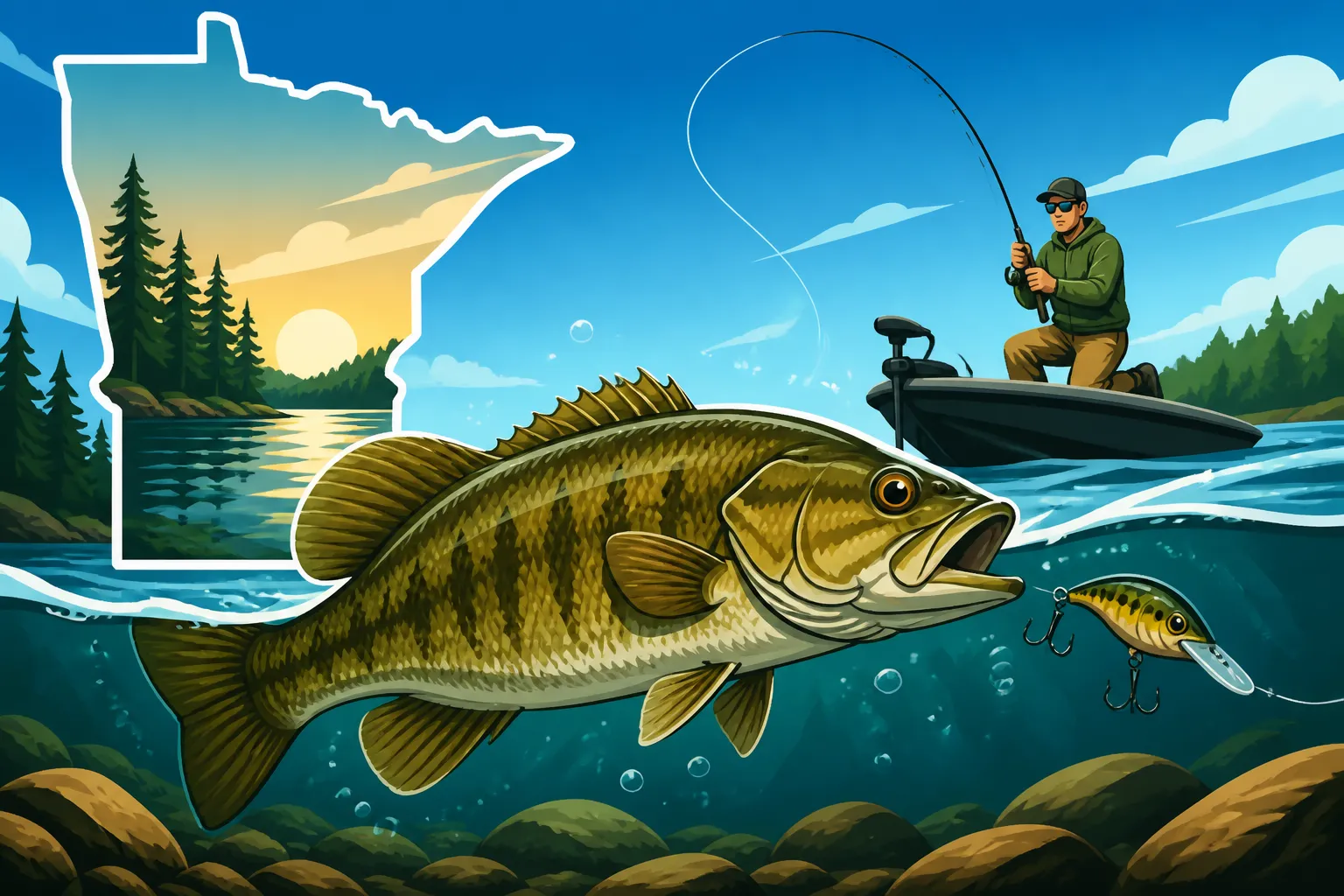
How to Catch Smallmouth Bass in Minnesota
Many anglers in Minnesota find themselves staring at a vast lake, wondering where those elusive smallmouth bass might be hiding, especially with their reputation for being hard fighters and somewhat picky eaters compared to their largemouth cousins. It can be frustrating to know these feisty bronze beauties are out there but not quite connect with them. This comprehensive guide is designed to peel back the layers of mystery surrounding smallmouth bass in Minnesota, giving you the knowledge, gear advice, and tactical approaches to consistently hook into these incredible fish, no matter the season or water body.
Understanding Minnesota Smallmouth Bass
Smallmouth bass, often called "bronzebacks" or "brown bass," are a truly magnificent sport fish. They don't just put up an incredible fight on the line; they also inhabit some of Minnesota's most picturesque lakes and rivers. To consistently catch them, you first need to understand their preferred hangouts and how their behavior shifts throughout the year. It’s not just about casting a lure; it’s about understanding the fish itself.
Smallmouth Bass Habitat and Behavior
Unlike largemouth bass that often lurk in thick weed beds and shallow, murky cover, smallmouth bass are creatures of clear water and hard structure. Think rocks, boulders, gravel, sand, and even submerged timber on rocky points or sheer drops. They love areas with good current, whether it's a river system or a main lake basin with wind-driven currents pushing baitfish. These fish are ambush predators, often holding tight to cover, waiting for crayfish, minnows, or insects to drift by. Their diet heavily influences the types of lures that work best.
You'll typically find them congregated around specific structural elements. This could be a rocky point extending into deep water, a large boulder field on a flat, or the distinct breakline where a shallow shelf drops off into deeper water. They are highly attuned to changes in depth and substrate. When the sun is high and bright, they often retreat to deeper, shadier parts of these structures. During low light conditions, like early morning, late evening, or on cloudy days, they might move shallower to actively feed. Their aggressive nature means they'll often strike at lures with surprising ferocity, making for an exhilarating battle.
Seasonal Movements of Smallmouth Bass
Smallmouth bass are incredibly dynamic in their movements throughout the year, driven primarily by water temperature and their spawning cycle. Understanding these shifts is crucial for knowing where to find them and which techniques will be most effective. It's like having a secret calendar for the fish.
In spring, as ice leaves the lakes and water temperatures begin to rise into the high 40s and 50s Fahrenheit, smallmouth bass start moving from their deep wintering holes to shallower staging areas. These are often rocky flats, points, or sheltered bays adjacent to deeper water, where they can bask in the warmer sun. Once the water hits the mid-50s to low-60s, they move onto their spawning beds. These beds are usually hard-bottomed areas, like gravel or small rocks, in 2-10 feet of water, often near submerged logs or boulders. During this pre-spawn and spawn period, they can be extremely aggressive as they protect their nests. The Minnesota Bass Season (New 2026 Catch-and-Release) has specific regulations around this time, so always check the latest rules.
Summer sees smallmouth bass disperse from their spawning grounds as water temperatures climb. They typically move to deeper, cooler water, often relating to main lake structure. You’ll find them on deep rock humps, offshore reefs, steep breaks, and points in 15-30 feet of water, or even deeper in some lakes like Mille Lacs. This is when Summer Walleye Patterns: Deep Structure techniques, often used for walleye, can sometimes cross over for smallmouth if they are sharing the same deep, rocky features. They'll actively chase schools of baitfish, making them susceptible to fast-moving presentations. As autumn approaches and water temperatures begin to drop again, smallmouth bass embark on a significant feeding frenzy, stocking up for winter. They move shallower again, often to the same rocky points and breaks they frequented in spring, but with a renewed voracity. This can be one of the best times of year to catch big numbers and large fish as they actively chase baitfish.
Essential Gear for Minnesota Smallmouth Fishing
Having the right tools for the job can make a world of difference when targeting smallmouth bass. While you don't need to break the bank, choosing appropriate rods, reels, line, and lures will significantly increase your success rate and enjoyment. Think about how each piece of equipment plays into the overall strategy.
Rods, Reels, and Line Choices
For smallmouth bass, a versatile setup is key. Most anglers opt for a medium-light to medium-power spinning rod, typically 6'6" to 7'2" in length. This provides enough backbone for strong hooksets and fighting powerful fish, yet enough sensitivity to detect subtle bites. A fast or extra-fast action rod is preferred as it allows for quicker hook penetration and better control when working various lures. If you prefer baitcasting, a medium-heavy rod in the same length range is excellent for heavier lures and pitching into cover. For specific recommendations, check out a guide on the Best Bass Rod and Reel for Minnesota Lakes.
Matching your rod with a quality reel is vital. For spinning setups, a 2000 or 2500 series reel with a smooth drag system is ideal. Brands like Shimano and Daiwa offer excellent options that can handle the hard runs of a smallmouth. For baitcasters, a reel with a moderate gear ratio (around 6.x:1) is versatile, allowing for both fast retrieves and slower presentations. As for line, many anglers favor braided line with a fluorocarbon leader. A 10-20 lb braided main line offers incredible sensitivity and casting distance, while a 6-12 lb fluorocarbon leader provides invisibility in clear water and abrasion resistance against rocks. You can also opt for straight fluorocarbon line, which offers a good balance of sensitivity and invisibility, or even monofilament for topwater presentations where its buoyancy is an advantage.
Lure Selection for Smallmouth Bass
Smallmouth bass are opportunistic feeders, but certain lures consistently produce in Minnesota waters. Your tackle box should have a good mix to cover different conditions and depths. Having a variety is much like having different clubs in a golf bag; you need the right tool for the right shot. For a deeper dive into lure choices, consider exploring the Best Bass Lures for Minnesota Lakes.
Topwater lures like poppers, walking baits (e.g., Heddon Super Spook), and prop baits are incredibly exciting to use, especially during low-light conditions or when smallmouth are actively feeding in shallow water. Few things beat the explosive strike of a smallmouth on a topwater. Moving baits like crankbaits, jerkbaits (Rapala X-Rap, Lucky Craft Pointer), and spinnerbaits are excellent for covering water and triggering reaction strikes. Dive-specific crankbaits allow you to target different depths, while jerkbaits excel in mimicking injured baitfish with their erratic action. For fishing deep structure, jigs are indispensable. Tubes, Ned rigs, football jigs, and hair jigs are fantastic for imitating crayfish and bottom-dwelling forage. Soft plastics like senkos, grubs, and creature baits rigged on a Drop-Shot for Smallmouth Bass or a Texas rig can be highly effective when the fish are finicky or holding tight to cover.
Here's a quick look at some popular lure types and when they shine:
| Lure Type | Best Conditions | Retrieve Style | Common Imitation |
|---|---|---|---|
| Topwater | Low light, calm water, shallow feeding | Walk-the-dog, pop-and-pause, steady retrieve | Injured baitfish |
| Jerkbaits | Clear water, cooler temps, suspended fish | Twitch-twitch-pause, erratic retrieve | Baitfish |
| Crankbaits | Covering water, targeting specific depths | Steady retrieve, occasional pause, deflect off structure | Baitfish, crayfish |
| Spinnerbaits | Stained water, windy conditions, around weeds/wood | Steady retrieve, slow-roll, bump-and-go | Baitfish |
| Tube Jigs | Bottom fishing, rocky areas, imitating crayfish | Drag-and-hop, short hops, jigging | Crayfish |
| Ned Rigs | Finicky fish, clear water, subtle presentation | Drag-and-shake, subtle hops, dead-sticking | Small forage |
| Drop-Shot Rigs | Deep water, vertical presentations, precise targeting | Light shaking, subtle lifts, maintaining tension | Baitfish, worms |
Top Techniques for Minnesota Smallmouth Bass
Catching smallmouth bass in Minnesota isn't about one magic bullet; it's about a combination of understanding their environment, choosing the right gear, and deploying effective techniques. Flexibility and adaptation are your best friends. These fish are smart, and conditions can change rapidly.
Targeting Rocky Structure and Current
As we discussed, smallmouth love rocks and current. When fishing lakes, focus your efforts on prominent rocky points, submerged humps, and rubble fields that are exposed to wind and current. These areas concentrate baitfish and provide ambush points for smallmouth. Start by making long casts parallel to the structure, allowing your lure to work along the depth changes where fish are most likely to be holding. For deeper structure, a football jig with a creature bait or a deep-diving crankbait can be incredibly effective. Pay attention to your electronics (if you have them) to identify subtle rock piles or changes in bottom composition that might hold fish.
When fishing rivers, current becomes an even more critical factor. Smallmouth will position themselves just out of the main current, in eddies, behind large boulders, or along current seams, waiting for food to be swept past. Casting upstream and allowing your lure to drift naturally with the current, then retrieving as it sweeps downstream, can be deadly. Jigs, spinnerbaits, and small crankbaits that mimic minnows are excellent choices here. Exploring how to catch Smallmouth Bass on a River offers even more specialized tips for these dynamic environments. Remember, the stronger the current, the more aggressive smallmouth tend to be, so don't be afraid to use slightly faster retrieves or more vibrant lure colors.
Adjusting to Water Conditions and Time of Day
Smallmouth bass are notoriously sensitive to changes in light and water clarity. On bright, sunny days with clear water, they'll often retreat to deeper water or seek shade under docks, overhanging trees, or deep rock ledges. In these conditions, a more subtle approach with natural colors like green pumpkin, watermelon, or smoke, and smaller baits, often works best. Think finesse techniques like a Ned rig or a drop-shot. Present your lure slowly and precisely, targeting specific pieces of cover.
Conversely, on cloudy days, during early morning or late evening, or in stained water, smallmouth often become more aggressive and move shallower to feed. This is when Topwater Bass Fishing in Minnesota can really shine, along with spinnerbaits or brightly colored crankbaits that create more vibration and visibility. Experiment with retrieve speeds – sometimes a slow, deliberate presentation is key, while other times a fast, erratic retrieve triggers a reaction strike. The key is to constantly observe the conditions and adjust your presentation accordingly. Don't be afraid to try something different if what you're doing isn't producing.
Mastering Catch and Release Practices
Smallmouth bass populations in Minnesota are a precious resource, and proper handling is essential for their long-term health, especially for larger, older fish. Many smallmouth lakes operate under special regulations to protect these trophy fisheries, like those on Mille Lacs Lake Fishing Regulations (2026), so always consult the latest Minnesota DNR regulations. Adopting best practices for catch and release ensures these fish can continue to provide thrilling battles for years to come.
When you land a smallmouth, handle it gently. Use wet hands to minimize the removal of the protective slime coat, which helps prevent disease. Avoid squeezing the fish, especially around its belly. If the fish is deeply hooked, consider cutting the line as close to the hook as possible rather than attempting to rip the hook out, which can cause significant internal damage. Barbless hooks can make hook removal much easier and reduce stress on the fish. Support the fish horizontally, especially larger ones, to protect its internal organs and spine. A quick photo is fine, but get the fish back in the water as soon as possible. Gently hold the fish upright in the water until it's strong enough to swim away on its own. For more detailed advice, check out Catch and Release Best Practices in Minnesota.
Prime Smallmouth Bass Lakes and Rivers in Minnesota
Minnesota is truly a gem for smallmouth bass anglers, boasting a plethora of waters that offer incredible fishing opportunities, from vast inland seas to winding rivers. Knowing where to start can feel overwhelming, but certain locations consistently stand out.
Renowned Lakes for Trophy Smallmouth
When you talk about trophy smallmouth bass in Minnesota, a few lake names immediately come to mind. These lakes are famous not just for the sheer numbers of smallmouth, but for their potential to produce true giants. For a comprehensive overview, you might want to explore the Best Bass Lakes in Minnesota (Smallmouth & Largemouth).
Mille Lacs Lake: This massive central Minnesota lake is arguably the state's premier smallmouth fishery, consistently producing fish in the 4-6 pound range, with larger ones not uncommon. Its vast expanses of rocky reefs, humps, and points provide ideal smallmouth habitat. Anglers often target specific areas like the famous "mud flats" that transition into rocky structure, or the numerous rock piles scattered across the lake. During the summer, deep crankbaits, tubes, and drop-shot rigs are deadly. Many consider it a world-class fishery, often mentioned alongside How to Catch Smallmouth Bass on Mille Lacs.
Lake Vermilion: Located in northern Minnesota, Lake Vermilion offers a stunning wilderness backdrop to exceptional smallmouth fishing. This lake is characterized by its irregular shoreline, numerous islands, rocky points, and clear waters, all of which smallmouth adore. You'll find them relating to the countless rock piles, sunken islands, and steep breaks. Jerkbaits and topwaters can be particularly effective here in the right conditions.
Rainy Lake: Straddling the U.S.-Canada border, Rainy Lake is another northern powerhouse for smallmouth. Its wild, rugged shoreline with endless rocky islands, reefs, and intricate passages creates a perfect environment for bronzebacks. Fishing the current breaks around islands and rocky shorelines with jigs and tubes is a popular and productive tactic. The sheer size and undeveloped nature of Rainy Lake make it an adventurous destination for any smallmouth enthusiast.
Rivers and Smaller Waters Worth Exploring
While the big lakes get a lot of attention, Minnesota's rivers and many smaller, overlooked lakes offer fantastic, often less pressured, smallmouth bass fishing. These waters can provide a different kind of challenge and reward.
The St. Croix River, forming part of the border with Wisconsin, is a phenomenal smallmouth fishery. Its diverse habitats, from rocky stretches and riffles to deeper pools and current breaks, hold abundant smallmouth. Anglers float sections of the river in kayaks or small boats, casting spinnerbaits, jigs, and small crankbaits to shoreline cover, current seams, and submerged timber. The upper stretches, especially around Taylors Falls, are particularly renowned.
The Mississippi River in Minnesota, particularly sections from Brainerd downstream, also offers excellent smallmouth opportunities. Look for rocky wing dams, bridge pilings, and shoreline riprap. These structures create current breaks and ambush points where smallmouth lie in wait. Jigging plastics or crankbaits parallel to these structures can be very productive. Other notable rivers include the Rum River and the Crow Wing River, which, while smaller, provide intimate and productive environments for river smallmouth fishing. For those who enjoy a quieter, often wading or canoe-based experience, these smaller rivers can be incredibly rewarding.
Ultimately, catching smallmouth bass in Minnesota is about understanding their habits, equipping yourself properly, and adapting your techniques to the specific water you're fishing and the conditions of the day. With a bit of patience and persistence, you'll soon be experiencing the thrill of these incredible bronze warriors.
Disclaimer
The information provided in this guide is for general informational purposes only and is subject to change. Always consult the official Minnesota Department of Natural Resources (DNR) regulations and local ordinances before fishing, as rules and seasons can vary by water body and may change annually. Fishing inherently carries risks, and anglers should always prioritize safety on the water.