Garmin vs Lowrance Ice Flasher: Which to Buy?
Navigating the world of ice fishing electronics can feel like trying to find a walleye in a whiteout – confusing, frustrating, and a quick way to empty your wallet on the wrong gear. Many anglers find themselves caught in the perennial debate between top brands like Garmin and Lowrance, especially when considering the jump into advanced flasher and live sonar technology. This comprehensive guide will meticulously break down what each brand brings to the hardwater, helping you confidently choose the system that will put more fish on the ice during your next Minnesota ice fishing adventure.
Understanding the Core Technology: Flashers vs. Sonar
Before we dive into the specifics of Garmin and Lowrance, it's crucial to understand the fundamental difference between traditional ice flashers and the more advanced sonar units that are becoming increasingly popular. Many anglers, especially those new to the game, often use the terms interchangeably, but there are distinct differences that impact your fishing experience. Knowing these distinctions will help you appreciate what each brand offers and why certain features might matter more to your specific fishing style.
The Traditional Flasher Experience
Think of a traditional ice flasher as the tried-and-true workhorse of ice fishing. Brands like Vexilar and Marcum, and even the Humminbird Ice Helix series, have built their reputations on these units. What exactly is a flasher? It's a real-time sonar display that shows you what's directly beneath your ice hole in a circular, glowing display. You see your lure, any fish, and the bottom contour almost instantaneously. There's no lag, which is critical when you're jigging aggressively for finicky walleye or subtle crappie.
The beauty of a flasher lies in its simplicity and raw, unfiltered data. You see strong signals as thick bands and weaker signals as thin lines. The colors often indicate signal strength – a bright red for a hard bottom or a fish directly under your transducer, yellow for a medium signal, and green for a weaker one. This immediate feedback helps you gauge how fish are reacting to your presentation. You can literally see a fish swim up to your bait, investigate it, and then either take it or turn away. For many, this direct, no-frills approach is exactly what they want. If you've ever struggled with trying to interpret a flickering screen, a traditional flasher's directness can be a breath of fresh air. It’s a core piece of gear for any serious angler, and understanding how to read a flasher (Vexilar/Humminbird style) is a fundamental skill.
The Rise of Digital and Live Sonar
Now, let's talk about the newer generation of electronics that Garmin and Lowrance truly excel in: digital and live sonar. While traditional flashers give you a "snapshot" of what's directly below, these modern units offer a much more detailed, often historical, and sometimes even forward-looking view of the underwater world. Digital sonar displays typically show a scrolling history of the sonar returns, often in color, giving you more information about what fish have been doing over time and allowing for better target separation.
The real game-changer, though, is live sonar. This technology, spearheaded by innovations like Garmin LiveScope and Lowrance ActiveTarget, provides real-time, video-like sonar images. Instead of just seeing a traditional flasher's color bands, you see incredibly detailed images of fish swimming, your lure descending, and underwater structure in three dimensions, often in stunning clarity. Imagine watching a fish approach your bait from 20 feet away, seeing its exact swimming path, and knowing precisely when to adjust your presentation. This isn't just seeing a target; it's seeing the fish and its behavior. It's a completely different league of technology, offering a level of understanding that was unimaginable just a decade ago. These systems transform ice fishing from a vertical game into a much more expansive, proactive pursuit, fundamentally changing the way many anglers approach Ice Fishing for Walleye: Tactics & Setups.
Garmin Ice Fishing Electronics: Strengths and Offerings
Garmin has made a massive splash in the ice fishing world, largely thanks to its innovative live sonar technology. While they also offer traditional flasher-style displays, their true dominance comes from pushing the boundaries of what's possible in real-time underwater viewing. Anglers who are looking for cutting-edge technology and a seamlessly integrated system often gravitate towards Garmin.
Garmin's Ecosystem and Mapping Integration
One of Garmin's significant advantages lies in its comprehensive ecosystem. If you're already familiar with Garmin products for boating, automotive GPS, or even outdoor activities, you know their user interface is often intuitive and their mapping capabilities are top-notch. For ice fishing, this translates to robust, detailed lake mapping. Units like the ECHOMAP UHD series, which forms the core of many Garmin ice bundles, come preloaded with excellent LakeVü g3 maps, often with integrated Navionics data. This means you have access to detailed contours, points, humps, and drop-offs right out of the box, which is invaluable for locating productive fishing spots on lakes like Mille Lacs or Lake of the Woods.
Furthermore, Garmin's Quickdraw Contours feature allows you to create your own custom maps in real-time as you move around the lake. While this is more commonly used in open water, the ability to record precise depth and contour data can still be beneficial for finding subtle structure on the ice, especially if you venture onto smaller, lesser-mapped lakes. The continuity across their devices means that if you have a Garmin chartplotter on your boat, you'll feel right at home with their ice fishing units, which is a big plus for many anglers who fish year-round.
LiveScope and Panoptix: Game-Changers on Ice
When people talk about Garmin in ice fishing, they're usually talking about LiveScope. This is the technology that truly sets Garmin apart for many anglers. LiveScope isn't just a sonar; it's a revolutionary forward- and down-looking system that provides incredibly clear, real-time sonar images. It lets you see fish swimming, structures, and your jig moving up to 200 feet away from your hole (though usually less in practical ice fishing scenarios, more like 40-60 feet with good clarity). This is a stark contrast to traditional flashers that only show you what's directly beneath your transducer.
With LiveScope, you can actively search for fish schools as you move your transducer, watch how fish react to your bait from a distance, and even direct your cast or jig precisely to where the fish are. Imagine being able to see a school of crappies hugging a weed line 30 feet away, and then maneuvering your bait directly into them. This kind of vision drastically increases your efficiency and reduces the guesswork. While the initial investment for a LiveScope system can be substantial, many dedicated ice anglers feel that the competitive edge it provides is well worth it, especially when targeting popular species like walleye. This technology really makes you rethink if Is Garmin LiveScope Worth It for Walleye?, and for many, the answer is a resounding yes.
User Interface and Portability
Garmin's user interfaces are generally considered user-friendly and intuitive, even for those new to advanced electronics. The touchscreen displays on their ECHOMAP units are bright and responsive, and navigating through menus and customizing settings is straightforward. This ease of use reduces the learning curve, allowing anglers to spend more time fishing and less time fumbling with their electronics. Many Garmin ice bundles, often available at retailers like Bass Pro Shops or online through Amazon, are designed for portability. They typically come in rugged carrying bags with dedicated battery compartments, making them easy to transport from hole to hole. The transducers are designed for quick deployment through an ice hole, ensuring you can set up and start fishing rapidly. This emphasis on portability and user-friendliness makes Garmin a strong contender for anglers who move frequently or don't want to be bogged down by complicated setups.
Lowrance Ice Fishing Electronics: Strengths and Offerings
Lowrance has a long and storied history in marine electronics, often credited with many sonar innovations over the decades. They bring that deep expertise to the ice, offering robust systems that compete fiercely with Garmin, particularly in the realm of high-definition traditional and live sonar. For anglers loyal to the Lowrance brand or those seeking a different approach to cutting-edge sonar, Lowrance provides compelling alternatives.
Lowrance's Heritage and CHIRP Sonar Prowess
Lowrance has been a pioneer in sonar technology for decades, and their expertise in traditional and CHIRP (Compressed High-Intensity Radiated Pulse) sonar is evident in their ice fishing offerings. CHIRP sonar, which sends a range of frequencies instead of a single one, provides much better target separation and clearer images than older sonar technologies. This means you can distinguish individual fish even when they're tightly schooled, or differentiate a fish from a piece of bottom structure with remarkable clarity. Lowrance units, often built around their HDS Live or Elite FS displays, leverage this advanced CHIRP technology to give anglers incredibly detailed views of what's happening directly beneath their hole.
For anglers accustomed to traditional sonar but craving more detail, Lowrance’s high-resolution 2D CHIRP sonar is a significant upgrade. It delivers crisp, clear images of fish arches, bait, and bottom composition, allowing for precise jigging and presentation. This refined traditional sonar experience is a core strength for Lowrance, providing a familiar yet vastly improved view for those who prefer the vertical display format but still want top-tier performance.
ActiveTarget and Ghost Trolling Motors: A Complete System
Just like Garmin has LiveScope, Lowrance counters with its ActiveTarget Live Sonar. ActiveTarget also offers real-time, high-resolution live views of fish movements and structure. It allows you to see fish in front of your transducer, below it, or to the side, giving you that crucial situational awareness that live sonar provides. Whether you're watching a school of jumbo perch dart around or tracking a big Northern Pike as it investigates your deadstick, ActiveTarget delivers. The images are incredibly sharp, making it easy to identify species and gauge their reactions.
Lowrance also integrates its sonar technology with its Ghost Trolling Motor, which, while primarily an open-water product, showcases their commitment to a holistic fishing system. The ability to network various Lowrance devices, including displays, transducers, and even accessories, creates a powerful and cohesive setup. While a trolling motor isn't for ice fishing, this integration philosophy carries over to their ice bundles, where displays like the HDS Live and Elite FS can be paired with ActiveTarget transducers to create formidable ice fishing machines. You can find these advanced systems at specialty outdoor stores or on platforms like Amazon, but they definitely represent a significant investment into your Best Gear for Ice Fishing Walleye in Minnesota.
Mapping and Screen Customization
Lowrance has also invested heavily in mapping, offering C-MAP charts with their units. These maps are rich in detail, featuring high-resolution bathymetric contours, shading, and points of interest. Similar to Garmin, this mapping capability is vital for efficient hole hopping and understanding the underwater topography of Minnesota's vast lakes. Being able to mark waypoints for active fish or interesting structure and then navigate back to them with precision is a huge advantage.
Where Lowrance truly shines for many users is in its screen customization options. Their HDS Live and Elite FS units allow for incredible flexibility in how you display your sonar data. You can create multiple custom screen layouts, splitting the screen to show 2D CHIRP, ActiveTarget, and mapping all at once. This ability to tailor your display to your exact preferences, whether you're sight-fishing for crappie or vertically jigging for lake trout, is a major benefit. Anglers can choose what data is most important to them and arrange it in a way that maximizes their effectiveness on the ice. This level of control appeals to experienced anglers who know precisely what information they need at a glance.
Direct Comparison: Garmin vs. Lowrance for Ice Fishing
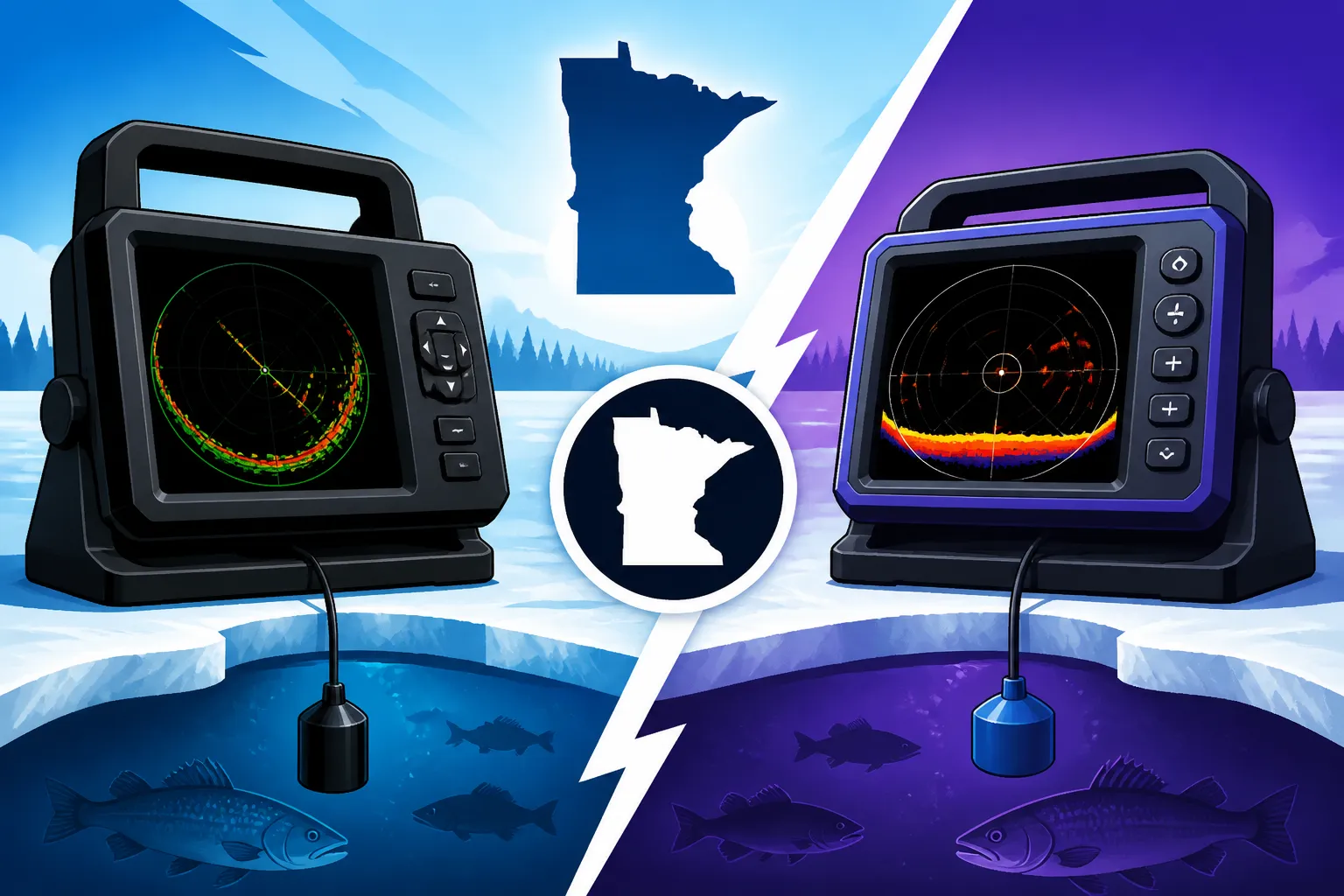
When it comes down to choosing between Garmin and Lowrance for your ice fishing adventures, it's less about which one is inherently "better" and more about which system aligns best with your budget, fishing style, and technological preferences. Both brands offer incredible technology, but they have distinct philosophies and strengths that might sway your decision.
Key Feature Showdown: What Matters Most
Let's lay out some of the crucial features side-by-side to highlight where each brand excels. This isn't just about raw specs; it's about how these features translate into practical advantages on the ice.
| Feature / Aspect | Garmin (e.g., ECHOMAP UHD + LiveScope) | Lowrance (e.g., Elite FS/HDS Live + ActiveTarget) |
|---|---|---|
| Live Sonar Clarity | Exceptional detail and range, highly praised for real-time video-like imagery. | Excellent detail and clarity, very competitive with Garmin, especially in open-water applications. Some argue Garmin's forward view is slightly wider. |
| Mapping | Strong with LakeVü g3 (Navionics integrated), Quickdraw Contours for custom mapping. User-friendly interface. | Robust C-MAP charts, excellent detail. Highly customizable screen layouts. |
| User Interface | Generally considered highly intuitive and easy to learn, especially if you're already a Garmin user. | Feature-rich, highly customizable, but can have a slightly steeper learning curve for beginners due to depth of options. |
| Traditional Sonar | Solid 2D CHIRP, but often seen as secondary to LiveScope's appeal. | Excellent 2D CHIRP, known for superior target separation and clarity. A core strength. |
| Portability | Ice bundles are very well-designed for mobility, compact carrying cases. | Ice bundles are also portable but can be slightly bulkier depending on screen size. |
| Ecosystem | Strong integration across marine and outdoor products. | Deep integration with other Lowrance marine electronics and trolling motors. |
When we talk about live sonar specifically, both Garmin LiveScope and Lowrance ActiveTarget are truly phenomenal. The differences in image quality are often subtle and can vary based on water conditions, depth, and transducer setup. Some anglers perceive LiveScope as having a slightly more "video game" feel, while ActiveTarget might offer a slightly more traditional sonar-like interpretation, but both are incredibly effective at showing you fish in real-time. What often matters more is how quickly you can interpret the data and make adjustments. For those wanting a more traditional flasher view, Lowrance's refined CHIRP sonar often gets high marks for target separation when not using live mode.
Pricing and Value Proposition
Let's be real: these advanced ice fishing electronics are an investment. You're not just buying a basic flasher; you're often getting a full-blown marine chartplotter that happens to be packaged for ice fishing.
- Entry-Level (Traditional Flasher-style display): Both brands offer more basic, dedicated ice flashers or portable units with traditional 2D sonar. These might range from $400 to $800, giving you solid performance for vertical jigging. Consider something like a Humminbird Ice Helix if a dedicated flasher is your primary goal, as they are specifically designed for that experience, or even checking out the Best Ice Fishing Flashers: Vexilar vs Humminbird vs Garmin for a broader view.
- Mid-Range (Digital Sonar / Entry Live Sonar Ready): For units that offer better digital 2D sonar and the capability to add live sonar later, you're usually looking at $800 to $1,500 for the head unit alone. This is often where you'll find the bundled systems without the live sonar transducer.
- High-End (Full Live Sonar System): This is where the price jump occurs. A complete Garmin LiveScope or Lowrance ActiveTarget ice bundle, including the compatible display, transducer, pole, and battery, will typically run you anywhere from $2,000 to $3,500 or more, depending on the screen size and specific model. This is a serious commitment, but for many, it's considered essential for serious trophy hunting or competitive fishing. You can often find deals at larger retailers like Bass Pro Shops or on online marketplaces like Amazon, but be prepared for the sticker shock.
The "value" here isn't just about the lowest price, but what you get for your money. If the ability to "see" fish from a distance and understand their behavior in real-time dramatically increases your catch rate and enjoyment, then the higher price tag can be justified. For those just starting out, a more budget-friendly approach to the Best Fishing Gear for Beginners in Minnesota (By Budget) might be more appropriate before making such a significant leap.
Which Brand Suits Your Fishing Style?
Ultimately, the choice comes down to your personal preferences and how you intend to fish.
-
Choose Garmin if:
- You prioritize cutting-edge, real-time live sonar (LiveScope) above all else.
- You value a highly intuitive, easy-to-navigate user interface.
- You appreciate a strong mapping system with custom mapping capabilities.
- You already use Garmin products for other activities and want a cohesive ecosystem.
- You often fish on the move, drilling many holes and quickly checking them.
-
Choose Lowrance if:
- You want incredibly clear and detailed traditional 2D CHIRP sonar, even if you eventually add live sonar.
- You appreciate extensive screen customization options to tailor your display.
- You are an existing Lowrance user and want seamless integration with your other marine electronics.
- You're looking for a robust, feature-rich system that offers flexibility in how you interpret data.
- You often fish from a fixed position for longer periods, but still want to observe fish behavior with ActiveTarget.
Both brands offer solutions that will help you tremendously on the ice. If possible, try to see both systems in action, whether at a fishing show, a local retailer, or by talking to fellow anglers. The best way to make an informed decision is to experience the display and controls firsthand. Remember, the goal is to enhance your time on the water and make you a more effective angler, whether you're chasing the Walleye Season & Limit in Minnesota or trying your hand at How to Catch Crappie Through the Ice in Minnesota.
Final Thoughts on Your Ice Electronics Decision
Making the jump to advanced ice fishing electronics from Garmin or Lowrance is a significant step, and it's understandable to feel overwhelmed by the choices. There's no single "right" answer, as both brands produce exceptional gear that can truly elevate your ice fishing game. What matters most is aligning the technology with your specific needs and how you like to fish.
Consider how much you value seeing fish at a distance versus having the absolute sharpest view directly beneath your hole. Think about your comfort level with technology and how much time you're willing to invest in learning a new system. And, of course, your budget plays a big role. Whether you opt for the immersive real-time views of Garmin LiveScope or the finely-tuned sonar and customization of Lowrance ActiveTarget, you'll be adding a powerful tool to your ice fishing arsenal. These systems aren't just gadgets; they're investments in more productive, and let's face it, more exciting days on the frozen lakes of Minnesota.
Disclaimer
The information provided in this guide is for general informational purposes only. Fishing regulations, product features, and pricing are subject to change. Always consult the latest Minnesota Department of Natural Resources (DNR) regulations before fishing and refer to manufacturer specifications for the most up-to-date product details. Fishing involves inherent risks; always prioritize safety on the ice.