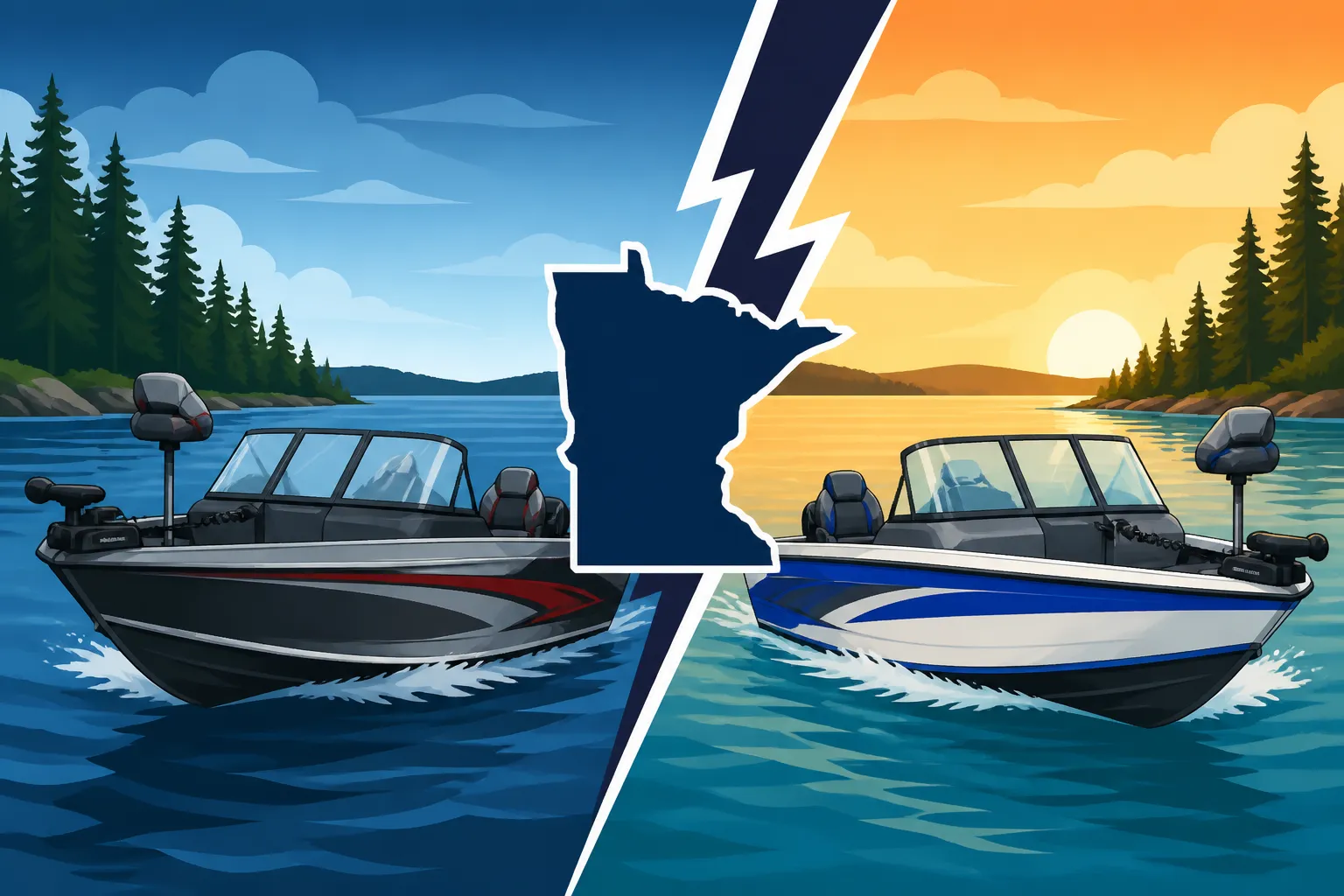
Lund vs Crestliner Fishing Boats
Choosing a new fishing boat is a huge decision, one that often comes with a hefty price tag and a lot of dreams attached. For many anglers in Minnesota, that choice quickly narrows down to two iconic names: Lund and Crestliner. Both brands have built legendary reputations on our diverse waters, but deciding between them can feel like trying to land a trophy walleye with a panfish rod – daunting and full of nuance. This guide is here to untangle the specifics, helping you understand the unique personality and performance each brand brings to the lake, so you can confidently pick the perfect vessel for your fishing adventures.
The Legacy and Philosophy Behind Each Brand
When you're looking at a boat from Lund or Crestliner, you're not just buying aluminum and rivets; you're investing in decades of boat-building philosophy and angler-driven innovation. Understanding their core approaches can shed a lot of light on why they feel and perform the way they do on the water.
Lund: The Walleye King's Enduring Reputation
Lund boats have long been synonymous with serious fishing, particularly among walleye anglers across the Midwest and Canada. Founded in 1948 in New York Mills, Minnesota, Lund quickly established itself by building rugged, dependable aluminum boats designed to handle big water and big fish. Their reputation was forged on performance and durability, becoming a go-to choice for guides and tournament pros who demand unwavering reliability day in and day out. They’ve consistently evolved, but their commitment to a fishing-first design, often with a focus on ride quality in rough conditions, has remained a cornerstone.
When you step into a Lund, there’s an immediate sense that it’s built for the pursuit. From the layout of the rod lockers to the placement of the livewells, every detail feels carefully considered for an angler's needs. This focus has earned them a fiercely loyal following, with many owners proudly declaring themselves "Lund for Life." They often employ a rivet construction method, a signature element that many believe contributes to their legendary ride and longevity, though we'll dive deeper into that later.
Crestliner: Crafting Durability and Innovation
Crestliner, another powerhouse originating from Little Falls, Minnesota, in 1946, has always prided itself on its all-welded aluminum construction. This isn't just a manufacturing choice; it's a design philosophy that promises exceptional strength, rigidity, and a seamless, smooth finish. While Lund often catered to the traditional deep-V fishing crowd, Crestliner has built a strong following by emphasizing robust construction and a drier, more stable ride, particularly appealing to those who frequent choppy lakes or want a boat that feels incredibly solid underfoot.
Crestliner has also been at the forefront of introducing thoughtful features and innovative layouts designed to maximize space and versatility. Their boats are often recognized for smart storage solutions and a strong, confident feel, whether you're navigating big waves on Lake Superior or cruising across Mille Lacs. This brand has carved out its niche by offering a formidable combination of durability, intelligent design, and a performance that truly stands up to the rigors of serious angling and family recreation.
Head-to-Head: Key Differences in Construction and Performance
Now, let's get into the nitty-gritty of what really sets these two fantastic boat brands apart when you're out on the water. These aren't just minor variations; they impact everything from how the boat handles rough water to how you organize your gear.
Hull Design and Ride Quality
This is often the most significant point of debate and distinction between Lund and Crestliner. Lund has long been known for its IPS (Integrated Power Strake) and more recently, IPS2 hull designs. These designs feature a series of strakes and a flatter running pad at the stern, which is designed to enhance lift, improve handling, and provide a superior ride, especially in choppy water. Many anglers swear by the Lund ride, describing it as softer and more forgiving when pounding through waves, which is crucial for those long runs across expansive waters like Lake of the Woods or Lake Vermilion. The riveted construction, a hallmark of many Lund models, is believed by some to allow for a slight "flex" that absorbs shock, contributing to that legendary smooth ride.
Crestliner, on the other hand, is a champion of all-welded aluminum construction. Their hulls are meticulously welded, creating a single, incredibly rigid piece of aluminum. This design is often praised for its sheer strength and durability, making for a boat that feels incredibly robust and solid. When you're dealing with big rollers, a Crestliner often feels like it cuts through the waves with authority, offering a very stable and dry ride. The all-welded design means fewer potential points of leakage over time and a generally quieter ride, as there are no rivets to potentially loosen or flex. This translates to a boat that gives you immense confidence, whether you're battling a stiff breeze or navigating rocky shorelines. Both brands produce excellent boats, but their fundamental approach to hull construction leads to distinct on-water experiences.
Interior Layout, Storage, and Fishability
Beyond the hull, the interior of a fishing boat is where you live, cast, and store your precious gear. Both Lund and Crestliner offer a variety of layouts, but they often have subtle differences that appeal to different fishing styles.
Lund boats are renowned for their angler-centric layouts. You’ll find extremely well-thought-out rod storage, often deep and wide to accommodate longer rods, protecting your investment. Their livewells are typically generous, aerated, and easily accessible, essential for keeping your catch lively, especially if you're practicing catch and release. Many models also feature spacious casting decks and intelligent placement of tackle storage. If you're a serious multi-species angler who carries a lot of specialized gear, you'll appreciate how Lund often maximizes every nook and cranny for organized storage. They've fine-tuned their designs over decades to optimize for specific fishing scenarios, like jigging for walleye or casting for pike. Anglers often appreciate how easy it is to add aftermarket accessories or integrate new technologies like those discussed in our guide to the Best Fish Finders & Electronics for Minnesota Fishing.
Crestliner interiors often emphasize versatility and a clean, spacious feel. Their all-welded construction often allows for very strong, integrated storage compartments and robust decks. You'll find incredibly deep and secure storage options, often with dry-storage capabilities that are highly valued. Crestliner’s focus on structural integrity extends to their interior components, meaning seats and consoles are typically mounted to a very solid foundation. They offer a range of boat types, from deep-V walleye boats to bass boats and utility models, often providing highly configurable seating options that can quickly switch from a fishing setup to a family cruising configuration. Some Crestliner models also boast innovative "sure-grip" floors and durable vinyl options that make cleanup a breeze, a real plus after a messy day of fishing or a family outing. For those who visit popular spots like Lake Minnetonka and need a boat that can handle both serious fishing and leisurely days on the water with family, Crestliner often presents a compelling blend of features.
Customization Options and Aftermarket Value
When you invest in a premium fishing boat, you want to make it your own. Both Lund and Crestliner offer various options for customization, both from the factory and through aftermarket additions, though their ecosystems can differ slightly.
Lund has a massive network of dealers and a huge following, which translates to a wide array of factory options for everything from motor choices (often Mercury, though other brands are available) to electronics packages, seat upgrades, and custom paint jobs. Because they are so popular, finding aftermarket accessories designed specifically for Lund models is relatively easy, whether you're looking for extra rod holders, downrigger mounts, or even custom boat covers. This robust market also means that Lund boats tend to hold their resale value exceptionally well. Many anglers see a Lund as a long-term investment, confident that if they ever decide to upgrade, they'll get a good return. The strong community of Lund owners also means plenty of advice and resources are available online and through local fishing clubs. This is particularly relevant when considering specialized gear like the Best Walleye Rods & Reels or finding the Best Tackle for Walleye in Minnesota that complements your boat's setup.
Crestliner also offers substantial factory customization, allowing buyers to spec out their boat with preferred engines (again, often Mercury is a primary option, but others are available), electronics, and interior configurations. Their all-welded approach means that many structural add-ons are incredibly secure. While perhaps not quite as universally extensive as Lund’s aftermarket, Crestliner still benefits from a strong dealer network and popular models, making it easy to find parts and compatible accessories. Crestliner boats are also known for their excellent durability, which contributes to their strong resale value. Buyers looking for a pre-owned boat know that a Crestliner is built to last, often providing many years of reliable service even after multiple owners. Whether you're decking out your new boat or looking to add some specialized equipment, stores like Bass Pro Shops or even online retailers like Amazon offer a wide range of compatible gear for both brands.
Real-World Considerations: What Anglers Experience
Beyond the technical specs and marketing materials, what's it really like to own and fish from a Lund or Crestliner? This section touches on the practical aspects that truly shape the ownership experience.
Price Point and Value Retention
Let's be realistic: fishing boats are a significant investment. Generally speaking, both Lund and Crestliner operate in a similar premium price bracket within the aluminum fishing boat market. However, there can be nuances. Historically, some Lund models, especially their higher-end Pro-V series, might command a slightly higher sticker price when new, reflecting their market positioning as a top-tier fishing machine with extensive features and refined ride characteristics. But this isn't a hard and fast rule; specific models, engine packages, and options can push prices up for either brand.
Where both brands truly shine, and why many anglers consider them sound investments, is their value retention. These aren't boats that depreciate rapidly. Lund, in particular, has a reputation for holding its value exceptionally well, often fetching strong prices on the used market. This is due to its established brand loyalty, widespread recognition, and perceived durability. Crestliner, with its robust all-welded construction, also boasts excellent value retention. Buyers in the used boat market often seek out these brands specifically because they know they are getting a quality product that will continue to perform for years. So, while the initial outlay might be substantial, the long-term financial picture often looks quite favorable for both.
Dealer Network and Service Experience
Having a reliable dealer is paramount, especially when you're making such a substantial purchase. Both Lund and Crestliner benefit from extensive dealer networks, particularly in key fishing regions like Minnesota. You’ll find authorized dealers across the state, from smaller towns to metropolitan areas, making it generally convenient for service, warranty work, and purchasing parts.
The quality of service, however, can vary significantly from one dealership to another, regardless of the brand. It’s always wise to research local dealers, read reviews, and talk to other boat owners in your area about their experiences. A great dealer can make ownership a joy, providing timely service and expert advice, while a poor one can lead to frustration. Many anglers find their fishing gear, from basic hooks to advanced electronics, at stores like Bass Pro Shops, but for major boat service, a specialized dealer is key. Before committing to either brand, take the time to visit a few dealerships, ask about their service department, and gauge their responsiveness and expertise. This due diligence is just as important as choosing the boat itself.
Specific Models: Comparing Apples to Apples (or Walleyes to Bass)
It's not truly a Lund vs. Crestliner debate without looking at specific models, as both brands offer a diverse lineup. You wouldn't compare a compact sedan to a full-size pickup; similarly, you need to consider comparable boat types.
For deep-V walleye boats, Lund's Pro-V and Tyee series are often pitted against Crestliner's Raptor and Fish Hawk lines. Lund's Pro-V is a tournament-proven machine, known for its incredible ride in rough water, massive livewells, and dedicated fishing features. The Tyee offers a great blend of fishing capability and family comfort. Crestliner's Raptor series brings serious big-water performance with its robust, all-welded hull, often providing a very dry ride and confident feel. The Fish Hawk is a highly popular choice, praised for its stability, spacious interior, and versatile layout that appeals to both anglers and families. When you're fishing the renowned walleye waters, understanding these specific series helps in making an informed decision. For general guidance, check out the Walleye Fishing in Minnesota: Complete Guide.
If you're looking at smaller, more versatile utility or multi-species boats, Lund's Crossover XS or Impact series might go head-to-head with Crestliner's Super Hawk or Sportfish models. The Crossover and Impact are excellent for anglers who want a capable fishing boat that can also handle watersports with the family, offering good storage and comfortable seating. Crestliner's Super Hawk and Sportfish series provide similar versatility, often with a slightly beamier feel and very deep, secure cockpits that instill confidence, especially when fishing with children. For those who enjoy chasing pike or muskie, both brands also offer models geared towards those heavier demands, often featuring reinforced transoms for larger outboards and ample casting deck space. Learn more about Northern Pike in Minnesota: Identification & Where to Catch or Muskie Fishing in Minnesota: The Fish of 10,000 Casts for species-specific boat considerations.
Ultimately, the best way to compare specific models is to walk through them at a boat show or dealership, sit in the seats, open the compartments, and visualize yourself fishing from them.
Making Your Decision: Matching the Boat to Your Fishing Style
Choosing between a Lund and a Crestliner isn't about one being definitively "better" than the other; it's about which boat better aligns with your personal fishing style, the types of water you typically fish, and your overall boating needs.
When a Lund Might Be Your Best Bet
You might find yourself leaning towards a Lund if your fishing adventures frequently take you to the expansive, often choppy waters of Minnesota's largest lakes. Think about those windy days on Lake Mille Lacs or when you're making long runs across Leech Lake. The renowned IPS2 hull with its riveted construction often delivers a softer, more absorbent ride that can make a big difference in angler comfort over a long day of pounding waves. If you prioritize a "cushioned" feel and want to minimize the impact of rough water, a Lund is a very strong contender.
Furthermore, if you're a serious, dedicated angler who values a purely fishing-focused layout, Lund often excels here. Their meticulous attention to rod storage, livewell design, and tackle organization is hard to beat. If your boat is primarily a fishing tool, and you appreciate the subtle efficiencies and ergonomic considerations designed for casting, jigging, and trolling, a Lund will likely feel like home. Many guides and tournament fishermen choose Lund for these very reasons, trusting in the brand's heritage of performance under pressure. If you're looking to dive into serious Walleye Fishing Techniques: Complete Minnesota Guide, a Lund is often seen as the ultimate companion.
Why a Crestliner Could Be the Perfect Fit
A Crestliner might be the ideal choice if you prioritize rock-solid structural integrity and a boat that feels incredibly rigid and secure underfoot. The all-welded aluminum hull provides exceptional strength and a sense of unwavering confidence, especially when navigating heavy chop or when you need a boat that can withstand constant use. If you value a very stable casting platform and a drier ride in splashy conditions, Crestliner's design philosophy often delivers precisely that. The absence of rivets can also appeal to those who prefer a completely seamless hull.
Additionally, if your boating needs extend beyond just fishing to include more family-oriented activities like tubing, waterskiing, or general cruising, many Crestliner models offer a fantastic balance of sport and utility. Their interiors are often spacious, versatile, and built with durable materials that stand up to active families. If you're looking for a boat that can transition seamlessly from a serious morning of fishing for Northern Pike in Minnesota: Identification & Where to Catch to an afternoon of family fun, a Crestliner often provides the robust platform and adaptable layout you need. For those who frequently launch at public boat launches and value a boat that can take a bit of extra wear and tear, Crestliner's legendary toughness is a huge asset.
No matter which brand you lean towards, remember to consider the total package: the specific model, the engine, the electronics you plan to add (perhaps some of the Best Trolling Motors: Minn Kota Buyer's Guide), and, of course, your budget.
Comparative Overview: Lund vs Crestliner
| Feature | Lund (Typical Characteristics) | Crestliner (Typical Characteristics) |
|---|---|---|
| Hull Construction | Primarily riveted aluminum (IPS/IPS2 hull designs) | Exclusively all-welded aluminum |
| Ride Quality | Known for a "softer," more cushioning ride in chop; absorbs shock | Known for a "solid," rigid ride; cuts through waves, often drier |
| Structural Integrity | Excellent, legendary durability | Exceptional, all-welded provides extreme rigidity |
| Fishability Focus | Highly angler-centric, optimized rod storage, livewells | Versatile layouts, strong integrated storage, stable casting platforms |
| Versatility | Strong fishing focus, some crossover models for family | Excellent blend of fishing and family recreation capabilities |
| Resale Value | Very strong, often holds value extremely well | Very strong, known for long-term durability and retained value |
| Typical Engine Brands | Often Mercury (but supports other brands) | Often Mercury (but supports other brands) |
| Aesthetics | Traditional fishing boat look, often deeper V hulls | Modern, often beamier designs with clean, smooth lines |
Disclaimer
The information provided in this guide is for general informational purposes only and does not constitute professional advice. Boat specifications, features, and pricing can change frequently. Always consult with authorized dealers, review official manufacturer specifications, and conduct your own thorough research before making any purchasing decisions. Fishing regulations, safety guidelines, and local conditions can also vary; always refer to the most current Minnesota Department of Natural Resources guidelines and practice safe boating.