Best Panfish Lakes in Minnesota
If you've ever felt that familiar tug of a feisty bluegill on the end of your line, or experienced the thrill of a slab crappie hitting your jig, you know why panfish are such a beloved part of Minnesota fishing. But sometimes, finding those truly exceptional lakes where the panfish are not only abundant but also of a decent size can feel like searching for a needle in a haystack, especially with constantly changing regulations. This guide is here to cut through the confusion and point you toward some of the best panfish lakes Minnesota has to offer, ensuring you spend less time searching and more time reeling in those perfect eaters.
Why Panfish Are the Perfect Catch in Minnesota
Let's be honest, not every fishing trip needs to be a quest for a trophy muskie or a giant walleye. Sometimes, you just want to get out on the water, enjoy the fresh air, and catch some fish, plain and simple. That's where panfish truly shine, offering an accessible and incredibly rewarding experience for anglers of all skill levels.
Accessibility and Fun for All Ages
One of the biggest frustrations for new anglers or families with young kids is often the difficulty in actually catching something. Panfish, like bluegills, crappies, and sunfish, are the ultimate confidence builders. They're often schooling fish, relatively aggressive, and not nearly as finicky as some of their larger predatory cousins. This means more bites, more action, and more excitement for everyone on the boat or on the dock. You don't need a fancy setup either; a simple rod and reel, a bobber, and a live worm or a tiny jig are often all it takes. Many of the best panfish lakes in Minnesota also feature excellent public access points, from maintained fishing piers to accessible boat launches, making it easy to get out and enjoy a day on the water. This accessibility makes them fantastic for a casual afternoon of shore fishing in Minnesota (No Boat).
Delicious Table Fare and Abundant Populations
Beyond the sheer fun of catching them, panfish are absolutely delicious! There's a reason a good old-fashioned panfish fry is a staple of Minnesota cabins and fish camps. Their flaky, white meat is sweet and mild, making them a favorite for many, even those who might shy away from other fish species. What's more, many Minnesota lakes boast incredibly healthy and abundant panfish populations. While some lakes might be managed for trophy-sized fish of other species, panfish are often plentiful, providing a sustainable and enjoyable harvest for anglers, provided you know and respect the local regulations.
Understanding Minnesota's Panfish Management
Minnesota takes its panfish seriously, which is great news for anglers. However, it also means that you can't just assume the statewide limits apply everywhere. Understanding the specific regulations is absolutely crucial for responsible and legal fishing.
Sunfish and Crappie Limits by Lake (Panfish Initiative)
You might be used to a standard statewide limit, but when it comes to sunfish and crappie in Minnesota, things can get a little nuanced, especially with the Minnesota DNR's "Panfish Initiative." This program was put in place to address concerns about declining average panfish size and overharvest in many popular lakes. The idea is to tailor regulations to individual lake conditions, protecting bigger fish in some lakes while encouraging harvest in others.
For anglers, this means you absolutely must check the specific regulations for the lake you plan to fish. You can’t just assume the statewide limits of 20 sunfish and 10 crappies apply. Many lakes now have reduced possession limits, often as low as 5 or 10 for sunfish, and 5 for crappies, to ensure healthy populations of larger fish. The goal isn't to make it harder to fish, but to ensure that everyone can enjoy catching quality panfish for years to come. It’s always best to consult the official Minnesota Fishing Regulations PDF for the most current information. Checking what is the Sunfish Limit on My Lake? is vital before heading out.
Here's a simplified look at how regulations might vary:
| Panfish Species | Statewide Daily Bag/Possession Limit | Example of Special Regulation Lake Limit |
|---|---|---|
| Sunfish | 20 | 5-10 |
| Black Crappie | 10 | 5 |
| White Crappie | 10 | 5 |
| Yellow Perch | 20 | 20 (often no special limit) |
Note: This table provides general examples; specific lake regulations can vary widely and should always be verified with the current Minnesota Fishing Regulations.
Identifying Key Panfish Species
Minnesota waters are home to a delightful variety of panfish, each with its own characteristics and preferred habitats. Knowing what you're reeling in adds to the fun and helps ensure you're complying with specific species limits. Understanding the differences between Bluegill vs Sunfish vs Crappie: Panfish ID is a great skill to develop.
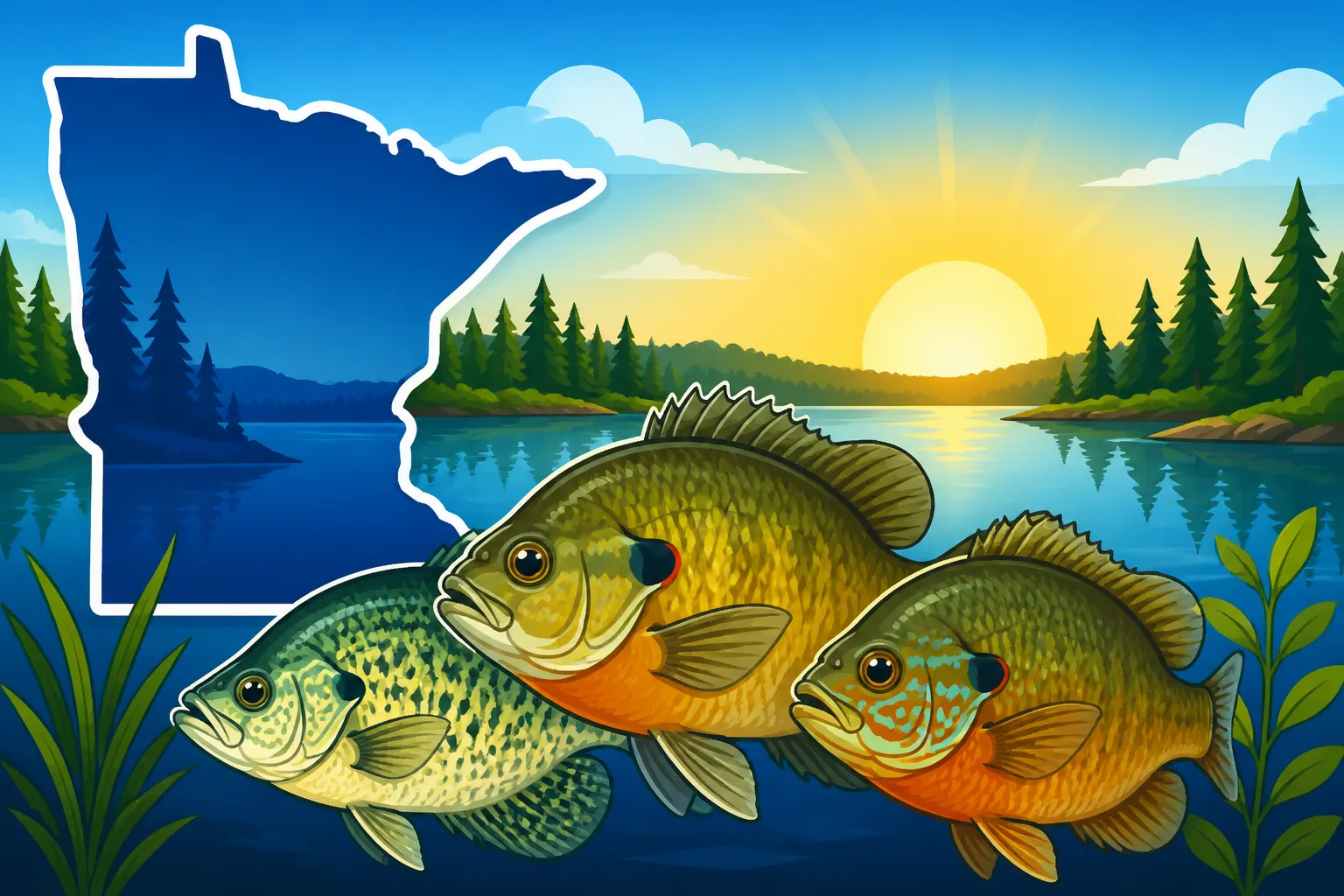
- Bluegill: These are arguably the most iconic panfish. They're typically deep-bodied, roundish fish with a small mouth and a distinct black spot on the "ear flap" (operculum). Their colors can vary, often showing vibrant blues, oranges, and greens, especially on males during spawning. They love weedy areas and are often caught near docks and shorelines.
- Black Crappie: Recognizable by their deep, compressed bodies and a speckled, silvery-black appearance, black crappies have 7-8 dorsal spines. They tend to prefer clearer water bodies with plenty of submerged structure like brush piles, downed trees, or deep weed lines. They school heavily and are known for their strong spring bite.
- White Crappie: Similar in shape to black crappies but generally lighter in color with distinct vertical bars on their sides. White crappies have 5-6 dorsal spines. They tolerate more turbid water and are often found in larger rivers and shallower, muddier lakes than their black crappie cousins.
- Other Sunfish Varieties: Beyond the common bluegill, Minnesota has a few other sunfish species that fall under the panfish umbrella, including pumpkinseeds, green sunfish, and orangespotted sunfish. While less common to target specifically, they often mix in with bluegill catches and contribute to the panfish bounty.
Top Panfish Lakes Across Minnesota
Now for the exciting part! Minnesota truly is the "Land of 10,000 Lakes," and while many hold panfish, some consistently stand out for their quality and quantity. Whether you're in Central, Northern, or Southern Minnesota, there's a fantastic panfish lake waiting for you.
Central Minnesota Gems
The heart of Minnesota offers a fantastic mix of lake types, from large, popular destinations to smaller, quieter bodies of water.
- Gull Lake (Brainerd Lakes Area): While famous for its walleye and bass, Gull Lake is also a fantastic panfish fishery. Its diverse structure, including numerous bays, points, and weed beds, provides excellent habitat for both crappies and bluegills. Anglers often find success targeting crappies in the deeper basins during summer and early ice, and bluegills around the abundant submerged vegetation. The sheer size of Gull Lake means there's always a new spot to explore, and the public access is excellent.
- Lake Minnetonka (Twin Cities Metro): Yes, even the bustling metro area has incredible panfish! Lake Minnetonka, a sprawling urban fishery, is renowned for its large crappies and impressive bluegills. Its complex structure, including numerous interconnected bays, channels, and humps, holds panfish year-round. You'll find anglers targeting suspended crappies over deep basins and bluegills hiding in thick weed beds. Be sure to check the specific regulations for Lake Minnetonka as it is closely managed.
- Pelican Lake (Otter Tail County): Otter Tail County lives up to its "1,000 Lakes" nickname, and Pelican Lake is a standout for panfish. Known for its strong populations of both crappie and bluegill, Pelican offers consistent action. Its numerous islands, reefs, and expansive weed lines provide ample cover and feeding grounds. It’s a favorite for families and vacationers looking to catch a good meal.
Northern Minnesota Hotspots
When you think of fishing in Northern Minnesota, walleye and pike often come to mind. But many of these majestic northern waters also hold incredible panfish populations, especially crappies.
- Leech Lake: This massive lake is celebrated for its walleye and muskie, but don't overlook the crappie fishing! Leech Lake has several bays and sheltered areas that consistently produce impressive crappies, particularly in the spring and during the ice fishing season. Shingobee Bay, Agency Bay, and Walker Bay are often prime locations for finding schools of active crappies. For more detailed fishing information, check out our full Leech Lake Fishing Guide.
- Lake Winnibigoshish (Winnie): Often called "Big Winnie," this lake is a walleye factory, but also a hidden gem for yellow perch. While perch are panfish, they often get overlooked for their larger cousins. Winnie offers fantastic jumbo perch fishing, especially through the ice. The shallower bays and flats dotted with sparse vegetation are great places to start your search. If you're looking for quality yellow perch, Winnie should be on your list.
- Upper Red Lake: While Upper Red Lake is a renowned walleye hotspot, especially for ice fishing, it also harbors excellent crappie fishing. The lake’s shallower, stained waters are ideal for crappies, and anglers often find large schools in specific areas. It’s a great destination if you want a chance at both walleye and some quality crappies in the same trip.
- Cass Lake & Lake Bemidji: These interconnected lakes in the Bemidji area are fantastic multi-species fisheries. Both Cass Lake and Lake Bemidji offer strong crappie and bluegill populations. Look for crappies suspending over deeper humps or along transitions, and bluegills in the extensive weed beds. The convenience of being close to the city of Bemidji makes these lakes very accessible.
Southern and Metro Area Opportunities
Don't think you have to drive hours north to find great panfish. The southern half of Minnesota, including the Twin Cities metro, has many productive lakes perfect for a local outing. The accessibility of these lakes makes them ideal for a quick trip after work or a spontaneous weekend adventure.
- Lake Waconia: Just west of the Twin Cities, Lake Waconia is a large, diverse lake known for its trophy bass and walleye, but it consistently produces excellent crappies and bluegills. Its complex bottom structure, deep holes, and extensive weed flats provide ideal habitat. Anglers often target crappies over deep water during winter and spring, and bluegills in the shallows during warmer months. The lake is well-known for its impressive size structure of panfish.
- Bde Maka Ska (Minneapolis): Right in the heart of Minneapolis, Bde Maka Ska offers surprisingly good fishing for bluegills and crappies. Being an urban lake, it's easily accessible by foot, bike, or public transport, with numerous fishing piers and shoreline access points. While not known for giants, it provides consistent action, making it perfect for an impromptu family fishing outing.
- Lake Harriet (Minneapolis): Another fantastic urban option, Lake Harriet also provides good opportunities for crappies and bluegills. Similar to Bde Maka Ska, it's very accessible, offering plenty of shoreline fishing and public piers. These metro lakes are perfect for introducing kids to fishing, where catching anything is the main goal.
- White Bear Lake: This popular lake on the northeastern edge of the Twin Cities metro is a great option for panfish. White Bear Lake has healthy populations of crappies and bluegills, and its varied structure provides plenty of places for them to hide. During the open water season, target weed lines and submerged points. For those looking for local options, checking the fishing reports for White Bear Lake fishing is always a good idea.
Panfish Fishing Techniques and Tips for Success
Catching panfish is generally straightforward, but a few key techniques and tips can significantly increase your success rate and help you find those bigger fish. Whether you're an experienced angler or just starting out, refining your approach can make all the difference.
Essential Gear and Bait
You don't need a massive tackle box full of expensive gadgets to catch panfish. Simplicity often reigns supreme, especially when targeting these eager eaters.
- Light Tackle is Key: Panfish have relatively small mouths and can be very subtle biters, especially the larger ones. A light action spinning rod (5' to 6'6") paired with a small spinning reel spooled with 2-4 pound test monofilament or fluorocarbon line is perfect. This setup allows for light presentations and helps detect those faint nibbles. For ice fishing, specialized ice fishing rods are ideal, often ranging from 24-36 inches in length, again in light or ultra-light action. If you're looking for a full setup, consider some of the best fishing gear for beginners in Minnesota (By Budget).
- Small Jigs and Hooks: The vast majority of panfish are caught on small offerings. Tiny jigs, ranging from 1/64 oz to 1/8 oz, are incredibly effective. Colors like chartreuse, pink, white, and black are often good starting points. Tipping these jigs with a small piece of live bait or a micro plastic tail can enhance their appeal. For live bait fishing under a bobber, use small, sharp hooks (size 8 or 10 Aberdeen or baitholder hooks).
- Bobbers: A good slip bobber rig is invaluable for panfish. It allows you to present your bait at a precise depth, which is crucial when fish are holding in specific zones, whether it's just off the bottom or suspended in the water column. Learning how to use a slip bobber for Walleye & Crappie is a fundamental skill for any panfish angler.
- Live Bait Favorites: When in doubt, live bait is almost always a winner for panfish.
- Wax Worms/Larvae: These are irresistible to bluegills and other sunfish. A small jig tipped with a wax worm is a classic and highly effective presentation.
- Small Minnows: Crappies, especially larger ones, often prefer a small minnow. Lip-hooked or tail-hooked minnows under a bobber are deadly.
- Nightcrawlers (pieces): While a whole nightcrawler is too big, a small piece of one can entice bluegills.
Seasonal Strategies for Panfish
Panfish movements and feeding patterns change throughout the year, just like any other fish. Understanding these seasonal shifts will help you find them more consistently.
- Spring (Post-Ice Out & Spawn): As the ice melts and water temperatures rise, panfish move into shallower, warmer bays and protected areas. This is particularly true for crappies. They'll stage near deeper channels and then move into shallow brush or emergent vegetation to spawn. Targeting shallow bays with soft bottoms that warm quickly is a great strategy. This is prime time for Spring Crappie Fishing in Minnesota. Bluegills follow shortly after.
- Summer (Weed Lines & Deeper Structure): Once spawning is complete and water temperatures fully stabilize, panfish will often relate to dense weed lines, lily pads, and submerged timber in shallower water, especially in the mornings and evenings. During the brightest parts of the day, or as water temperatures peak, crappies, in particular, will often suspend over deeper water or relate to deep submerged structure like brush piles or humps. Don't be afraid to cast into thick cover with a weedless jig or present bait under a bobber near these hideouts.
- Fall (Transition & Deepening Water): As the days shorten and water temperatures cool, panfish will begin to transition. They often move from shallow weed beds to the edges of deeper water, gathering in larger schools. Crappies might be found suspending near thermoclines or congregating around deep points and humps. This can be an excellent time to find larger schools of active fish before the ice sets in.
- Winter (Ice Fishing): Ice fishing for panfish is a Minnesota tradition, and it's incredibly productive. Crappies will often school up over deep basins or relate to specific structures like deep humps or brush piles. Bluegills tend to be found in slightly shallower depths, often relating to the remaining green weed beds under the ice. Learning about Ice Fishing for Crappie & Panfish will show you how to use small jigs, often tipped with a wax worm or a tiny plastic, to entice bites. Using a fish finder or flasher like a Vexilar or Humminbird can make a huge difference in locating these schools under the ice.
Disclaimer
Fishing regulations can change frequently. Always consult the latest Minnesota Department of Natural Resources (DNR) fishing regulations before heading out on the water. This guide is for informational purposes only and should not be considered a substitute for official DNR publications. Be safe, ethical, and have fun out there!