Yellow Perch & Sauger in Minnesota
For anglers venturing onto Minnesota's abundant waters, there's often a bit of a puzzle when it comes to identifying two common yet distinct species: yellow perch and sauger. It's easy to confuse them, or to not fully understand their unique preferences, which can truly impact your success on the water. This comprehensive guide will unravel the mysteries of these fascinating fish, helping you identify them correctly, understand their habits, and ultimately, improve your catch rates.
Understanding Yellow Perch in Minnesota
The yellow perch is a beloved staple across Minnesota, known for its vibrant colors and delicious, flaky white meat. They're a fantastic fish for anglers of all skill levels, from kids just learning the ropes to seasoned veterans looking for a fun day on the lake. But don't let their widespread presence fool you; there's a lot of nuance to finding and catching true "jumbo" perch.
Distinctive Features and Identification
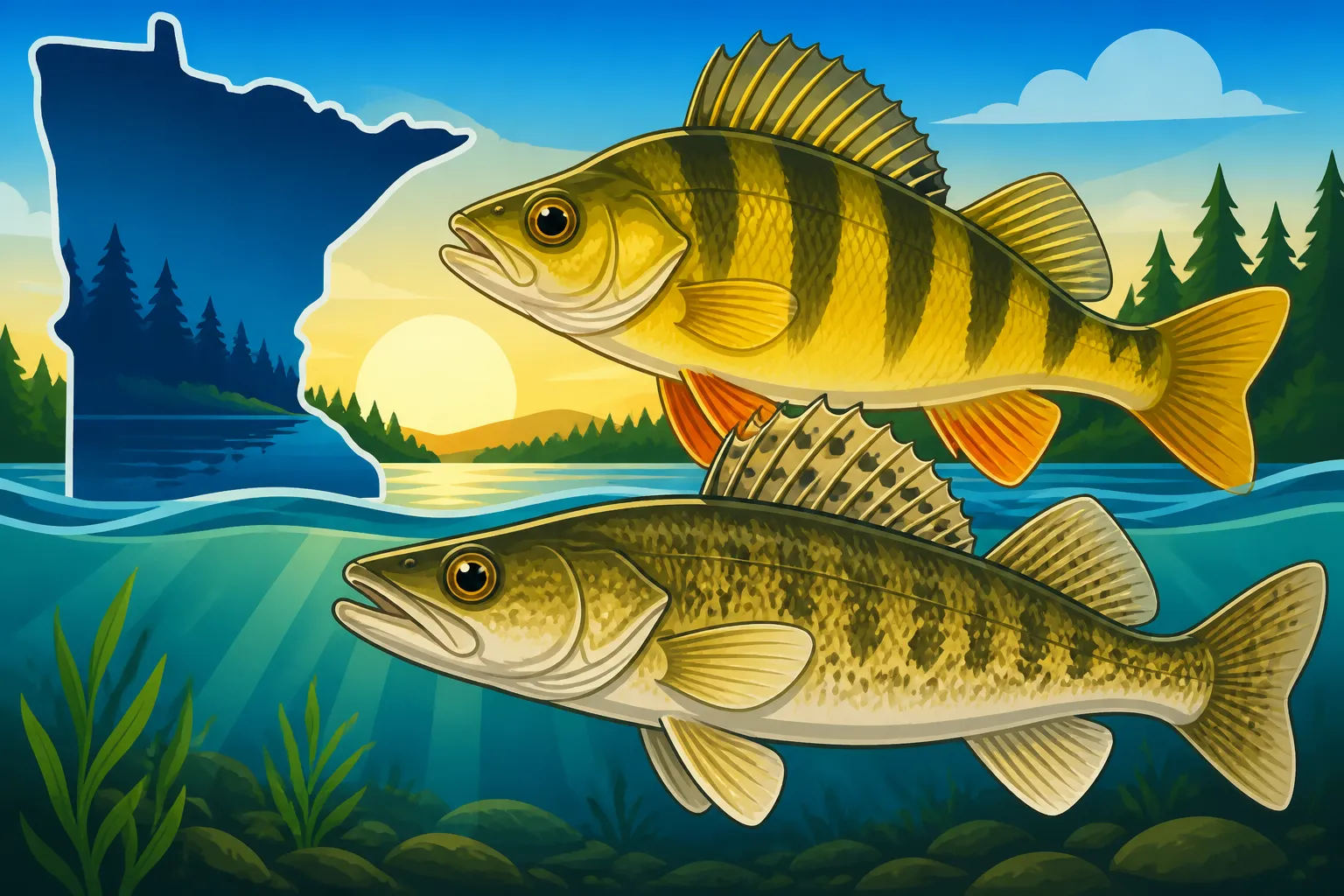
When you pull a yellow perch from the water, you're usually met with an undeniably beautiful fish. Their most striking feature is their coloration: a distinct golden-yellow body marked with six to eight prominent, dark, vertical stripes that fade as they approach their belly. These stripes are a dead giveaway. You'll also notice two separate dorsal fins. The first, spiny dorsal fin usually has 12 to 14 sharp rays, while the second, soft-rayed dorsal fin is located just behind it. Their anal fin often has a reddish or orange tint, especially during spawning season, adding to their vibrant appeal.
Another key identifier is their relatively compact body shape, which is somewhat compressed laterally. They typically have a small mouth, which is important to remember when selecting hook sizes for fishing. Unlike some other species, yellow perch usually don't grow to extreme sizes in Minnesota, with most catches ranging from 6 to 10 inches. However, finding a "jumbo" perch over 12 inches is a real trophy and a testament to good lake health and smart angling. These larger specimens will often have an even more pronounced hump behind their head.
Preferred Habitats and Behavior
Yellow perch are incredibly adaptable, thriving in a wide variety of aquatic environments, from large, sprawling lakes to smaller ponds and slow-moving rivers. Generally, they prefer clear to moderately turbid water with plenty of submerged vegetation, offering both cover from predators and a rich hunting ground for food. In the summer months, you'll often find them congregating in weed lines, around docks, or near submerged structures like brush piles and rock reefs in depths from 5 to 25 feet. As waters cool in the fall, they tend to move deeper, schooling up in open water basin areas, often suspending over deep flats.
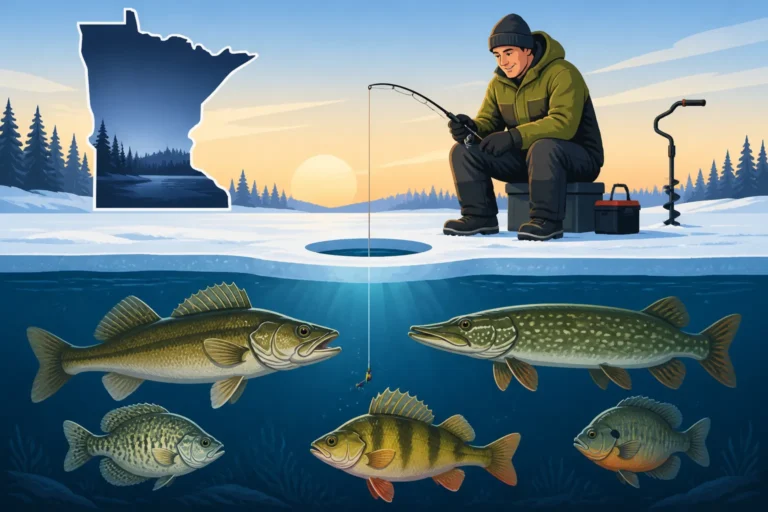
During the ice fishing season, their behavior can shift dramatically. Early ice often sees them still relating to shallow weed edges, but as winter progresses, they migrate to deeper main lake basins, sometimes suspending several feet off the bottom over depths of 30 feet or more. This schooling behavior is a key aspect of perch fishing; if you find one, you're very likely to find many more. They are diurnal, meaning they are most active during the day, though they can bite effectively during low-light periods as well. Understanding these seasonal and daily patterns is crucial for locating them.
Dietary Habits and Foraging
Yellow perch are opportunistic predators with a varied diet that changes as they grow. Younger perch primarily feed on zooplankton and aquatic insects. As they mature, their diet expands significantly to include insect larvae, small crustaceans like scuds and freshwater shrimp, and even the eggs and fry of other fish species. Larger perch become more piscivorous, meaning they eat other fish, preying on smaller minnows, shiners, and even the young of their own kind. This broad diet makes them receptive to a wide range of baits and lures, which is a big part of their appeal to anglers.
Their foraging strategy often involves cruising in schools, actively searching for food. They are visual predators, relying on their keen eyesight to spot prey. This is why bait presentation, color, and size can be so important when targeting them. On lakes with abundant forage, such as many of Minnesota's larger lakes, perch can grow quickly and attain impressive sizes. The health of the forage base directly correlates with the size and abundance of the perch population, making lakes with diverse ecosystems prime spots for finding those elusive jumbo perch.
Decoding Sauger in Minnesota Waters
Sauger are often the unsung heroes of Minnesota's fishing scene, frequently overshadowed by their larger, more famous cousin, the walleye. However, sauger offer a unique and rewarding angling experience, often found in different habitats and biting under conditions that might send walleye into hiding. Recognizing a sauger and understanding its preferences can open up a whole new world of fishing opportunities, especially on some of our larger border waters and river systems.
Key Characteristics to Spot a Sauger
While sauger share a similar torpedo-shaped body with walleye, there are several key features that set them apart. The most definitive characteristic is the distinct, irregular dark spots on their first dorsal fin. These spots often form noticeable bars or blotches, a feature almost entirely absent on a walleye's dorsal fin, which typically has a solid dark blotch at the rear base. Additionally, sauger have noticeable rows of small, dark spots on their sides, giving them a mottled, sometimes brassy or brownish appearance, rather than the more uniform olive-gold of a walleye.
Their scales also extend further onto their cheek and gill covers compared to a walleye, which has mostly bare cheek patches. Sauger generally grow smaller than walleye, with most catches in Minnesota ranging from 12 to 18 inches. While a 20-inch sauger is considered a very respectable catch, they rarely approach the trophy sizes of walleye. Their eye is also smaller in proportion to their head compared to a walleye, and their overall body profile can appear more slender. Getting a good look at that spiny dorsal fin is almost always the quickest and most reliable way to confirm a sauger. For more detailed comparison, refer to our guide on How to Identify a Walleye vs Sauger.
Typical Sauger Haunts and Patterns
Unlike walleye, which often prefer clearer waters and rocky structures, sauger have a strong affinity for turbid, stained, or muddy water and areas with strong current. You'll frequently find them in the deeper channels, holes, and eddies of large rivers like the Mississippi River, Red River of the North, and the Rainy River. In lakes, they'll often be found in the deeper, siltier basins, or around current breaks near river mouths and narrows, usually preferring depths greater than walleye. They are much less commonly found in shallow, clear-water environments.
Sauger are often found in association with walleye, especially in river systems, but they will typically occupy the deeper, swifter currents or the more turbid sections. They are highly sensitive to light, even more so than walleye, which means they are incredibly active during low-light conditions, such as dawn, dusk, and especially after dark. This makes night fishing particularly effective for sauger. Their movements are largely dictated by current and depth, and understanding how these factors influence their position is key to successful sauger fishing. They tend to stick close to the bottom, often hugging structure to avoid being swept away by strong flows.
What Sauger Feast On
Sauger are primarily piscivores, meaning their diet consists almost exclusively of other fish. They are not as opportunistic as yellow perch or even walleye when it comes to insect larvae or crustaceans, though they will consume them if readily available. Their preferred prey includes various types of minnows, shiners, dace, and often the young of other fish species that inhabit the same current-rich, turbid environments. They are ambush predators, using the cover of stained water and structure to surprise their prey.
Their reliance on fish as a primary food source influences effective bait selection. Live baits such as shiners, fatheads, and chubs are often irresistible to sauger, mimicking their natural forage. Artificial lures that imitate these baitfish, especially those designed to be fished close to the bottom in current, can also be highly effective. The low-light conditions they prefer also play a role, as many of their prey species are also active during these times. Understanding their diet helps you "match the hatch" and present offerings that sauger simply can't resist.
The Critical Differences: Perch vs. Sauger
While both yellow perch and sauger are fantastic sport fish and excellent table fare found in Minnesota, understanding their fundamental differences is more than just academic; it's essential for becoming a more effective angler. Confusing the two can lead to incorrect fishing strategies or even accidental violations of specific fishing limits, as regulations often differ.
Visual Cues for Easy Differentiation
When you're holding a fish in your hand, you want to be certain about its identity, especially if you're trying to adhere to specific bag limits. Here’s a quick breakdown of the most reliable visual distinctions:
| Feature | Yellow Perch | Sauger |
|---|---|---|
| Dorsal Fin | First dorsal fin is clear or slightly dusky, no spots | First dorsal fin has distinct, irregular dark spots |
| Body Color | Bright golden-yellow with 6-8 dark vertical stripes | Mottled brown/brass/gray with dark blotches/spots on sides |
| Cheeks/Gills | Mostly scaled | Fully scaled cheeks and gill covers |
| Size | Typically 6-10 inches, rarely over 14 inches | Typically 12-18 inches, rarely over 20 inches |
| Tail Fin | No distinct pattern | Often has a white lower lobe, especially on larger fish |
| Overall Shape | More compressed (taller body relative to length) | More slender and elongated (similar to walleye) |
These visual cues, particularly the spotted dorsal fin of the sauger and the vertical bars of the perch, are your best friends in the field. Always check multiple features if you're unsure, especially on smaller specimens where some traits might be less pronounced.
Habitat Overlaps and Separations
While both species can occasionally be found in the same general water body, their preferred micro-habitats often differ significantly. Yellow perch are the adaptable generalists, thriving in everything from shallow, vegetated bays to open-water humps and even deep lake basins. They are much more tolerant of clear water and less dependent on current. You'll find them widely distributed across thousands of Minnesota lakes and slower river sections.
Sauger, on the other hand, are specialists. They dominate in environments with significant current and turbid water. Think about the big river systems like the Mississippi or the Rainy River, or large, deep lakes that have strong currents or consistent water flow through them, such as Lake of the Woods. While they might occasionally venture into less turbid waters, their strong preference for deeper, darker, and faster-moving water sets them apart. This habitat separation is a key reason why you might target walleye and catch sauger, or vice versa, but rarely encounter jumbo perch in the same deep, swift river channel where sauger thrive.
Fishing Implications of Their Differences
Understanding these distinctions has profound implications for your fishing strategy. If you're targeting perch, you'll likely be focusing on shallower depths, weed lines, and structural elements using smaller baits and lighter tackle. You'll probably be looking for those tell-tale yellow bars and preparing for a fight with a panfish-sized fish. On the other hand, if sauger are your quarry, you'll be gearing up for deeper water, stronger currents, and fishing with slightly heavier gear and larger baits to mimic the minnows they prefer.
The time of day also becomes a factor. Perch are active throughout the day, while sauger truly excel in low-light conditions or even complete darkness. This means a daytime perch trip might transition into a prime sauger hunt as the sun sets. Always check the specific Minnesota Fishing Limits: Bag & Possession (2026) for the water body you are fishing, as limits can vary by species and location, particularly in border waters where sauger are more prevalent. Knowing your target and its distinct characteristics ensures you're not only successful but also compliant with regulations.
Targeting Yellow Perch: Techniques and Tips
Yellow perch are a fantastic target for anglers of all skill levels, offering consistent action and a delicious meal. To consistently catch them, especially those highly sought-after jumbo perch, you need to understand the right baits, where to find them, and the essential gear.
Best Baits and Lures for Perch
Yellow perch are not particularly picky eaters, but certain presentations definitely outperform others. Live bait is almost always a winner. Small minnows, especially fatheads or shiners, fished on a plain hook or small jig, are deadly. Threading a lively minnow through the lips and letting it swim naturally under a bobber can be incredibly effective, especially when they are scattered. Waxworms, spikes (maggots), and small pieces of nightcrawler are also excellent choices, particularly when jigging or using a slip bobber. The scent and natural movement of live bait are hard for a perch to resist.
When it comes to artificial lures, presentation is key. Small jigs, typically 1/32 to 1/8 ounce, tipped with a small minnow or a couple of spikes, are incredibly versatile. Colors like chartreuse, white, orange, and glow can be very effective, especially in stained water or during low-light conditions. Tiny soft plastic grubs or micro-spoons can also entice bites. For instance, brands like Northland Tackle offer a range of small jigs and spoons specifically designed for panfish that work wonders on perch. A classic method involves a small spoon, jigging spoon, or even a specialized ice fishing lure like a "Demon" or "Ratso," jigged slowly with pauses, often tipped with a piece of bait. The flash and vibration can draw them in, and the natural bait seals the deal.
Seasonal Perch Hotspots
Perch fishing success is heavily influenced by the season and water temperature.
- Spring: After ice-out, perch often move into shallower areas, congregating near emerging weed growth or along soft bottoms in bays where insect larvae and small minnows are abundant. They'll also follow creek mouths and river inflows as these areas warm up faster and provide new food sources. Focus on depths of 5-15 feet.
- Summer: As waters warm, perch often relate to the deepest, densest weed lines during the day, seeking cooler temperatures and cover. They'll also be found around submerged humps, rock piles, and points that drop off into deeper water. In some lakes, particularly during mid-day, they might suspend in open water over deep basins, feeding on schools of baitfish. Early mornings and evenings often see them pushing shallower to feed.
- Fall: This is prime time for jumbo perch! As the water cools, perch schools become more consolidated and migrate from shallow weeds to deeper, main lake structures and mud flats. They become very active, feeding heavily in preparation for winter. Look for them on the edges of deep breaks, humps, and large flats in 20-40 feet of water.
- Winter (Ice Fishing): Early ice finds perch still near shallow weeds and structure. As winter progresses, they move to deeper main lake basins. Key areas include gradual slopes, main lake humps, and expansive mud flats. Understanding how to find fish while ice fishing for perch means exploring these deeper areas, often suspending your bait several feet off the bottom, as they might be feeding on crustaceans or plankton layers. Our guide on Ice Fishing for Perch in Minnesota delves deeper into these techniques.
Perch Fishing Gear Essentials
You don't need heavy-duty tackle to enjoy perch fishing. In fact, lighter gear often leads to more bites and a more enjoyable fight.
- Rods and Reels: An ultralight or light action spinning rod, typically 5 to 6.5 feet long, paired with a small spinning reel (size 500-1000) is ideal. This setup allows for accurate casts with small baits and provides excellent sensitivity to detect subtle perch bites. For ice fishing, sensitive ultralight ice rods with a spring bobber are crucial for seeing those faint uplifts or pauses that signal a bite.
- Line: Opt for light line, typically 2-4 pound monofilament or fluorocarbon. Braided line can be used, but consider adding a fluorocarbon leader for stealth, as perch can be line-shy in clear water. For ice fishing, specific low-stretch monofilament or fluorocarbon lines designed for cold temperatures perform well.
- Terminal Tackle: A variety of small hooks (size 8-12 Aberdeen or plain shank), split shot weights, and small bobbers (slip bobbers are excellent for fishing at varying depths) are essential. Don't forget a pair of needle-nose pliers for hook removal and a small tackle box to keep everything organized. Our guide on Best Live Bait for Walleye (Leeches, Minnows, Crawlers) can provide some crossover tips on bait presentation that apply to perch as well.
Landing Sauger: Strategies for Success
Sauger might not get the same press as walleye, but they offer some of the most consistent action and excellent eating among Minnesota's fish species. Targeting them effectively requires a slightly different approach, focusing on their preference for current and deeper, darker water.
Effective Baits and Presentation for Sauger
Sauger are primarily fish-eaters, making live bait one of the most effective tools in your arsenal. Active minnows are paramount. Shiners, fatheads, or small chubs, hooked lightly through the lips or dorsal fin, are incredibly effective. A classic presentation involves a Lindy Rig or a plain walking sinker rig, allowing the minnow to drift naturally near the bottom in the current. This "low and slow" approach is often irresistible. Many anglers use a three-way swivel rig with a heavy weight on a dropper line and a snelled hook with a minnow on a longer leader, keeping the bait right in the strike zone.
Artificial lures can also be highly productive, especially jigs. A jig head (typically 1/4 to 3/8 ounce, depending on current strength and depth) tipped with a minnow is arguably the most consistent sauger catcher. Colors like orange, chartreuse, white, or glow can be effective, particularly in the turbid waters sauger prefer. Vertically jigging spoons or blade baits, especially those with rattles, can also trigger aggressive strikes. These lures mimic dying baitfish and can be highly effective when worked directly beneath the boat in current. The key is to keep your bait close to the bottom and present it slowly, allowing the current to impart natural action.
Prime Times and Locations for Sauger
Sauger are champions of low-light and deep-water conditions.
- Time of Day: Forget peak daylight. Sauger fishing shines brightest at dawn, dusk, and especially throughout the night. Their light-sensitive eyes give them a distinct advantage in these conditions, making them more active and willing to bite. Overcast days can also provide excellent daytime sauger action, as the diffused light penetrates the water less.
- Seasonal Peaks: While sauger can be caught year-round, late fall and early winter (prior to heavy ice) are often exceptional times, as they feed aggressively in river channels. During winter, ice fishing for sauger is very popular on large border waters. Our guide on How to Catch Sauger Through the Ice in Minnesota shares specific tactics. Spring, during and immediately after spawning runs in river systems, can also be red-hot. Summer sauger are typically found in the deepest, coolest, and most oxygenated parts of rivers or deep lake basins, often requiring specialized deep-water trolling or vertical jigging techniques.
- Specific Locations: Focus on the main channels of rivers with strong current, deep holes, current seams, eddies behind wing dams, and structural elements like bridge pilings. In lakes like Lake of the Woods or Rainy Lake, target deep main lake basins, narrows with current, or the mouths of rivers flowing in or out. Sauger will often stack up in these areas, making it possible to catch multiple fish once you locate a school.
Recommended Sauger Fishing Tackle
To effectively battle sauger in current and at depth, you'll want slightly more robust gear than for perch.
- Rods and Reels: A medium-light to medium action spinning rod, 6.5 to 7 feet in length, paired with a reliable spinning reel (size 1000-2500), is a versatile setup. This provides enough backbone to handle the fish and the current, while still maintaining sensitivity for bite detection. Baitcasting setups can also be very effective for heavier jigging or trolling applications, offering more control over heavier weights and larger lures.
- Line: Use 6-10 pound test monofilament or fluorocarbon. Braided line (10-20 pound test) with a fluorocarbon leader is an excellent choice, providing superior sensitivity and strength, which is crucial for detecting light bites in deep water and heavy current. The low stretch of braid helps you feel every tap.
- Terminal Tackle: Stock up on jig heads in various weights (1/4 to 1/2 ounce being common), walking sinkers, three-way swivels, and snelled hooks (size 4-6). Also, a selection of minnow-imitating crankbaits (like Rapalas or Berkley Flicker Shads) and blade baits can be useful for trolling or vertical jigging in certain situations. Make sure your hook points are sharp to penetrate the sauger's bony mouth.
Where to Find Jumbo Perch and Sauger in Minnesota
Minnesota is truly a land of opportunity for anglers seeking both plentiful yellow perch and elusive sauger. While they inhabit many of the same general regions, their specific preferred haunts often diverge. Knowing the best spots can drastically cut down on your search time and increase your chances of success.
Top Lakes and Rivers for Yellow Perch
When it comes to yellow perch, you can find them in virtually every sizable lake across Minnesota. However, some destinations consistently produce numbers and, more importantly, those prized "jumbo perch."
- Lake of the Woods: This vast northern lake is legendary for its abundance of perch, often overshadowed by its walleye fame. Both the main lake and its various bays offer incredible opportunities. Look for perch relating to large mud flats, rocky reefs, and the edges of expansive weed beds, particularly in areas like Big Traverse Bay or the bays near Baudette. In winter, massive schools congregate in deeper basins, providing some of the best ice fishing for perch in Minnesota.
- Upper Red Lake: While primarily known for walleye, Upper Red Lake also boasts a healthy perch population, with excellent fishing for eaters and occasional larger specimens, especially along its expansive soft bottoms and gradual slopes.
- Lake Winnibigoshish (Winnie): A fantastic multi-species lake, Winnie offers consistent perch action, often found on its numerous humps, bars, and mud flats. Early season and fall can be particularly productive for numbers.
- Leech Lake: Another premier Minnesota fishery, Leech Lake provides abundant perch, especially in its shallower, weedy bays and on its vast offshore flats. Areas like Walker Bay, Steamboat Bay, and Sucker Bay are often productive.
- Mille Lacs Lake: While famous for its walleye and smallmouth bass, Mille Lacs also holds a good population of yellow perch, often found around the edges of the mud flats and rocky structures that attract its other predatory fish.
- Many smaller, unheralded lakes: Don't overlook the countless smaller, lesser-known lakes, especially those in the north-central and west-central parts of the state. Many of these lakes, though not "destination" fisheries, can hold surprisingly robust perch populations, often with less fishing pressure. You can often find where to find jumbo perch through local bait shops or by checking DNR lake surveys.
Premier Sauger Fishing Destinations
Sauger fishing in Minnesota is largely concentrated in specific river systems and interconnected lake environments where their preferred conditions of current and turbidity are met.
- Rainy River: This iconic river, forming part of the border with Ontario, is arguably Minnesota's premier sauger destination, especially during its spring and fall runs. Sauger stack up in the deeper holes and channels, particularly from Baudette downstream to Lake of the Woods. It's an incredible fishery for both numbers and size.
- Lake of the Woods: As the Rainy River flows into this massive lake, sauger are found throughout its deeper basins and in areas with current flow. While walleye get most of the attention, sauger are a significant component of the catch, particularly in the depths.
- Mississippi River (Pools 1 through 8): The various pools of the Mississippi River in southeastern Minnesota are fantastic for sauger. Look for them in the deeper navigation channels, below dams, and in areas with significant current breaks, such as wing dams and submerged rock piles. Areas around Red Wing, Lake City, and Winona are particularly renowned. Our guide on Mississippi River Pool Fishing in Minnesota can provide more detailed insights into these specific stretches.
- St. Croix River: Another excellent border water, the St. Croix River, particularly in its lower stretches and deeper holes, offers good sauger fishing.
- Red River of the North: While more famous for its catfish, the Red River of the North in northwestern Minnesota also holds sauger, especially in its deeper sections and where currents create eddies and scour holes.
Border Water Considerations for Both Species
When fishing Minnesota's border waters, such as Lake of the Woods, Rainy River, or the Mississippi and St. Croix Rivers, it's absolutely critical to be aware of specific regulations. These waters are often shared with neighboring states or provinces (Ontario, Wisconsin, North Dakota), and fishing regulations can differ significantly depending on which side of the imaginary line you're on, or even which part of the water you are fishing. For example, Minnesota might have one set of rules, while Wisconsin or Ontario has another.
Always consult the most current Minnesota fishing regulations booklet published by the DNR, specifically looking for sections on "Border Waters." This includes details on species-specific length limits, bag limits, and season dates that may vary from inland Minnesota waters. Ignorance of the law is no excuse, and wardens patrol these areas diligently. Check out our Border Water Fishing Rules (Minnesota-Ontario, Wisconsin) guide to ensure you're fully prepared and compliant when fishing these unique and productive areas.
Regulations and Conservation for Perch and Sauger
As responsible anglers, understanding and adhering to Minnesota's fishing regulations for yellow perch and sauger is paramount. These rules are in place not just to maintain healthy fish populations for future generations but also to ensure a fair and sustainable angling experience for everyone. Ignoring them can lead to significant penalties, but more importantly, it can negatively impact the very fisheries we love.
Minnesota Fishing Limits and Rules
The Minnesota Department of Natural Resources (DNR) sets specific regulations for different fish species, including yellow perch and sauger. These regulations can vary significantly depending on the lake or river system you are fishing, so always double-check the current Minnesota Fishing Regulations handbook or the DNR's online lake finder tool for the specific body of water.
For yellow perch, statewide regulations generally allow for a generous daily bag limit, often quite high (e.g., 20 or 30 fish). However, some specific lakes may have reduced limits or even size restrictions, particularly those where DNR fisheries managers are trying to encourage the growth of jumbo perch populations. For instance, a lake might have a reduced bag limit of 10 perch, with only one over 10 inches, to protect larger breeding females. The season for perch is typically open year-round, which is fantastic for consistent angling.
For sauger, regulations are often tied more closely to walleye regulations, especially in lakes and rivers where both species are present. Statewide, sauger are often included in the aggregate walleye/sauger bag limit, meaning you can keep a combined total of, say, 6 walleye and sauger, with specific provisions for each. For example, the Minnesota Walleye Limit & Size Rules might specify that only one sauger over a certain length can be kept, or that sauger must be within a certain slot. The season for sauger often mirrors the Walleye Season & Limit in Minnesota, typically opening in mid-May and running through the winter ice fishing season. Given their preference for border waters, rules can be particularly nuanced, so reviewing documents like the Rainy Lake Fishing Regulations (2026) or Lake of the Woods Fishing Regulations (2026) is critical if you're fishing those specific areas.
Ethical Angling and Catch-and-Release Practices
Beyond simply following the rules, ethical angling practices ensure that the fish we catch, whether kept or released, have the best chance of survival and contribute to healthy ecosystems.
- Minimize Stress: When handling fish you intend to release, do so quickly and gently. Keep the fish in the water as much as possible, especially during warm weather when oxygen levels are lower. Avoid excessive squeezing or handling.
- Proper Hook Removal: Use appropriate tools like needle-nose pliers or a hook-out tool to quickly remove hooks. If a fish is deeply hooked, especially in the gills or throat, it's often best to cut the line as close to the hook as possible rather than tearing internal organs trying to remove it. Barbless hooks can also make removal much easier and reduce injury. Our guide on Catch and Release Best Practices in Minnesota offers more detailed advice.
- Revive If Necessary: If a fish appears lethargic upon release, gently hold it upright in the water, facing into a mild current, until it regains its strength and swims away on its own. This is particularly important for sauger caught from deep water, as they can sometimes suffer from barotrauma (pressure changes).
- Respect the Resource: Always pack out everything you pack in, and avoid leaving behind fishing line, bait containers, or other litter. Be mindful of your impact on shorelines and sensitive aquatic vegetation. These small actions contribute to the overall health and beauty of our fishing waters.
Understanding Environmental Factors
Our fish populations, including perch and sauger, are directly impacted by environmental factors, and understanding these helps us appreciate the regulations in place. Water quality, habitat degradation, and climate change all play a role in the abundance and health of fish.
- Water Quality: Pollution, runoff from agricultural lands, and shoreline development can introduce harmful chemicals and excessive nutrients into lakes and rivers, impacting fish health and their food sources. The DNR constantly monitors water quality and issues advisories, such as the Minnesota Fish Consumption: Mercury & PFAS Advisories, to protect public health.
- Habitat: Healthy aquatic vegetation, diverse bottom structures, and intact shorelines provide crucial spawning grounds, nursery areas, and feeding habitats. Practices like responsibly managing aquatic invasive species (AIS) are vital to protecting these habitats.
- Climate Change: Changes in water temperatures, ice cover duration, and precipitation patterns can affect spawning success, fish growth rates, and the spread of diseases. For example, warmer winters might impact the success of species like sauger and perch that rely on specific temperature cues for spawning or cold water for overwintering. By understanding these broader environmental pressures, anglers can become better advocates for conservation and sustainable fishing practices.
Disclaimer
Fishing regulations in Minnesota are subject to change. Always consult the most current Minnesota Department of Natural Resources (DNR) fishing regulations booklet or website before heading out on the water. This guide is for informational purposes only and should not be considered a substitute for official DNR regulations.