Topwater Bass Fishing in Minnesota
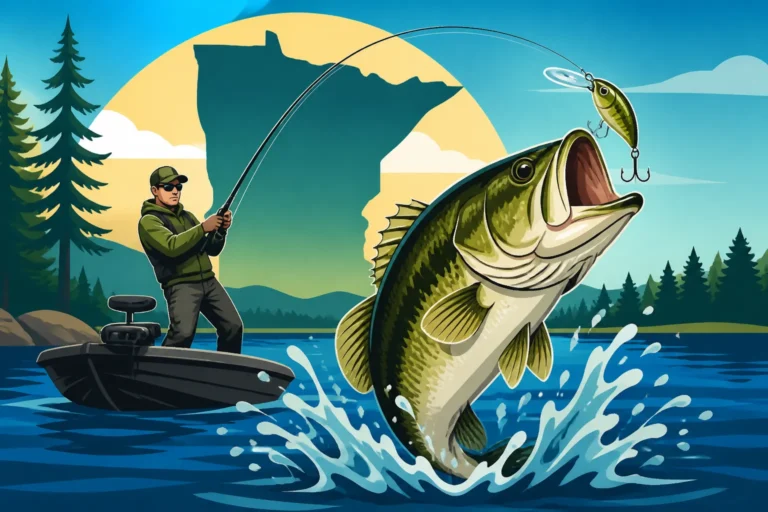
There is nothing more frustrating than watching a massive largemouth bass explode on a dragonfly right in the middle of a lily pad field while your deep-diving crankbait keeps coming up choked with weeds. You know the fish are there, but you can't reach them without snagging every two seconds. This guide solves that problem by breaking down the art of topwater bass fishing in Minnesota, ensuring you have the right gear and techniques to pull those giants out of the slop.
The Unique Appeal of Minnesota Surface Fishing
Minnesota is often called the Land of 10,000 Lakes, but for a bass angler, it’s more like the Land of 10,000 Shallow Weed Beds. From the murky waters of the south to the crystal-clear glacial lakes of the north, our state offers a diverse range of habitats where bass love to look up for their next meal. Understanding why topwater works so well here starts with recognizing our short, intense growing seasons. When the water warms up in June, the metabolism of a bass hits overdrive, and they become much more willing to expend energy on a big, noisy meal struggling on the surface.
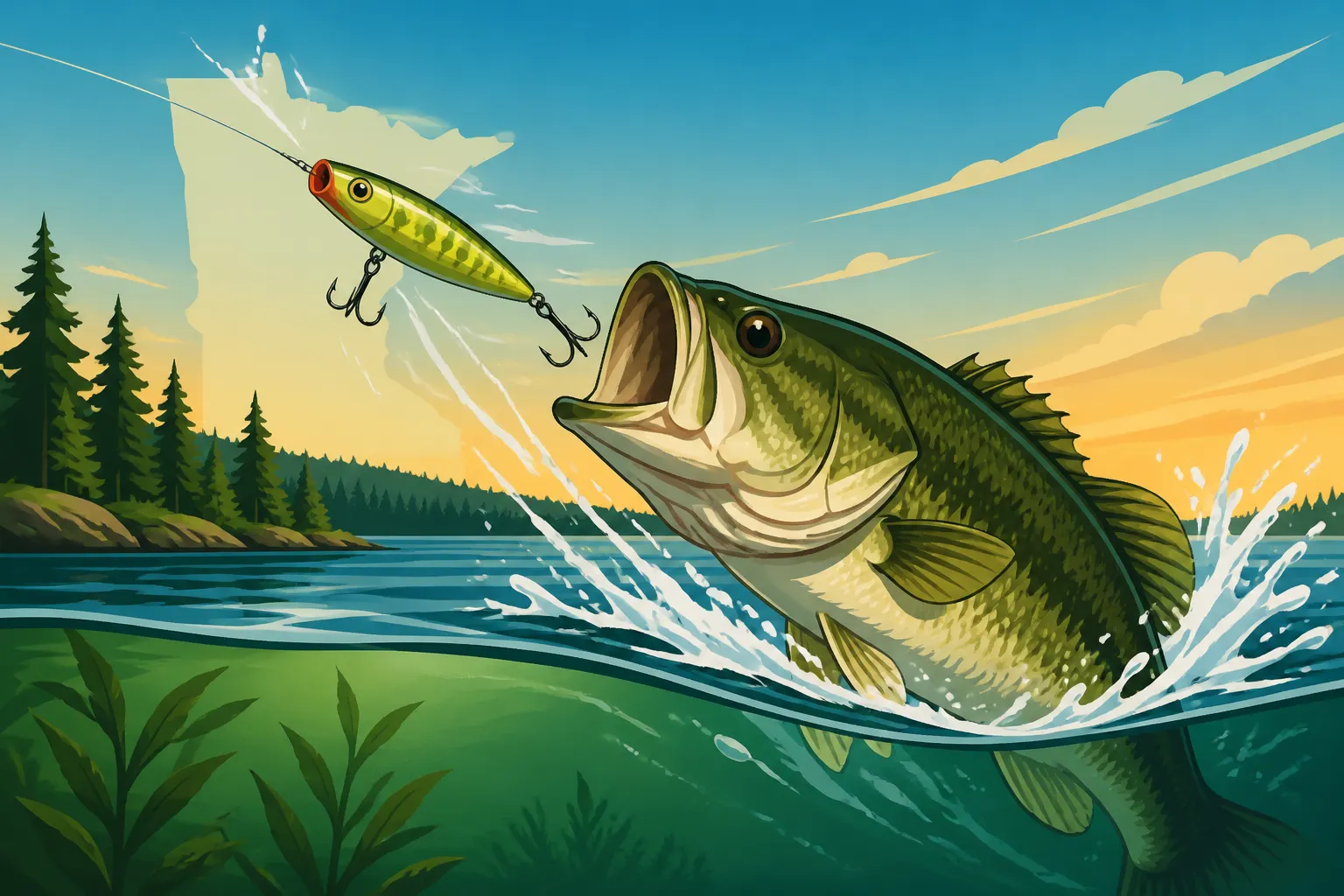
I’ve spent countless mornings on places like Lake Minnetonka and the Chisago Chain, and the one thing that stays consistent is the thrill of the strike. Unlike jigging where you feel a subtle "thump," topwater fishing is a visual and auditory assault. You see the wake, you hear the "slurp" or the massive "ka-plosh," and your heart rate immediately triples. It’s the most addictive way to fish for Smallmouth & Largemouth Bass in Minnesota, and once you witness a four-pounder launch itself out of the water to crush a frog, you’ll find it hard to go back to dragging worms on the bottom.
Furthermore, topwater fishing allows you to cover water that is otherwise inaccessible. Minnesota’s lakes are notorious for heavy milfoil, coontail, and lily pads. If you try to run a traditional lure through these areas, you’ll spend more time cleaning your hooks than fishing. Topwater lures, particularly weedless varieties, let you dance right over the top of the "jungle," putting your bait exactly where the biggest fish are hiding from the midday sun. It’s a strategic advantage that every local angler needs to master to be successful during the peak summer months.
Dealing with the Midsummer Slump
Many anglers struggle when the heat of July and August hits. They assume the fish have all retreated to the deepest holes in the lake to stay cool. While some fish certainly go deep, a huge portion of the population stays shallow, buried deep under the thickest canopy of vegetation they can find. These fish are often the most aggressive, but they are also the most protected. Topwater lures are the key to breaking through that midsummer slump by triggering a "reaction strike" from fish that are otherwise resting in the shade of the weeds.
In Minnesota, we also deal with significant "turnover" events and algae blooms that can mess with water clarity. When the water gets "soupy," bass rely less on their vision and more on their lateral line to detect vibrations. A noisy topwater lure, like a Whopper Plopper or a buzzing frog, creates a massive disturbance that fish can track even when they can barely see two inches in front of their faces. This makes surface lures an essential part of Best Bass Fishing Tactics in Minnesota when conditions turn less than ideal in late August.
Validating the Frustration of Missed Strikes
Let’s be real: topwater fishing can be infuriating. There is a specific kind of heartbreak that occurs when a bass blows up on your lure, the water flies everywhere, you set the hook with everything you’ve got, and the lure comes flying back at your head while the fish swims away. It happens to everyone, from the weekend warrior to the pro on the Bassmaster circuit. The "swing and a miss" is part of the game, but it usually stems from one of two things: timing or equipment.
The frustration often leads people to give up on topwater too early. They try it for twenty minutes, miss one fish, and go back to what feels safe. But if you stick with it and learn the nuances of waiting a split second before the hookset, your landing percentage will skyrocket. We are going to dive deep into how to minimize those heart-wrenching misses so you can actually start putting those "photo-worthy" fish in the boat or on the shore if you are Shore & Bank Fishing in Minnesota (No Boat).
Essential Gear for the Surface Game
If you show up to a lily pad field with a light-action panfish rod and 6-pound monofilament, you are bringing a knife to a gunfight. Minnesota bass, especially those in the heavy cover, are incredibly strong, and they use the weeds to their advantage the second they feel the hook. You need gear that can not only launch a lure a long distance but also have the "backbone" to winch a fish through twenty pounds of tangled vegetation.
When shopping for gear, many people find it convenient to browse Amazon for specialized bass rods and high-quality reels. You want to look for a rod that is labeled as "Medium-Heavy" or "Heavy" with a "Fast" or "Extra-Fast" action. The "Fast" action means the rod only bends at the very tip, giving you the leverage you need to drive a thick gauge hook into the hard roof of a bass's mouth. A 7-foot or 7-foot-3-inch rod is generally the "sweet spot" for most Minnesota lakes, providing a balance of casting distance and accuracy.
Choosing the Right Reel and Gear Ratio
The reel is just as important as the rod when it comes to topwater. You generally want a baitcasting reel with a high gear ratio—something in the 7.1:1 or 8.1:1 range. Why? Because when a bass strikes a topwater lure, it often swims directly toward the boat or the shore. You need a reel that can pick up slack line at lightning speed so you can maintain tension on the fish. If you are using a slow reel, the fish will have enough slack to shake the lure out before you even realize you’ve got a solid hookup.
Additionally, topwater lures like "walking baits" require a lot of rhythmic rod twitches. A high-speed reel helps you manage the line between those twitches without losing the "action" of the lure. If you are just starting out, don't feel like you need to spend $500 on a reel. There are plenty of reliable options on Amazon that will get the job done without breaking the bank, as long as you prioritize that higher gear ratio and a smooth drag system.
Line Selection: Braid vs Mono
This is where many anglers make their biggest mistake. For almost all topwater applications in Minnesota, you should be using braided line. Braided line has zero stretch, which is crucial for those long-distance hooksets. If you use monofilament and try to set the hook on a fish 40 yards away, the line will stretch like a rubber band, and the hook will never penetrate. I recommend 30-pound to 50-pound braid for most situations. It might sound like overkill, but the thin diameter of braid means a 50-pound test is about the same thickness as 12-pound mono.
The only exception is when you are using small poppers in open, clear water. In that case, monofilament is actually preferred because it floats. Fluorocarbon, which is popular for most other types of fishing, is a terrible choice for topwater because it sinks. If your line sinks, it will pull the nose of your lure down, ruining the action and making it much harder to get a clean hookset. Stick to braid for the heavy stuff and mono for the light, open-water finesse work.
| Lure Type | Recommended Rod | Recommended Line | Best Structure |
|---|---|---|---|
| Hollow Body Frog | Heavy / Extra Fast | 50lb – 65lb Braid | Thick Lily Pads, Slop |
| Walking Bait (Zara Spook) | Medium-Heavy / Fast | 30lb Braid or 15lb Mono | Points, Rock Flats, Weed Edges |
| Whopper Plopper | Medium-Heavy / Fast | 40lb Braid | Large Flats, Long Shorelines |
| Popper | Medium / Fast | 12lb – 15lb Mono | Docks, Small Pockets in Weeds |
Topwater Lure Selection for Minnesota Lakes
Choosing the right lure can feel overwhelming when you see the massive aisles at a tackle shop or the endless pages on Amazon. However, for Minnesota waters, you can really narrow it down to four main categories. Each has a specific "job" based on the type of lake you are fishing and the mood of the fish. Understanding these nuances will help you stop guessing and start catching.
One thing to keep in mind is the Minnesota Bass Season (New 2026 Catch-and-Release) rules. Since we now have expanded opportunities to fish for bass earlier in the spring, you’ll find that topwater lures become effective much sooner than they used to. However, the lures you use in May might be very different from the ones you use in August. Early in the year, smaller and quieter lures usually work better, while the heat of summer demands big, loud, and aggressive presentations.
Hollow Body Frogs in the Heavy Slop
The hollow body frog is the king of Minnesota bass lures. Because the hooks are tucked against the body, you can throw this lure into the thickest, nastiest "slop" imaginable without snagging. This is the lure you want for the vast lily pad fields of Lake Gulkana or the matted vegetation on the backwaters of the Mississippi River. When fishing a frog, the key is to make it look like a panicked creature trying to find a place to hide.
I like to use "walking" frogs that I can twitch side-to-side in small pockets of open water within the weeds. Often, a bass will track the movement of the frog under the pads and wait for it to hit a small opening before they strike. Don't be afraid to let the frog sit still for 5 or 10 seconds. Sometimes the "do-nothing" approach is exactly what it takes to convince a wary trophy fish to commit. If you're looking for the Best Bass Lures for Minnesota Lakes, a high-quality frog should be at the very top of your list.
Walking Baits and Poppers for Open Water
When you aren't dealing with heavy "mats" of weeds, walking baits like the Zara Spook or the Strike King Sexy Dawg are incredible tools. These lures are designed to zig-zag across the surface in a "walk the dog" motion. They are particularly effective on clear-water lakes like Mille Lacs Smallmouth Bass: World-Class Fishery areas, where the fish can see the lure from a long distance. Smallmouth bass, in particular, will often "wolf pack" these lures, with multiple fish chasing the bait at once.
Poppers are a bit more finesse-oriented. They have a cupped face that creates a "bloop" or "spit" sound when you twitch the rod. These are great for fishing around specific targets like boat docks, fallen logs, or the edges of bulrushes. If the fish seem a bit sluggish or the water is calm as glass, a popper allows you to stay in the "strike zone" longer than a walking bait. You can "pop" it once, let the bubbles settle, and wait for a curious bass to come up and investigate.
Prop Baits and Whopper Ploppers
In recent years, the Whopper Plopper has taken the Minnesota bass world by storm. It features a rotating tail that creates a distinct "plopping" sound that can be heard from a long way off. This lure is a "search bait," meaning you use it to cover a massive amount of water quickly to find where the active fish are. It’s a great choice for large, shallow flats or long stretches of shoreline on lakes like Leech or Winnie.
The beauty of the Whopper Plopper is its simplicity. You don't need to master a complex rod rhythm; you just cast it out and reel it back at a steady pace. It's an excellent option for beginners or for those days when the wind is kicking up a bit of a "chop" on the water. The vibration and noise cut through the surface waves, making it much easier for fish to locate than a subtle popper or a silent frog.
Key Locations and Seasonal Timing
Timing is everything in the Minnesota topwater game. While you can technically catch a bass on top at noon in the middle of a sun-drenched Tuesday, your odds are significantly better if you understand the "prime time" windows. Generally speaking, the "golden hours" are the first two hours of daylight and the last two hours before sunset. During these times, the light is low, and bass feel more comfortable moving out of the deep weeds to hunt near the surface.
However, don't sleep on those overcast, "gray" days. If it's drizzling or just cloudy all day, the topwater bite can actually stay active for the entire 12-hour period. I’ve had some of my best days on Lake Minnetonka Bass Fishing trips during mid-August when a cold front was moving in and the sky was a dull charcoal color. The low barometric pressure often triggers a feeding frenzy, and topwater is the best way to capitalize on that aggression.
Finding the Right Structure
In Minnesota, not all weeds are created equal. If you want to find the big bass, you need to look for "transitions" and "edges." A massive, uniform field of lily pads is okay, but a field of lily pads that suddenly meets a wall of deep-water coontail is a goldmine. Bass love "edges" because they provide the perfect ambush point. They can sit in the dark shade of the thick weeds and look out into the clearer water for passing prey.
Another key structure to look for is "isolated" cover. If you see a single clump of weeds or a lone boulder in an otherwise sandy area, there is almost certainly a bass living there. These "lone wolf" spots are perfect for a precision cast with a popper or a frog. In the river systems, look for "eddies" or slow-moving water behind bridge pilings and fallen trees. Smallmouth love to sit in the slack water and wait for the current to bring a struggling bug or minnow right over their heads.
The Impact of Water Temperature
Water temperature plays a massive role in how bass react to surface lures. Once the water hits 60 degrees in the spring, the topwater window officially opens. However, the "sweet spot" for explosive action is usually between 70 and 80 degrees. At these temperatures, the fish's metabolism is peaked, and they are incredibly aggressive.
When the water gets above 80 degrees in late July, the fish might get a bit "lazy" during the heat of the day, which is when you need to focus on the thickest shade possible. Conversely, in the fall, as the water cools back down into the 60s, the fish know that winter is coming. They will go on a "feeding binge" to bulk up, and this is often when you will catch your biggest fish of the year on a large walking bait or a big prop bait.
Techniques for Landing the Big One
The most common reason people lose fish on topwater is the "panic hookset." When you see a massive explosion on your lure, your natural instinct is to jerk the rod back immediately. This often results in you pulling the lure right out of the fish's mouth before they’ve actually closed their jaws on it. You have to train your brain to wait.
The "one-one-thousand" rule is a lifesaver. When the fish hits, don't look at the splash. Instead, wait until you feel the weight of the fish on the line. I like to count "one-one-thousand" in my head, reel down until the line is tight, and then deliver a powerful, sweeping hookset. This ensures that the fish has had enough time to turn its head and move back toward the cover, which helps the hooks find purchase in the corner of the mouth.
Perfecting the Walk-the-Dog Action
Walking the dog is a rhythmic technique that takes a little bit of practice. It involves twitching the rod tip on a slack line. If you twitch on a tight line, the lure will just jump forward. But if there is a little bit of "slack" in the line, the twitch will cause the nose of the lure to dart to one side. As you reel in the slack and twitch again, the lure darts to the other side.
It's a "twitch-reel-twitch-reel" cadence that, when done correctly, looks exactly like a wounded baitfish struggling to stay afloat. The key is to keep your rod tip pointed down toward the water. This gives you more control over the lure and puts you in a better position to set the hook when a fish finally commits. If you're struggling, you can find many tutorials and specialized lure kits on Amazon that help simplify the learning curve for this specific movement.
Managing the Fight in Heavy Cover
Once you’ve hooked a big Minnesota bass in the "thick stuff," the real work begins. You cannot give the fish an inch of slack. You need to keep the rod tip high and reel as fast as possible to keep the fish's head up on top of the weeds. If the fish is allowed to dive down into the roots, it will wrap your line around the stalks, and you’ll likely lose it.
This is why we use 50-pound braid. You aren't just fighting the fish; you are fighting the vegetation. Don't be afraid to use the power of your rod and reel to "bully" the fish back to the boat. If the fish gets buried in a clump of weeds and stops moving, don't just pull as hard as you can—you might snap the line or pull the hooks out. Instead, keep steady pressure and move the boat toward the fish if possible, then reach down and grab the whole clump of weeds, fish and all.
Top Minnesota Bass Destinations
While almost any lake in Minnesota has the potential for a great topwater day, some spots are legendary for their surface action. For those near the cities, Lake Minnetonka Bass Fishing is world-class, but it can be crowded. If you can get out on a weekday morning or a cloudy evening, the northern arms of Minnetonka have some of the best lily pad fishing in the Midwest.
Further north, the Brainerd Lakes area offers hundreds of smaller "puddle" lakes that are often overlooked. These lakes have less boat traffic and the bass are often much more willing to hit a topwater lure because they haven't seen a thousand of them every weekend. Places like Gull, North Long, and Pelican Lake are all fantastic options for a summer bass safari.
River Smallmouth on the Surface
If you’ve never experienced a river smallmouth hitting a topwater bait, you are missing out on one of the greatest thrills in angling. The Mississippi River, particularly the stretch from St. Cloud down to the Twin Cities, is home to an incredible population of "bronzebacks." These fish are fueled by the current and are pound-for-pound much stronger than their lake-dwelling cousins.
When fishing the river, focus on the "seams" where fast water meets slow water. Casting a walking bait or a small popper into these seams and letting it drift down while working it back can lead to some truly violent strikes. The St. Croix River is another gem, offering crystal-clear water where you can often see the smallmouth coming from 10 feet away to crush your lure. It's a visual experience that is hard to beat, and it's why many consider How to Catch Smallmouth Bass on Mille Lacs and the surrounding rivers to be the pinnacle of Minnesota bass fishing.
Metro Giants and Northern Gems
Don't overlook the smaller metro lakes. Lakes like Harriet, Bde Maka Ska, and Waconia are managed for high-quality fishing and often produce bass over five pounds. Because these lakes have "electric motor only" rules or limited access, the bass don't get the same level of pressure as the big resort lakes. A stealthy approach with a topwater frog at dawn on one of these city lakes can result in the fish of a lifetime.
If you are heading up to the "big water," keep in mind that lakes like Mille Lacs Smallmouth Bass: World-Class Fishery require a slightly different approach. Because the water is so clear, you may need to make much longer casts to avoid spooking the fish. A large walking bait that you can launch a country mile is often the best tool for the job. On these lakes, focus on the shallow rock reefs and flats, especially when the wind is calm.
Minnesota Fishing Regulations Disclaimer
It is the responsibility of every angler to stay updated on the latest rules and laws. Fishing regulations in Minnesota can change annually, including season dates, bag limits, and specific lake-wide restrictions. Always consult the official Minnesota Department of Natural Resources (DNR) handbook or website before heading out on the water. Ensure you have a valid fishing license and are aware of any special "catch and release" periods or slot limits that may apply to the specific body of water you are fishing. Safe and legal fishing ensures that our incredible bass populations remain healthy for generations to come.