Pokegama Lake Walleye Limit & Slot
Planning a trip to Pokegama Lake in Grand Rapids can be a dream come true until you find yourself staring at a beautiful walleye and wondering if it belongs in the livewell or back in the water. Sorting through various lake-specific regulations is one of the most frustrating parts of being a Minnesota angler. This guide solves that confusion by providing the exact Pokegama Lake walleye limit and slot rules, ensuring you stay legal while enjoying some of the best fishing Itasca County has to offer.
Understanding the Pokegama Lake Protected Slot
If you have spent any time fishing the Northwoods, you know that not all lakes are created equal. While many lakes in Minnesota follow the general statewide regulations, Pokegama Lake is managed with a specific "protected slot" to ensure the long-term health of the walleye population. This is a common source of anxiety for folks who aren't on the water every day. You don't want to be the person at the boat landing trying to explain a 15-inch fish to a DNR officer when that specific size is protected.
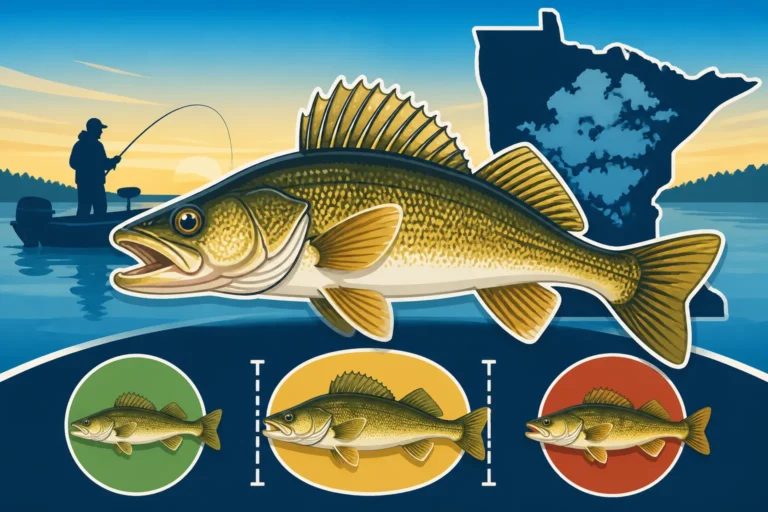
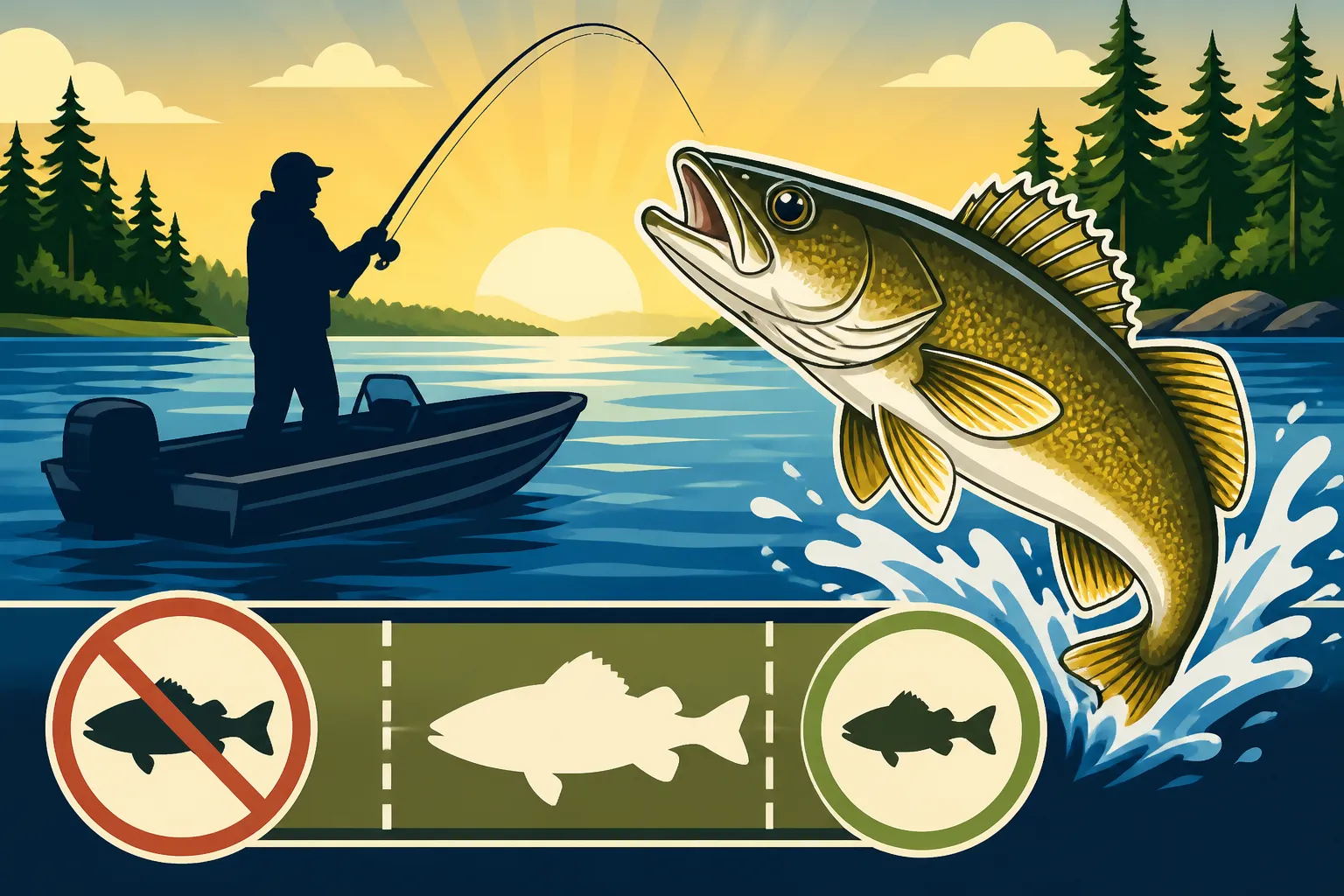
On Pokegama Lake, the current regulation is a protected slot for walleye between 14 and 18 inches. This means that every walleye you catch that measures between 14 and 18 inches must be immediately returned to the water. It feels counterintuitive to many because a 16-inch walleye is often considered the "perfect" eater. However, these fish are the future of the lake’s spawning population. By protecting them, the DNR ensures that there are enough mature fish to keep the population self-sustaining.
When you are out on the water, having a high-quality, flat measuring board is essential. Using a flexible tape measure can lead to errors, and on Pokegama, an error of half an inch can result in a hefty fine. When measuring, make sure the fish's mouth is closed and the tail is pinched to get the maximum length. If the tail tip touches that 14-inch mark or stays anywhere under the 18-inch mark, that fish needs to go back. For more context on why these rules exist, you can check out Minnesota Slot Limits: Which Lakes & Why to see how these regulations help maintain trophy fisheries across the state.
Daily and Possession Limits on Pokegama
Understanding what you can't keep is only half the battle; you also need to know exactly what you can put in the frying pan. For Pokegama Lake, the daily limit for walleye is generally three fish. Within this three-fish limit, you are allowed to keep walleye that are under 14 inches or over 18 inches. However, there is an additional "one over" rule to be aware of. Only one of those walleye in your daily limit can be over 26 inches.
This is where the math gets a little tricky for weekend warriors. If you catch two 13-inchers and one 19-incher, you have reached your daily limit. If you are lucky enough to land a 28-inch trophy, that counts as your "one over 26" and occupies one of your three spots. It is vital to remember the difference between a daily limit and a possession limit. Your possession limit is the total number of fish you can have at any time, whether they are in your boat, your cooler at the cabin, or processed in your freezer back home. For most Minnesota anglers, the possession limit matches the daily limit for walleye on this specific lake. You can find a deeper breakdown of these nuances in our guide on Minnesota Possession Limits Explained.
The reality of fishing Pokegama is that you will likely catch a lot of fish in that "dead zone" of 14 to 18 inches. It can be a test of patience, especially when you’re looking to host a fish fry for the family. But this management style has turned Pokegama into a very consistent producer. If you find yourself struggling to find keepers, it might be time to adjust your depth or presentation. Many locals find that the smaller keepers often hang out in shallower weeds, while the bigger slot fish and trophies move toward the deeper humps and the famous Tioga beach drop-offs as the sun gets higher.
Comparing Pokegama Rules to Statewide Standards
One of the biggest pitfalls for visiting anglers is assuming that the rules they followed last weekend on a different lake apply here. Minnesota has thousands of lakes, and many of them fall under "General Regulations," but the Grand Rapids area is known for its "Special Regulations." If you are coming from a lake that allows you to keep six walleye with no slot, Pokegama's three-fish limit and 14-18 inch protected slot will feel very restrictive.
| Regulation Type | Pokegama Lake Rule | General Minnesota Rule |
|---|---|---|
| Daily Walleye Limit | 3 Fish | 6 Fish (usually) |
| Protected Slot | 14" to 18" (must release) | None (usually) |
| Large Fish Allowance | 1 over 26" | 1 over 20" (standard) |
| Possession Limit | 3 Fish | 6 Fish |
| Species Included | Walleye and Sauger | Walleye and Sauger |
As you can see in the table above, the pressure on Pokegama is managed much more tightly than the average Minnesota pond. This is largely because Pokegama is deep, clear, and highly accessible from a major town. Without these specific limits, the walleye population could be decimated by the high volume of boat traffic. If you’re curious about how this compares to other major Northwoods waters, take a look at the Mille Lacs Lake Fishing Rules & Limits to see how different management strategies are applied to high-traffic lakes.
How to Handle Slot Fish and Selective Harvest
Since you will be releasing a significant portion of your catch on Pokegama Lake, mastering the art of the release is just as important as mastering the Lindy Rig. A "slot fish" that is handled poorly and dies after release is a waste of a precious resource. When you hook a walleye in 30 feet of water—a common occurrence on Pokegama’s deep structure—bringing them up too fast can cause barotrauma. This is where the fish's air bladder expands, making it impossible for them to swim back down.
To be a responsible angler, try to keep the fish in the water as much as possible while unhooking. If you must bring it into the boat for a quick photo, make sure your hands are wet to protect the fish's slime coat. Avoid "vertical hangs" by the jaw, as this can damage the internal organs of a heavy walleye. Instead, support the belly with one hand. If a fish is deeply hooked, it is often better to cut the line rather than tear at the gills or stomach. Most modern hooks will rust out or the fish's stomach acids will handle it better than a traumatic surgery on the boat floor. For a refresher on these techniques, read up on Catch and Release Best Practices in Minnesota.
Selective harvest is the other side of the coin. While the 14-18 inch fish are protected, keeping a few 13-inchers for a meal is actually encouraged. These smaller fish are abundant and delicious. Keeping the smaller ones while releasing the larger "spawners" is the hallmark of a veteran angler. If you are successful in getting your three "under" fish, you can enjoy one of the best meals in the Midwest. For those who wonder if the effort is worth it, our article on Are Walleye Good to Eat? Minnesota's Favorite Fish explains why this species is the gold standard for shore lunches.
Navigating Local Licensing and AIS Requirements
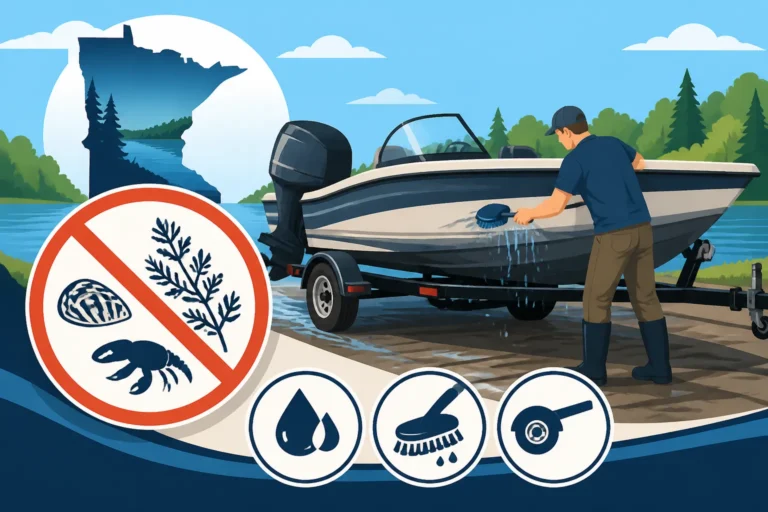
Before you even drop your boat in at the Highway 169 landing or the Tioga access, you need to make sure your paperwork is in order. Minnesota continues to be very strict about Aquatic Invasive Species (AIS). Pokegama is a beautiful, clear lake, but it is at constant risk from zebra mussels and Eurasian watermilfoil. You are required by law to pull your drain plug and keep it out while transporting your boat. Failure to do so can result in a fine that costs more than a high-end rod and reel. To make sure you’re compliant, check out How to Decontaminate Your Boat (AIS).
Additionally, ensure your license is current. You can't rely on the "I forgot" excuse when the warden pulls alongside your boat. Whether you are a resident or visiting from out of state, there are various options ranging from 24-hour passes to full-season licenses. If you haven't grabbed yours yet, you can learn How to Get a Minnesota Fishing License Online to save time before you hit the water.
Lastly, remember that Pokegama is a multi-species lake. While you are hunting for walleye, you are very likely to run into some of the lake's famous smallmouth bass or even a trophy northern pike. Being aware of the seasons for these other species is crucial so you don't accidentally keep a fish out of season. You can find all the relevant dates in our guide to Minnesota Fishing Seasons & Opener Dates (2026).
Tactics for Finding Keeper Walleyes
Because the slot is so specific, many anglers on Pokegama find themselves "farming" the same size of fish all day. If you find yourself catching nothing but 16-inchers, you are likely sitting on a school of fish from the same year-class. To find keepers that are under the 14-inch mark or over the 18-inch mark, you often need to change your "neighborhood" on the lake.
Smaller, sub-14-inch walleye often stick to the edges of the cabbage weeds in 10 to 15 feet of water. They use this cover to hide from the very 25-inch monsters you might be hoping to catch. A simple slip bobber with a leech is a deadly way to target these eaters. On the other hand, if you are looking for that "one over 26," you should look toward the deep-water points and the edges of the many sunken islands that dot the main basin. For a deeper dive into these methods, our Walleye Fishing Techniques: Complete Minnesota Guide and Best Walleye Fishing Tactics in Minnesota are perfect resources to help you fill that three-fish limit.
Minnesota Fishing Regulations Disclaimer
Fishing regulations in Minnesota are subject to change by the Department of Natural Resources (DNR) at any time. While we strive to provide the most accurate and up-to-date information for the 2026 season, always consult the official Minnesota Fishing Regulations handbook or the DNR website before your trip. Local lake associations or tackle shops in Grand Rapids can also provide real-time updates on any emergency rule changes or local postings at public accesses. Safe and legal fishing is the responsibility of every angler on the water.