Pelican Lake Walleye Limit & Slot
You have just spent three hours scouting the rock humps near Breezy Point, finally finding a school of hungry fish. Your heart jumps as a solid 19-inch walleye hits the deck, but then the local anxiety kicks in: is this a keeper or a ticket waiting to happen? This guide breaks down the specific Pelican Lake walleye limit and slot regulations to keep you legal and your cooler filled.
Navigating the Confusion of Multiple Pelican Lakes
One of the most frustrating aspects of Minnesota fishing is the sheer redundancy of lake names. If you tell a fellow angler you are headed to Pelican Lake, they might assume you are going to the massive trophy destination in St. Louis County near Orr, the popular vacation hub in Crow Wing County near Breezy Point, or even the sprawling waters in Otter Tail County. Each of these lakes is managed differently by the DNR to account for varying levels of fishing pressure and habitat.
The specific "slot limit" that most people search for is generally associated with Pelican Lake in Crow Wing County. Because this lake is located in the heart of the Brainerd Lakes Area, it faces immense pressure from both locals and tourists. To prevent the fishery from collapsing and to ensure there are enough spawning-age females, the DNR has implemented a protected slot. Before you even launch your boat, you should ensure you have reviewed How Much Is a Minnesota Fishing License? to make sure your paperwork is as ready as your tackle box.
In contrast, Pelican Lake in St. Louis County is a massive, shallow, island-filled paradise. While it also has special regulations, they often focus on northern pike as much as walleye. Knowing exactly which county you are in is the first step toward staying compliant. A mistake here isn't just a minor "oops"—it can lead to confiscated gear and heavy fines, so let’s dive into the specifics of the most-fished Pelican locations.
Pelican Lake Crow Wing County Walleye Regulations
For the 2026 season, the regulations for Pelican Lake near Breezy Point remain some of the most strictly enforced in the region. The goal here is "trophy management." The DNR wants to ensure that the "eater" size fish are harvested while the prime spawners stay in the water to keep the population self-sustaining.
The Protected Slot Breakdown
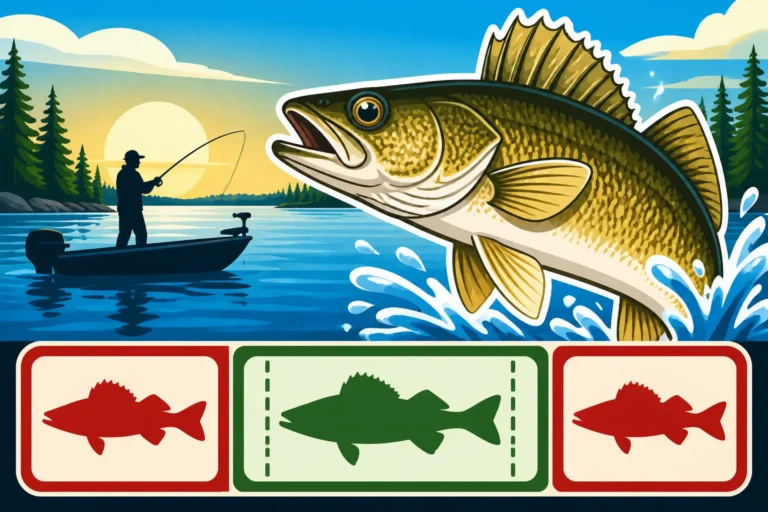
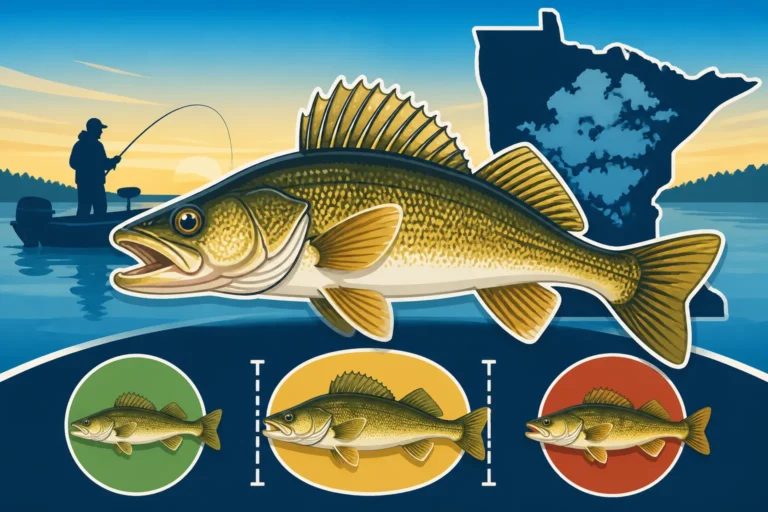
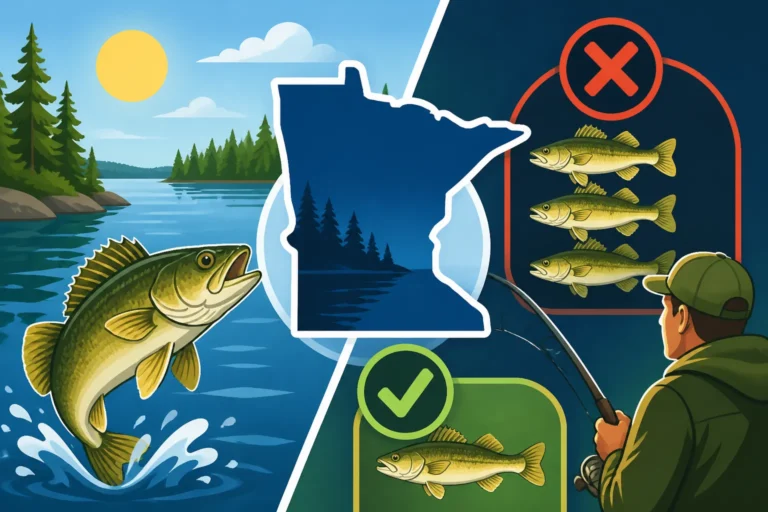
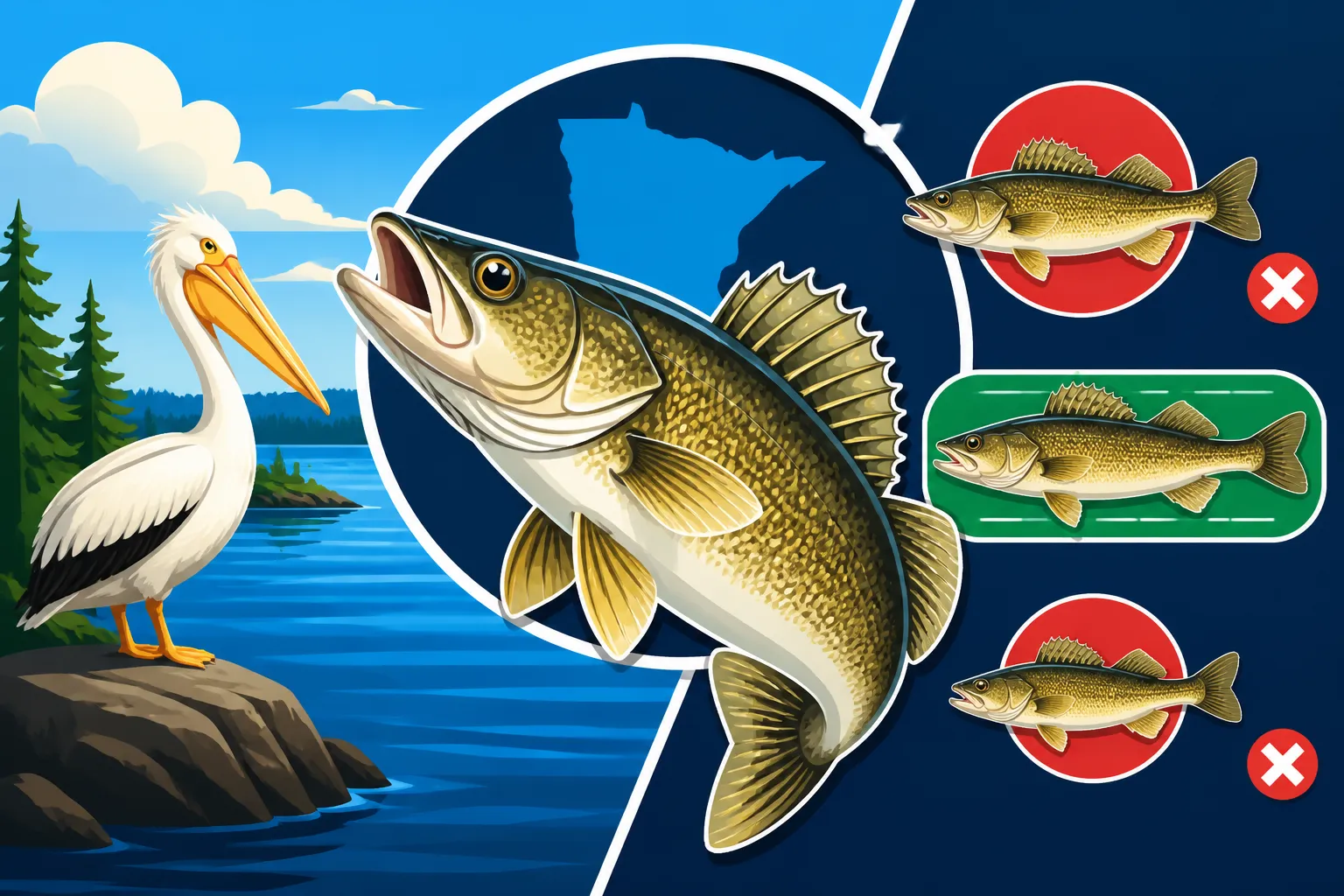
The current regulation for walleye on this Pelican Lake is a protected slot of 18 to 26 inches. This means every single walleye you catch that measures between 18 and 26 inches must be returned to the water immediately. It does not matter if the fish is "gut-hooked" or if you think it won't survive; the law is absolute. This specific range is chosen because fish in this bracket are the most productive spawners. They are the "factory" that produces the next generation of Walleye Season & Limit in Minnesota fish for everyone else to enjoy.
Many anglers find this frustrating because a 19-inch walleye is often considered the perfect fillet size on other lakes. However, on Pelican, you are looking for those "unders" or the rare "over." You are allowed to keep fish that are strictly less than 18 inches. If you are lucky enough to land a true wall-hanger, you are allowed one fish in your possession that is over 26 inches. Anything in that 18 to 26-inch "no-man's land" is off-limits for the frying pan.
Possession and Daily Bag Limits
In addition to the size restrictions, you must adhere to the possession limit. For Pelican Lake in Crow Wing County, the possession limit is 3 walleye. This is more restrictive than the standard Minnesota statewide limit of 4 or 6, depending on the year and specific water body. It is vital to remember that "possession" includes fish in your freezer at home or in your cabin's refrigerator. If you have three fish from Monday’s trip in the fridge, you cannot legally keep any more on Tuesday until you eat the ones you already have.
To help you keep track of the different rules across these similarly named lakes, refer to the table below:
| Lake Location | Walleye Possession Limit | Protected Slot Range | Notes |
|---|---|---|---|
| Pelican (Crow Wing) | 3 | 18" – 26" | All 18"-26" must be released; only 1 over 26" |
| Pelican (St. Louis) | 6 | None (Standard) | Focus on Northern Pike special regs instead |
| Pelican (Otter Tail) | 3 | 18" – 26" | Matches Crow Wing management style |
| Pelican (Grant/Ashby) | 3 | 18" – 26" | Often updated; check local postings |
Pelican Lake St. Louis County Walleye Rules
Heading north to the Orr area, Pelican Lake offers a completely different experience. This lake is over 10,000 acres and is known for its complex structure and hundreds of islands. Because of its size and northern location, the management goals differ slightly from the Brainerd area. Here, the focus is often on maintaining a high volume of fish, though size is still a major factor in the Minnesota Walleye Limit & Size Rules.
Standard Statewide Limits vs. Special Regs
While the Crow Wing version of Pelican has a very specific 18-26 inch slot, the St. Louis County Pelican often follows the more standard Northeastern Minnesota regulations, but with a twist. Anglers here are generally allowed a possession limit of 6 walleye, but you must be incredibly careful to check for "experimental" regulations that the DNR may post at the public landings. These can change annually based on the previous year's netting surveys.
The real catch on the northern Pelican Lake is often the Northern Pike regulation. Many people get confused and apply the Pike slot to the Walleye or vice-versa. Always remember that your Minnesota Fishing Limits: Bag & Possession (2026) are species-specific. For walleye in this region, you are typically looking for fish in the 14 to 17-inch range for the best eating, while being mindful that only one fish over 20 inches is usually allowed in a limit of six to protect the larger females.
Why the Northern Pelican is Different
The habitat in the northern Pelican is much more stained and shallow compared to the crystal-clear waters of the Breezy Point Pelican. This means the fish grow at different rates. The DNR uses Minnesota Slot Limits: Which Lakes & Why to tailor rules to these growth rates. In the north, the water is colder for longer, meaning a 20-inch walleye might be significantly older than a 20-inch walleye in a southern or central lake. Protecting those older fish is key to the lake's longevity as a premier fishing destination.
Understanding the Purpose of Minnesota Slot Limits
It is easy to get grumpy when you have to throw back a beautiful fish, but understanding the biology behind the Minnesota Slot Limits: Which Lakes & Why can help ease the sting. Slot limits are not designed to punish anglers; they are designed to maximize the "yield" of a lake while protecting its reproductive potential.
Protecting the Spawning Biomass
When a lake like Pelican (Crow Wing) gets hammered by thousands of boats every summer, the first fish to be removed are the 16 to 22-inchers. These are the fish that are most aggressive and easiest to catch. Unfortunately, these are also the fish that produce the highest quality eggs. By forcing the release of fish in the 18 to 26-inch range, the DNR ensures that even if every "eater" under 18 inches is harvested, there is still a massive population of mature fish left to spawn the following spring.
Managing for Trophy Status
Some lakes are managed specifically to produce "trophy" fish. Pelican Lake is one of them. By limiting the harvest to smaller fish and only allowing one "giant" over 26 inches, the lake can support a higher density of large walleyes. This makes Pelican a favorite for catch-and-release enthusiasts who want the thrill of a 28-inch fish, even if they know it’s going back in the hole. If you're looking for the latest info on where these big ones are hanging out, checking a Pelican Lake Fishing Report & What's Biting is a great way to start your trip.
Best Practices for Catch and Release on Pelican Lake
Since the majority of the "quality" fish you catch on Pelican will likely fall into the protected slot, knowing how to release them properly is your responsibility as an ethical angler. A fish that is released but dies an hour later is a waste of a precious resource and technically a violation of the spirit of the law.
Proper Handling Techniques
When you realize a fish is in the slot, the clock starts ticking. The longer that fish is out of the water, the lower its chances of survival, especially in the heat of July. Use a rubberized net to protect the fish’s slime coat. Avoid "vertical hanging" the fish by its jaw, as this can damage its internal organs and vertebrae. Instead, support the fish with two hands—one under the belly and one behind the gill plate (but not in the gills). For more detailed tips, check out Catch and Release Best Practices in Minnesota.
Deep Water Hazards
Pelican Lake has some deep holes where walleye congregate during the mid-summer months. If you are pulling fish up from deeper than 30 feet, they may suffer from barotrauma—a condition where their swim bladder expands rapidly. These fish often cannot swim back down and will float on the surface, eventually dying. If you are fishing Pelican and find that the bite is only happening in the deep basins, consider moving to shallower structure if you aren't catching "keepers." Catching and releasing slot fish from deep water is often a death sentence for them.
Measuring Accurately
The difference between a legal 17.75-inch fish and an illegal 18.25-inch fish is tiny, but the warden’s ruler doesn't lie. Always use a flat measuring board rather than a flexible tape measure. To get an accurate reading, close the fish's mouth and squeeze the tail fins together. This "pinched tail" method is the standard used by the DNR. If a fish is even a fraction of a hair over the 18-inch mark, it must go back. To avoid any issues with the authorities, it is helpful to understand Minnesota Possession Limits Explained so you never have too many fish on your boat or in your lodge.
Planning Your Trip to Pelican Lake
Before you hit the water, a little preparation goes a long way. Beyond just knowing the slot, you need to be aware of the daily conditions. Pelican can get extremely rough when a north wind blows, and the rock piles that hold walleyes can be treacherous for your lower unit.
- Check the Weather: Pelican is a large body of water. A 15-mph wind can create 3-foot rollers that make precise jigging on the slot-sized fish nearly impossible.
- Update Your Electronics: Ensure your GPS maps are updated. The "humps" on Pelican are specific, and being ten feet off the mark can mean the difference between a limit of eaters and a skunked day.
- Mind the Crowds: Especially on the Crow Wing Pelican, the weekend boat traffic is intense. Early morning or late evening (the "golden hour") is often the best time to find walleyes moving into the shallows to feed, away from the jet skis.
If you are new to the area or just want to brush up on the general rules, take a look at the Minnesota Walleye Limit & Size Rules to see how Pelican compares to other nearby lakes like Gull or North Long. Every lake is its own ecosystem, and being an informed angler is the best way to ensure we have fish for another hundred years.
Minnesota Fishing Regulations Disclaimer
Fishing regulations in Minnesota, including size limits, bag limits, and seasonal openers, are subject to change by the Department of Natural Resources (DNR) at any time. While this guide provides the most current information for the 2026 season, always consult the official Minnesota Fishing Regulations handbook or the DNR website before your trip. Local postings at public water accesses take precedence over any printed or digital guide. Stay safe and fish legally.