Best Gear for Ice Fishing Whitefish in Minnesota
Ice fishing for whitefish in Minnesota can feel like a totally different ballgame compared to chasing walleyes or panfish. Many anglers get out there with their usual setup, only to be met with frustration and empty buckets because whitefish are notoriously finicky and have very specific habits. If you’ve ever found yourself wondering why those elusive silver rockets aren’t biting your standard jig, you’re in the right place. This guide will dive deep into the best gear you’ll need to successfully target whitefish through the ice, helping you overcome those common hurdles and fill your cooler.
Understanding the Unique Challenges of Whitefish Ice Fishing
Before we even talk about rods and reels, it’s vital to understand why whitefish require specialized gear. These aren't your aggressive, hard-hitting pike. Whitefish are often plankton feeders and bottom dwellers, and their mouths are designed for sifting or sucking in small morsels. This means their bites can be incredibly subtle – sometimes just a slight "heave" on your line or a tiny uptick on your flasher. Trying to detect these bites with a heavy walleye rod is like trying to catch a feather with a baseball mitt; it's just not going to happen.
Whitefish Behavior and Habitat
Whitefish typically inhabit deeper, colder, oxygen-rich waters in larger Minnesota lakes. Think big, clear lakes like Lake Superior's bays, Lake of the Woods, or even some deeper spots in Mille Lacs. They often suspend in the water column or cruise near the bottom, often over sandy or muddy flats, looking for insect larvae, zooplankton, or small invertebrates. They can be found anywhere from 20 to 80+ feet of water. Understanding their preference for depth and their subtle feeding patterns directly dictates our gear choices, from the sensitivity of our rods to the precision of our electronics. They’re constantly on the move, which means you need to be able to locate them and present your bait effectively.
The Subtle Art of Detecting a Whitefish Bite
One of the biggest frustrations for anglers new to whitefish is identifying a bite. It's rarely a violent strike. Often, your line will just go "heavy," or you'll see a slight sag. Sometimes, your rod tip might just barely load up, or your spring bobber will straighten out an inch. On a flasher, you might see your lure mark suddenly disappear, or a fish mark might appear and then seemingly vanish. This is often a whitefish inhaling your bait. If you wait for a typical "thump," you've probably missed it. This requires incredibly sensitive equipment and a keen eye on your electronics.
Essential Rods, Reels, and Line for Whitefish
When it comes to whitefish, sensitivity is king. You need a setup that allows you to feel the faintest nudge and react instantly.
The Right Rod: Ultra-Light Sensitivity
Forget your heavy-action walleye sticks; for whitefish, you want something light and sensitive.
- Rod Power: An ultra-light or light power rod is ideal. This softer action allows the rod tip to bend easily under minimal pressure, making those subtle bites much more apparent.
- Rod Action: A fast or extra-fast action rod is perfect because it has a sensitive tip for detecting bites but enough backbone (though still light) to set the hook. This combination gives you the best of both worlds – unparalleled sensitivity and responsive hook-setting power.
- Rod Length: Opt for a rod between 28 and 36 inches. This length provides good leverage when fighting a fish in deep water but isn't so long that it's cumbersome in an ice shelter.
A good example would be an ultra-light carbon fiber rod from a brand like Fenwick or St. Croix. Their "Ice Combo" series often includes specific models designed for panfish that work wonderfully for whitefish, too. The lightweight graphite blanks transmit even the slightest disturbance up the line and into your hand.
The Perfect Reel: Smooth and Reliable
A smooth spinning reel is critical, especially when you're dealing with deep-water fish that can make strong runs.
- Size: A 500-1000 series spinning reel is typically sufficient. These smaller reels match the lightness of the rod and handle thinner lines beautifully.
- Drag System: Ensure the reel has a smooth, reliable drag. Whitefish can be surprisingly powerful, especially bigger ones, and a sticky drag will lead to snapped lines and lost fish. Brands like Shimano or Daiwa offer excellent small spinning reels with incredibly smooth drags.
- Weight: Look for a lightweight reel to maintain the overall balance of your sensitive rod setup. An unbalanced setup can reduce your ability to feel those faint bites.
Line Choices: Low-Visibility and Minimal Stretch
Your choice of fishing line is just as crucial as your rod and reel.
- Fluorocarbon Line: This is arguably the best choice for whitefish. Fluorocarbon is nearly invisible underwater, has very little stretch, and sinks quickly. The low stretch enhances sensitivity, allowing you to feel those light bites. For whitefish, 2-4 pound test is usually plenty. You might even consider a 6-pound leader if you're targeting bigger whitefish in waters where pike might also be present, but generally, lighter is better for presentation and bite detection.
- Monofilament Line: While not as invisible or sensitive as fluorocarbon, high-quality monofilament can work, especially if you're on a budget. Stick to 2-4 pound test. The extra stretch can sometimes cushion strong runs, but it also reduces bite detection.
- Braided Line (with fluorocarbon leader): Some anglers prefer braided line for its zero stretch and incredible sensitivity, especially in very deep water. If you go this route, always use a fluorocarbon leader (3-6 feet) tied on with a small swivel or a reliable knot like an FG knot. The braid acts as your main line, and the leader provides the stealth and abrasion resistance needed near your lure. A 4-6 pound braid with a 2-4 pound fluorocarbon leader is a strong combination.
Keeping your line fresh is important, especially fluorocarbon, as it can develop memory and coil over time. Regularly inspect your line for nicks and abrasions, especially after reeling in fish.
Lures and Baits: The Key to Enticing Whitefish
Whitefish are picky eaters, and what works for walleyes won't always cut it for them. You need small, subtle presentations that mimic their natural forage.
Tiny Jigs and Spoons
The cornerstone of whitefish ice fishing tackle revolves around small, subtle presentations.
- Small Jigging Spoons: Think tiny, 1/16 oz to 1/8 oz spoons. Colors like silver, gold, white, or glow are often effective. The flash and flutter of these spoons can attract whitefish from a distance. Brands like Northland Tackle, VMC, and Custom Jigs & Spins make excellent small spoons perfect for whitefish. The key is a slow, methodical jigging motion – often just a slight lift and fall.
- Tungsten Jigs: These tiny but heavy jigs sink fast and offer excellent sensitivity. Pair them with a small plastic or live bait. Sizes from 3mm to 5mm are ideal. They come in a variety of colors, but natural tones like black, brown, and green, as well as brighter glow colors, can be very effective.
Baiting Strategies
Presentation with bait is crucial for whitefish.
- Live Bait: This is often the most consistent producer. Small eurolarvae, wax worms, spikes, or even a single specialized whitefish grub are highly effective. Thread them onto your tiny jig or spoon. The natural scent and movement are often irresistible. You can often find these at local bait shops or sometimes order them through online retailers like Amazon if your local shop is out.
- Soft Plastics: Tiny soft plastics designed for panfish can also work. Think micro-plastics that mimic larvae or small invertebrates. The key is to tip them with a small piece of real bait for added scent and appeal.
Here's a quick comparison of popular whitefish lures:
| Lure Type | Size Range | Typical Colors | Key Action / Presentation | Best Paired With | Notes |
|---|---|---|---|---|---|
| Small Jigging Spoon | 1/16 – 1/8 oz | Silver, Gold, White, Glow | Subtle flutter, slow lift & fall | Eurolarvae, Wax Worm, Grub | Attracts from distance, triggers reaction |
| Tungsten Jig | 3mm – 5mm | Black, Brown, Green, Glow | Stationary, slight twitch | Spikes, Wax Worm, Eurolarvae | Excellent sensitivity, fast sink rate |
| Small Jigging Rap | #3 – #5 | Natural, Chrome, Glow | Erratic darting, suspended | Single spike on treble | Can trigger aggressive strikes, good for searching |
| Marmooska Jigs | Small (various) | Gold, Silver, Brass, Black | Very subtle, natural presentation | Eurolarvae, Spikes, Grub | Classic subtle presentation, high hookup |
Always remember to downsize your offerings for whitefish. A presentation that seems "too small" for walleyes is often just right for them.
Navigating the Ice: Augers and Electronics
Finding and staying on whitefish often requires covering ground and precise location, making your auger and electronics critical tools.
Augers: Power and Efficiency
Whitefish often lurk in deeper basins, meaning you'll be punching through significant ice.
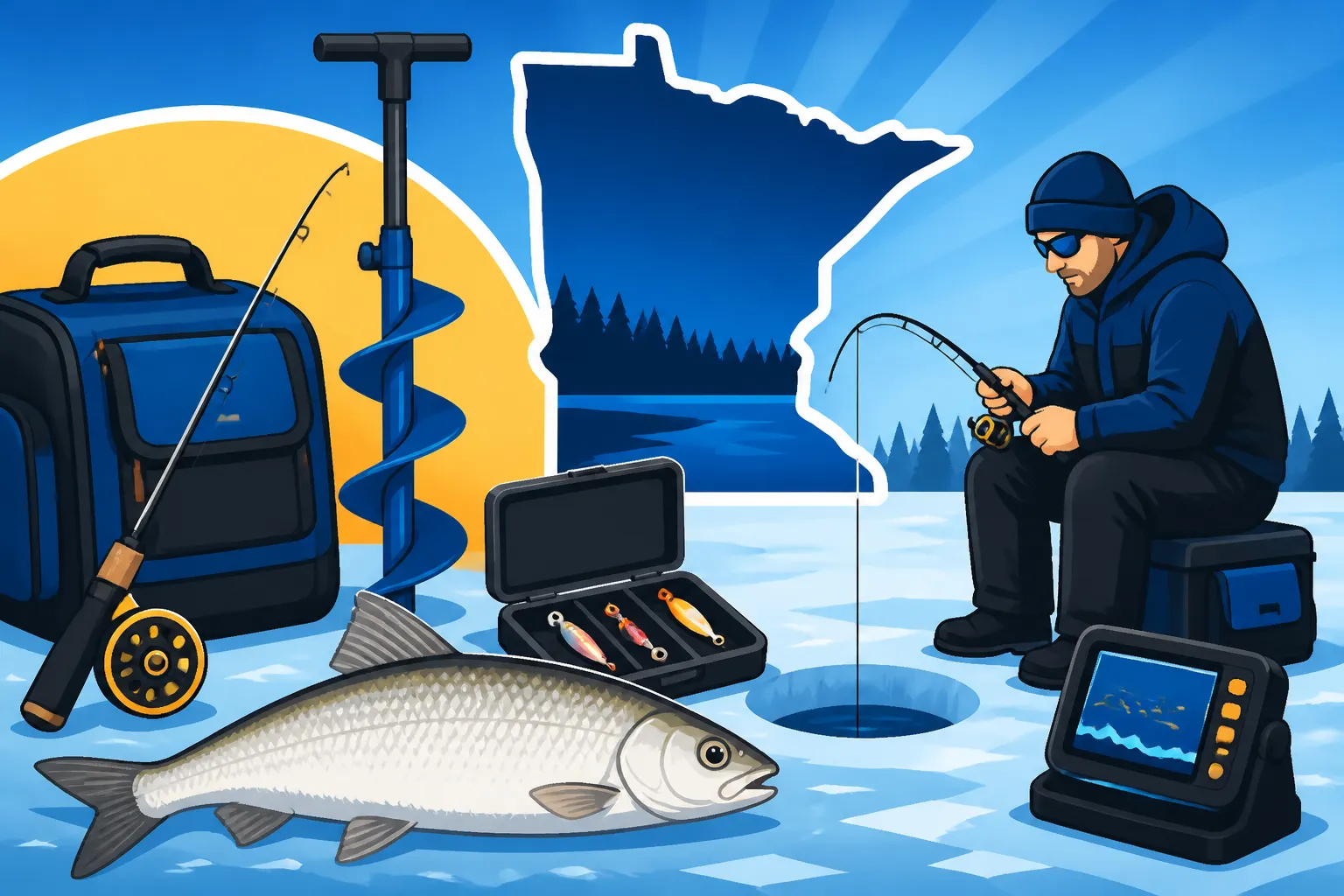
- Electric Augers: These are a game-changer for whitefish anglers. They are quiet, odorless, and incredibly efficient, especially for drilling multiple holes when searching for roaming schools. Brands like StrikeMaster (their Lithium 40V is a powerhouse) and ION are popular choices. The quiet operation is a huge advantage, as loud gas augers can spook fish in shallow to medium depths.
- Gas Augers: Still reliable, especially for thick ice or if you’re planning long days with heavy drilling. Just be mindful of noise and fumes, especially in enclosed shelters.
- Hand Augers: While not ideal for drilling dozens of holes in thick ice over deep water, a sharp 6-inch hand auger can be a good backup or for quick checks if you’re in more accessible depths.
Having a reliable auger is essential when you're on the hunt for whitefish.
Electronics: Your Underwater Eyes
For whitefish, electronics aren't just helpful; they're practically mandatory. Their subtle bites and often suspended nature make them incredibly difficult to target without a clear picture of what's happening below.
- Flashers (Vexilar, MarCum, Humminbird): A quality flasher is your best friend. It provides real-time feedback on fish presence, your lure's depth, and how fish are reacting to your presentation. You'll use it to monitor for those subtle "bumps" on your lure or fish that suddenly appear near your bait. Paying attention to how your lure mark interacts with fish marks is key to understanding whitefish behavior. You'll often see them rise slowly, investigate, and then barely mouth the bait.
- Sonar/GPS Combos (Garmin, Humminbird, Lowrance): For those looking for more advanced tools, a sonar/GPS combo with mapping capabilities is incredibly useful. This allows you to pinpoint deep structures, humps, or flats where whitefish congregate. Features like side imaging or LiveScope (Garmin) can help you locate schools of fish even before you drill a hole, especially when they are suspended. While more of an investment, the ability to mark waypoints, track drifts, and see fish in real-time under your hole is invaluable.
The ability to read your flasher or sonar is a skill you'll develop over time, but for whitefish, it's absolutely paramount. You'll learn to distinguish between a walleye's aggressive attack and a whitefish's gentle investigative approach. This helps you know exactly when to set the hook on those faint bites. If you want to dive deeper into these tools, check out our guide on how to read a flasher.
Comfort and Safety on the Ice
While not directly gear for catching fish, being comfortable and safe allows you to focus on the fishing, which is particularly important for patient whitefish angling.
Ice Shelters: Stay Warm and Mobile
Long hours on the ice, especially in Minnesota's winter, demand good shelter.
- Portable Flip-Over Shelters: Brands like Clam and Otter offer excellent flip-over shelters that are quick to set up and take down. These are perfect for mobile anglers who need to move and re-drill holes to stay on active whitefish. They provide excellent protection from the wind and cold.
- Hub-Style Shelters: These offer more space, often accommodating multiple anglers, but take a bit longer to set up. If you're planning on staying in one spot for a while or fishing with friends, a hub shelter can be great.
- Permanent Ice Houses: For serious whitefish anglers who target the same deep spots repeatedly, a permanent ice house provides maximum comfort, often equipped with heaters, bunks, and even stoves. However, they limit mobility, which can be a disadvantage when whitefish are roaming.
Regardless of the type, an insulated shelter will make your time on the ice much more enjoyable and extend your fishing day. Remember to always follow Minnesota Ice Fishing & Shelter Rules regarding shelter identification and removal deadlines.
Warm Clothing and Safety Gear
Winter fishing is no joke in Minnesota. Dressing appropriately is crucial.
- Layered Clothing: Start with a moisture-wicking base layer, add an insulating mid-layer (fleece or down), and finish with a waterproof and windproof outer shell.
- Float Suits: Brands like Striker Ice and Eskimo make insulated float suits that not only keep you warm but also provide buoyancy in case you fall through the ice. This is a non-negotiable safety item for serious ice anglers. You can often find a good selection at Bass Pro Shops or Cabela's.
- Ice Safety Picks and Spud Bar: Always carry ice picks around your neck for self-rescue and use a spud bar to check ice thickness as you move, especially early or late in the season.
- First-Aid Kit: A basic first-aid kit is always a good idea, along with a fully charged phone or satellite communication device.
Staying warm, dry, and safe means you can focus on detecting those subtle whitefish bites without shivering your way off the ice prematurely. If you're new to the sport, our guide to Ice Fishing in Minnesota: Complete Beginner-to-Pro Guide has even more safety and comfort tips.
Final Tips for Whitefish Success
Even with the best gear, a few extra tips can make a big difference in your whitefish catch rates.
Keep Moving to Find Them
Whitefish are often nomadic. Don't be afraid to drill multiple holes and move frequently until you locate an active school. Your electronics will be your best guide here. If you mark fish that aren't responding, move on.
Subtle Movements are Key
Aggressive jigging will often spook whitefish. Instead, employ very subtle movements. Lift your rod tip just a few inches, let the lure flutter back down, and then hold it still for a long pause. Sometimes, just holding the lure perfectly still is what triggers a bite.
Monitor Your Rod Tip or Spring Bobber
Because whitefish bites are so light, dedicating your attention to your rod tip or a sensitive spring bobber is paramount. Any slight twitch, sag, or straightening could be a bite. This is where an ultra-light, sensitive rod truly shines.
By understanding their habits, equipping yourself with the right sensitive gear, and practicing patience and subtle presentations, you'll be well on your way to mastering the art of ice fishing for whitefish in Minnesota.
Disclaimer
The information provided in this guide is for general informational purposes only and does not constitute legal advice regarding fishing regulations. Always consult the most current Minnesota Department of Natural Resources (DNR) fishing regulations before heading out on the water, as rules and limits can change. Stay safe and enjoy your time on the ice!