Best Fishing Boat Under $30,000 in Minnesota
Trying to find a reliable fishing boat in Minnesota without breaking the bank can feel like a daunting task, especially with new boat prices seemingly skyrocketing every year. It’s easy to get discouraged when you see price tags stretching into the tens or even hundreds of thousands of dollars. But trust me, you absolutely can find a fantastic fishing rig that's perfect for our diverse Minnesota waters and fits comfortably under that $30,000 mark. This guide is here to walk you through the realistic options and smart strategies to get you on the water without emptying your wallet.
Understanding Your Budget and Needs for a Fishing Boat
Before you even start browsing listings or walking through dealership lots, it’s absolutely crucial to sit down and honestly assess what you need and what you can truly expect from a boat under $30,000. Many anglers, especially those just starting out or looking to upgrade from a tiny jon boat, have grand visions of brand-new, fully loaded rigs, but the reality of a budget this size means making smart choices and sometimes a few compromises.
Realistic Expectations for Under $30,000
When you set your sights on a fishing boat under $30,000 in Minnesota, you're primarily looking at two main categories: well-maintained used boats or smaller, more basic new aluminum models. It's not the budget for a brand-new, fully decked-out fiberglass multi-species monster, and that's perfectly okay. What you can find, however, are incredibly capable boats that have been loved and cared for, or new entry-level models that offer solid performance for their price point.
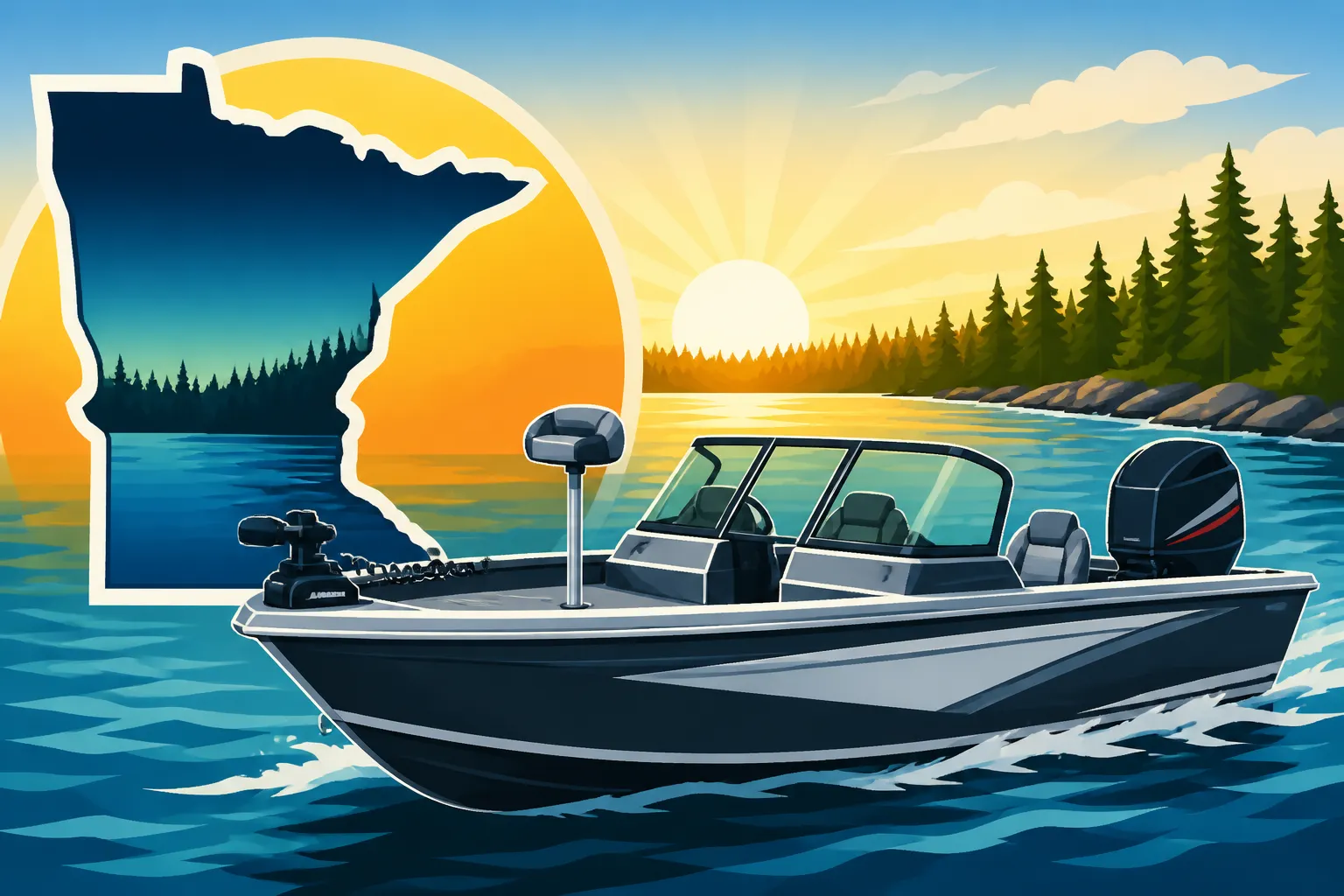
For instance, if you're eyeing a new boat, you'll mostly be in the market for a 16 to 18-foot aluminum utility or mod-V boat, possibly with a smaller, but still perfectly capable, outboard engine – think 50 to 90 horsepower. These boats are fantastic for a wide range of fishing activities across our smaller lakes and even larger ones on calmer days. They might not come with all the bells and whistles of higher-end models, but they'll get you to your favorite fishing spots. You might find some great deals on brands like Lowe, Crestliner, or even certain Lund models like the Fury series.
When it comes to the used market, your options open up considerably. Here, $30,000 can get you a much larger and more feature-rich boat, potentially a 17 to 20-foot aluminum or even a fiberglass rig. The trade-off is often age. You might be looking at boats from the early 2000s to early 2010s, but many of these older models, especially from reputable manufacturers, were built like tanks and can still have decades of life left. The key is diligence in inspection, which we'll get to later. You could find a used Lund Pro-V, a Ranger Reata, or an Alumacraft Competitor that, while a decade or more old, offers superior ride quality, more storage, and better fishing amenities than a new entry-level boat.
Key Factors to Consider for Minnesota Waters
Minnesota is the "Land of 10,000 Lakes," and each one offers a unique fishing experience. What works great on a small, protected lake in central Minnesota might be completely inadequate for battling the rollers on Lake Superior or Mille Lacs Lake. So, thinking about where and how you typically fish is paramount.
First, consider the type of water you frequent. Are you mostly fishing smaller, sheltered lakes like those around the Brainerd Lakes Area, or do you often venture out onto expansive waters like Lake of the Woods, Leech Lake, or Lake Winnibigoshish? If it's the latter, a longer boat with a deeper V-hull will provide a much safer and more comfortable ride when the wind kicks up. For smaller, shallower lakes, a lighter, shallower-draft aluminum boat might be more practical for launching and navigating.
Next, think about your fishing style. Are you a dedicated walleye angler, religiously trolling crankbaits or jigging breaks? Or do you prefer casting for bass in the weeds, chasing muskie with large baits, or simply spending a relaxing day catching panfish with the family? Different fishing styles lend themselves to different boat layouts. Walleye anglers often appreciate ample rod storage, livewells, and a stable platform for trolling. Bass anglers might prioritize large casting decks and a powerful Minn Kota trolling motor with spot-lock capabilities. For casual panfishing, a simple utility boat with plenty of open space might be all you need.
Finally, consider passenger capacity and storage needs. Will you always be fishing solo or with one buddy, or do you frequently bring the whole family or a group of friends? A 16-foot boat can feel pretty cramped with three or four adults and all their gear. Think about how many rods you typically bring, if you need space for coolers, tackle boxes, and safety gear. A good boat offers not just seating but also thoughtful storage solutions to keep your gear organized and out of the way, preventing clutter and potential tripping hazards, which is especially important on smaller vessels.
Top Boat Types for Minnesota Anglers Under $30,000
With your budget and specific needs in mind, let's dive into the types of fishing boats that are most commonly available and best suited for Minnesota angling within the sub-$30,000 price range. Each type has its own strengths and weaknesses, so understanding these will help you prioritize.
Aluminum Fishing Boats (Utility and Mod-V)
Aluminum boats are the quintessential Minnesota fishing machine, and for good reason. They are incredibly popular, durable, and offer fantastic value, making them a prime candidate for budget-conscious anglers. Within the under $30,000 bracket, you'll find a wide array of options, from basic utility boats to more refined mod-V (modified V-hull) designs.
-
Pros of Aluminum Boats:
- Durability: Aluminum is tough. It can handle bumps and scrapes from rocks, docks, and trailer mishaps far better than fiberglass. This is a huge plus if you fish in shallow areas or are prone to accidental bumps.
- Lightweight: Being lighter means easier towing with a smaller vehicle, better fuel efficiency on the water, and simpler launching and loading, especially at rustic boat ramps.
- Shallow Draft: Many aluminum boats, especially the utility and smaller mod-V models, have a shallow draft, allowing you to get into skinny water where other boats might run aground. This is great for accessing those hidden bays or shallow spawning areas.
- Cost-Effective: Generally, new aluminum boats are less expensive than comparable fiberglass models, and their resale value tends to hold up well. Maintenance is also often simpler and more affordable.
- Versatility: From trolling for walleye on Lake Vermilion to casting jigs for crappie in a small pond, aluminum boats can do a little bit of everything.
-
Cons of Aluminum Boats:
- Rougher Ride: The biggest complaint about aluminum boats is their ride quality in choppy water. Their lighter weight and hull design mean they tend to "pound" more over waves compared to heavier fiberglass boats, making for a less comfortable, wetter ride on windy days on big lakes.
- Less Storage/Deck Space: While many modern aluminum boats are very well-designed, they generally offer less integrated storage and deck space compared to similar-sized fiberglass boats.
- Noise: Aluminum can be noisy, especially when waves slap against the hull or if you drop a tackle box. This can be mitigated with some sound dampening, but it's something to consider.
Within this budget, you might look at new models like a Lund Fury 1600 or a Lund Rebel, which are fantastic entry-level multi-species boats. For slightly larger, more feature-rich options on the used market, you could find older Alumacraft Competitor or Voyageur models, or even a Crestliner Super Hawk. These brands are Minnesota mainstays for a reason, offering reliability and functionality. If you're serious about your walleye fishing, these types of boats, especially if they come equipped with a reliable fish finder and a decent Minn Kota trolling motor, can be absolute workhorses. Make sure to check out our deep dive on different manufacturers in the article "Alumacraft vs Crestliner vs Lund: Aluminum Boats".
Used Fiberglass Bass Boats or Walleye Rigs
While a new fiberglass boat is likely out of reach at $30,000, the used market can sometimes surprise you. You might find older (think 10-20 years old) but still very capable fiberglass bass boats or multi-species walleye rigs. These are often performance-oriented boats, and they offer a very different experience than aluminum.
-
Pros of Used Fiberglass Boats:
- Smoother Ride: Fiberglass boats, being heavier and often having a deeper V-hull design, cut through chop much more effectively than aluminum. This translates to a significantly smoother and drier ride, especially on large, rough waters like Mille Lacs or Lake Superior.
- More Power Potential: Fiberglass hulls can generally handle larger outboard engines, providing exhilarating speed and better hole shot.
- Larger Casting Decks & Storage: Bass boats, in particular, are designed with expansive, flat casting decks and abundant, organized storage for rods, tackle, and gear. Multi-species fiberglass boats also tend to offer more integrated storage and larger livewells.
- Aesthetics: Let's be honest, fiberglass boats often have a sleek, polished look that many anglers appreciate.
-
Cons of Used Fiberglass Boats:
- Higher Maintenance/Repair Costs: Fiberglass can crack or spider-web on impact, and repairs can be more complex and expensive than aluminum. Older boats may also have issues with transom or deck soft spots due to water intrusion, which are costly fixes.
- Deeper Draft: Fiberglass boats typically sit deeper in the water, limiting access to very shallow areas.
- Heavier: They are heavier to tow, requiring a more capable tow vehicle, and are harder to launch and retrieve by hand.
- Fewer Options in Budget: Finding a good fiberglass boat under $30,000 will likely mean looking at older models, potentially from the early 2000s or late 1990s. You'll need to be extra vigilant about the boat's condition, especially the engine.
If you find an older Ranger, Skeeter, or Triton that has been meticulously cared for, it could be a diamond in the rough. These brands are known for their quality construction, and a well-maintained older model can still outperform many newer aluminum boats in terms of ride and fishing platform. Just be prepared to do your homework on the engine and structural integrity. For those who prioritize speed and a smooth ride for bass fishing on big lakes or serious tournament angling, an older fiberglass boat can be a fantastic value. Many anglers will tell you that the ride of an older Ranger can't be beat. For a detailed comparison of popular brands, check out "Lund vs Ranger: Which Walleye Boat Is Better?"
Jon Boats and Small Utility Boats
For the most budget-conscious angler, or someone who primarily fishes very small, calm waters, a jon boat or a small utility boat offers incredible accessibility and simplicity. While they might not be the flashiest rigs on the water, they are extremely effective for specific purposes.
-
Pros of Jon Boats and Small Utility Boats:
- Very Affordable: This is where you'll find the absolute lowest entry point into boat ownership, often well under $10,000, leaving plenty of room in your $30,000 budget for upgrades or other gear.
- Versatile for Small Waters: Jon boats are flat-bottomed, making them incredibly stable in calm water and allowing them to float in mere inches of water. They're perfect for skinny water, river fishing, or small, protected lakes.
- Easy to Transport: Their lightweight design means they can often be loaded into the back of a truck or easily trailered with a small car. Many don't even require a full-sized trailer.
- Minimal Maintenance: Simple by design, there's less to go wrong, and repairs are generally straightforward.
-
Cons of Jon Boats and Small Utility Boats:
- Limited Rough Water Capability: This is their biggest drawback. Jon boats are not designed for choppy water. Even moderate waves can make them dangerous and uncomfortable. They are strictly fair-weather, small-water vessels.
- Minimal Features: They are typically bare-bones, with no built-in livewells, rod storage, or advanced electronics. Customization is usually DIY.
- Basic Ride: Expect a utilitarian, sometimes wet, ride.
While a jon boat might not be your primary rig for a full day of walleye fishing on Leech Lake, it's an excellent choice for exploring small local ponds for panfish, duck hunting, or accessing out-of-the-way spots on a river. Brands like Lowe, Tracker, or Alumacraft offer various sizes of jon boats and small utility boats that are exceptionally durable and functional for their intended use. You can often find great deals on these at retailers like Bass Pro Shops or even used through online classifieds.
Here's a quick comparison of these boat types for under $30,000:
| Feature/Boat Type | New Aluminum Mod-V (16-18 ft) | Used Fiberglass Multi-Species/Bass (18-20 ft, 10-20 yrs old) | Jon Boat / Small Utility (12-14 ft) |
|---|---|---|---|
| Ride in Chop | Fair to Good (can pound) | Excellent (smoother, drier) | Poor (dangerous in waves) |
| Durability | Excellent (resists dents/scratches) | Good (can crack on impact) | Excellent (tough, basic) |
| Shallow Water Access | Very Good | Fair to Good (deeper draft) | Excellent (very shallow draft) |
| Fuel Economy | Very Good | Good to Fair (heavier, often larger motors) | Excellent (small motors) |
| Storage | Good (some integrated compartments) | Excellent (ample, organized compartments) | Poor (usually open bench seating, DIY needed) |
| Electronics Included | Basic fish finder, basic trolling motor (on higher new models) | Often older, but potentially high-end, electronics; likely needing upgrades | Rarely any, typically user-added |
| Towing/Launching | Easy (lighter weight) | Moderate (heavier, needs capable vehicle) | Very Easy (lightest) |
| Primary Use | Multi-species, general fishing on various lake sizes | Walleye/bass tournaments, big water, high performance, comfort | Small lakes, rivers, panfish, hunting, extreme budget |
| Example Models | Lund Fury, Alumacraft Prowler, Lowe FM series | Older Ranger Reata, Skeeter MX/ZX, Triton TR, older Lund Pro-V/Tyee (fiberglass) | Lowe L series, Tracker Guide V, various no-name brands |
Where to Find and Evaluate Boats in Minnesota on a Budget
Once you have a clear idea of what type of boat aligns with your budget and fishing style, the next step is to actually find it. The search itself can be part of the fun, but it also requires patience and a sharp eye. In Minnesota, we have a robust boating culture, which means a good used boat market, but also a lot of competition for desirable rigs.
Navigating the Used Boat Market
The used boat market is where your $30,000 will stretch the furthest. This is where you'll find the best blend of features, size, and performance for your money. However, it also comes with the inherent risk of buying a used item, so caution is key.
- Online Marketplaces: These are your bread and butter for finding used boats. Websites like Craigslist, Facebook Marketplace, and dedicated boat sales sites like Boattrader are excellent resources. Facebook fishing groups specific to Minnesota can also be a goldmine, as fellow anglers often know of boats for sale or offer advice. You can also sometimes find options on Amazon, particularly for smaller accessories or even inflatable boats, but for a full fishing boat, dedicated marketplaces are better. Set up alerts for specific brands (Lund, Alumacraft, Crestliner, Ranger) and boat types within your price range. Be prepared to act quickly if a good deal pops up, as they don't last long in Minnesota.
- Local Dealerships: Don't overlook your local marine dealerships like MarineMax, Rapid Marine, or even smaller, independent shops. They often take trade-ins, and while their prices might be slightly higher than a private sale, you typically get the benefit of a professional inspection, sometimes a limited warranty, and financing options. They also handle all the paperwork, which can be a relief.
- Boat Shows and Consignment Sales: Keep an eye out for regional boat shows, especially at the end of the season. Dealers sometimes offer significant discounts on leftover new inventory or have excellent used boats on display. Consignment lots also pop up and can be a good place to see multiple options in one spot.
- Word of Mouth: Sometimes the best deals come from friends, family, or fellow anglers. Let everyone know you're in the market for a boat. You never know who might be looking to sell their perfectly maintained rig.
Essential Inspection Checklist
This is perhaps the most critical part of buying a used boat. A thorough inspection can save you thousands of dollars and countless headaches down the road. Never buy a boat unseen, and always try to inspect it with someone knowledgeable, even if you have to pay a mechanic for an hour of their time.
-
Engine Health: The engine is the heart of your boat and often the most expensive component to repair or replace.
- Compression Test: This is non-negotiable for an outboard. A mechanic can perform this quickly to check the health of each cylinder. Even compression across all cylinders is a good sign.
- Start-Up and Run: Insist on hearing the engine run, ideally in water (either on the lake or in a test tank/muffs). Listen for unusual noises, smoothness of idle, and response when throttled.
- Service Records: Ask for maintenance history. A seller who can provide detailed service records is a huge plus.
- Propeller: Check for dings, bends, or damage. Minor dings are normal, but significant damage can indicate rough use.
- Power Trim/Tilt: Ensure it operates smoothly without grinding or hesitation.
-
Transom and Hull Integrity: These are the structural backbone of your boat.
- Transom: For fiberglass boats, check for soft spots by pressing firmly around the engine mount. Look for cracks where the engine bolts through. A rotten transom is a very expensive repair. For aluminum, check for rivets popping or welds cracking around the transom.
- Hull: Inspect the entire hull, inside and out, for cracks, deep gouges, or signs of previous repairs. On aluminum boats, check for dents or separated rivets, particularly on the bottom. For fiberglass, look for spider cracks or delamination.
- Drain Plug Area: Inspect this area for any signs of rot or stress.
-
Trailer Condition: A boat is only as good as its trailer, especially if you plan on exploring all the great fishing spots in Minnesota.
- Tires: Check tire tread and sidewalls for cracks. Ensure proper inflation. Don't forget the spare!
- Bearings: Inspect for grease leaks or rust. Spin the wheels by hand if possible to listen for grinding.
- Lights: Test all trailer lights (running, brake, turn signals).
- Winch and Straps: Ensure they are in good working order and not frayed.
- Frame: Look for rust, especially at welds.
-
Electronics and Accessories:
- Fish Finder/GPS: Turn them on. Do they power up? Are the screens clear? If possible, test them on the water. Modern electronics can make a huge difference in finding fish. Our guide on "Best Fish Finders & Electronics for Minnesota Fishing" can help you understand what to look for.
- Trolling Motor: Test forward/reverse, steering, and any special features like Spot-Lock if it's a Minn Kota. Ensure the battery situation is adequate. Read up on "Best Trolling Motors: Minn Kota Buyer's Guide" for more info.
- Livewells and Bilge Pump: Fill the livewell with water and check for leaks. Test the bilge pump.
- Navigation Lights: Ensure they work.
- Batteries: Check the age and condition of all batteries.
By being thorough and patient, you can absolutely find an incredible fishing boat under $30,000 that will provide years of enjoyment on Minnesota's fantastic waters. From chasing trophy walleye on Upper Red Lake to targeting smallmouth bass on Mille Lacs, the right boat at the right price is out there waiting for you. Just remember to prioritize your needs, inspect everything carefully, and don't be afraid to walk away if something feels off.
Disclaimer
Fishing regulations, license requirements, and boat safety guidelines can change. Always consult the most current Minnesota Department of Natural Resources (DNR) regulations before heading out on the water. This guide is for informational purposes only and should not replace official sources or professional advice.