Lower Red Lake Walleye Fishing Tips
Lower Red Lake can be one of Minnesota's most rewarding walleye fisheries, but its unique regulations and vast, often shallow, waters can be intimidating for anglers accustomed to more conventional lakes. Many folks struggle with understanding the specific nuances of this lake's management and how that impacts their fishing strategies. This guide will help you decode Lower Red Lake, offering practical, real-world tips to increase your chances of finding and catching walleye, respecting both the fish and the regulations.
Understanding Lower Red Lake's Unique Walleye Fishery
Lower Red Lake isn't just another Minnesota lake; it's a true gem with a fascinating history and a meticulously managed walleye population. What makes it stand out is its co-management between the Minnesota Department of Natural Resources (DNR) and the Red Lake Band of Chippewa Indians, leading to a truly sustainable and robust fishery. This partnership has helped the walleye population rebound dramatically over the past two decades, making it a premier destination.
The Walleye Comeback Story
Years ago, the walleye population in Upper and Lower Red Lake faced significant challenges, prompting drastic measures to protect and restore it. Through dedicated conservation efforts, including strict harvest limits and stocking programs, the walleye have made an incredible comeback. This success story means anglers today can enjoy a vibrant fishery, but it also means respecting the ongoing management practices, particularly the unique slot limits. It's a testament to what thoughtful resource management can achieve, and every angler plays a part in maintaining this delicate balance. The strong year-classes of walleye here mean there's usually an abundance of fish, often leading to fast action, particularly for smaller "eater" sized walleye.
Navigating Special Regulations and Slot Limits
Unlike many other Minnesota lakes, Lower Red Lake often operates under specific, and sometimes changing, walleye regulations set by the Red Lake Band of Chippewa. These regulations are paramount, and they often differ from statewide Minnesota Fishing Limits: Bag & Possession (2026). Typically, you'll encounter a protected slot limit, meaning fish within a certain size range must be immediately released. This is designed to protect spawning-sized fish and maintain a healthy age structure in the population.
For instance, in many recent seasons, anglers have been allowed to keep a certain number of walleye, with only one over a specific length. Always, and I mean always, check the most current regulations for Red Lake before you even think about putting a line in the water. These can be found on the Minnesota DNR website or through the Red Lake Band’s natural resources department. Ignorance of the rules is no excuse, and wardens patrol these waters diligently to ensure compliance. Understanding these rules is crucial not just for avoiding penalties, but for contributing to the long-term health of this incredible fishery.
Seasonal Strategies for Walleye Success on Lower Red Lake
The vast, shallow nature of Lower Red Lake means walleye movements are heavily influenced by the seasons and forage availability. What works in May might be completely ineffective in August. Knowing where walleye typically hold and what techniques are most productive during different times of the year is key to consistent success.
Spring and Early Summer: The Post-Spawn Feast
When the ice finally gives way, usually around late April or early May, the walleye in Lower Red Lake are eager to feed after their arduous spawn. This is a fantastic time to target them, as they're often found in shallower waters, gorging themselves on available forage. Focus your efforts on the transition areas where deeper channels meet extensive shallow flats, especially those with some remaining green weeds or rocky structure.
Many anglers find success by slowly trolling crankbaits in depths of 6-12 feet or by jigging with live bait like shiners or fatheads. The northern and eastern shores, particularly around bays and points, can be prime locations as the water warms up faster there. This period often sees some of the most aggressive bites of the year, and it’s a great opportunity for high-volume catches, though remember the slot limits. For a broader understanding of spring walleye tactics, you might want to review our article on Early Season Walleye After the Opener.
Mid-Summer: Finding Them on the Flats
As summer progresses and water temperatures rise, the walleye on Lower Red Lake tend to spread out across the massive shallow flats that characterize much of the lake. This can make them a bit trickier to pinpoint, as they don't always concentrate on distinct structure like in deeper, rockier lakes. However, they're still there, often relating to subtle depth changes, isolated rock piles, or even just patches of harder bottom within the soft-bottomed expanses.
Trolling with bottom bouncers and spinner rigs tipped with nightcrawlers or leeches can be incredibly effective for covering water and finding active schools. Don't be afraid to experiment with different speeds and depths, but generally, 8-15 feet is a good starting point. On calmer days, sometimes a slip bobber over these subtle spots can yield some excellent results, especially if you're marking fish but they're finicky. When the sun is high, walleye might tuck into slightly deeper troughs or even shade provided by dense weed beds, if present.
Fall and Ice Fishing: Concentrated Action
The cooler temperatures of fall signal a major feeding period for walleye as they bulk up for winter. This often leads to walleye concentrating in predictable areas. Look for them moving towards deeper edges of flats, channel entrances, and any remaining hard-bottomed areas. Trolling crankbaits or casting jigs and plastics can be very productive during this time. The fish are often more aggressive and less hesitant to chase a bait.
When the lake freezes over, Lower Red Lake transforms into an ice fishing paradise. The shallow nature of the lake means walleye can be found almost anywhere, but focusing on those same flat edges and subtle depth changes that were productive in the fall is often a winning strategy. Jigging spoons, Jigging Raps, and dead sticks with a shiner are all go-to presentations. You’ll find a mix of smaller "eater" walleye and some larger, protected fish. Just like open water, always be sure to know the current ice fishing regulations, including how many lines you can use ice fishing in Minnesota. If you're looking for an unforgettable winter trip, checking out guides on platforms like FishingBooker can help you find experts familiar with the ice fishing patterns on Lower Red.
Here’s a quick overview of seasonal approaches:
| Season | Typical Depths (Feet) | Preferred Baits/Lures | Techniques | Key Areas |
|---|---|---|---|---|
| Spring | 6-12 | Live minnows (shiners, fatheads), Crankbaits | Jigging, Slow Trolling crankbaits | Shallow bays, points, main lake flats near shore |
| Early Summer | 8-15 | Leeches, Nightcrawlers, Crankbaits | Bottom Bouncing, Trolling crankbaits | Main lake flats, subtle humps, transition areas |
| Mid-Summer | 10-18 | Nightcrawlers (spinner rigs), Plastics, Leeches | Bottom Bouncing, Jigging (plastics) | Vast open flats, deeper troughs, isolated structure |
| Fall | 8-20 | Large minnows, Crankbaits, Blade baits | Trolling, Casting, Vertical Jigging | Deeper edges of flats, channel mouths |
| Ice Fishing | 8-25 | Jigging spoons, Jigging Raps, Live minnows | Vertical Jigging, Deadsticking | Flat edges, subtle breaks, historical hot spots |
Proven Techniques and Baits for Lower Red Lake Walleye
While walleye fishing tactics can vary widely across Minnesota's diverse lakes, Lower Red Lake has certain techniques and baits that consistently shine. Given its expansive, relatively uniform bottom, covering water and effectively presenting bait are paramount.
The Power of Live Bait Rigs
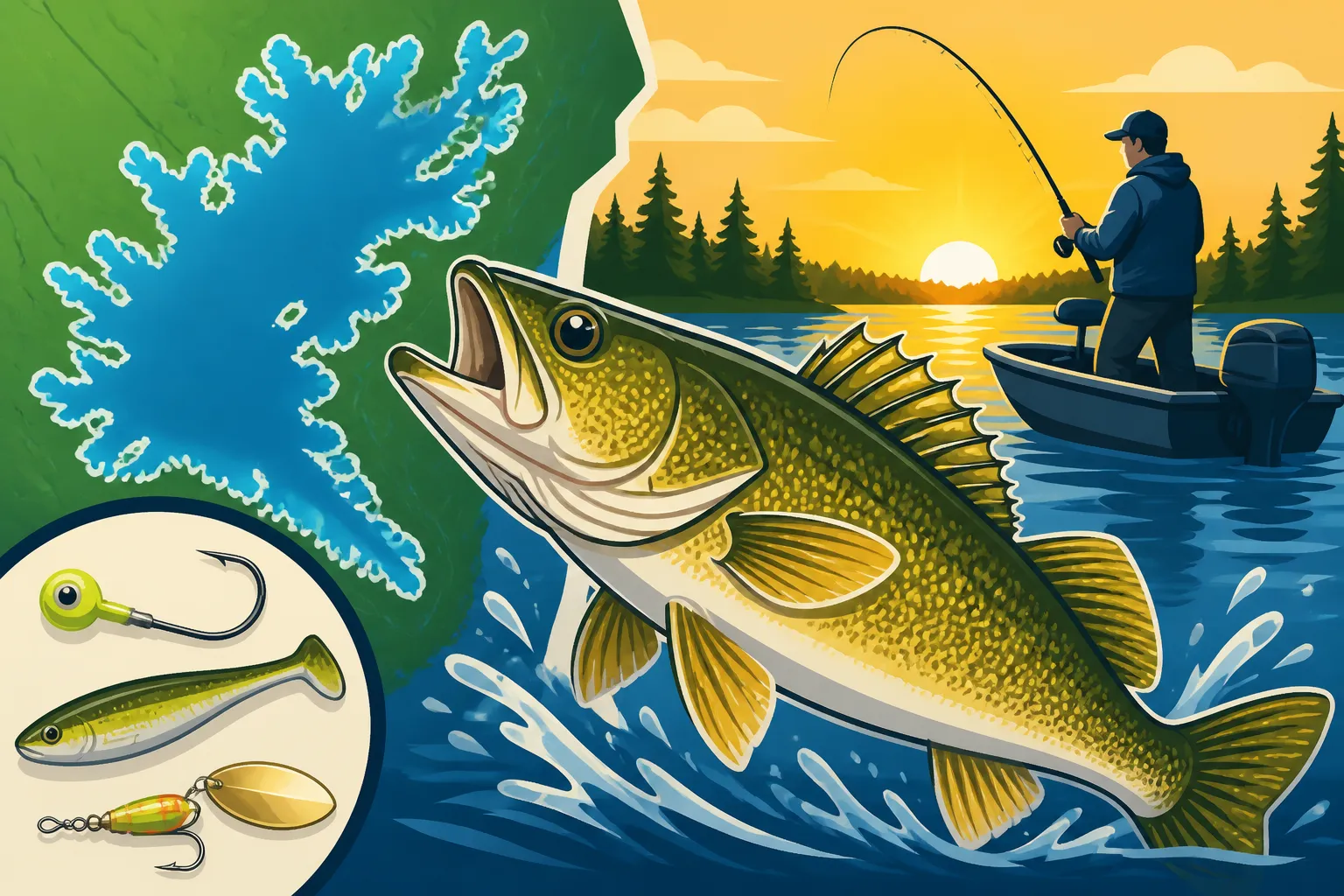
When it comes to walleye, live bait is often king, and on Lower Red Lake, this holds especially true. A classic Lindy Rig with a lively leech or a plump nightcrawler can be deadly, particularly when fish are scattered or less aggressive. The subtle presentation allows the bait to flutter naturally, enticing cautious walleye. When searching for the best live bait for walleye (leeches, minnows, crawlers), consider what's freshest and most available at local bait shops around Ponemah or Waskish.
Bottom bouncers paired with spinner rigs are another incredibly effective live bait presentation, especially when you need to cover a lot of water. Tipping a brightly colored spinner with a juicy nightcrawler, trolled at a slow pace (around 1-1.5 mph), can often outproduce other methods on the large flats. The flash and vibration of the spinner help attract walleye from a distance, while the live bait seals the deal. This is a fantastic search tool, allowing you to systematically work large areas until you find a school of active fish.
Mastering Jigging and Artificials
While live bait often dominates, don't underestimate the power of a well-presented jig on Lower Red Lake. Jigging for walleye: Jig & Minnow Basics is a technique that can be incredibly effective, especially in spring and fall, or when fish are concentrated. A 1/4 to 3/8 ounce jig, tipped with a lively shiner or fathead, worked slowly along the bottom, can trigger powerful strikes. Experiment with jig head colors – chartreuse, orange, and white are often reliable choices in the often-stained waters of Red Lake.
For those who prefer artificials, soft plastics like paddle tails or curly tail grubs on a jig head can also be highly productive, especially when walleye are aggressive. The key is to match the hatch and present them naturally. Trolling crankbaits, such as those from Rapala or Berkley, can also be very effective, especially in spring and fall. Shallow-diving models that run in the 6-12 foot range are typically excellent for covering the vast flats and finding active fish. Consider hiring a guide through a service like FishingBooker if you want to quickly learn the most current artificial presentations for the lake. They often have real-time knowledge of what lures are performing best.
Responsible Angling and Conservation on Lower Red Lake
Fishing on Lower Red Lake isn't just about catching fish; it's about being a part of a successful conservation story and respecting the unique ecosystem. Responsible angling practices are crucial for maintaining the health of this world-class walleye fishery for future generations.
Protecting the Resource Through Catch and Release
Given the strict slot limits, catch and release is an integral part of fishing on Lower Red Lake. Many of the larger, mature walleye caught here will fall within that protected slot and must be returned to the water. Learning best practices for Catch and Release Best Practices in Minnesota is vital. This means minimizing the time the fish is out of the water, handling it gently with wet hands, and using proper de-hooking tools. Avoid dragging fish on rough surfaces or holding them by the gills.
If you're planning to take photos, do so quickly and ensure the fish is supported horizontally. For heavily weighted fish, consider using a cradle or net to keep them submerged as much as possible. Releasing a healthy fish, especially a large female, contributes directly to the spawning success and overall vitality of the lake's walleye population. It's a small effort that yields massive dividends for the fishery we all cherish.
Preventing Aquatic Invasive Species (AIS)
The threat of Aquatic Invasive Species (AIS) is very real in Minnesota, and Lower Red Lake is no exception. Every angler has a responsibility to prevent the spread of these harmful organisms. This means following all AIS rules for boaters, including cleaning, draining, and drying your boat and gear before and after every trip. Remove all weeds and debris, pull your drain plug, and make sure your livewell and bait buckets are empty of lake water before leaving the access.
These steps are not just suggestions; they are legal requirements designed to protect our precious waters. Even a small fragment of Eurasian watermilfoil or a single zebra mussel larvae can wreak havoc on an ecosystem. By being diligent, you help ensure that Lower Red Lake and other Minnesota waters remain healthy and productive for years to come. If you're unsure about the specifics, resources from the Minnesota DNR provide comprehensive guides on How to Decontaminate Your Boat (AIS).
Local Considerations and Respect
When fishing Lower Red Lake, it's important to remember you are on the reservation lands of the Red Lake Band of Chippewa. While a Minnesota fishing license is valid for the portion of Lower Red Lake accessible to the public, being respectful of the local community and their resource management is paramount. This isn't just about following rules; it's about acknowledging the long-standing stewardship the Band has provided this lake. Always pack out what you pack in, be considerate of other anglers, and if you have questions, reach out to local bait shops or resorts; they are invaluable sources of current information and local etiquette.
Disclaimer
The information provided in this guide is for general informational purposes only and is subject to change. Fishing regulations, seasons, and limits can be updated frequently by the Minnesota DNR and the Red Lake Band of Chippewa. Always consult the official Minnesota Department of Natural Resources website or the Red Lake Band of Chippewa Natural Resources Department for the most current and accurate regulations before planning your fishing trip to Lower Red Lake.