Fishing Near Bemidji, Minnesota
For many anglers, staring at a map of Northern Minnesota, especially around a fishing mecca like Bemidji, can be both exciting and a little overwhelming. With literally hundreds of lakes and rivers in the vicinity, figuring out where to cast your line for the best chances at walleye, pike, or that trophy muskie can be a real head-scratcher. This comprehensive guide will cut through the noise, helping you pinpoint the prime fishing spots and techniques near Bemidji, ensuring your next trip is a successful and memorable one.
Why Bemidji is a Northern Minnesota Fishing Hub
Bemidji isn't just a charming town; it's truly the heart of some of Minnesota's most renowned fishing grounds. Nestled in a region shaped by ancient glaciers, the area boasts an incredible tapestry of freshwater ecosystems, from sprawling, deep lakes to meandering rivers and smaller, secluded ponds. This unique geography, combined with robust fisheries management by the Minnesota Department of Natural Resources (DNR), has cultivated a diverse and healthy fish population that draws anglers from all corners of the country.
The 'First City on the Mississippi' Advantage
What makes Bemidji truly special is its unique claim to fame as the "First City on the Mississippi." Lake Bemidji itself is one of the very first lakes the mighty Mississippi River flows through, creating a dynamic and nutrient-rich environment. This constant flow of water acts like a natural conveyor belt, carrying nutrients and baitfish, which in turn supports thriving populations of game fish. The river system also connects Lake Bemidji to other significant bodies of water, allowing for fish movement and maintaining genetic diversity. This connection is a huge factor in why the fishing pressure, while sometimes high on certain lakes, rarely depletes the overall fish stocks in the larger system. It's a living, breathing fishery that continually replenishes itself, offering consistent action year after year.
Diversity of Waters: Lakes, Rivers, and the Species They Hold
The sheer variety of fishing environments near Bemidji is astounding. You have immense, deep glacial lakes that hold everything from cold-water species like Cisco (Tullibee) and the occasional lake trout, to the warm, shallow bays perfect for panfish. Then there are the medium-sized, fertile lakes, often connected by smaller rivers and channels, which are prime walleye and northern pike territory. Finally, the river sections themselves, particularly the Mississippi, offer unique current-oriented fishing opportunities for species like smallmouth bass and catfish, complementing the lake fishing experience. This mosaic of habitats means that no matter your preferred fishing style or target species, there’s a perfect spot waiting for you. This diversity also means that if one lake is having an off day, or the bite is slow, you often have a completely different type of water body just a short drive away that might be producing. It's a true angler's playground, and understanding this variety is key to unlocking its full potential.
Top Lakes for Anglers Near Bemidji
When you're looking to wet a line near Bemidji, certain lakes always rise to the top for their consistent fishing action and diverse populations. These aren't just names on a map; they are vibrant ecosystems each with its own character and fishing challenges.
Lake Bemidji: Walleye, Pike, Muskie, and Panfish
Lake Bemidji itself is a fantastic starting point, right on the edge of town. It's a relatively large lake, covering about 6,596 acres, with a maximum depth of around 80 feet. It's truly a multi-species lake. For walleye anglers, the main basin offers classic structure like humps, points, and weed lines where you can employ traditional jigging tactics or troll with crankbaits. The deeper holes can hold schools of walleye, especially during the summer months.
Beyond walleye, Lake Bemidji is known for its robust northern pike population, with plenty of hammer handles to keep you busy and legitimate trophy pike lurking in the extensive weed beds and around drop-offs. Muskie anglers also flock here, targeting the shallow bays and weed edges with large baits, always in pursuit of that fish of 10,000 casts. For those looking for a more relaxed day, the shallow bays and emergent vegetation are teeming with panfish, including black crappie, bluegill, and yellow perch, making it an excellent spot for families or beginners. Don't forget to check out the specific rules for Lake Bemidji Fishing Regulations (2026), as regulations can vary.
Cass Lake: Walleye, Muskie, and Bass Hotspot
Just a stone's throw south of Bemidji, Cass Lake is another legendary fishing destination, boasting over 15,000 acres of prime water. It's part of a chain of lakes that also includes Lake Andrusia and Pike Bay, all interconnected and offering incredible fishing opportunities. Cass Lake is perhaps most famous for its walleye fishery, consistently producing good numbers and respectable sizes. Anglers often find success drifting with live bait rigs (like a Lindy rig with a leech or crawler) over the expansive sand flats and humps, particularly around Star Island.
But Cass Lake isn't just about walleye. It's also a premier muskie lake, often producing some truly massive fish. The diverse structure, from shallow weed flats to deep-water points, provides ideal habitat for these freshwater giants. Additionally, both smallmouth and largemouth bass thrive here. Smallmouth prefer the rocky areas and transition zones, while largemouth are often found tucked deep into the lily pads and heavy cover in the shallower bays. Learning about Cass Lake & Lake Bemidji Fishing specifics can really pay off.
Lake Winnibigoshish (Winnie): Jumbo Perch and Walleye Mecca
A bit further southeast, but still very much "near Bemidji" in the grand scheme of Northern Minnesota fishing, lies Lake Winnibigoshish, affectionately known as "Winnie." This massive lake (over 58,000 acres!) is legendary for its jumbo yellow perch and prolific walleye fishery. Winnie's relatively shallow, saucer-shaped basin means it warms quickly, creating a super-fertile environment. While it can get choppy on windy days due to its size, the rewards are often well worth the effort.
Walleye anglers here often focus on the many sand and gravel bars, humps, and subtle breaks that dot the lake. Trolling crankbaits or pulling spinner rigs are popular and effective methods, especially when covering large areas. However, it's the jumbo perch that really draw a crowd, particularly during the ice fishing season. These "Winnie perch" are often over 10 inches and fight hard, providing fantastic action. If you’re looking to dive deep into this particular fishery, our Lake Winnibigoshish (Winnie) Fishing Guide is an excellent resource. Remember, understanding Lake Winnibigoshish Fishing Regulations (2026) is key to a legal and successful trip.
Other Notable Waters: Less-Pressured Options
While Lake Bemidji, Cass, and Winnie get a lot of attention, there are countless other fantastic lakes around Bemidji that offer excellent fishing, often with less pressure. Consider smaller gems like Lake Andrusia (connected to Cass) for walleye and bass, or Wolf Lake and Pug Hole Lake for their diverse panfish populations and decent pike. The Mississippi River itself, both above and below Lake Bemidji, offers excellent stream fishing for smallmouth bass, northern pike, and even channel catfish in its slower sections. Don't overlook these smaller, often quieter waters; they can hold big surprises and offer a more serene fishing experience away from the crowds.
| Lake Name | Primary Species Targeted | Key Features / Known For | Best Fishing Strategy | Average Size (Acres) | Max Depth (Feet) |
|---|---|---|---|---|---|
| Lake Bemidji | Walleye, Pike, Muskie, Panfish | Mississippi River flow-through, varied structure, metro lake | Jigging/trolling for walleye, casting for pike/muskie | 6,596 | 80 |
| Cass Lake | Walleye, Muskie, Smallmouth Bass | Part of large chain, numerous islands & sand flats | Live bait rigging, casting large muskie baits | 15,960 | 120 |
| Lake Winnibigoshish | Walleye, Jumbo Perch | Large, relatively shallow, expansive sand bars | Trolling crankbaits, jigging for perch | 58,544 | 65 |
| Lake Andrusia | Walleye, Smallmouth Bass | Connected to Cass, good structure | Jigging, slip bobbers for walleye | 1,607 | 50 |
| Wolf Lake | Panfish, Northern Pike | Smaller, less pressured, good weed lines | Bobber fishing, casting spoons | ~1,000 | 30 |
Prime Fish Species to Target Around Bemidji
The Bemidji area is a playground for anglers because it offers such a wide variety of fish species, each with its own appeal and unique fighting characteristics. Knowing what fish are in the waters and how to target them is half the battle won.
Walleye: Minnesota's Crown Jewel
Ah, the walleye. For most anglers visiting Minnesota, this is the Holy Grail. The Bemidji region is absolutely stacked with lakes that consistently produce good numbers of these delicious fish. Walleye are active predators, especially during low-light conditions, making dusk and dawn prime times to target them. They prefer clear to moderately turbid water and often relate to structure like rocky reefs, gravel points, and deep weed lines. Popular methods include jigging with a minnow or leech, slow-trolling live bait rigs (like those legendary Lindy Rigs), or casting crankbaits like Rapalas or Berkley Flicker Shads.
The key to consistent walleye success is understanding their seasonal movements. In spring, after the spawn, they’re often found shallower, feeding aggressively. As summer progresses, they move to deeper, cooler water, often suspending over open basins or holding tight to deep structure. Fall sees them move shallower again as they bulk up for winter. Our Walleye Fishing Techniques: Complete Minnesota Guide goes into much more detail on how to consistently put these fish in the boat. Don't forget that using Best Live Bait for Walleye (Leeches, Minnows, Crawlers) can make a huge difference.
Northern Pike and Muskie: Apex Predators
If you're looking for an adrenaline rush, the Bemidji area’s northern pike and muskie fisheries will not disappoint. These aggressive, toothy predators are widespread and can grow to impressive sizes here.
Northern Pike are generally more common and can be found in almost any lake or river. They love weed beds, submerged timber, and sharp drop-offs where they can ambush unsuspecting prey. Casting spoons, spinnerbaits, and large swimbaits are incredibly effective. You'll catch plenty of "hammer handles" (smaller pike), but the potential for trophy pike, often over 30 inches, is very real, especially in lakes like Bemidji and Winnie. Learn more about Northern Pike in Minnesota: Identification & Where to Catch.
Muskie, the true "fish of 10,000 casts," are the ultimate challenge for many anglers. Lakes like Bemidji and Cass Lake are known for their healthy muskie populations, including some true giants. Muskie fishing is a commitment, requiring specialized gear, large baits (bucktails, jerkbaits, glide baits, topwaters), and immense patience. They often lurk in similar habitats to large pike but prefer even larger prey and more secluded territories. Catching one is a badge of honor in the fishing world. For a deeper dive, check out our Muskie Fishing in Minnesota: The Fish of 10,000 Casts guide. These apex predators demand respect and proper handling for release.
Panfish (Crappie, Bluegill, Perch): Family Fun
For pure fun and a great meal, you can't beat the panfish action around Bemidji. Black crappie, bluegill, and yellow perch are abundant and provide consistent action for anglers of all skill levels, making them perfect for family outings or teaching kids to fish.
Crappie are schooling fish, often found around submerged timber, docks, and deep weed edges. They bite readily on small jigs tipped with a minnow or plastic, or on a tiny jig suspended under a slip bobber. Spring and fall are prime times, but they can be caught year-round, even through the ice.
Bluegill are typically found in shallower, weedy areas, especially around lily pads and emergent vegetation. They're eager biters, taking small worms, wax worms, or tiny jigs. While not as big as crappie, they provide endless entertainment.
Yellow Perch are often found in schools over sand flats or along weed edges, and the Bemidji area, particularly Lake Winnibigoshish, is famous for its "jumbo" perch. They readily hit small jigs tipped with a minnow or wax worm.
These species offer consistent action, and you don't need fancy gear to catch them. A light spinning rod, a handful of small jigs, and some live bait are often all it takes. For comprehensive tactics, check out our Crappie & Panfish Fishing Techniques guide.
Essential Fishing Tips and Local Insights
Even with the best maps and knowledge of the fish, knowing how and when to approach the waters near Bemidji can make all the difference. Local insights and seasonal strategies are paramount to a successful outing.
Seasonal Strategies: What to Expect Throughout the Year
Fishing in Northern Minnesota is a year-round affair, each season offering its own unique challenges and rewards. Understanding these patterns is crucial.
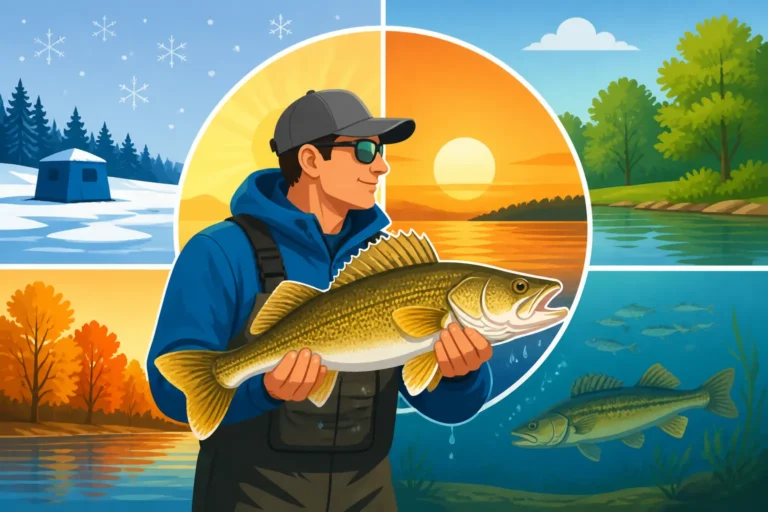
Spring (May-June): This is the eagerly anticipated "opener" for walleye and northern pike, usually in mid-May. Fish are often shallow, recovering from the spawn, and actively feeding. Walleye can be found near river inlets, shallow rocky points, and newly emerging weed beds. Pike are aggressive and can be caught casting to shallow, sun-warmed bays. Panfish, especially crappie, move into shallow spawning areas, making them easy to target. Always double-check the Minnesota Fishing Seasons & Opener Dates (2026) before planning your trip, as dates can shift slightly year to year.
Summer (July-August): As waters warm, fish scatter. Walleye move to deeper main lake humps, points, and thermoclines. Trolling crankbaits or deep jigging become more effective. Bass fishing heats up, with smallmouth on rocky structures and largemouth in heavy cover. Muskie become highly active, and anglers will spend long days casting massive baits. Panfish can be found deeper along weed lines and brush piles. Night fishing for walleye can be incredibly productive during the warmest months.
Fall (September-October): This is often a favorite season for many experienced anglers. As water temperatures drop, fish go on a feeding frenzy in preparation for winter. Walleye move back to shallower flats and points, feeding heavily. Muskie fishing can be phenomenal, with many trophy-sized fish caught as they put on weight. Pike are also very active. The beautiful fall colors add a scenic bonus to your fishing experience.
Winter (November-April): Ice fishing is a massive cultural event in Minnesota, and the Bemidji area is no exception. Lake Bemidji, Cass Lake, and Winnie become small cities of ice shelters. Walleye, crappie, perch, and pike are all actively pursued through the ice. Specialized gear, like ice fishing flashers and portable shelters, makes the experience enjoyable even in frigid temperatures. Make sure to consult our Best Ice Fishing Gear for Minnesota (2026) Guide if you're planning a winter adventure. Also, be aware of Minnesota Ice Fishing & Shelter Rules to ensure you're compliant.
Gear Recommendations: What Tackle Works Best
While you don't need to break the bank, having the right gear can significantly improve your chances and enjoyment.
For Walleye, a medium-light to medium power spinning rod (6'6" to 7'0") with a sensitive tip is ideal for jigging. Pair it with a 2500-sized spinning reel spooled with 8-10 lb braided line and a fluorocarbon leader. When trolling, medium-heavy casting rods with line counter reels are preferred. For live bait, sensitive graphite rods are key to feeling those subtle bites.
Northern Pike require a medium-heavy to heavy power casting or spinning rod (7'0" to 8'0") to handle larger lures and their powerful runs. Use 30-50 lb braided line and always, always use a steel or heavy fluorocarbon leader to prevent bite-offs from their razor-sharp teeth.
Muskie fishing demands heavy-duty gear: extra-heavy power rods (8'6" to 9'6"), high-quality baitcasting reels, 80-100 lb braided line, and long, heavy fluorocarbon or wire leaders. Large, durable lures are a must.
For Panfish, ultra-light to light power spinning rods (5'0" to 6'6") with small 500-1000 sized reels are perfect. Spool with 4-6 lb monofilament or braid with a light leader. Small jigs, bobbers, and tiny hooks are all you need.
Remember, regardless of species, always carry basic necessities like pliers, a measuring tape, and a camera. If you're planning to buy a boat, Best Fishing Boats for Minnesota: Lund, Ranger & More can help you find the right vessel for these waters. And always understand How Many Lines Can You Fish in Minnesota? as limits vary for open water versus ice fishing.
Hiring a Local Guide or Charter: When It Makes Sense
For those new to the Bemidji area, or even seasoned anglers looking to quickly unlock a lake's secrets, hiring a local fishing guide can be an absolute game-changer. These professionals spend countless hours on the water, tracking fish movements, understanding current patterns, and knowing exactly what baits are producing. A good guide not only puts you on fish but also teaches you techniques and gives you invaluable insights into the local fishery that would take years to acquire on your own.
Consider booking a guide if:
- You're targeting a specific, challenging species like muskie.
- You have limited time and want to maximize your fishing success.
- You're unfamiliar with the local lakes and their nuances.
- You want to learn new techniques or refine existing skills.
Services like FishingBooker are an excellent resource for finding reputable, experienced local guides and charter captains in the Bemidji area. They list a variety of guides specializing in different species and techniques, making it easy to find one that fits your needs and budget. A guided trip can provide an incredible learning experience and often leads to unforgettable catches. Whether you're after trophy walleye or want to learn the intricacies of Muskie Fishing in Minnesota, a local expert can get you there faster.
Disclaimer
The information provided in this guide is for general informational purposes only and does not constitute professional advice. Fishing regulations, seasons, and limits are subject to change by the Minnesota Department of Natural Resources (DNR). Always consult the most current official Minnesota fishing regulations before heading out on the water. Fishing involves inherent risks, and personal safety precautions should always be taken.