Best Seasonal Pattern for Muskie in Minnesota
For many anglers in Minnesota, the pursuit of muskie isn't just a pastime—it's an obsession, a true test of patience, skill, and understanding. But anyone who's spent countless hours casting knows that these elusive giants don't just hang out in the same spots all year. Understanding the seasonal patterns of muskie is absolutely critical to increasing your chances of success, and this guide will walk you through exactly how these magnificent fish behave throughout the year in our diverse Minnesota waters.
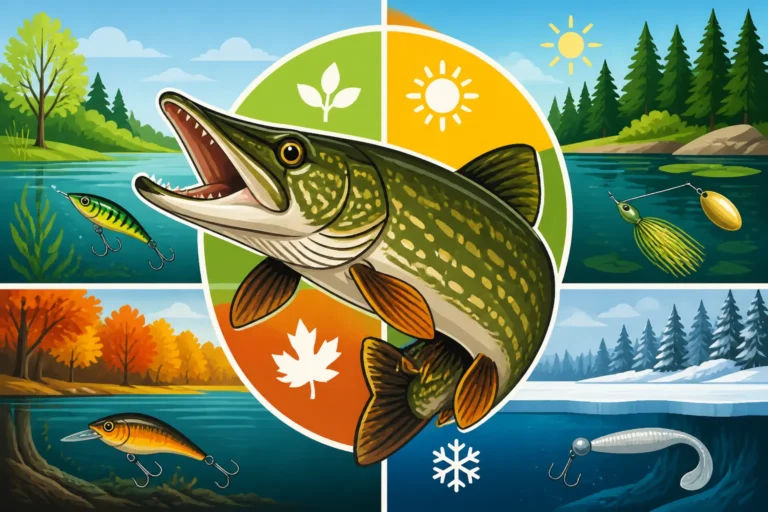
Spring Muskie Patterns: The Post-Spawn Revival
When the ice finally relents and Minnesota's lakes and rivers begin to thaw, muskie, like most fish, are primarily focused on one thing: reproduction. The spring can be a tricky time to target them, not just because of regulations (the season typically opens in early June in most parts of the state), but also because their behavior is heavily influenced by spawning activities. However, by the time the season opens, they’ve often moved into a recovery and feeding phase, making it an exciting, albeit challenging, period to fish.
Early Spring Warm-Up (Pre-Spawn and Recovery)
Even before the season officially opens, it's worth understanding what's happening beneath the surface. As water temperatures slowly climb into the 40s and low 50s Fahrenheit, muskie begin their annual spawning ritual. They’ll seek out shallow, vegetated bays, often with dark bottoms that absorb sunlight, providing warmer water. These areas are usually sheltered from strong winds, offering a crucial staging and spawning ground. Think about those northern bays on lakes like Lake Vermilion or Leech Lake that are the first to melt free of ice.
After the spawn, which can last a few weeks depending on water temperatures, female muskie are often exhausted and vulnerable, while males might linger a bit longer. Both are in a recovery mode, not actively feeding aggressively. As the water warms a bit more, say into the mid-50s, they’ll start to look for easy meals to regain energy. Focus on the immediate vicinity of these spawning bays, looking for deeper edges, submerged logs, or weed lines that offer both cover and proximity to baitfish. Large, slower-moving baits can be effective here, as the fish might still be lethargic.
Post-Spawn Recovery and First Feed
Once the season opens, typically in early June, muskie have usually completed their spawning duties and are beginning to resume more regular feeding patterns. The key here is "recovery." They're not yet in their aggressive summer feeding mode, but they're certainly hungry. Look for them in and around the same shallow, warmer water areas they used for spawning, but now they might be positioned on the deeper edges of those bays, along emerging weed flats, or near rocky points adjacent to shallow water.
These fish are still often relating to warmer water, so sheltered areas with dark bottoms continue to be productive. Cast medium-sized bucktails, twitch baits, or glide baits into these zones. The key is often patience and persistence. Sometimes a fish will follow multiple times before committing. This is also a good time to practice the "Muskie Figure-8 Technique" at the boat, as these fish might be curious but hesitant. Remember, muskie can be spooky in shallow water, so stealth is your friend.
Summer Muskie Patterns: Heat, Weeds, and Open Water
Summer brings consistent warm water, and with it, more predictable (but still challenging) muskie patterns. This is when muskie spread out more across the lake, utilizing a wider range of habitat from dense weeds to open water. The key to summer success is understanding how these fish relate to both structure and forage in the warmer months.
Mid-Summer Weeds and Structure
As summer progresses and water temperatures stabilize in the high 60s and 70s, muskie often become deeply entrenched in heavy cover. Think about those expansive cabbage weed beds on Mille Lacs Lake or the wild rice beds in some of the smaller northern lakes. Muskie use these dense weeds for ambush points, shade, and access to abundant baitfish like perch and cisco. They might be in the thickest part of the weeds, making them incredibly difficult to reach.
Beyond weeds, look for other forms of structure like rock reefs, points, humps, and submerged timber. Muskie will relate to the edges of these structures, especially those that drop off into deeper water, providing easy access to different depths as water temperatures fluctuate throughout the day. Casting large bucktails, topwater baits (especially during low-light conditions), or spinnerbaits over and through these weed beds and along structural edges can provoke violent strikes. Sometimes, a search pattern with a long cast and a fast retrieve is what it takes to cover water and find an active fish.
Open Water Trolling and Suspended Fish
While many muskie hug the cover, a significant portion of the population, particularly in larger, deeper lakes, will suspend in open water. These fish are often targeting pelagic baitfish like cisco or whitefish, which school in deeper basins. Finding these suspended muskie can be like searching for a needle in a haystack, but when you do, they can be some of the biggest and most aggressive fish in the lake. This is where trolling comes into its own.
Trolling with large crankbaits, like those from Grandma Lures or Jakes, that can reach specific depths, becomes a highly effective tactic. Using GPS and sonar to identify baitfish schools or structural transitions in open water is crucial. Experiment with different depths and speeds until you find a pattern. Keep an eye on your electronics for baitfish schools and isolated arches that might indicate a hungry muskie. Many anglers opt for a dedicated muskie trolling setup, often found on Amazon, which includes heavy-duty rods, line counters, and large reels capable of handling massive lures and powerful fish.
Fall Muskie Patterns: The "Esox Madness" Window
For many serious muskie anglers, fall is the most anticipated time of year. As water temperatures begin to drop, muskie enter a feeding frenzy, bulking up for the long winter ahead. This period, often called "Esox Madness," offers some of the best opportunities to catch truly giant muskie.
Early Fall Transition
As summer slowly fades and air temperatures cool, the surface water temperature begins its gradual decline, usually dropping into the low to mid-60s. This early fall transition sees muskie often returning to shallower areas, especially those with green, healthy weeds that still hold warmth and baitfish. They might be less spooky than in spring, but still highly focused on food. Large bucktails and jerkbaits continue to be effective, as muskie are willing to chase a fast-moving meal.
This is also a great time to start exploring outside weed lines and rocky points more thoroughly. Muskie will stage on these features, moving into shallower feeding flats during low-light conditions and retreating to deeper breaks during brighter periods. The fish are actively seeking food, and they'll expend more energy to chase down a bait than they might have in the dead of summer. Think about casting along the famous mud flats of Mille Lacs Lake, which often hold abundant baitfish during this period.
Late Fall Feast (The Big Bait Window)
Once water temperatures dip into the 50s and even high 40s, the "late fall feast" is in full swing. This is when muskie are at their most aggressive, trying to pack on as much weight as possible before winter dormancy. Their metabolism is still high enough to chase, but they prefer larger, slower-moving meals that offer maximum caloric value for minimal effort. This is the time to throw the biggest baits you own.
Large crankbaits, oversized soft plastics, and huge glide baits are the order of the day. Muskie will often abandon dense weed beds as they die off, moving to deeper rock reefs, humps, and main lake points where cisco and whitefish gather. These fish are often found deeper, so heavy-duty tackle capable of delivering and working large baits at depth is essential. Look for vertical structure, steep breaks, and areas with access to deep water. Many anglers swear by a specific time window in late October or early November when the biggest fish seem to be most active, often requiring extra layers and a thermos of hot coffee to endure the cold.
Winter Muskie Patterns: A Brief Hiatus (Ice-Covered Waters)
Unlike some other species in Minnesota, active muskie fishing during the dead of winter is generally not an option. The muskie season typically closes in early December, well before most lakes are safely frozen, and reopens in early June. This means that for much of the ice fishing season, muskie are off-limits and, more importantly, are largely dormant.
Ice Fishing for Muskie Considerations
While you won't be actively targeting muskie through the ice, understanding their winter patterns is still crucial for predicting their spring behavior. As water temperatures drop below 40 degrees Fahrenheit and ice forms, muskie metabolism slows dramatically. They become largely inactive, conserving energy. They'll often move to deeper basin areas, settling near the bottom or suspending over deep water where temperatures are most stable.
They rarely feed aggressively during this time, relying on the reserves they built up during their fall feast. This period of dormancy is vital for their survival and for the success of future spawning seasons. So, while you might catch one incidentally while targeting other species like walleye (which would require immediate release if the season is closed), muskie are effectively "hibernating" under the ice. Knowing this helps you understand why they'll be so ravenous once the spring thaw arrives and the water starts to warm up again.
Essential Gear and Tactics Across Seasons
No matter the season, having the right gear is non-negotiable for muskie fishing. These are powerful fish that demand robust equipment.
| Season | Typical Water Temp | Primary Location | Recommended Baits | Key Tactics |
|---|---|---|---|---|
| Spring | 50s – 60s°F | Shallow bays, weed edges, points | Smaller bucktails, twitch baits, glide baits | Casting shallow, Figure-8 at boat |
| Summer | 65s – 75s°F | Heavy weeds, rock reefs, open water | Large bucktails, topwater, spinnerbaits, crankbaits | Casting weeds/structure, open water trolling |
| Early Fall | 55s – 65s°F | Outside weed lines, rock points | Large bucktails, jerkbaits, soft plastics | Covering water, fast retrieves |
| Late Fall | 40s – 55s°F | Deep rock reefs, humps, basin edges | Oversized crankbaits, large soft plastics, glides | Slow retrieves, deep trolling, targeting forage |
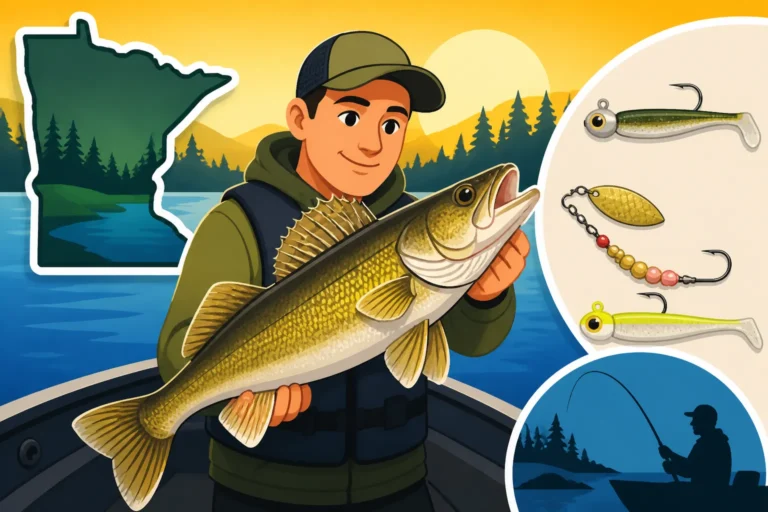
For tackle, a heavy-action muskie rod paired with a robust baitcasting reel is essential. Braided line, typically 80-100 lb test, is a must for cutting through weeds and handling the violent strikes. Don't forget heavy-duty leaders, either fluorocarbon or wire, to prevent bite-offs. You can find a fantastic selection of these specialized muskie fishing essentials on Amazon, ensuring you're ready for whatever these toothy critters throw at you. For beginners, it's worth checking out guides on Muskie Fishing Techniques for Beginners to get started right.
Choosing the right lure size and type is equally important. In spring and early summer, smaller bucktails and twitch baits can be effective as muskie might be less active. As water warms in mid-summer, moving to larger bucktails, topwaters, and big crankbaits will typically cover more water and attract aggressive fish. When the water cools significantly in late fall, don’t be afraid to go with truly massive lures; this is when the biggest fish are looking for the biggest meals. For more detailed lure advice, check out our guide on the Best Muskie Lures (Bucktails, Jerkbaits, Topwater).
Understanding Muskie Biology and Behavior
Muskie, or Esox masquinongy, are apex predators in Minnesota's aquatic ecosystems. Their behavior is intrinsically linked to water temperature, light conditions, and the availability of their preferred forage. They are notoriously solitary, territorial, and opportunistic hunters, often lurking in ambush points waiting for an unsuspecting meal.
Their eyesight is exceptional, especially in low light, which is why dawn, dusk, and even cloudy days can be prime times for muskie activity. Understanding their biology helps explain why a particular lure or tactic might be more effective in one season over another. For instance, knowing that they spawn in shallow, vegetated areas in spring informs where you might find them in the immediate post-spawn period. Likewise, understanding their need to build fat reserves before winter explains the late-fall feeding binge. If you're curious about identifying these fish, learn Muskie vs Northern Pike: How to Tell the Difference.
For anglers looking to explore different muskie waters, some Minnesota lakes are legendary. Leech Lake Muskie Fishing is a popular destination, known for its strong muskie population and diverse forage base. Other excellent choices include Lake Vermilion and Lake of the Woods. Each body of water will have its unique nuances, but the seasonal patterns generally hold true across the state. Remember to always be aware of the Muskie Season & Limit in Minnesota to ensure you're fishing legally and sustainably.
Disclaimer
Fishing regulations, including seasons, limits, and specific lake rules, can change. Always consult the most current Minnesota Department of Natural Resources (DNR) fishing regulations handbook or website before heading out on the water. This guide is for informational purposes only and should not replace official regulations.