Summer Walleye Patterns: Deep Structure
When the Fourth of July fireworks fade and the Minnesota heat really starts to settle in, many anglers find themselves struggling as their favorite shallow-water honey holes suddenly go ghost. This guide solves the mystery of the mid-summer disappearance by breaking down the specific deep-water patterns, structural transitions, and specialized techniques required to find and catch walleye when they retreat to the depths of our 10,000 lakes.
Understanding the Summer Transition: Why They Go Deep
Every year, like clockwork, the bite in the shallows starts to fizzle out as June turns to July. It’s a frustrating time for anyone used to picking off fish in six feet of water near the bulrushes. The reality is that walleyes are biologically driven to find comfort, and in the heat of a Minnesota summer, comfort isn't found in the bath-water temperatures of the shoreline. This transition is less about the fish "leaving" and more about them relocating to areas where they can maintain their metabolism and find consistent food sources.
Water Temperature and Oxygen Levels
The primary driver for this migration is the thermocline. As the sun beats down on lakes like Lake Winnibigoshish or Gull Lake, the upper layer of water becomes too warm for a walleye's liking. Walleyes are cool-water predators; they thrive when their environment allows them to stay active without burning through their energy reserves too quickly. When the surface temps hit the mid-70s or low 80s, the fish seek out the "cool pool" below the transition zone.
However, it isn't just about being cold. Oxygen is the other half of the equation. If a lake is deep enough to stratify, the deepest water may actually become devoid of oxygen, forcing the fish to hang out just above that dead zone. You’ll often find them suspended along deep breaks where the water is significantly cooler than the surface but still rich enough in oxygen to support life. This is why Summer Walleye Patterns: Deep Structure becomes the dominant theme for veteran guides during the dog days of August.
The Pursuit of Deep-Water Forage
While temperature sends them deep, food keeps them there. In many of our premier fisheries, the primary forage shifts from shallow-water minnows and insects to deep-water delicacies like ciscoes (tullibee), yellow perch, and various invertebrates living in the mud. On a lake like Leech Lake, the massive schools of ciscoes move into the deep basins as soon as the water warms up, and the trophy-sized walleyes follow them like a shadow.
If you aren't finding fish, it’s often because you’re looking at the right structure but the wrong "neighborhood" of forage. You have to think like a hunter. If the groceries have moved to 30 feet of water, the predator isn't going to hang around the 10-foot weed line just because that's where you caught them in May. Recognizing this shift is the first step toward a successful summer on the water.
Identifying High-Percentage Deep Structures
In the vastness of a lake like Mille Lacs, "deep water" can feel like an ocean. You can’t just drop a line anywhere and expect a bite. You need to look for specific structural elements that act as magnets for roving schools of walleye. These are the landmarks of the underwater world, providing both a place to ambush prey and a point of reference for the fish as they move through the basin.
Sunken Islands and Underwater Humps
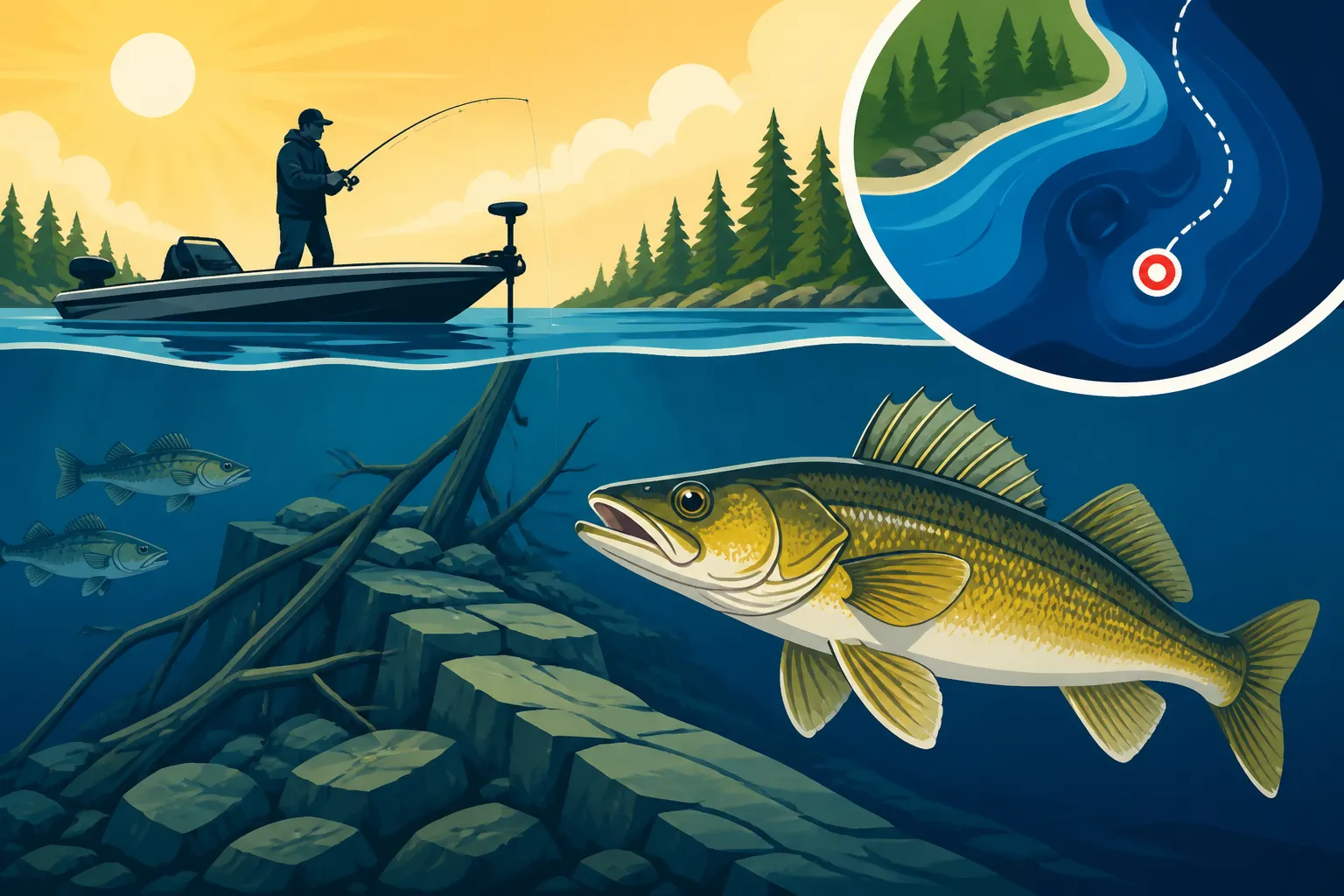
Sunken islands, often called "humps" by locals, are arguably the most iconic summer walleye structures in Minnesota. These are essentially underwater hills that rise up out of the deep basin but don't quite reach the surface. On your electronics, these look like isolated blobs of color surrounded by deeper water. The best humps are often those that feature a mix of substrate—think a pile of rocks or gravel sitting on top of a clay or mud base.
When fishing these, the "sweet spot" is rarely the very top. Instead, fish tend to orbit the edges, specifically the windward side where the current pushes baitfish against the structure. If you’re targeting these areas, it pays to check your Mille Lacs Lake Fishing Guide: Walleye, Bass & More for specific coordinates or structural maps, as these humps can be small enough that being ten feet off-target means a skunked afternoon.
Deep Weed Edges and Sharp Drop-offs
Not all deep-water walleyes live in the mud. In many of our clearer, glacier-carved lakes, the "deep" pattern might actually be the deep edge of a cabbage line. In these lakes, the weeds might grow out to 15, 18, or even 22 feet. The walleyes will tuck into the base of these weeds during the day to stay cool and hidden, then move just a few yards out to the sharp drop-off to feed.
The transition from a lush weed bed to a steep, sandy, or rocky drop-off is a classic ambush point. You want to look for "inside turns"—areas where the weed line curves back toward the shore—as these pockets tend to trap baitfish. Navigating these edges requires precision boat control, which is why having a high-quality trolling motor is essential. If you're looking for replacement parts or accessories for your rig, you can find a wide variety of boat hardware on Amazon to keep your setup tuned for these tight maneuvers.
Mud Flats and Basin Transitions
Then there are the mud flats, the vast "underwater deserts" of lakes like Mille Lacs and Upper Red Lake. While they may look boring on a map, these flats are teeming with life, specifically mayfly larvae and other invertebrates that walleyes love. During the summer, walleyes will roam these flats in massive, loose schools.
The key to fishing mud flats is finding the "transition." This is where the bottom composition changes—perhaps from soft silt to a slightly harder clay, or where the flat meets a subtle rise. Often, the fish are suspended just a few feet off the bottom across miles of identical-looking terrain. This is when Trolling for Walleye: Crankbaits & Leadcore becomes your most effective weapon, allowing you to cover vast amounts of water to find those active pods of fish.
Essential Techniques for Deep Walleye
Once you've located the fish on your electronics, the next challenge is getting a lure in front of them and convincing them to bite. Deep-water fishing presents unique challenges, primarily involving line stretch, lure depth, and the physical distance between you and the fish.
Power Trolling with Leadcore and Crankbaits
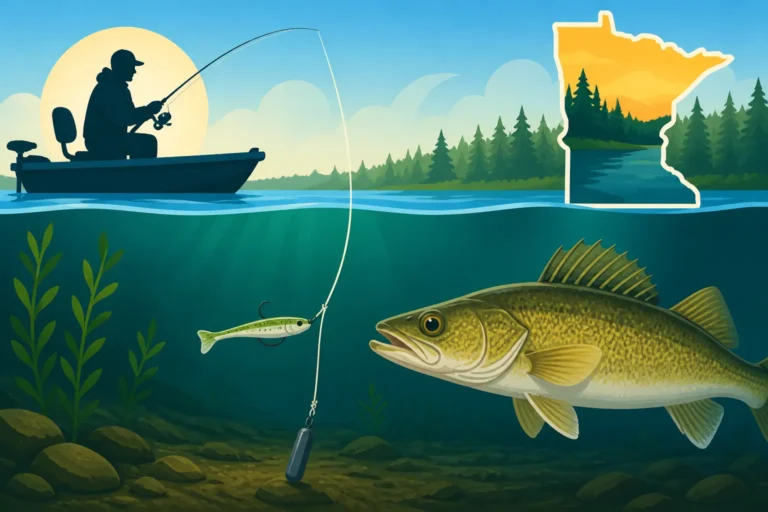
When walleyes are scattered across deep basins or suspended at 30 feet, trolling is the most efficient way to put a limit in the boat. However, a standard monofilament line won't get your favorite crankbait down deep enough without an absurd amount of line out. This is where leadcore line becomes a game-changer. Leadcore is a weighted line that sinks, pulling your lure down to depths that would be unreachable otherwise.
The beauty of leadcore is that it follows the path of the boat perfectly, allowing you to "snake" your lures along deep contours. You can find several brands of leadcore and specialized trolling reels on Amazon if you're looking to gear up for the summer season. When trolling, speed is your best friend; sometimes a bump from 2.0 mph to 2.5 mph is all it takes to trigger a reaction strike from a lethargic summer walleye.
Precision Jigging with Heavy Tungsten
If the fish are pinned to a specific rock pile or a small hump, trolling isn't the answer—precision is. Deep-water jigging (often in 25 to 40 feet of water) requires heavy weights to maintain contact with the bottom. A standard 1/8 oz jig will never get down there in a breeze. You need 3/8 oz or even 1/2 oz jigs to stay vertical.
Tungsten jigs are preferred by many veterans because tungsten is denser than lead. This means a 1/2 oz tungsten jig is smaller in profile than a lead one of the same weight, allowing it to sink faster and provide much better "feel" of the bottom. When you're jigging in 30 feet of water, that extra sensitivity is the difference between feeling a "mushy" bite and thinking you've just bumped a rock. Don't forget to check your Best Walleye Lures: Jigs, Cranks & Spinners list to ensure you have the right colors for stained vs. clear water.
Bottom Bouncers and Crawler Harnesses
The "Lindy Rig" is a Minnesota staple, but in the heat of summer, many anglers prefer a bottom bouncer paired with a spinner and a fat nightcrawler. The bottom bouncer—a L-shaped piece of wire with a weight—is designed to tick along the bottom without snagging. The spinner adds vibration and flash, which is crucial in the diminished light of deep water.
This is a "slow and steady" approach, usually clocked at 0.8 to 1.2 mph. It’s incredibly effective on those mud flats we discussed earlier. The vibration of a Colorado blade can pull fish in from a distance, and very few walleyes can turn down a juicy nightcrawler trailing behind it. It’s a classic technique that has filled more livewells in Minnesota than perhaps any other.
| Technique | Ideal Depth | Target Structure | Pros | Cons |
|---|---|---|---|---|
| Leadcore Trolling | 25' – 45' | Basin/Mud Flats | Covers huge areas; precise depth control. | Requires specialized heavy gear. |
| Bottom Bouncers | 15' – 30' | Flats/Gravel Bars | Very easy to learn; high hook-up rate. | Can be prone to snagging in heavy rocks. |
| Vertical Jigging | 20' – 50' | Humps/Points | Ultimate precision; great for "stuck" fish. | Difficult to do in high wind. |
| Deep Crankbaits | 15' – 25' | Weed Edges/Breaks | Triggers reaction strikes; fast pace. | Limited by dive curves of the lure. |
Electronics and Technology for Deep Water Success
In the modern era of Minnesota Fishing, your electronics are your eyes. Trying to find a 20-foot hump in the middle of a 100,000-acre lake without GPS and sonar is like trying to find a needle in a haystack while wearing a blindfold.
Interpreting Traditional Sonar vs. Down Imaging
Most anglers are familiar with the "arches" of traditional sonar, but when you're fishing deep structure, Down Imaging (DI) provides a much clearer picture of what you're actually looking at. Traditional sonar can sometimes blend a fish into a rock or a piece of timber. Down Imaging uses a higher frequency to provide a "picture-like" view, helping you distinguish between a school of perch and a pod of hungry walleyes.
When scanning deep humps, look for "separation." You want to see space between the bottom and the signal. If the "bumps" on the bottom have a slightly different color or density on your screen, those are likely fish. Learning to trust your electronics is a hurdle for many, but once you see a fish on the screen, drop a jig, and catch it, you’ll never go back to "blind" fishing again.
The Impact of Forward-Facing Sonar (LiveScope)
We can't talk about deep-water patterns without mentioning the elephant in the room: Forward-Facing Sonar (FFS), like Garmin LiveScope. This technology has revolutionized how we fish deep structure. Instead of seeing what is under the boat, you can see what is 50 feet in front of the boat in real-time.
For summer walleyes, this is invaluable. You can literally watch a walleye react to your jig. If the fish moves away, you know you need to change your cadence or color. If the fish follows but won't commit, you might need to speed up the retrieve. It has turned fishing into a video game, and while some purists dislike it, there’s no denying its effectiveness in deep-water scenarios. If you're looking to upgrade your tech, Amazon carries various mounts and wiring kits for these high-end units. For more on the controversy and utility, read Garmin LiveScope Review: Is Forward-Facing Sonar Worth It?.
Seasonal Adjustments and Weather Factors
Mother Nature has a way of throwing a wrench in even the best-laid plans. In Minnesota, the weather can change from a glass-calm heatwave to a raging thunderstorm in a matter of minutes. Understanding how these shifts affect deep-water walleyes is the difference between a limit and a long, hot boat ride.
The Mid-Summer Heat Wave Strategy
During a true "stagnant" heatwave where the air is still and the sun is brutal, the bite often shifts to the extreme ends of the day. The "golden hour"—that period just before sunset and just after sunrise—is when the most active feeding occurs. However, don't overlook the "mid-day deep" bite. Often, walleyes will congregate in the absolute deepest, coolest water they can find during the heat of the day.
In these conditions, the fish are often lethargic. You may need to "downsize" your presentation. Instead of a big, thumping spinner blade, try a plain hook and a leech on a long fluorocarbon leader. This subtle approach is often what it takes to fool a pressured fish on a bright, sunny day. You might also want to check the Mille Lacs Lake Fishing Rules & Limits to see if there are any night-fishing restrictions, as some lakes have special regulations during the summer months.
Wind, Waves, and the "Walleye Chop"
There is an old saying in the Northwoods: "Wind is your friend." This is especially true for walleye. A good 10-15 mph wind creates what we call the "walleye chop." This surface disturbance breaks up light penetration, making the fish feel more secure and less wary of your boat. More importantly, the wind creates currents that push plankton and baitfish onto specific structural points.
When the wind is howling on a lake like Leech or Winnie, focus on the "windward" side of the humps and points. The walleyes will often be stacked right on the edge where the waves are crashing. It makes boat control difficult, but the fishing is usually spectacular. If you're struggling to stay on the spot, consider using a drift sock to slow your boat down. You can find high-quality drift socks on Amazon that are easy to deploy and pack away.
Gear and Equipment for Deep Water Applications
You wouldn't use a fly rod to catch a shark, and you shouldn't use a light-action panfish rod to fish for walleyes in 30 feet of water. The depth itself imposes physical stress on your gear that shallow-water fishing doesn't.
Choosing the Right Rod and Reel Combo
For deep-water jigging, you want a medium to medium-heavy power rod with an extra-fast action. The "extra-fast" part is crucial; it means the rod is stiff through most of its length and only bends at the very tip. This gives you the backbone needed to set a hook when there is 40 feet of line out. A "mushy" rod will simply flex, and you'll never get the hook through the fish's bony jaw.
Pair this with a 2500 or 3000 series spinning reel that has a smooth drag system. When a big walleye decides to dive back down to the bottom, a jerky drag will result in a snapped line every time. For those just starting out, there are several great Best Rod and Reel Combo for Beginners options that can handle the rigors of deep-water fishing without breaking the bank.
Line Selection: Braid, Mono, or Leadcore?
Line choice is perhaps the most debated topic among Minnesota walleye hunters. For deep vertical jigging, braided line is almost mandatory. Braid has zero stretch, meaning every little "tick" on your lure is transmitted instantly to your hand. If you use monofilament in 30 feet of water, the stretch in the line will act like a rubber band, dulling your sensitivity and ruining your hook sets.
However, for Trolling Crankbaits for Walleye: Speed & Depth, monofilament or leadcore is often better. Mono has a bit of "give" that acts as a shock absorber when a fish hits a moving lure at 2 mph. If you’re unsure which to choose, a common pro tactic is to use a braid main line with a 6-foot fluorocarbon leader. This gives you the sensitivity of braid with the invisibility of fluoro. You can stock up on various spools of high-performance line on Amazon to ensure you're prepared for any scenario.
Minnesota Fishing Regulations Changes for 2026
Before you head out, it is vital to stay updated on the latest rules. The DNR often adjusts limits and slot sizes mid-season based on population surveys. For instance, the Mille Lacs Walleye Regulations (2026) might be vastly different from what they were last year. Always carry a physical or digital copy of the current handbook to avoid hefty fines. Understanding Minnesota Possession Limits Explained is also key if you're planning a multi-day trip to a resort.
Disclaimer
The information provided in this guide is for educational and informational purposes only. Fishing regulations in Minnesota are subject to frequent changes by the Department of Natural Resources (DNR). Always verify current seasons, limits, and special regulations for the specific body of water you intend to fish before heading out. Safety should always be your top priority when navigating deep water.