Do You Need a Stamp to Fish for Trout in Minnesota?
Standing on the banks of a crystal-clear stream in the Driftless Area or casting into the icy surf of Lake Superior is a quintessential Minnesota experience, but nothing ruins the peace like the nagging fear that you’ve missed a checkbox on your licensing. Many anglers find themselves wondering if their standard fishing license is enough when they target those elusive brookies and rainbows. This guide clarifies exactly when, where, and why you need a Minnesota Trout Stamp to ensure you stay legal on the water.
Understanding the Minnesota Trout Stamp Basics
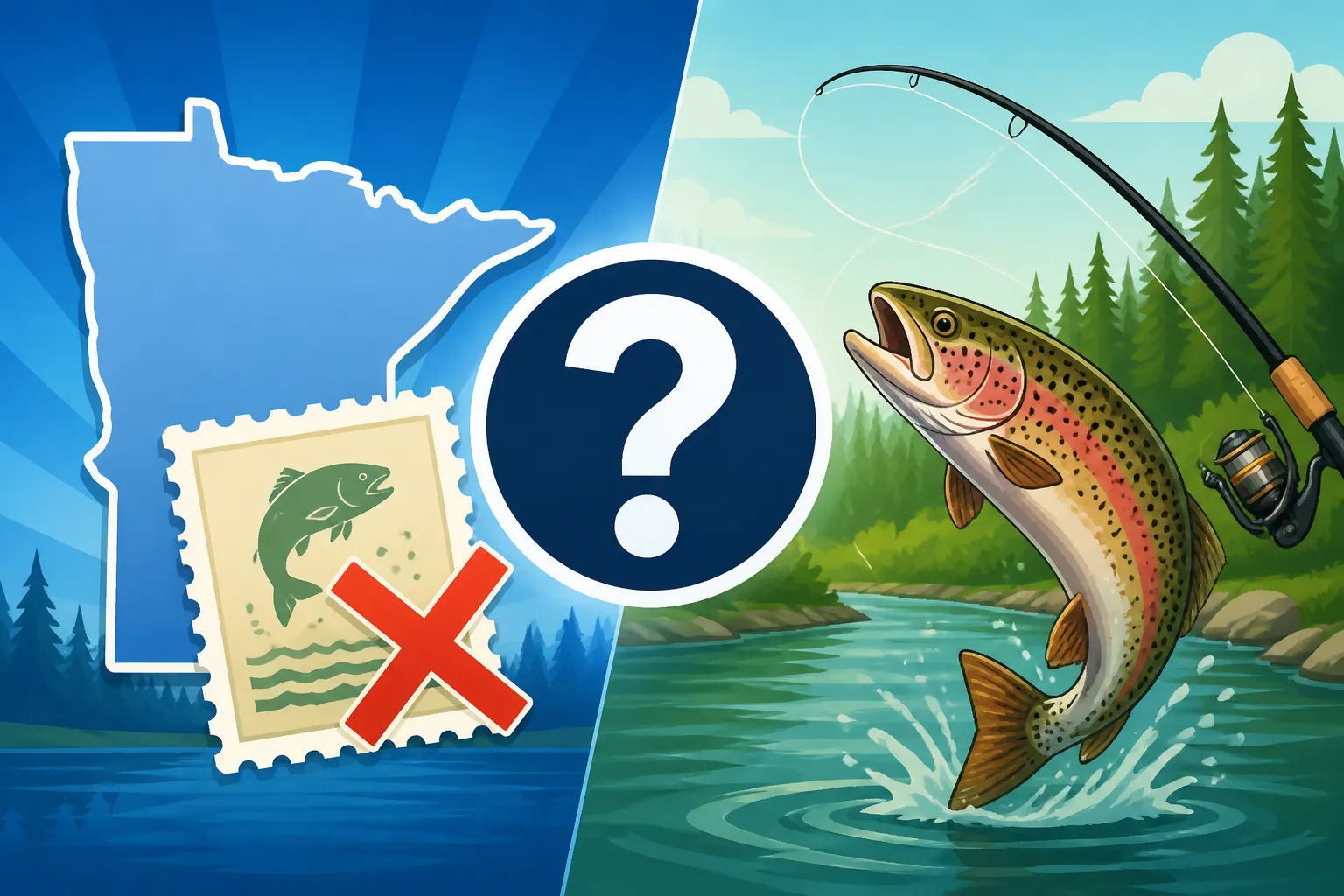
The Minnesota Trout Stamp isn't actually a physical "sticker" that you lick and paste onto a card anymore, though you can still request a pictorial version for a small extra fee if you’re a collector. In the eyes of the law and the Minnesota Department of Natural Resources (DNR), it is a digital validation added to your fishing license. It’s an additional "buy-in" that grants you the privilege to fish in specific waters and for specific species that require more intensive management and habitat restoration than your average panfish pond.
What exactly is a Trout Stamp validation
Think of the trout stamp as a specialized permit. While your base license covers you for walleye, northern pike, and bass, the trout stamp is a dedicated fund. Every penny from the sale of these stamps is legally "firewalled" to go back into trout-specific projects. This includes things like stream bank stabilization in Southeast Minnesota, removing fish passage barriers on the North Shore, and stocking thousands of yearling trout into "put-and-take" lakes. When you buy this validation, you aren't just paying a tax; you are directly funding the bridge or the habitat improvement on the very stream you are fishing.
Many people get confused because they think the stamp is only for keeping fish. That is a common and potentially expensive mistake. In Minnesota, the law generally states that if you are "fishing for" trout or fishing in "designated trout waters," you need the stamp. It doesn't matter if you have a barbless hook and intend to release every fish you see; the mere act of targeting them in their home waters triggers the requirement. For more on the specifics of the paperwork, check out the Minnesota Trout Stamp & Trout Regulations guide.
Who is required to buy one
The rules for who needs a stamp generally follow the age requirements of the standard fishing license, but with a few notable shifts. If you are a Minnesota resident between the ages of 18 and 64, you absolutely need a trout stamp validation to fish for trout in designated waters. If you are a non-resident over the age of 18, the requirement applies to you as well.
There is often a lot of debate around the "senior" category. In Minnesota, once you hit age 65, you are still required to have a fishing license, but the trout stamp requirement is waived for residents. This is a nice little perk for the veterans of our waters who have spent decades contributing to the system. However, if you are a non-resident senior, you usually still have to pay for the stamp unless a specific reciprocal agreement or special license type says otherwise. You can dive deeper into the nuances of Minnesota Fishing License for Seniors to see how these age brackets affect your total cost.
Where and When Do You Need the Stamp
Minnesota has a massive diversity of trout water, ranging from the tiny, spring-fed creeks near Lanesboro to the deep, cold depths of Lake Superior. Because the environments are so different, the rules on where the stamp is required can sometimes feel like they are moving targets. The most important thing to look for on a map or in the DNR rulebook is the term "Designated Trout Water."
Designated Trout Streams and Lakes
A "Designated Trout Stream" is a body of water that the DNR has officially classified as trout habitat. Once a stream gets this designation, the rules of the game change. Even if you are standing in a designated trout stream and claiming to be fishing for suckers or chubs, a conservation officer may still expect you to have a trout stamp. The logic is simple: it is nearly impossible to fish a trout stream without the high probability of hooking a trout.
The same applies to "Designated Trout Lakes." These are often smaller lakes that are managed specifically for rainbow or brook trout. Many of these are in Northern Minnesota, near Grand Rapids or Ely. If the lake is on the designated list, the stamp is a must. If you’re planning a trip to the southeast or the arrow head, you should definitely review the Minnesota Trout Season Dates & Streams to see which waters fall under these specific protections. This is especially true in the "Driftless Area," where almost every meandering creek in a valley is a designated trout stream.
Fishing for Trout in Lake Superior
Lake Superior is a category all its own. Because it is a massive, multi-jurisdictional body of water, the rules are very specific. If you are fishing in Lake Superior, you need a trout stamp validation. This applies whether you are trolling for lake trout five miles offshore in a big boat or casting a "spoon" from the rocky shore at Brighton Beach in Duluth.
There is a slight nuance regarding the tributaries. For most North Shore streams, the "trout water" designation begins at the first bridge or barrier upstream from the lake. If you are fishing "below the bridge" (on the lake side), you follow Lake Superior rules. If you move "above the bridge," you are in a designated trout stream. Both require the stamp, but the season dates and bag limits might change. If you are coming from out of state to tackle the big lake, make sure you understand the Nonresident Fishing in Minnesota: Licenses & Rules before you head to the marina.
Exceptions and Special Cases
As with any government regulation, there are exceptions that can save you a few dollars or a headache if you fall into a specific category. Most of these exceptions are based on age or the specific location of the fish you are catching.
Age-based exemptions for Kids and Youth
One of the best things about Minnesota fishing is how much we encourage the next generation. Residents and non-residents under the age of 18 do not need a trout stamp. They are free to fish for trout in any designated water without the added cost. This makes it much easier for a parent to take their kids out for a day of bobber fishing on a trout pond without having to double the cost of the outing.
It is important to note, however, that while the youth don't need the stamp, they still have to follow the Minnesota Fishing License for Kids & Youth guidelines regarding bag limits and seasons. If a child is fishing under the "supervision" of an adult who doesn't have a license, the adult cannot assist in the actual fishing (casting or reeling) in a way that suggests they are the ones fishing.
Possession vs Catch and Release
This is where many people get into trouble. There is a persistent myth that you only need the stamp if you intend to "possess" or keep the trout. This is false. In Minnesota, the law requires the stamp for anyone who is "fishing for trout." If you are using a fly rod on a famous trout stream like the Root River, it is very difficult to argue that you aren't fishing for trout.
There are rare cases where you might catch a trout in a non-designated water—for example, catching a stray rainbow trout in a warm-water river like the Mississippi or the Minnesota River. In those cases, if you did not intend to catch the trout and you are in non-designated water, you generally do not need the stamp. However, if you decide to keep that "accidental" trout, you must have a trout stamp. Without the stamp, you must release the fish immediately. This even applies if you are on a lake that isn't a designated trout lake but was accidentally stocked or has a small natural population. For a broader look at what happens if you make a mistake, read about What Happens If You Fish Without a License in Minnesota?.
| Angler Category | Stamp Required? | Location | Notes |
|---|---|---|---|
| Resident (18-64) | Yes | Designated Trout Waters | Required for catch & release or possession. |
| Resident (65+) | No | All MN Waters | Only the base fishing license is required. |
| Non-Resident (18+) | Yes | All MN Waters | Required even for 24-hour or 72-hour licenses. |
| Youth (Under 18) | No | All MN Waters | Can fish and keep trout within legal limits. |
| Accidental Catch | No* | Non-Designated Water | *Only if the fish is released immediately. |
Cost and Purchasing Details
Buying the stamp is a straightforward process, but the timing matters. In Minnesota, fishing licenses run on a specific cycle. Your 2026 license and trout stamp will be valid from March 1, 2026, through February 28, 2027. If you buy a stamp in the middle of the winter for ice fishing, remember that it will expire at the end of February regardless of when you bought it.
How much does it cost in 2026
For the 2026 season, the Minnesota Trout Stamp validation for residents is priced at $10.00. When you add the issuing fees, you’re usually looking at a total of around $11.00. For non-residents, the price is the same, but it must be added on top of the non-resident base license, which is significantly more expensive than the resident version.
While ten dollars might seem like a nuisance, it’s one of the best values in the sporting world. That ten-dollar bill helps pay for the thousands of hours DNR staff spend shocking streams to count populations, hauling bags of fingerlings into the backcountry, and negotiating with landowners for public fishing easements. If you’re still trying to figure out the best way to get your paperwork in order, the guide on How to Get a Minnesota Fishing License Online is a great resource to walk you through the clicks.
Where to buy your stamp
You have three main ways to get your trout stamp. The most common is visiting a local bait shop or a large retailer like Fleet Farm or Walmart. These locations are "ELS" (Electronic Licensing System) agents. You simply tell them you need a fishing license and a trout stamp, and they print it out on a piece of thermal paper.
The second way is online through the DNR’s website. This is incredibly convenient because you can save a PDF of your license on your phone. In Minnesota, showing a digital copy of your license to a conservation officer is perfectly legal. Just make sure your phone has enough battery! Lastly, you can buy one via phone, though this is becoming less common. If you are fishing on a whim and realize you forgot your stamp while standing in the stream, the online portal is your best friend.
Why the Stamp Matters for Minnesota Fisheries
It’s easy to feel like the state is just trying to nickel-and-dime us, but the trout stamp is actually a success story in "user-pay, user-benefit" conservation. Trout are what we call "indicator species." They require cold, clean, highly oxygenated water to survive. When a stream is healthy enough for trout, it means the entire ecosystem—from the insects to the groundwater—is in good shape.
The funds from the stamp have allowed Minnesota to become a world-class destination for trout. In the 1970s, many of the streams in the southeast were choked with silt and devoid of fish. Today, thanks to decades of stamp-funded restoration, those same streams have thousands of fish per mile. If you want to see that money in action, try using some Best Stream Trout Fishing Tactics in Minnesota on a restored stretch of water. You’ll see the deep pools and overhead cover that were built specifically using those funds.
If you are a fly fisherman, you know that the technicality of the sport requires a healthy environment. Learning How to Catch Stream Trout: Nymphs & Dries is much more rewarding when the fish are wild and plentiful. Even if you are a bait fisherman using a corn-filled hook for stocked rainbows in a suburban pond, that experience only exists because of the stamp.
Common Confusion: Private Property and Limits
A final point of confusion often involves private land. In Minnesota, the state owns the fish, and the DNR regulates them, regardless of who owns the land under the water. If you are fishing on private property that contains a designated trout stream, you still need a trout stamp. The "I'm on my own land" argument does not hold up when it comes to state-managed wildlife and fish. For more details on this specific headache, you can check out Do You Need a License to Fish on Private Property?.
Lastly, always be aware of the "Possession Limit." Even if you have the stamp, you are limited in how many fish you can have in your creel, your cooler, or your freezer at home. The stamp gives you the right to fish, but it doesn't give you the right to over-harvest. Always check the specific lake or stream regulations, as many trout waters have special "slot limits" or "catch and release only" rules that override the general state limits.
Disclaimer
This guide is for informational purposes only and reflects general regulations for the 2026 Minnesota fishing season. Fishing regulations can change due to emergency DNR orders or legislative updates. Always consult the official Minnesota Fishing Regulations handbook or the DNR website before heading out on the water to ensure you are in full compliance with the most current laws.